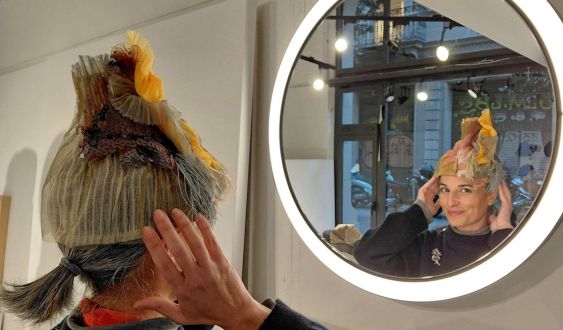
Number 3 on Santa Teresa street, in Gràcia, shows no sign indicating the activity that takes place there. The only clue is a display window through which a kind of mannequins built with recycled white wrapping paper, crowned with hats and caps, can be seen. And that is the clue. The place is actually an atelier, nothing like a traditional store, where Gema Galdón carries out her hat-making activity. A few blocks away, towards the sea, in a building on Roger de Llúria, Arianna Grau has converted part of her Eixample apartment into a restaurant. Nothing announces it either, only those who know of its existence through the old word-of-mouth technique come. One designs hats and the other cooks, but in common, both are an example of a new paradigm in the relationship with the client: direct and personalized contact. A new way of doing business that is emerging in Barcelona.
Neither Gema —she insists it's spelled with a single 'm'— nor Arianna spend a euro on advertising to promote their businesses. They replace it with personalized treatment with those who come to their premises. In Gema's case, this direct relationship with the client is very important, as a good part of this clientele are people who have suffered hair loss as a result of chemotherapy treatment. "These are people who need special treatment that allows them to overcome the problem and accept that they must wear something that covers their head and is not a wig," she points out. In fact, this artisan prefers to describe her activity as a designer of something to "dress the head," and not simply hats.
This personal treatment with a cancer patient or with people who come looking for some type of pamela or mantilla because, for example, they will go to a wedding with a dress code and do not like headpieces, means that, instead of initially attending to them at the premises, it is she who travels to their home. "In these cases, it is important to know their house, look at their wardrobe, and discover their dressing style. That gives me an idea of their tastes and I can adapt the hat. Little by little, a relationship of trust is established and clients overcome their prejudices," she explains.
Gema shares her premises, which in the past had been the newsroom of the magazine Ajoblanco, with another artisan who designs and sells shirts. It's a way to share expenses and feel accompanied. There is still room for another partner. Until seven years ago, she was a technical drawing teacher in a high school, until she decided to reinvent herself. Since she doesn't spend on advertising, she makes a habit of attending art exhibitions or events organized by the Liceu with one of her hats as a business card, and it is at these events where she expands her clientele. "They are my particular social networks," she says.
She is proud that one of her works is in the Metropolitan Museum of Art in New York. It is a hat she designed for the late American journalist André Leon Talley, who was editor of Vogue magazine. After his death, the museum acquired the piece, and a second one she was working on had to stay in her Gràcia workshop. Gema is also aware of climate change. For this reason, whenever she can, she resorts to the circular economy. She does this with her display of mannequins and when she goes to design workshops and takes the leftover scraps. "They save themselves from taking them to the trash and I get materials. We both win," she assures.
"Neither Gema nor Arianna spend a euro on advertising to promote their businesses. They replace it with personalized treatment with those who come to their premises"When one manages to book at Arianna's restaurant-home, one occupies one of the tables and soon she attends to you to announce the two vegetable starters and the two main courses of the day that can be chosen. There is nothing more. She is a great defender of vegetables, not only for their benefits, but also because "they have colors and shapes and offer a wide margin for creativity," she maintains. She has a predilection for leaves. When she settled in her third A on Roger de Llúria, she decided to convert an open-plan space in the apartment into a dining room to which she incorporated a kitchen.
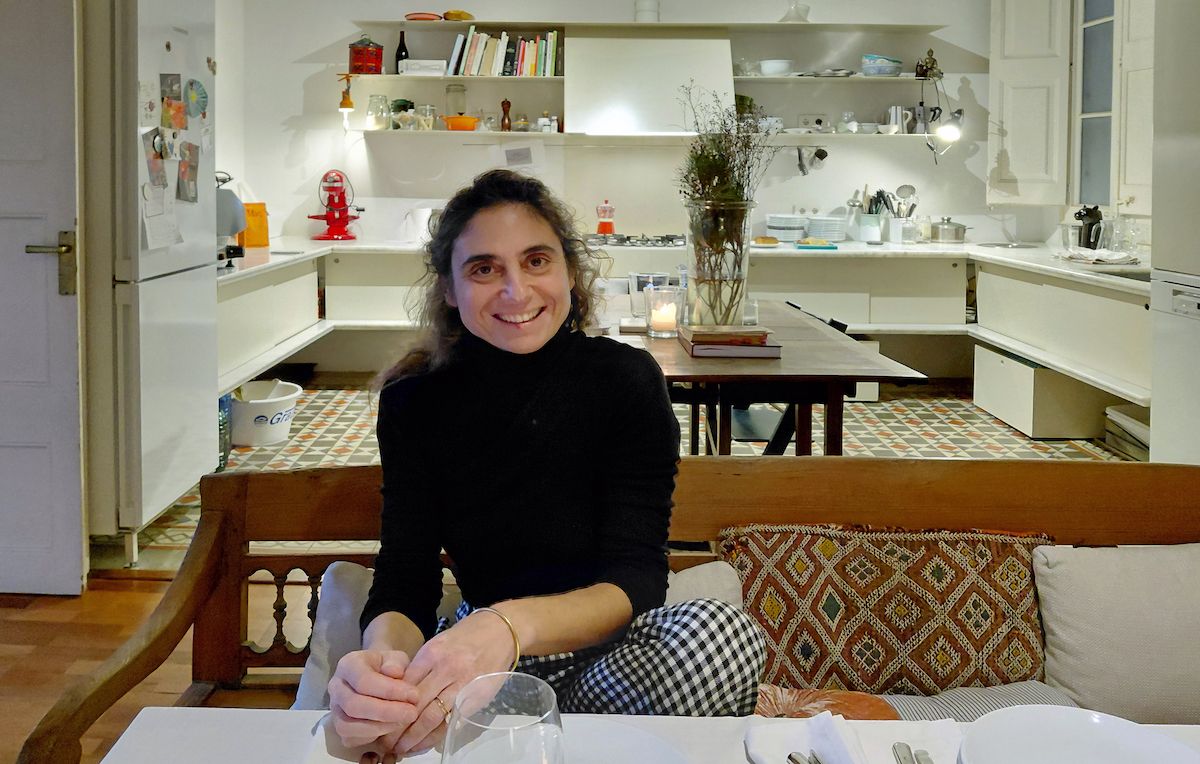
The secret of this medieval historian is also the personal treatment of the client. "Food is an important moment. Sitting down, eating, time for yourself... Value is created, a bond around a table with food," she argues. "This is the magic that attracts customers," she adds. Before opening the business, a little over two years ago, she worked in a restaurant in Born. Many of her old clients followed her, commented on it, more arrived, and today she can host up to 32 diners. Another of her secrets, she says, is not to be "ambitious" and to cultivate good treatment and care for what she cooks. "I work with seasonal produce and what the pagés who supplies me has at any given moment."
As she has Italian ancestry, the dish she likes to cook the most are potato gnocchi with burro and sage. "Simple, but the fusion of the three elements is perfect, they are like chocolates. When you crush and knead the gnocchis, when you shape them, add the clarified butter and sage... Magic."
Add The New Barcelona Post as your preferred Google source for free
Stay informed with the latest news.
