
Peu de la Creu is a small street in the Raval that shares the problems of this historic Barcelona neighborhood but, nevertheless, stands as a Gaulish village in the heart of Ciutat Vella. And it is that in the short stretch between Joaquín Costa and Lluna streets, a small commercial ecosystem has consolidated in recent years, with establishments oriented to artisanal production that give it a special singularity. It is about a dozen premises installed in old factory spaces with many possibilities that have managed to maintain a kind of quality seal. At a time when what abounds in Ciutat Vella are fruit shops and mobile phone case stores, Peu de la Creu is almost a miracle that breaks the monotony.
Marina Rodríguez and her bookstore Nocturama are the latest to join this adventure. She opened in December 2022 when she decided to start her own business after accumulating experience in the sector. Her bookstore has brought greater dynamism to the street, with the organization of reading groups, presentations, literary debates, and storytelling for the little ones. She admits that it was a "risky" bet because the Raval is a "tough" neighborhood, but she maintains her enthusiasm intact. It is not a specialized bookstore, but a generalist one, and Marina provides a very careful selection of good literature and essays.
Crossing the street, you will find the spectacular clothing store that Míriam and Gaia opened just over a year ago. It had been abandoned for years and they fell in love with it as soon as they saw it. A good number of square meters, and the natural light that enters through old industrial skylights arranged in part of the roof provide them with the right atmosphere to display vintage garments that they select one by one, and also those they market from independent designer brands. The space is so wide that they have even set up a gallery where they organize events and exhibitions.
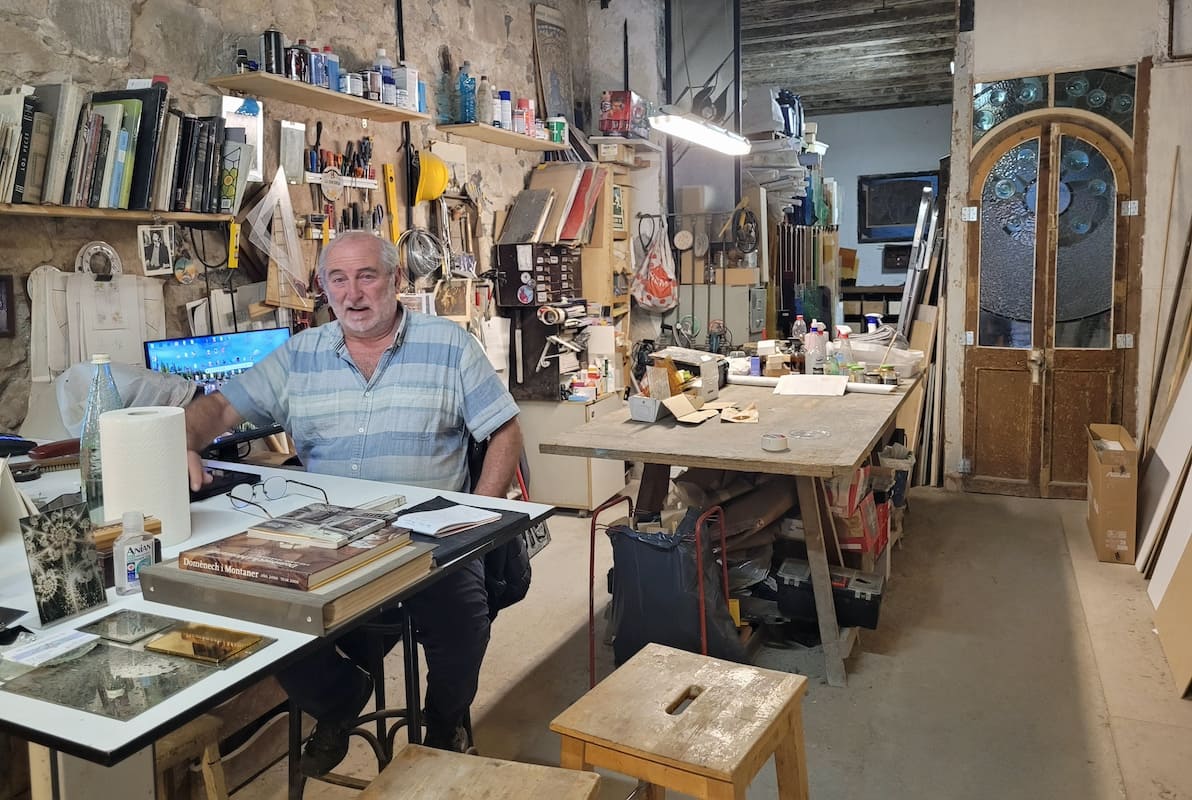
Back on the other side of the street, Jorge Aragonés dedicates his time and the workshop inherited from an old blacksmith's shop to restoring and manufacturing stained glass. He has been in Peu de la Creu for six years and before that he was on Calle de la Cera. He receives many commissions to repair old modernist pieces. He has specialized in recovering stained glass from Lluís Domènech i Montaner and Josep Puig i Cadafalch. Jorge highly values the commercial offer that he and his colleagues have consolidated in this part of the Raval, but agrees that it is a "tough" experience.
Next to Vitralls, is SIO-2 Store, a shop dedicated to selling material for ceramic manufacturing, run by María Maceira. They have been dedicated to this for more than a decade. They sell the clay they produce in their factory in Esparreguera, Can Batllori-Ceràmica Collet, in activity for 150 years. They are leaders in the manufacture of ceramic pastes for modeling. The store is a complete showroom, which also serves all kinds of accessories and has an oven available to customers to fire their works.
The merchants ensure that the street preserves its uniqueness, and maintain contact with the owners of the premises so that they rent them to businesses consistent with the author's activity.Almost opposite, the ceramic process continues, this time in another place, the Bahler Estudio, owned by Manuela Gerosa. Here they are dedicated to producing pieces and also to painting. They have been on the street for seven years and work for galleries in Barcelona and Germany.The premises had been an espadrille factory and later a car parts warehouse. Manuela preserves an old industrial wooden shelf on which labels are still stuck, identifying the place where headlights and other car elements were accumulated. Bahler also offers modeling classes.
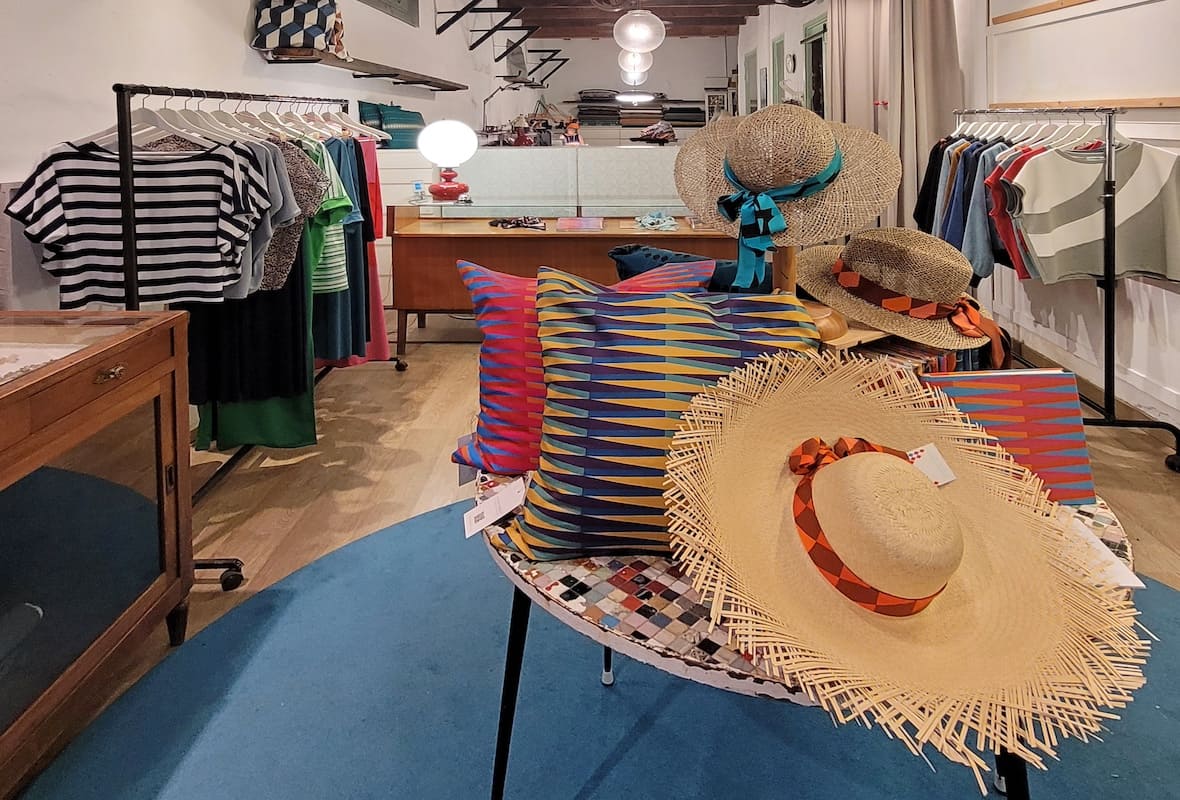
On the same sidewalk, a few doors further towards Lluna street, is María del Mar González's workshop and store. It can be said that she is to blame for everything, when in 2004 she decided to open her fashion business Novedades in Peu de la Creu. It was a very risky venture. Back then, there was nothing on the street, but María del Mar was clear that she wanted to open in the Raval, because, she says, it is an "authentic" neighborhood. It started as a workshop, where she marketed her creations. Now she also sells clothes from other designers. Two decades after starting the adventure, she highlights the "good energy" that reigns on the street.
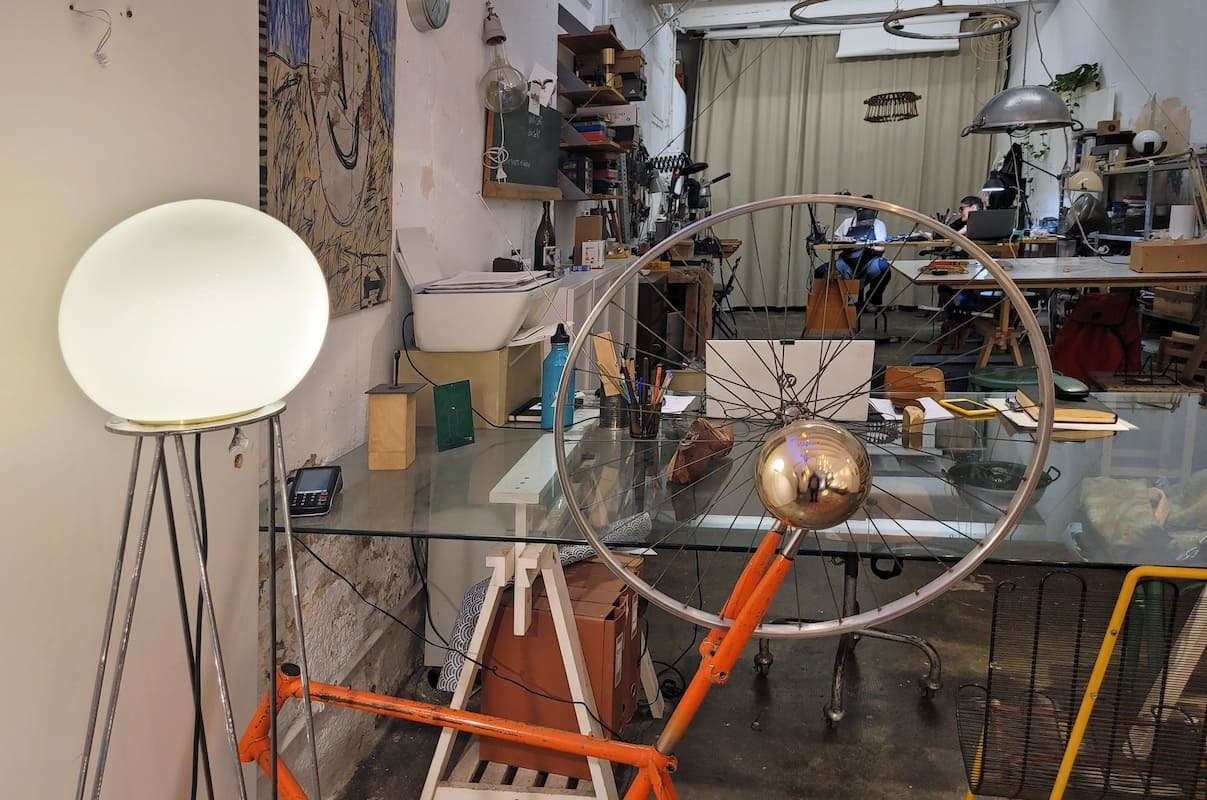
Next to Novedades, Imanol Ossa has a lamp business. He makes them from recycled material. He turns anything into a lamp, from a bicycle to basketballs. Visiting his store is like entering the laboratory of an alchemist of light. Imanol is one of the merchants of Peu de la Creu who somewhat directs the collective. They ensure that this kind of paradise they have created preserves its uniqueness, so they maintain contact with the owners of the still available premises so that they rent them to businesses consistent with the authorial activity of the street. He also owns the Indonesian restaurant Makan Makan, on the corner with Lluna.
A screen printing shop, Suburbia, also operates in this stretch of Peu de la Creu. It is almost on the corner with Joaquín Costa, but previously occupied another premises on the same street. It achieved such success with the quality of its work that it was forced to expand the business. Fortunately, it found its new establishment on the same street.
It is worth visiting Peu de la Creu. Don't miss it.
Add The New Barcelona Post as your preferred Google source for free
Stay informed with the latest news.
