I confess that I don't remember in all my years of professional career having counted the days left until vacation as much as this one. What a long and slow July, especially the last week. And what a fast August, so much so that I also don't remember a reincorporation as uphill as this one. The truth is that one expected a September with the last gasps of covid, but it seems it will still be a while. And on top of that, a disastrous August in terms of news.
An IPCC report tells us that global warming has already taken irreparable consequences for the planet and that, if we don't remedy it, we are heading straight for climate apocalypse. Then, the human drama in Afghanistan and the feeling of returning to where we were 20 years ago. And the electricity bill, which, if it continues at this rate, will end up being a burden for family economies worse than a mortgage. Personally, the death of Ed Asner, the great Lou Grant from the cult series set in the newsroom of Los Angeles Tribune, has left me touched. In my imagination —and surely in that of many colleagues of my generation and earlier—, it also culminates the demise of a type of journalists and journalism that I was fortunate enough to experience and that will not return.
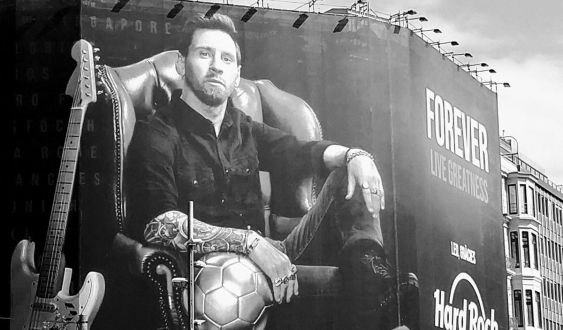
I leave for last the great drama of the summer, Messi's tearful departure from Barça, which, in addition to the emotional impact it has left among Barcelona fans, has brought to light the delicate situation of a world-renowned club whose bubble, in which it has lived for the last decades, has been burst by the current global crisis.
With this state of mind, I have visited an excellent exhibition that is going very unnoticed about the impact of football in Barcelona, from a social, urbanistic, political, economic, and international brand positioning point of view for the city. I said it has gone unnoticed because the Museu d'Història de Barcelona has located it in the Oliva Artés center, an old industrial building that was saved from demolition and is now a cultural space with great potential within the central park of Poblenou. I must admit that I was impressed by the quality of the exhibition and by the setting offered by this magnificent container that I was unaware of.
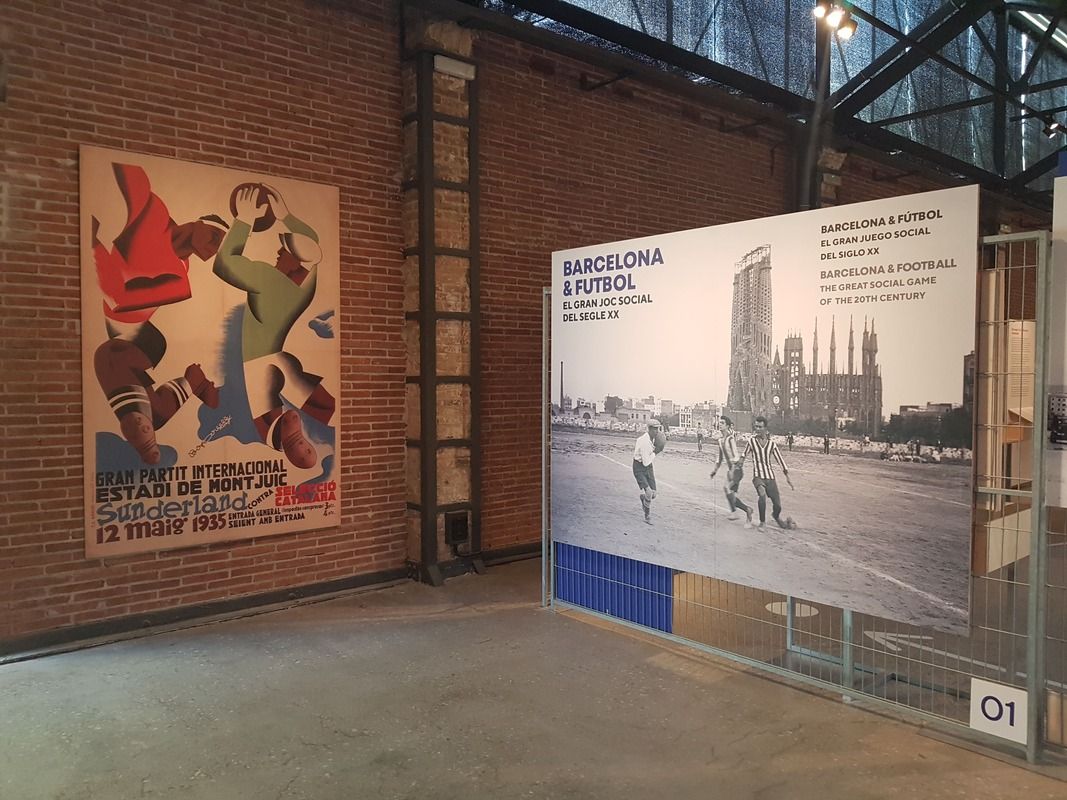
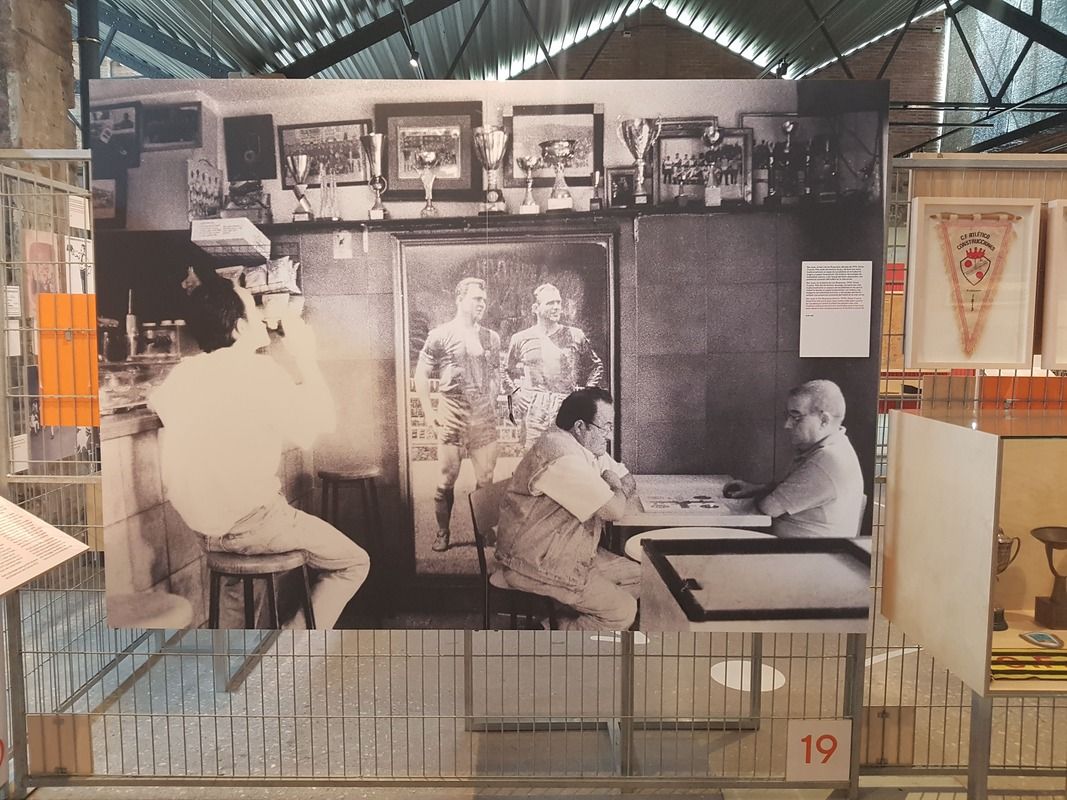
The exhibition is magnificently conceived and brings together an excellent collection of objects and images. Although Barça occupies an important part as a major global brand, the city's other clubs are also present. The exhibition reflects on the contribution and influence of professional football in the development of Barcelona throughout the 20th century and what its role will be in the 21st century. Thus, the organizers ask themselves if, as an urban game, football will be an instrument of social inclusion in a more plural city. Or when there will be full equality between men and women. For now, women's football is pushing hard and the names of female footballers are starting to be known and their quality valued. This is the case of some players from the successful treble-winning Barça, such as Alexia Putellas, Aitana Bonmatí, Jennifer Hermoso, Lieke Martens, and Caroline Graham Hansen, to name just a few. An unthinkable experience just a few years ago.
The exhibition also asks whether big clubs will continue to play an important role in the economy and politics. Surely they will, but we have to see how. The major professional leagues generate a lot of money through tickets and membership fees, which end up being a drop in the ocean when advertising, television rights, and merchandising come into play. This is only with regard to the clubs, because then there are all the activities that revolve around major competitions, such as betting. As a consequence of all this, elite clubs must bear large structural expenses if they want to be competitive. The most important are the players' salaries, whose contracts involve astronomical figures. This is what is now taking its toll on Barça, for whom the health and economic crisis of covid has exposed the feet of clay of the system.
In any case, the impact of football on cities and local, national, and international economies is evident. Many political and economic agreements are closed in the boxes of the big teams, although none at Camp Nou has managed to save Barça from the traumatic loss of the best player of all time.
Messi's tears were front-page news in all the world's newspapers and media. Including the Financial Times. In the major business centers of the planet, no decision is made without first reading the Financial Times, and those that were made that day were after the Argentine's crying. Put another way: Messi's departure from Barça and his signing for PSG have had an evident global economic impact. It would be good to quantify it. It must not be an easy task to calculate it with all its variables, but what we do know is that in Barcelona it has been negative. The question now is how long we will drag this economic, sporting, social, and even health crisis, because for more than one person, the star's departure has made them sick.
Add The New Barcelona Post as your preferred Google source for free
Stay informed with the latest news.
