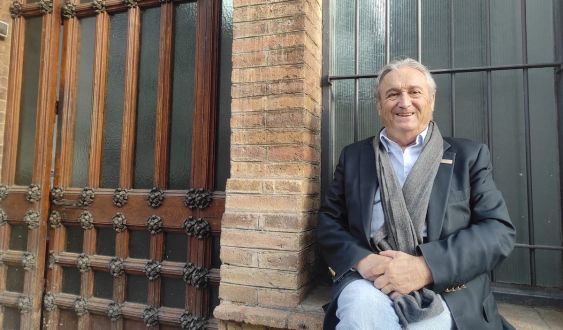
Joan Llovet is the man with whom the chocolate firm Godiva conquered Barcelona. The year the Olympic Games were held in this city, he opened the store of the select chocolate factory, originally Belgian, which until three years ago served as a 'jewelry of precious sweets' on Balmes street. With Llovet's retirement, the city lost a street-level point of sale for exquisite cocoa creations, in the hands of this master chocolatier, a self-made man who worked by following his intuition and curiosity.
When he thought of Barcelona, from his village, Bellmunt d'Urgell, he imagined that with so many people in this city, he would find someone to do things with. And when he was twenty, he came to find out. One Sunday, walking through the second-hand book market of Sant Antoni, he stopped in front of one titled The Horns of Tibidabo and the Catacombs of Barcelona. But it was the author's name, Domènec de Bellmunt, that made him stop. Bellmunt was the name of his village. From then on, following the trail of that writer would lead him to Toulouse. "First I asked people in the village of Bellmunt if anyone knew the writer. But we are of the generation of silence. Nobody told me anything," he recalls.
Even so, his perseverance in asking and searching led him to the home of a sister of this Domènec, and through her, he located him. Accompanied by his brother Ventura, one day they got into his SEAT 124 "with two crates of apples from our village," heading to Toulouse. The visit of those brothers moved Domènec Pallerola i Munné, the writer repressed during the dictatorship of Primo de Rivera. He had been born in Bellmunt d'Urgell and was the founder of the magazine Foc Nou from his exile in Toulouse, after the Civil War. "That man had left the village when he was nine years old, but he knew more about Bellmunt than I did. When you long for something, you remember it much more," says Llovet.
In Tolosa, "as in the movie Casablanca, a great story of friendship had begun," recalls Llovet who, as a result of that encounter, ended up being Pallerola's assistant for all tasks of editing, contacts, presentations, and dissemination of his books. At that time, a gentleman, also from Bellmunt, asked him if he would like to run a hostel in Caldetes, and introduced him to the owner, a gentleman from Les Garrigues. "I accepted the deal. He told me: we will go to profit and loss. If we make money, seventy will be for me and thirty for you. If we lose, I will have to pay seventy and you, thirty." And he accepted. It was La Fragata hostel, with capacity for about seventy people, and a restaurant. With a handshake, they closed the deal that would last a dozen years. "That first summer, from June 1st to September 1st, we earned a million pesetas. And the following year, I proposed to rent him the hotel and take charge myself," he explains.
From that summer on, every year he would do the season at the hotel, and the rest of the year he edited books and helped with permits, ISBN, and the dissemination of Domènec de Bellmunt's works. "I was like the ants that hoard food provisions in summer to have in winter". And one year for Christmas he decided to undertake a trip to India. "With hardly any money, and alone, because I felt that, if I really wanted to experience another country, with another culture and other customs, I had to go alone," he says.
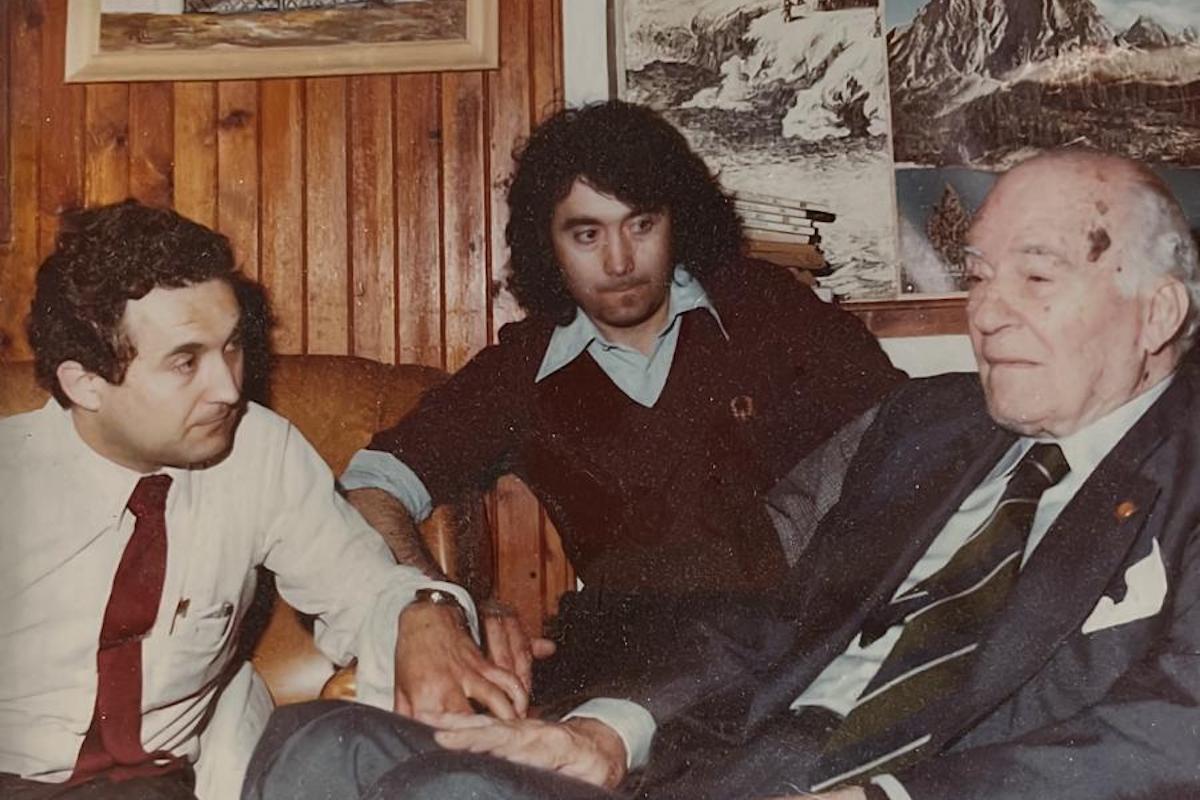
From Bombay, the city where he landed, he traveled to Goa, because he saw that there was a beach there and, "since I knew that Goa had been a Portuguese colony, I thought I could understand someone a little, because my English was very poor." Joan stayed in a private house where they rented rooms and the trust with the owner of the house led her to ask him, taking advantage of the fact that he said he wanted to go to Madras, to take two jars of peppers in vinegar to her granddaughter. Madras is on the other side of the country. He traveled with a duffel bag with his things, among which he kept the two jars of preserved peppers.
It was a thirty-six-hour train ride and, upon arrival, conversations practically with signs. "I remember we went for a drink with the granddaughter of that lady from Goa and a friend of hers who explained that she had to marry soon a boy she didn't know. I didn't understand that, but I comprehended it. After all, I knew that, in '45, someone from his village, Verdú, told my father that in the village of Bellmunt there was a marriageable woman who had been orphaned of her father, and my father took his bicycle and went to meet Rosario. And I have to say that my parents were very happy without ever having courted. In my mother's house, they needed young hands to work. We are talking, of course, about '45, when my father had already done three years of military service and three years of war. He was an angel fallen from heaven."
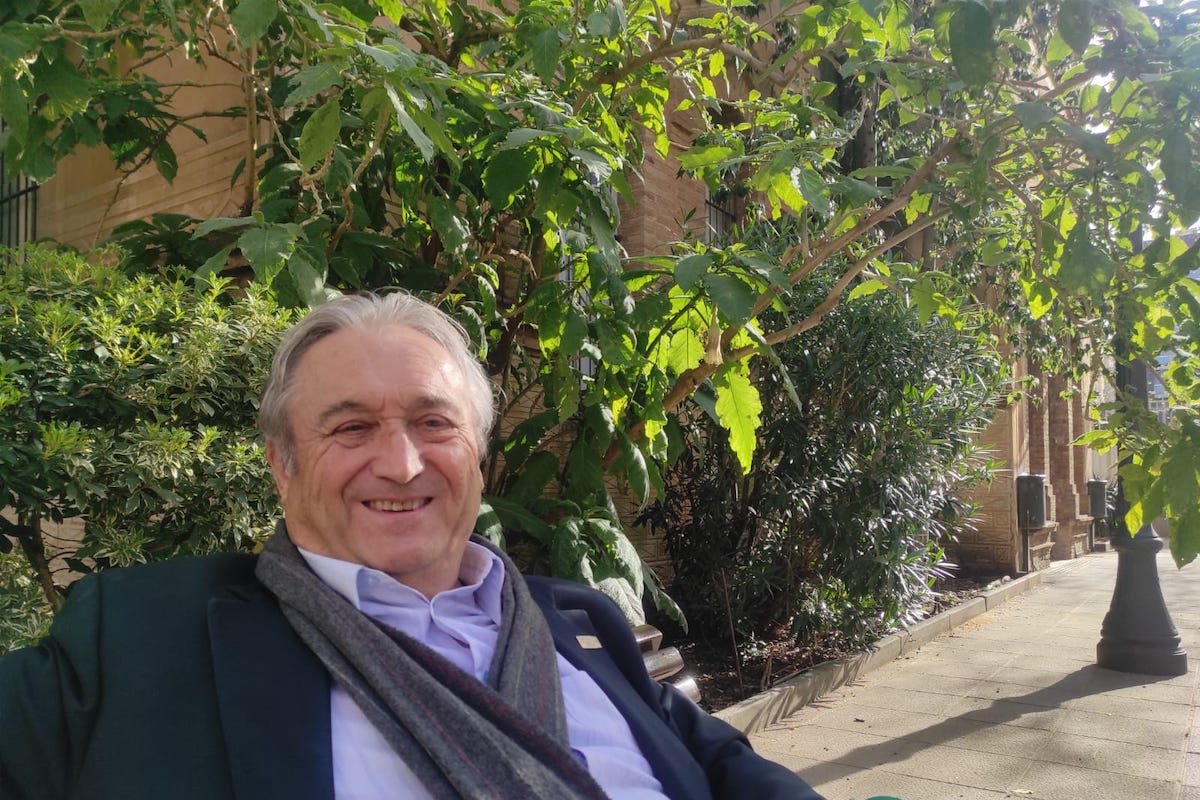
Upon returning to Barcelona, Joan continued to alternate summers at the hostel La Fragata de Caldetes with winters full of work missions. Work has never impressed this man. "My mother instilled in me a strong fighting spirit," he says. But when he would visit her in Bellmunt and explain that he installed polibanes ---a bathtub with bidet functions--- and she would ask me, "but you, where did you learn to do all that?" For Joan, it was all about putting in effort. "If you do it with enthusiasm, you enjoy it. Whatever it is," he thinks.
Five Olympic snails
At one point, he thought of setting up a snail farm. He saw that there was a growing fondness for this delicacy and wanted to raise them in a small house where he lived in the Horta neighborhood. He was figuring out how to prepare it. He even went to explain it to the Department of Agriculture, where they didn't believe him. But he had noticed the success of snail caviar in France and he also wanted to try it. "What cost me the most was finding the best solution as a watering trough for the snails," he recalls. From seeing them in the field and going to catch them, to raising them, there was a universe of learning.He got to know these animals so well that he ended up training a few of them to compete. Yes, snails doing athletics races. Just like that. Joan was the coach of the snails, he took care of them as if they were professional athletes. "I had five and I trained them every day." How? "With passion and patience. Relocating them every time they strayed from the set path, and making them feel the contact on my hand, to gain confidence."
One night, a kitchen jar fell on the snails' bedroom, a space next to the kitchen where he made them spend the night. And a blow from the jar cracked the shell of one of the snails. Without much hesitation, Joan went to the Clínic hospital, which was very close to his house, and asked a young doctor who attended him in the emergency room if he could give him a little plaster from the cast they used to immobilize limbs. "I started by telling him that I hadn't gone crazy, that I had a team of racing snails and that the shell of one of them had broken and I wanted to repair it." He was lucky and with a little plaster, just as he had thought, the shell was mended.
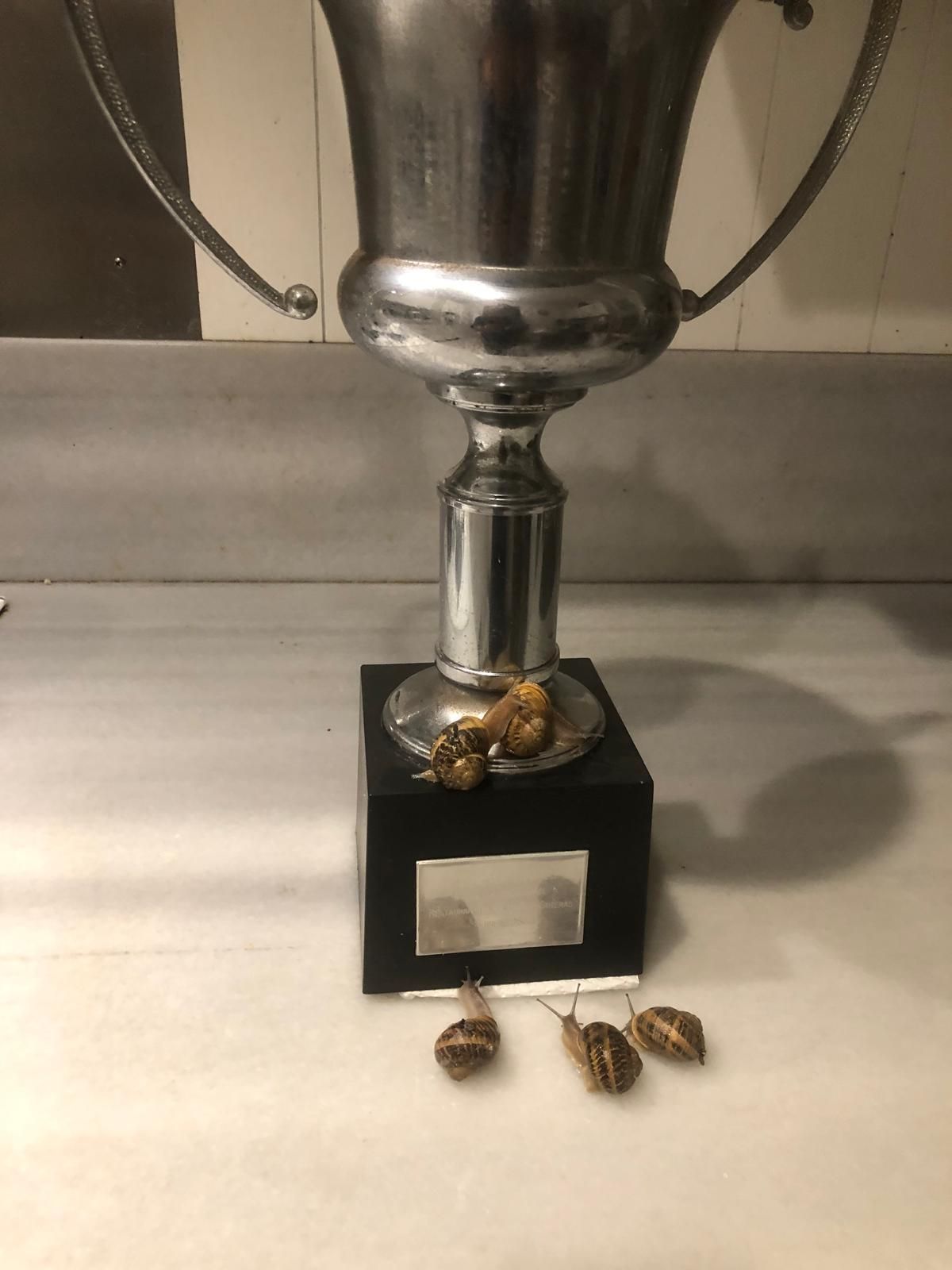
He also accustomed the snails to receiving a little aspirin powder with his finger as a reward after training. It sounds like fiction, like a cartoon movie plot, but the fact is that Joan keeps the trophy at home that proves his skill as a snail trainer. His five Olympic snails won races. However, the snail breeding farm did not yield the expected profits and the project did not continue. "Of caviar, I only managed to make a hundred-gram baby food jar that, even then, cost three thousand pesetas," explains the creator of this adventure that he never minds recounting and that always, surely, sparks surprise.
Una petita joya llamada Dame Blanche
The conversation goes through so many anecdotes that it feels like listening to the lives of many people, and it's only one, very full of passion for everything he has done. He likes to explain that "when I had to select personnel, I didn't look too much at resumes, because I believe more in attitudes than in aptitudes and I used to ask my interviewees: how are you doing on passion? I was referring to the enthusiasm they put into everything they did or wanted to do, because for me that is key."Traveling the world, from airport to airport, Joan always felt like getting a box of chocolates. He enjoyed looking at those temptations. He especially grew fond of the chocolate named La Dame Blanche that Godiva manufactured. He liked it so much that he imagined opening a Godiva store in Barcelona. And so he did. He traveled to Belgium to speak with the franchise managers of this renowned firm, then Belgian, in the hands of the Traps brothers, today owned by a Turkish company, and they made one of their deals. A handshake sealed the agreement to give the Catalan capital a Godiva chocolate and bonbon store. It was 1992. A long journey for Joan with chocolate began there, that product he had enjoyed so much as a child in Bellmunt, every Sunday, before going to mass, when for breakfast they ate toasted bread and hot chocolate, made with water.
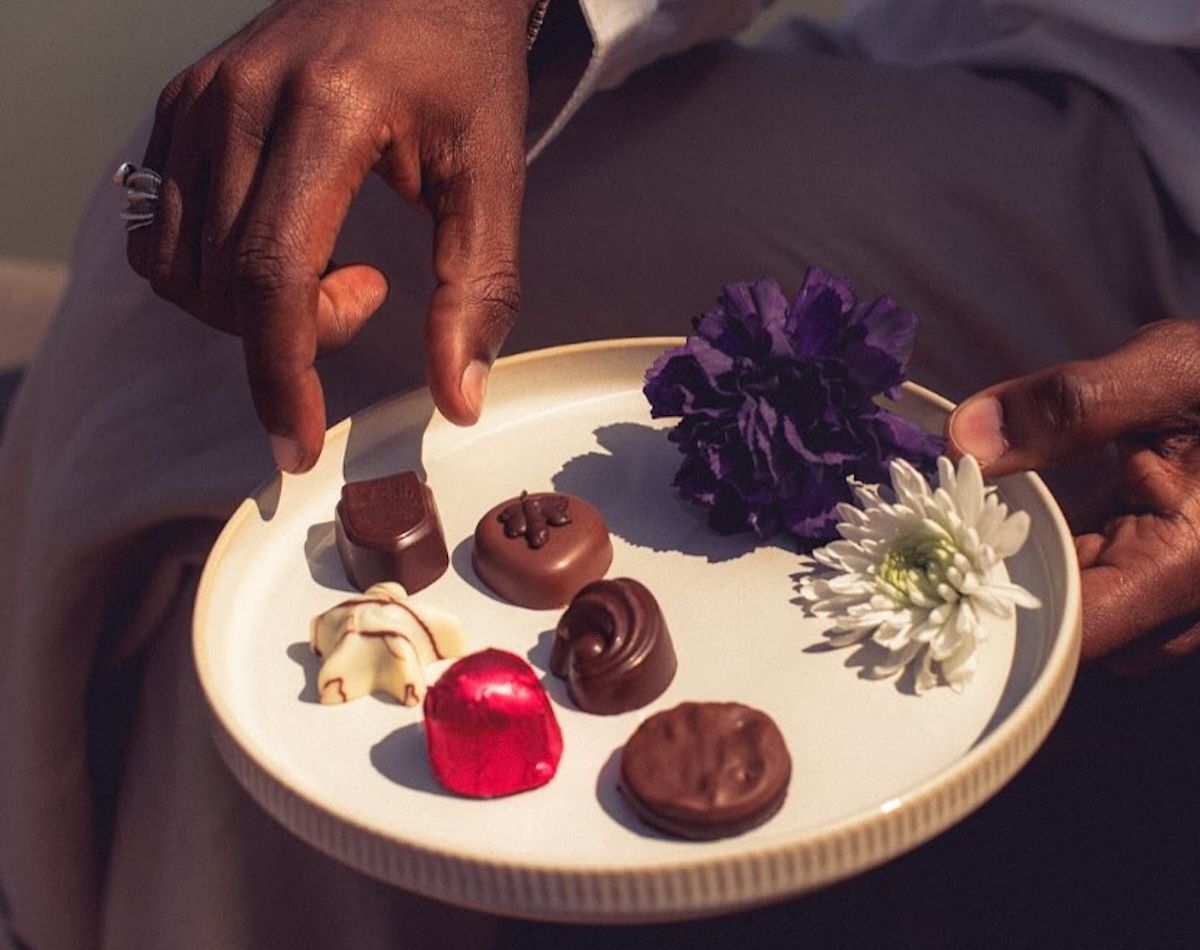
How much happiness in a cup!, and how much happiness in each bonbon. La Dame Blanche had entered his life to stay for a long time. Having been a part and a cog in so many moments of satisfaction in celebrations, of individual and collective enjoyment for so long makes him feel very happy. And it's all thanks to theobromine, an alkaloid substance found in the cocoa tree ---also in other plants--- that acts as a stimulant of the central nervous system. Like caffeine in coffee, in cocoa and chocolate, theobromine energizes and stimulates, but without altering as much as caffeine can.
Apart from the five or six collections that Godiva released each year inspired by the four elements, another great innovation of the firm was the creation of the Dipping Experience Godiva. Simply, dipping fruit, usually strawberries or tangerine segments, in chocolate. The key, however, is the temperature of the chocolate that the master chocolatier manages to make pass through the curve from 45 to 29 degrees and, when it is at 33 degrees, it is worked. "If you don't do this, the chocolate never solidifies." With this performance of fruit and hot chocolate, Joan has toured halls, hotels, terraces, gardens and festivals such as the Pedralbes gardens, where, in a VIP area, he deployed his gadgets to melt the delicate chocolate and dip the fruit into it.

And now what? What does this intrepid entrepreneur dedicate his hours to? Well, in addition to having more time to dedicate to his family, every Thursday he meets with a dozen friends, also retirees, to enjoy a good esmorzar de forquilla at Bar Joan in the Poblenou market. And not only that, he has encouraged these friends to accompany him to work his garden in Bellmunt. "Now we wait for the full moon to plant the potatoes. And when we go, we have such a good time!"
Now Joan's travels are not so far. And many of the trips he makes are inner journeys, based on memories of so many experiences that have led him to meet many people and also to get to know himself much better. He enjoys himself as much when he is working in the garden, as when he is walking through the industrial school, near his house, or along Passeig de Gràcia, in this city that he considers one of the most wonderful in Europe. Remembering his childhood, when with two spools of thread from his mother he made himself a tractor to play with, he says very convinced of his words: "the greatest wealth is to be happy with what you have, and not with what you desire".
Add The New Barcelona Post as your preferred Google source for free
Stay informed with the latest news.
