Freemasons and their secrets continue to cause fascination and/or fear since it was allegedly founded in London in 1717, a fact that historians question. Surrounded by a series of stereotypes ---many without any foundation---, lodges attract the curiosity of many. And curious are those who have been visiting for some weeks the exhibition Maçons! Una mirada actual a una institució centenaria at the Palau Robert ---until August 28---.
It is an exhibition that promised ambition, but has fallen short. Predictable in its usual topics, the visitor ends up concluding that Freemasons are an economic, political, and intellectual elite, when in reality it is a diverse group that encompasses all professions, social classes, beliefs, and ideologies. This is one of its graces, that in the same lodge professors mix with workers, politicians with merchants, and businessmen with retirees and unemployed. All share principles and membership in an initiatory club extended throughout the world. It is known that US President Franklin D. Roosevelt was a Freemason along with 13 other occupants of the White House, but less known is that his chauffeur belonged to the same lodge.
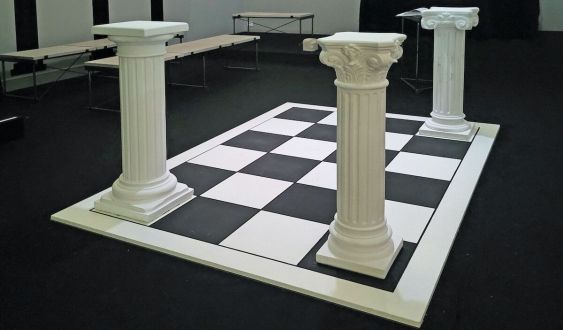
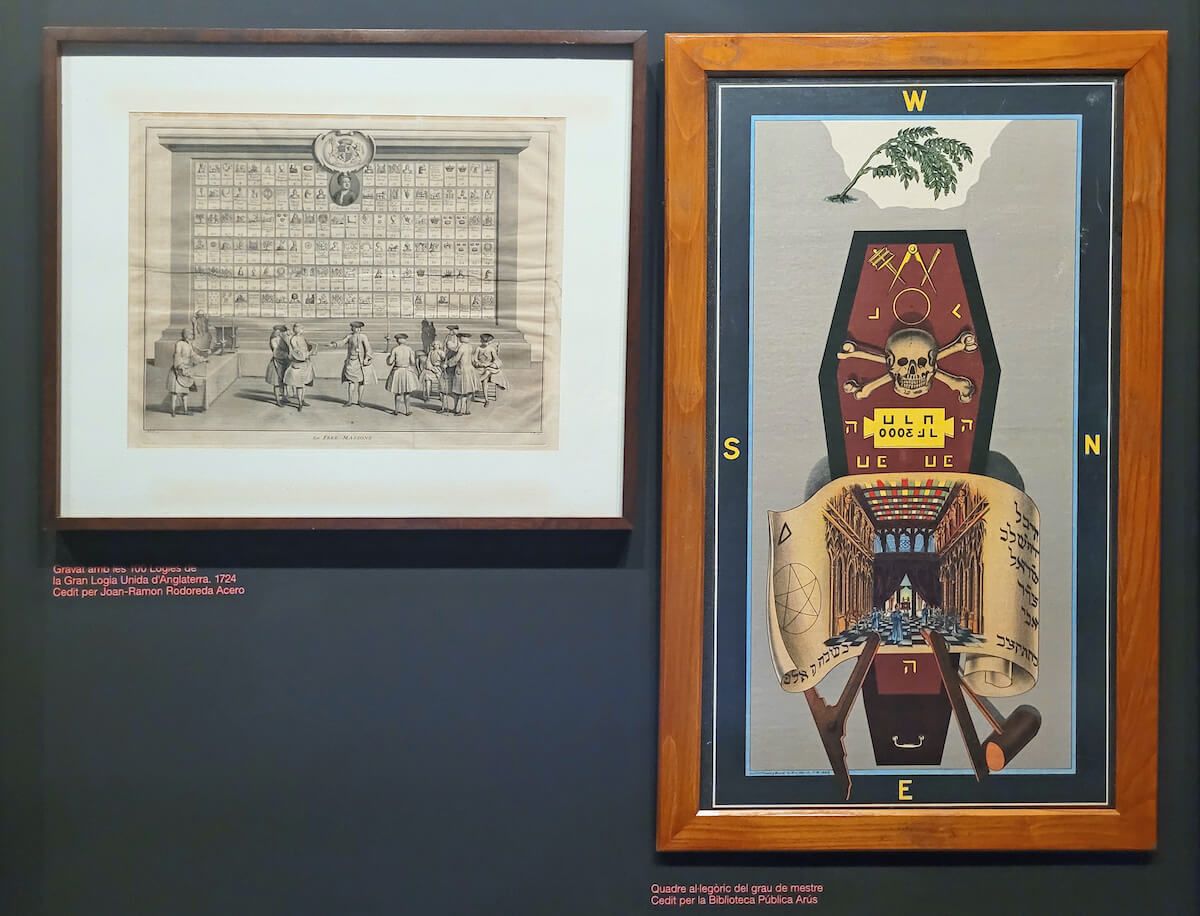
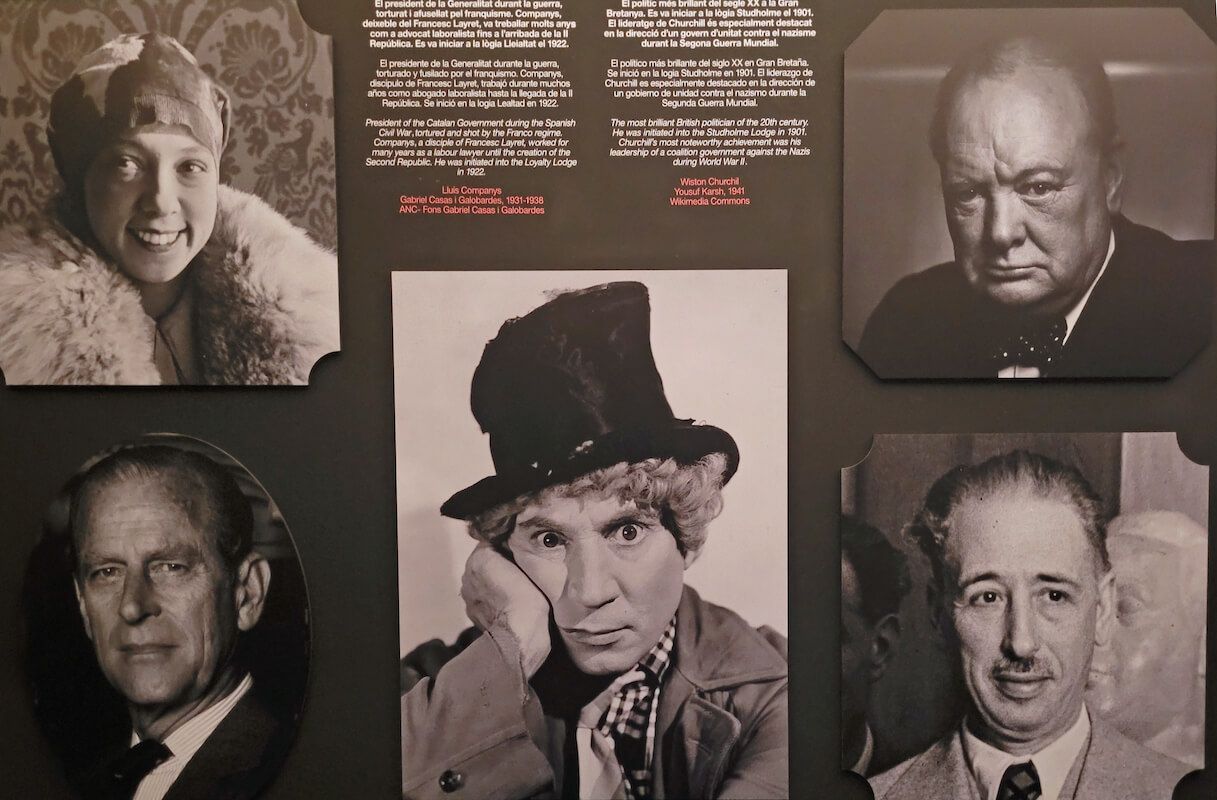
The best part of the exhibition is the recreation of a Masonic temple where one can follow, through a voice-over, the process of opening the works of a lodge. Few objects related to Freemasonry are exhibited, and the list of historical figures who have belonged to the secret society is the usual one: Montesquieu, Oscar Wilde, Churchill, Benjamin Franklin, Goethe, General Joan Prim, and President Lluís Companys, among others. However, the public can learn that the recently deceased husband of Queen Elizabeth II of England, the Duke of Edinburgh, was a Freemason until his death.
In many of humanity's great achievements, Freemasons have been involved. For example, it was a Catalan Freemason, Dr. Federico Duran, who invented the system to preserve blood in the midst of the Civil War and transport it to the front, which saved the lives of thousands of wounded soldiers and civilians. He had to flee to Manchester at the end of the conflict to avoid being arrested and retaliated against by the Franco regime.
The first football regulations were drafted in 1863 in the Masons' Tavern in London. Manchester City wears blue because originally the club was supported by a lodge, and that is the color of English Freemasonry. The original Coca Cola was invented by a Mason from Atlanta, and another Swiss Mason created Toblerone chocolate, which is not triangular by chance. Another Canadian Mason invented basketball, and one from New York created baseball, whose playing field resembles an intertwined compass and square, which is the most identifying symbol of the secret society.
Great rock names like Carl Perkins and Phil Collins have been Masons, as is the historic keyboardist of the group Yes, Rick Wakeman, very active today in his Chelsea lodge. And the considered best bassist in history, John Entwistle, of The Who, was also one. Even the Libro gordo de Petete was created by the Mason and Spanish cartoonist based in Argentina Manuel García Ferré. The real Charles Ingalls, the patriarch of Little House on the Prairie, his wife, and his daughter Laura, whose books inspired the historic television series, were also Masons.
And so we could go on. Continuous references to Freemasonry can be found in cinema, literature, comics, and cartoons, such as The Simpsons and The Flintstones. And if one knows where to find them, in Barcelona they abound: in the Barcelona Cathedral, in the old convent of Sant Agustí, in a hostel in Portaferrissa, in the building of an old cooperative in Barceloneta, and in the Arús Library, a reference research center of the secret society founded by a Barcelonian philanthropist who was the great promoter of Freemasonry in Catalonia in the 19th century. All of them have the merit of having survived the Francoist order to eliminate any Masonic symbol from public buildings and cemeteries, within the framework of the most furious repression that Freemasonry has suffered throughout its history.
Although the exhibition at Palau Robert is incomplete, it is worth visiting.
Add The New Barcelona Post as your preferred Google source for free
Stay informed with the latest news.
