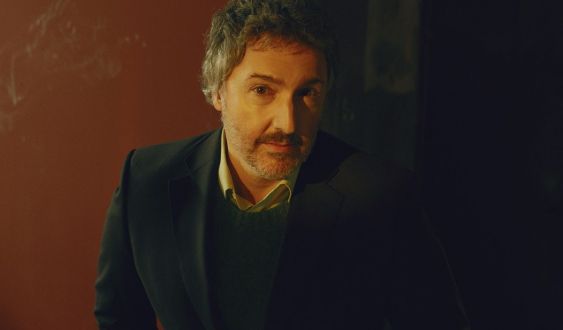
Carlos Zanón (Barcelona, 1966) has written a book that sounds like a song. Jim, Eileen, and Cowboy are the musicians who play a story about friendships and loves that come to an end. There is no illusion or nerves, there are certainties and disappointments. In Love Song (Salamandra, 2022), Zanón wanted the reader to have the feeling of being inside a song rather than being focused on following the plot. To achieve this, music plays constantly, accompanied by a summer tour of coastal campsites that the three protagonists embark on as a farewell.
In an interview with The New Barcelona Post, he states that his latest novel "speaks of the need to cut ties of affection to know who you are". In this breakup starring three protagonists on equal terms, there are hints of the plot starring writers Lord Byron and the Shelleys, as well as that of musicians Townes Van Zandt and the married couple Guy and Susanna Clark. "I was interested in that triangle that was never destroyed, that crumbles due to life, not for anything else," he maintains. The trio of Love Song is accompanied by a chauffeur who helps them escape Barcelona, Zanón's natural setting. They call him Polidori, and he becomes the practical and external voice, as well as a continuation with another name of Sandino from Taxi.
Music in Love Song is not only the theme but it is "the only territory in which the characters feel that their world makes sense; outside of that, they are incapable of even talking to each other." For the Barcelona-born author, music is also a fundamental axis in his creative process. "I started writing when I listened to the radio and waited for the announcer to translate the title of a song I liked that was in English. From the title, I imagined what the song had said and wrote. I must have been twelve or thirteen," he confesses. He still keeps those first texts, although he doesn't dare to read or throw them away.
From that guidance by what a song conveyed to write, Zanón has retained that a narration must also have rhythm. "I believe that what differentiates writing and drafting is musicality. You like a book page because of the words the author has chosen, the tone, the rhythm, how it sounds... Deep down, you don't care what someone explains to you; what you want is for that person to explain it to you, for someone specific to sing that song to you," he defends.
Despite this devotion to music, especially pop-rock but also soul, Zanón would not have liked to be a musician "when old," as happens to the protagonists of Love Song. "At the time, music is indeed fascinating, and so is being in music. But I think it's more pleasant to grow old as a writer or with any other profession than as a rock musician. It's quite ungrateful due to the fascination with youth," he reasons. That doesn't mean that when he was young, he didn't dabble in that world, but "without going beyond a super amateur level," like when he did theater. "Seriously, it's only been writing," he emphasizes. Despite not having wanted to delve deeper into the world of music, he has composed and written songs, some of them for Loquillo.
But the Barcelona author not only thinks about music, he also turns to movies. "I like to try to make writing imitate how our mind works, which goes from one thing to another. You're thinking something, you see something and you think of something else, a song crosses your mind... It's a bit like what happens in cinema, where you have many things talking to you at the same time: images, dialogues, and soundtrack. But you fit it all together," he explains. Thus, his books have to do the same, caring little about whether it's clear who is speaking or who is thinking, transmitting sensations. "I think it gives the book a point of something alive, which technically isn't perfect, but it does pulsate," he remarks.
Writing alone, without Internet
All this is accompanied by a process of accumulation and writing marathons. In Love Song, he has brought to light something that stayed with him many years ago, when he worked as a waiter in campsites and saw music groups pass by every night. "Sometimes, novels are things that stay inside for many years, until you find a way for them to take shape," he indicates.
"Sometimes, novels are things that stay inside for many years, until you find a way for them to take shape"To start, he needs to see something that demands to be written, something that impresses him, that is out of place. In his latest novel, it's a scene that goes completely unnoticed, when Jim and Eileen meet, with the piano played by an angry woman in the background: "I was in Buenos Aires and I went into a bar where this lady was, very ill-humored because they weren't giving her whiskey. I thought, there's something here." It doesn't matter if it's not decisive for the plot later, the important thing is to find something to work with.
Then there's when he starts writing "seriously," which forces him to isolate himself and not stop. He spends four or five days alone in a summer apartment, without internet, eating at odd hours and getting back pain. "You forget a bit about the outside world," he emphasizes. Thus, it takes him between six and eight months to have the first version, to which he adds another year and a half of corrections.
Paradigm shift
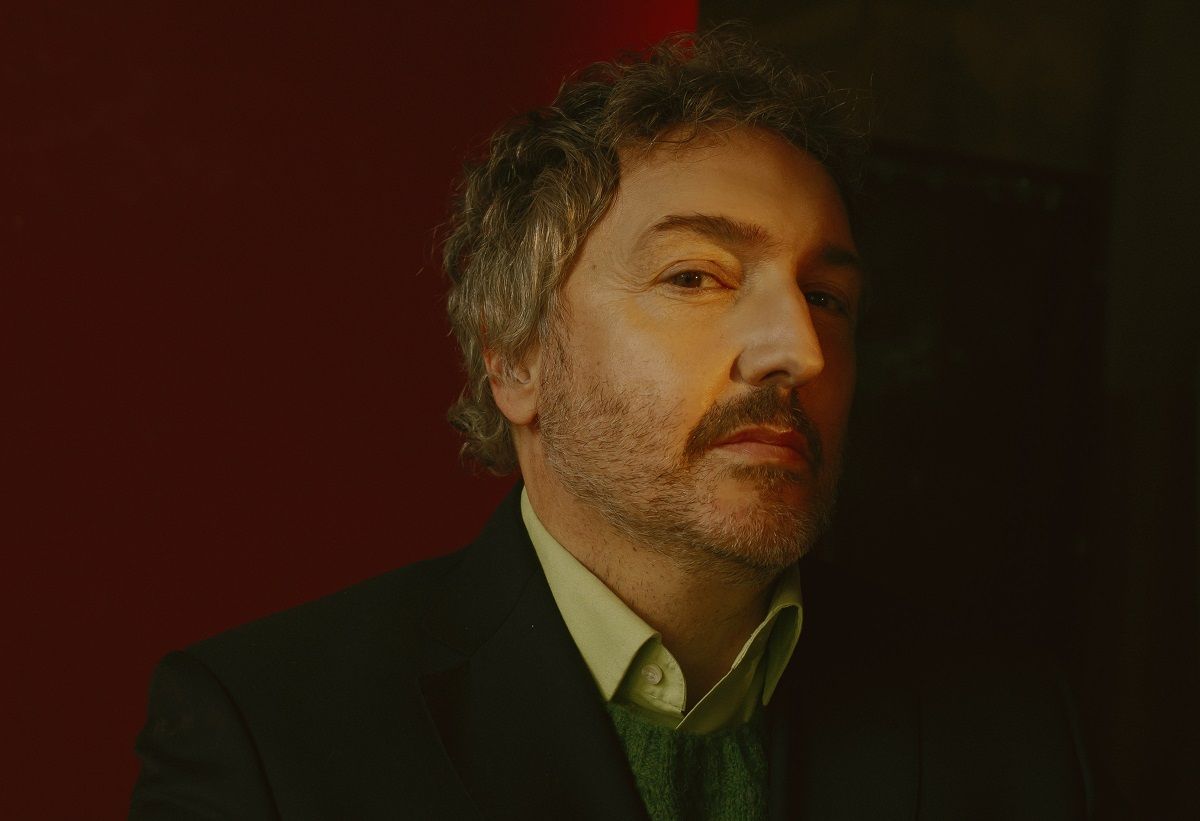
That musicality that the writer sought on the radio as a child led him to start his literary career with poetry. His first book, El sabor de tu boca borracha (The Taste of Your Drunken Mouth), arrived when he was only 22 years old. With more poems and song lyrics mixing, it took him twenty years to publish his first novel, Nadie ama a un hombre bueno (Nobody Loves a Good Man), although it was with the second, Tarde, mal y nunca (Late, Bad, and Never), when everything accelerated, until now.
Zanón, who rejects the label of crime novel author, "I've only done one novel with a detective and it wasn't mine," says that with Taxi he already began to change his literary project, which has been consolidated with Love Song. "In this one, a bit like its characters, I have broken with what I had done until now. It's a novel with a different light," he says. He still doesn't know where he will go next and, for now, he is not writing anything new.
Add The New Barcelona Post as your preferred Google source for free
Stay informed with the latest news.
