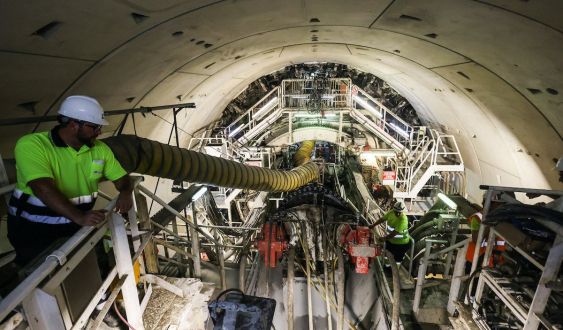
Although it's hard to believe, the Barcelona metro line 9 tunnel boring machine has returned to work. Almost 11 years have passed since it had to stop due to lack of resources and it has been very difficult to find the necessary funding to put an end to this wound in the middle of the city. As of today, the L9 Nord starts at Barcelona Airport and reaches Zona Universitària, where it ends next to the L10 Nord, which comes from the ZAL. Once the central gap is overcome, the L9 and L10 are reactivated in La Sagrera, one going to Santa Coloma de Gramenet (L9 Sud) and the other to Badalona (L10 Sud).
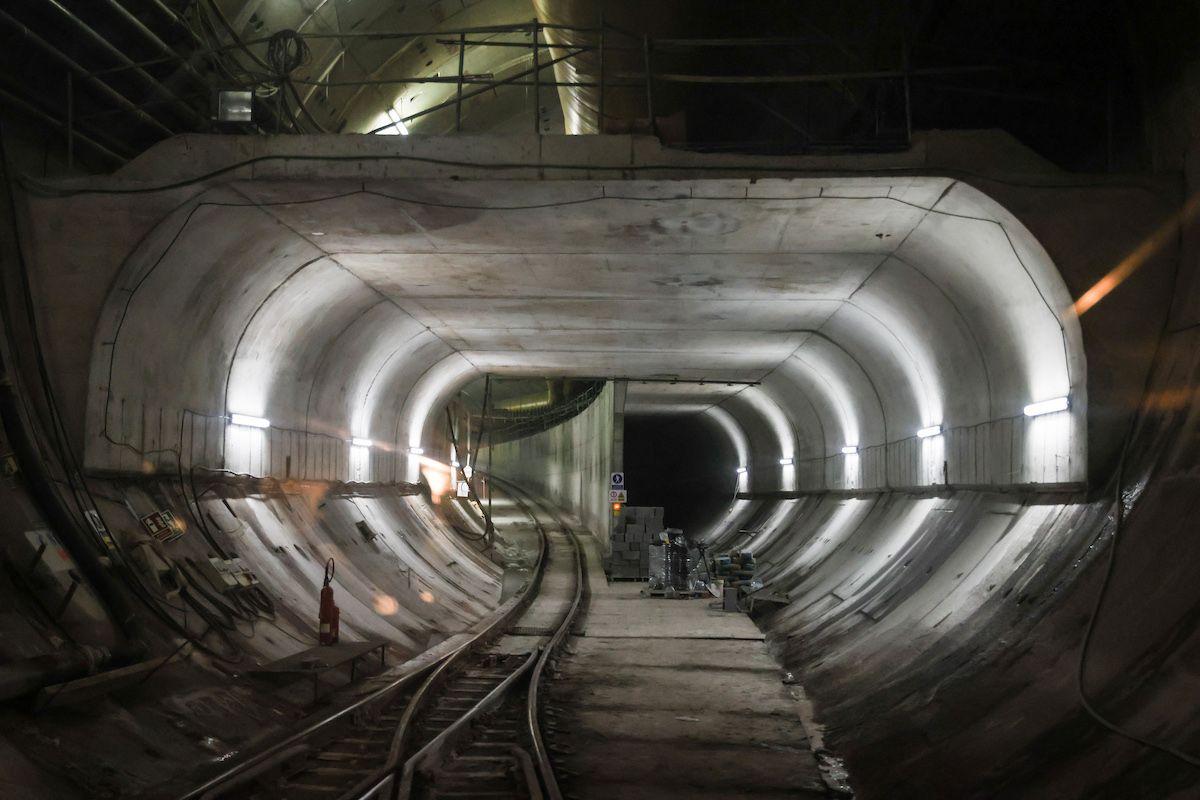
In that void that prevents connection between the cities of the metropolitan area, as well as within the capital itself, more than four kilometers of tunnel and a dozen pending stations remain to be drilled, actions that are expected to cost 926 million euros, financed entirely by the Generalitat. The total cost of both metro lines and the many delays will amount to almost 6,000 million euros. 7.5 million euros have been allocated to keeping the tunnel boring machine stopped for 11 years and preventing it from being lost.
More than a decade later, the tunnel boring machine, named Hospi, has abandoned its state of paralysis for a few weeks now and is gaining ground, advancing about seven meters a day ---200 meters a month--- in the Besòs direction. With a length of 100 meters and a diameter of 12 meters, it weighs more than 2,300 tons, which is equivalent to four Airbus 380s, the largest aircraft model in the world. Up to 250 operators have to be mobilized for the machine to make its way, many of them working 50 meters underground, and even more, and now experiencing a lot of heat.
For now, Hospi has already excavated about 100 meters and is located between the future Campus Nord and Manuel Girona stations. It has to reach Lesseps, passing through the Sarrià, Mandri, and Putxet stops. It is expected to reach Mandri during next summer and finish the journey, in Lesseps, in December 2024.
Once the remaining part of the tunnel has been built, there will still be pending the equipping of already finished sections. Specifically, between the Zona Universitària and Campus Nord stops, a part of the intermediate slab that divides the L9 stations is missing, which allows the metro to circulate on two parallel levels, one per direction. The intermediate slab also has to be built between the La Sagrera and Maragall stations, and in a section between Maragall and Guinardó Hospital Sant Pau.
Beyond the tunnel and the placement of the intermediate slab in some sections, a total of 15 stops must be executed to complete the line. Most of them are expected to enter service in phases starting in 2027. These are Camp Nou, Campus Nord, Manuel Girona, Sarrià, Mandri, Putxet, Lesseps, Sanllehy, Guinardó Hospital Sant Pau, Maragall and La Sagrera TAV, all of them in the central section. The Motors (L10) stop is also expected to start operating. For later and still without a calendar, other stations will remain to be tackled, such as Ciutat Aeroportuària and Eixample Nord (L9), and Polígon Pratenc (L10), all three located in El Prat de Llobregat.
26 years to finish the works
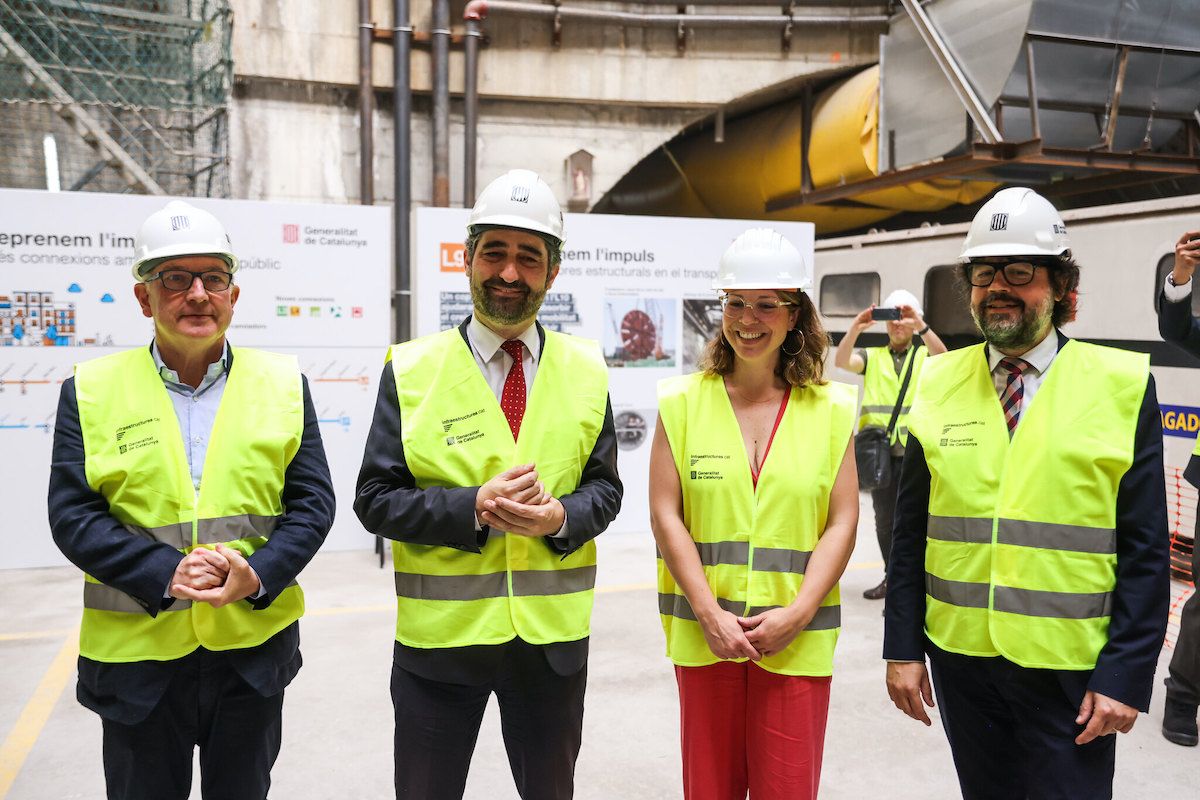
The Government has set the year 2029 as the deadline to finalize all planned actions in the current plan and open the line from end to end. "It is the most important civil work in Catalonia in the last 20 years," stated the vice president and minister of Digital Policies and Territory, Jordi Puigneró. He said this during a visit to the works, in the space where the future Camp Nou station will be located, where the shaft that will give access to the tunnel has already been made.
With works that began in 2003, it will have taken 26 years to complete them, provided there are no more surprises. "We are beginning to mend a historical debt of the Government with the city of Barcelona," defended the deputy mayor of Ecology, Urban Planning and Infrastructures, Janet Sanz, who warned that the council will remain alert to avoid any further delays.
"We are beginning to mend a historical debt of the Government with the city of Barcelona," defends deputy mayor Janet SanzSanz has remarked that the entry into operation of the L9 will allow avoiding 18,000 car displacements, improving the mobility of the entire city, especially in the mountain neighborhoods, and turning the new metro line into "the Ronda de Dalt of Barcelona's public transport." "It is fundamental," he insisted, refusing to raise "outdated" debates such as expanding roads or airports.
When L9 and L10 are ready, they will have a total length of 48 kilometers ---16 kilometers will be shared--- and will consist of 50 stations, 17 of which will be interchanges. The longest will be line 9, with 38 kilometers that will serve to connect El Prat de Llobregat, L'Hospitalet de Llobregat, Barcelona, and Santa Coloma de Gramenet. Both lines are expected to have an annual demand of 113 million passengers by 2028, increasing almost 400% the capacity it had in 2019, before the pandemic, with 23 million annual passengers. The central section is expected to generate 80% of the demand.
Add The New Barcelona Post as your preferred Google source for free
Stay informed with the latest news.
