We know the story, we know the end, we know the beginning. Therefore, we do not go to the Romea Theater to learn a surprising story, with unexpected twists or with a journey to unknown places. Pamplona, narrow portal of a house, courts, prison. The story is known and in any case it is the archives, the declarations, the judicial files that were not known in such detail. Jauría has had as involuntary scriptwriters the judicial secretaries and police reports, since each phrase recited is extracted from these official documents (however selectively and not exhaustively). So, if we already have politics well judicialized, in this case we have also managed to judicialize theater. We attend a show about versions of events. Official versions and personal versions. And all of them, real. And some, surely, more real than others. And therein lies its appeal.
Sold out tickets, sorry, full house. I attribute it to the high degree of social awareness in our days on these issues, and in no case to morbid curiosity, but I will keep a suspicion just in case. We find ourselves, despite any suspicion, with a good play that knows how to play hard no longer on the line between fiction and reality, because here there is not a crumb of fiction, but on the line between one narrative and another.
The narrative here is not constructed by a playwright with a lot of imagination, but rather they are confronted narratives in which the vision of the facts of those of the Manada participates with that of the victim, and again that of the victim (yes, in court she must relive and explain and try to explain herself), that of the judges, that of the prosecutors, that of the dissenting opinions and finally that of the public. Everyone will go home with dissenting opinions or with partial exemptions or with total mitigating circumstances and above all with a desired mirror effect to understand, after all, how we would have acted in these circumstances and how something like this can happen. And if the law is well made, and if the judges were right in that case, and even if she implied too many things in the conversation at the pub. Yes, do not deny it: once we got home, we discussed everything without taboos or limitations. And we also judged her, even if it was to acquit her without a doubt, Your Honor.
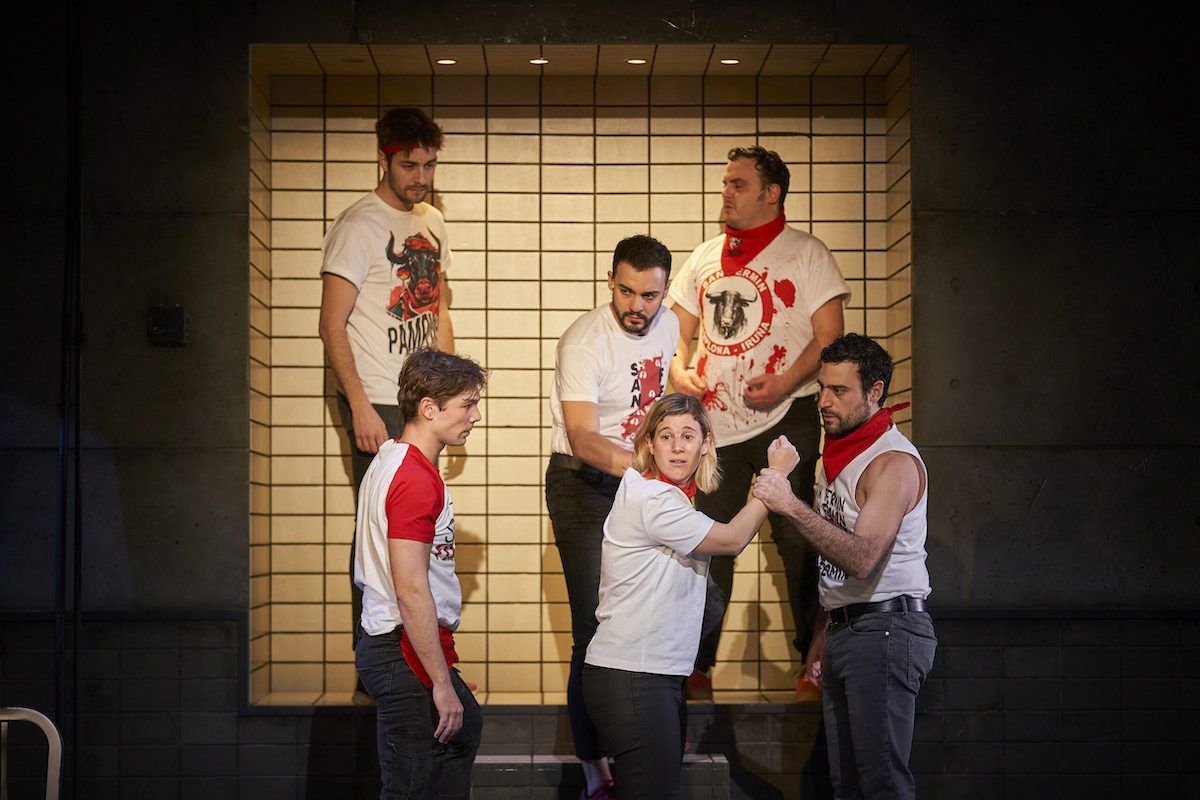
Jauría has spent few weeks in Barcelona because it is in a hurry to tour, and it is entirely understandable: it hits the theme and it hits the treatmentThe key to success in this case is not the story, which offers few surprises, but the treatment and interpretation:the treatment, because it is of great symbolic power that the aggressors themselves later dress in judge's robes, showing the claustrophobic feeling of permanent judgment that women suffer in our society. Inside and outside the courts. It is also accurate, in the opposite sense, that the actress who plays the victim (an impeccable Ángela Cervantes) later wears the prosecutor's robe with all the corresponding cuffs: the woman, then, accuses. It seemed to me an amazing and masterful resource, which almost says it all about the play.
They, let's not forget, are also very fine: you end up empathizing (both men and women can do it) with that dirty, vulgar, carefree and irresponsible tone that is often maintained among groups of men and that is watered with an essential refrain of Andalusian banter. Until, of course, the party ends. And it ends in part because they are short, because they are very short, so short that they even explain to the police that they are calm because everything is recorded on video.
The stage, a mixture of a prison with bars and a three-meter corner in a doorway: their prison and her initial (and endless) prison. Jauría has spent few weeks in Barcelona because it is in a hurry to tour, and it is entirely understandable: it gets the theme right and it gets the treatment right, and it creates a very direct empathy with both the characters you can hate and those you can love. I dare say that you almost end up understanding (not justifying) all of them. You understand them, you know them, you know what goes through their heads or what doesn't go through their heads. You take the photograph, you make the painting, you make the composition. Afterwards, as we said, the story that each one takes home is their own business. If it weren't for the problem that it's everyone's business.
Add The New Barcelona Post as your preferred Google source for free
Stay informed with the latest news.