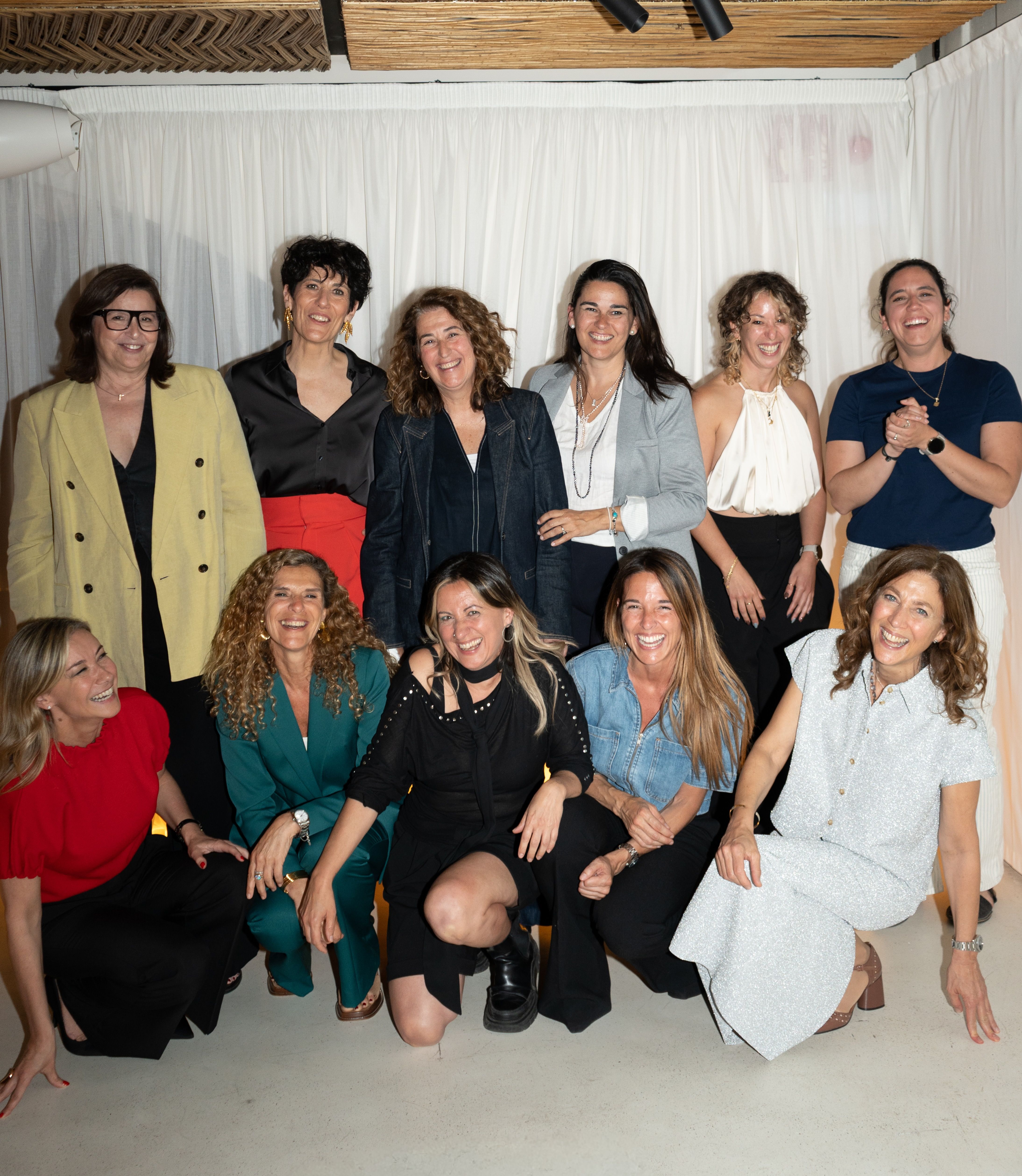
"Talent has no gender. And opportunities shouldn't either." With this phrase, the presentation of (in)visibles at Juno House kicked off this Wednesday night. And perhaps it was the best way to start an initiative that precisely wants to question one of the great paradoxes of our time: the invisibility of female talent in spaces of power. Because visibility, unlike other resources, is not exhausted when shared. It does not divide. It multiplies. When one woman yields her spotlight to another, she does not disappear: she expands the map. And that is exactly what happened this Wednesday night inside Juno House, in a chain of recognition, admiration, and symbolic relay that turned the microphone into a kind of collective witness of female talent.
"New brand, new narrative. Juno evolves," claimed its CEO Beatriz de Vicente during an event that also served to announce the club's new stage, which aims to stop being just a private community to become a platform for cultural and economic influence. "Juno is born to transform, and that means you have to transform yourself in that process." This new stage —she explained to The New Barcelona Post a few hours before the launch— comes with "a much more open message: open to the community, to men, to the ecosystem, to connect and transform into a network." Because, ultimately, "the challenge we have ahead of us is for everyone, not just Juno."
In this context, (in)visibles is born, an initiative promoted jointly with the business sector to "identify, make visible, and connect female talent" that, despite having a real impact on the economy, science, culture, or business, still does not occupy the media and public space it deserves. "There is no lack of talent. There is a lack of access. There is a lack of opportunities. There is a lack of women in leadership and decision-making positions," warned De Vicente, recalling that, according to the Women in Business 2026 report, only 18.5% of CEO positions in Spain are held by women.
But the great virtue of the evening is that the metaphor of "ceding visibility" did not remain an abstract concept. It became a real dynamic. Ten women successively presented other women. From a more visible to a less visible one. And vice versa. Like someone passing a ball. Or opening a door. The interventions, far from cold and protocolary networking, were full of affection, emotion, and sincere recognition.
The gesture of passing the microphone
"Today we will do this exercise of seeing women who have these spaces —and they are few— and how these women transfer that visibility to other equally leading profiles that perhaps we know less," De Vicente advanced. For this reason, she insisted, "visibility understood within this action is not a matter of ego, it is a responsibility." And even of generosity. Because "when a woman takes this step, she opens doors for many other women."
The first to do so was Beatriz de Vicente herself, who handed the microphone to the Minister of Inclusion, Social Security and Migration of Spain Elma Saiz. "Juno is already part of a tradition," the minister ironized, on her second recent visit to the house.
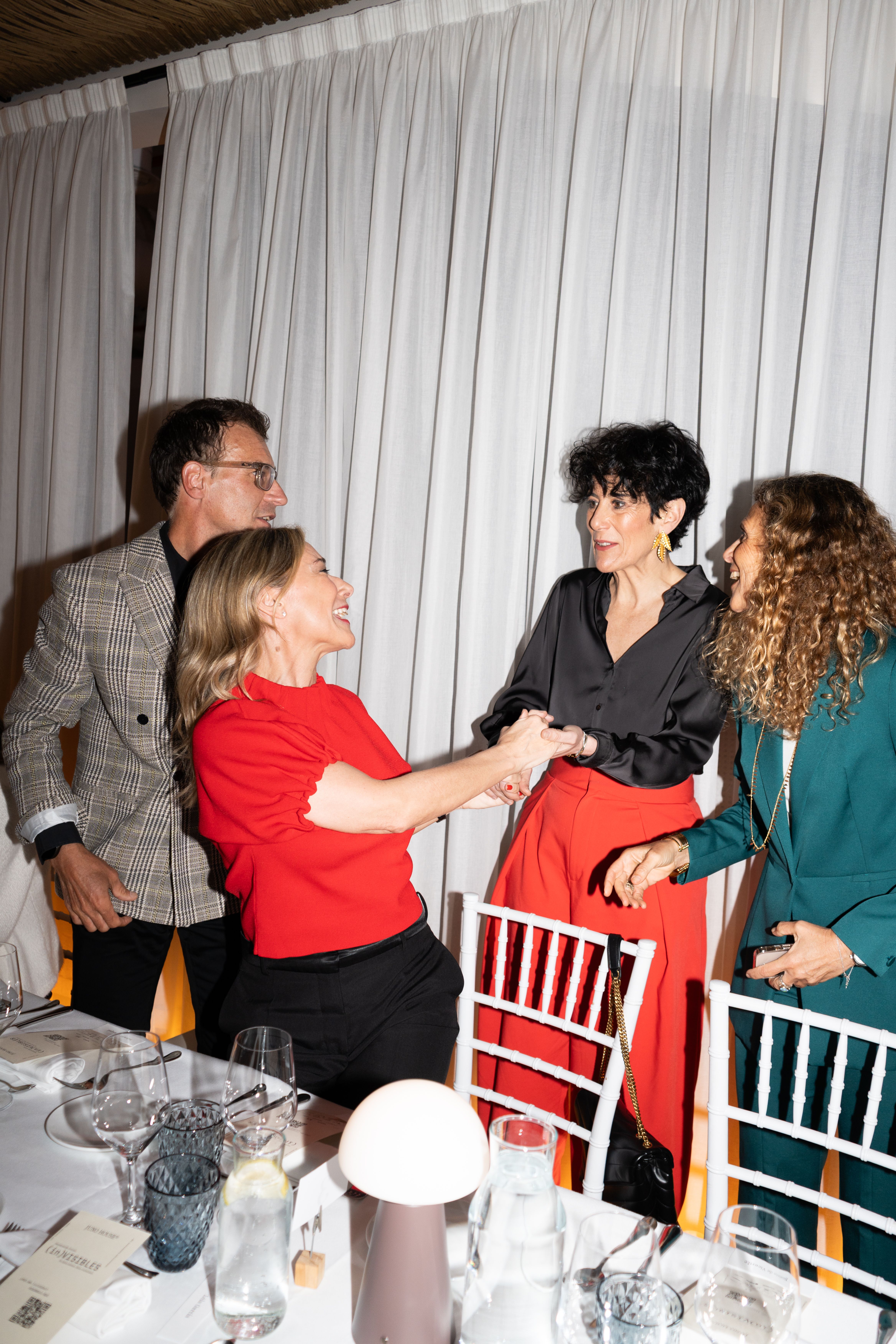
And Saiz shared her visibility with Anna Gener, of whom she highlighted the ability to "have built a solid and very respected dialogue in a traditionally masculine environment," as well as her skill in uniting business, culture, and humanism: "Without humanism, it is impossible to have leadership."
In her turn, Gener passed the baton to Carla Clarà, a professional who, according to her, "makes things happen, and happen well" within one of the most masculinized environments: professional football. "Approachable, professional and capable of moving naturally," Anna highlighted, in spaces where "codes are tough and environments complex," she summarized.
Clarà introduced —if she needs an introduction— the journalist and presenter of 3Cat Helena Garcia Melero, claiming her "credibility, empathy and kindness" that crosses the screen. "We have grown with you," she told her, recalling the journalist's transversal impact on different generations.
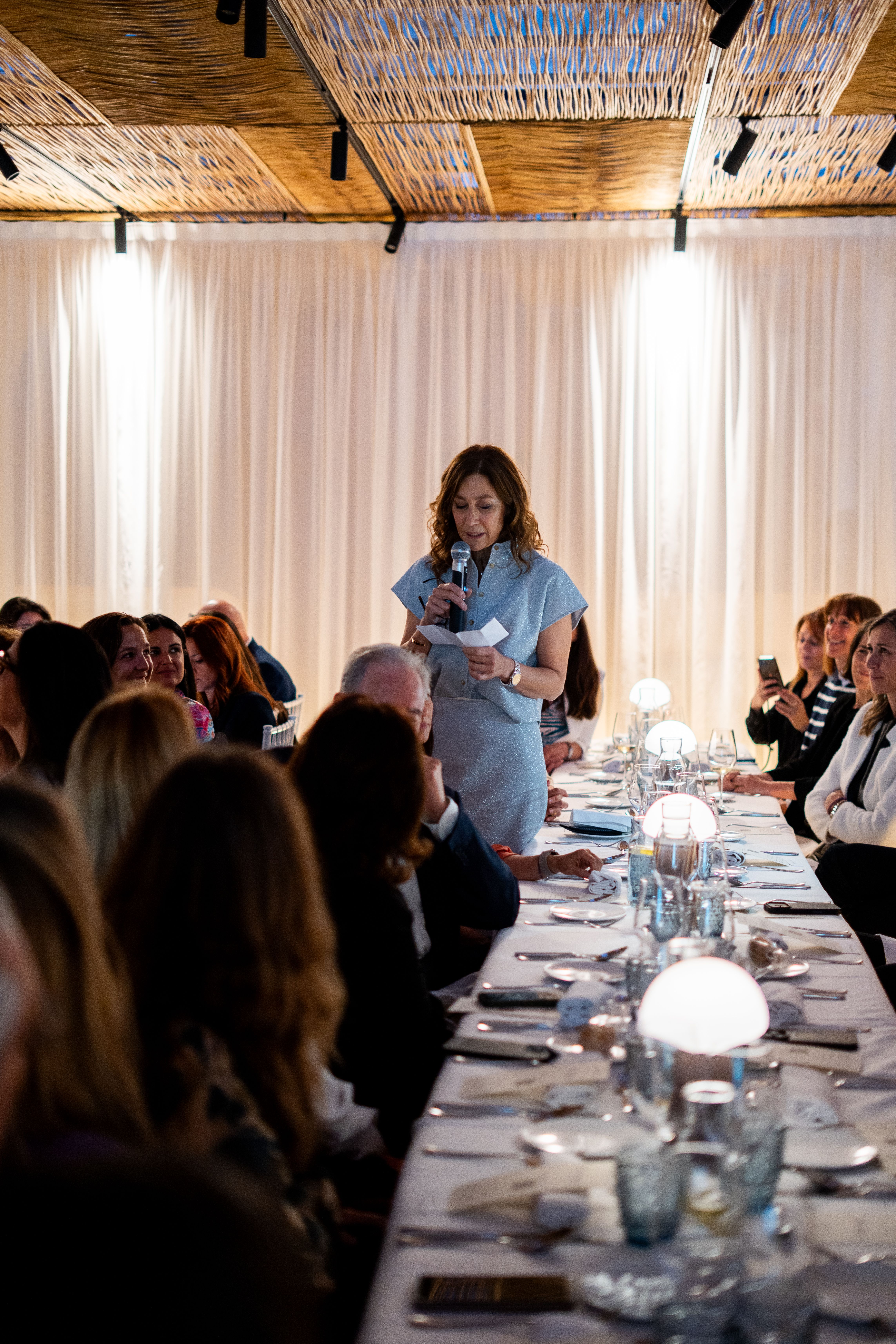
And Garcia Melero drew the spotlight on the bioscientist Patricia Ayma, whom she defined as a "bacteria trainer." Ayma has developed a biodegradable plastic substitute from beer yeast waste: "A plastic that, literally, we could eat tonight for dinner."
Afterwards, Ayma introduced Elvira Bisbe, a doctor, researcher and university professor, specialist in anesthesiology at Hospital del Mar and the first woman to preside over the Col·legi de Metges de Barcelona. "One of the most recognized voices in clinical innovation and patient safety," she remarked.
And Bisbe shared visibility with Mar Alarcón, co-founder of Moodin Policy, "one of the most recognized digital entrepreneurs in the ecosystem," highlighting her commitment to sustainability, future cities, and innovation with social impact.
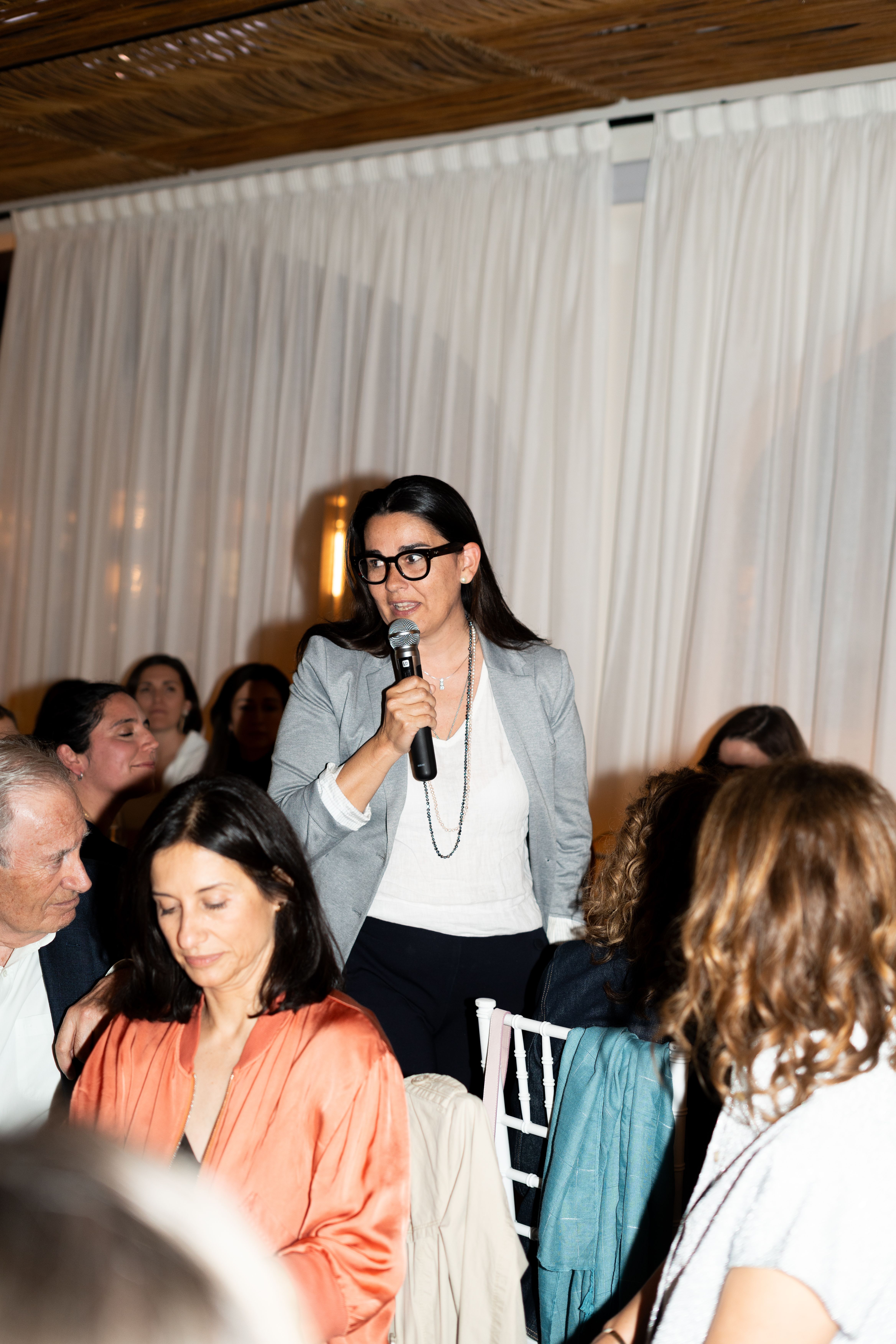
Alarcón ceded the spotlight to the mayor of Viladecans Olga Morales Segura, whom she defined as a "public servant by vocation" and accompanied this definition with an anecdote that exemplifies it well: "while other children rode bicycles, she, at 8 years old, liked to watch the State of the Nation debate with her grandfather."
Morales introduced Astrid Altadill, entrepreneur and consultant specialized in biohacking, habits, and physical and mental performance, who in just five years has turned her agency into a millionaire company and has entered the Forbes list of the 100 most influential creatives.
And finally, Altadill made visible casting director Reichel Delgado, a woman who —she said— "has been giving visibility to others for twenty years." Responsible for choosing the faces that occupy the media spotlight, Delgado closed the chain with humor: "We started with a minister and ended with the casting director," she said amidst the audience's laughter.
From individual focus to the network
Beyond the emotionality of the event, (in)visibles is born with a structural ambition. The project starts from a clear idea: the problem is not the lack of female talent, but the lack of access to the spaces where influence is built.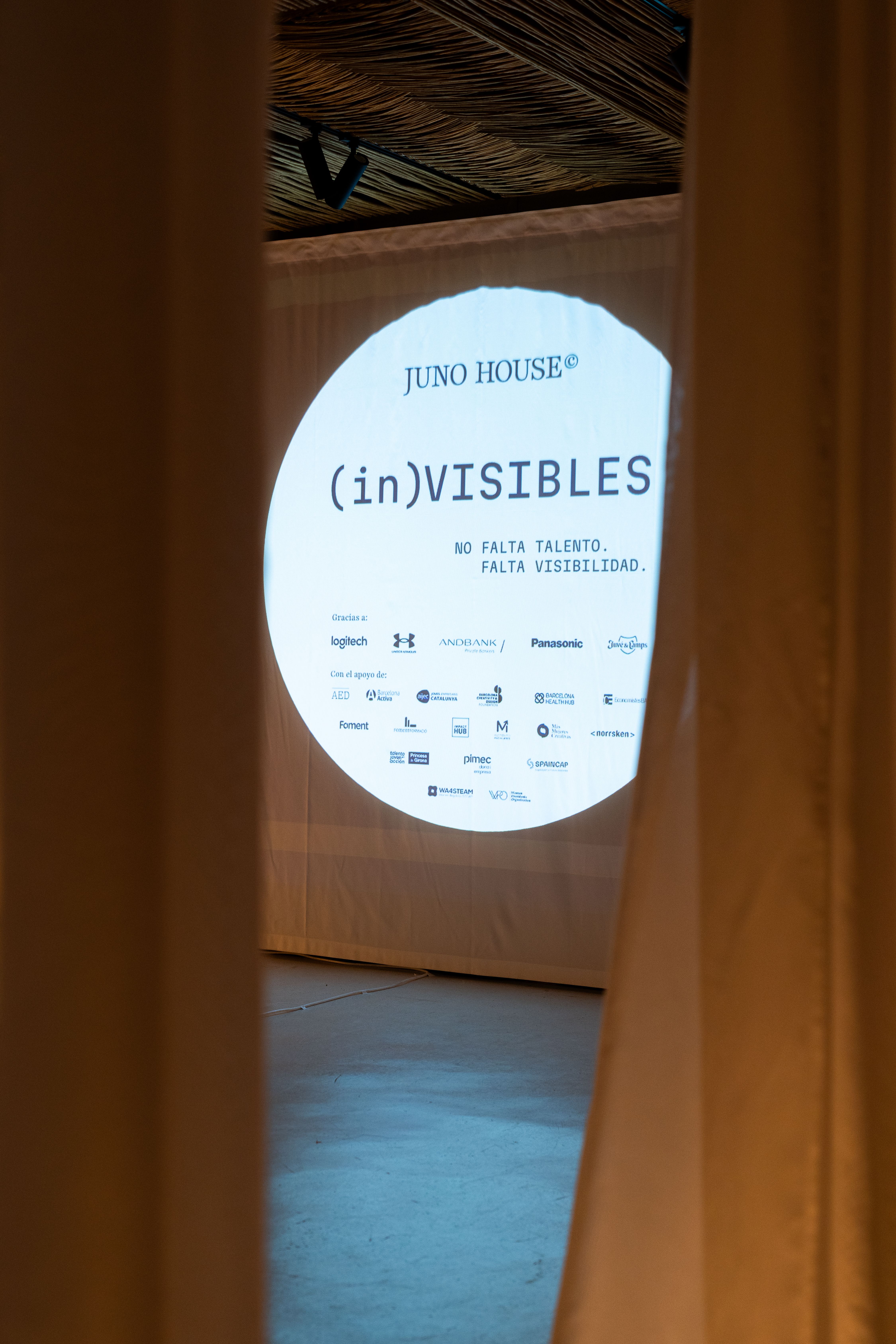
"When talent becomes visible, change accelerates," its manifesto defends. And for this reason, the platform wants to act not only on representation, but on real connections. According to Juno House, the program will identify women with long professional careers —a minimum of 20 years, or seven in the case of entrepreneurs— who have held positions of responsibility but do not have a recurring media profile, and an advisory committee will validate the profiles to ensure rigor and diversity.
Thus, the initiative will extend throughout the year with monthly dinners —the Invisible Dinners— that will bring together profiles from different sectors to generate connections difficult to produce in traditional circuits and thus connect profiles with public projection with others less visible.
"The project will culminate at the end of the year with a great professional speed dating open to the entire community"
Additionally, Juno will promote activations with collaborating companies and organizations to showcase female talent in diverse fields. "We will not talk about 'women who do things,' but about the things women do," De Vicente summarized. "We will prioritize talent and not gender." The project will culminate at the end of the year with a large professional speed dating event open to the entire community. "We want to open the doors of the house so that anyone who wants to meet talent—men and women—can come here, spend the day, and generate connections," she explained.
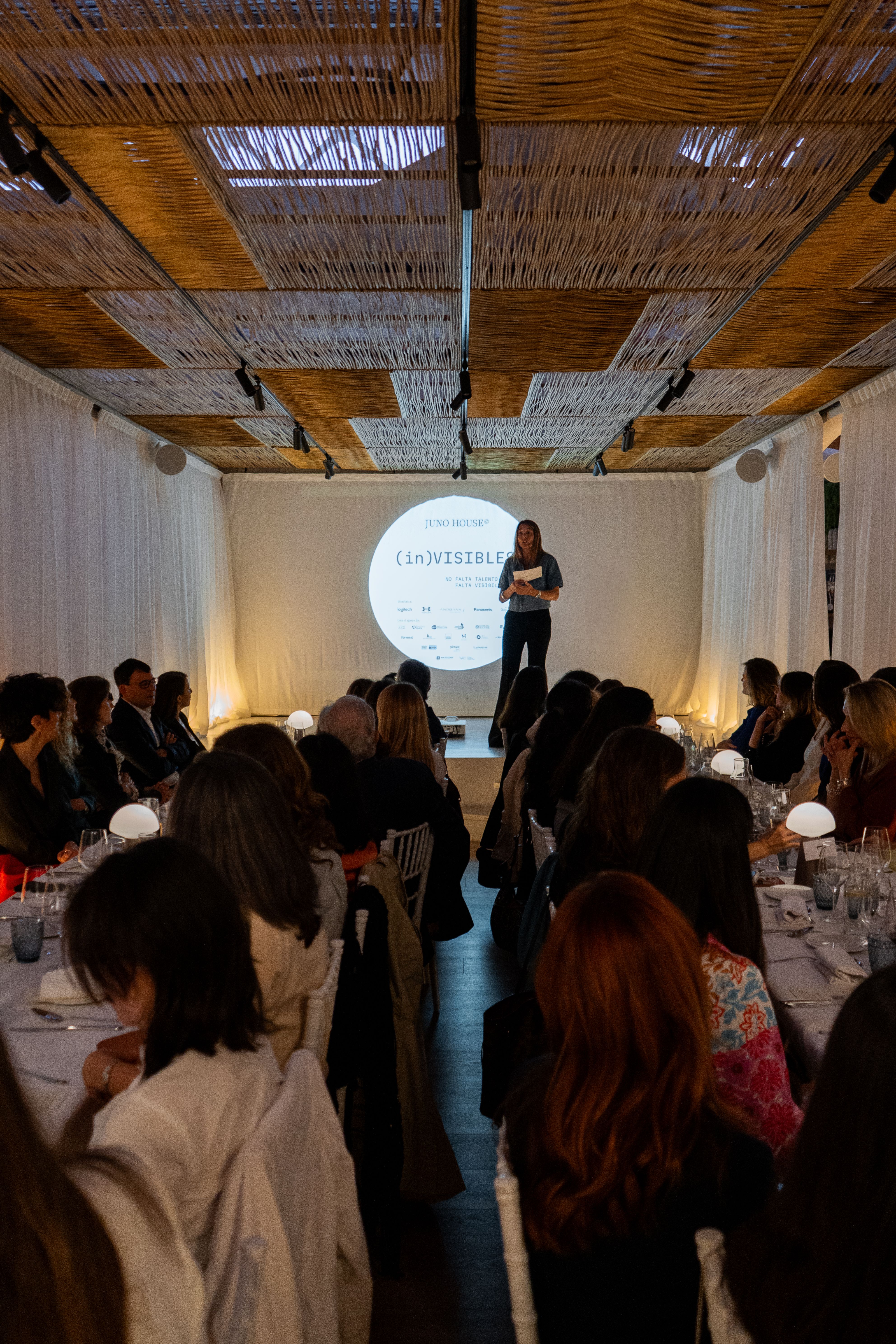
The project also has the support of Under Armour, Logitech, and Andbank, as well as the collaboration of key organizations in the business, entrepreneurial, and institutional ecosystem such as AED, AIJEC, PIMEC, SpainCap, WA4STEAM, WPO, Barcelona Health Hub, the Col·legi d'Economistes de Catalunya, Foment del Treball, Foment Formació, the Fundació Princesa de Girona, Impact Hub, Norrsken, Instituto Más Mujeres, Más Mujeres Creativas, and Lidera. A network of complicities that reinforces the desire to turn (in)visibles into more than a conversation: into an infrastructure of connections, opportunities, and shared influence.
Perhaps the most interesting thing about the night was not who had the microphone, but the gesture of passing it. At a time when visibility often functions as a space for competition, (in)visibles proposes exactly the opposite: to understand the spotlight as a collective tool, to be visible so that many others can also be. A simple idea that began to take shape this Wednesday with (in)visibles.
Add The New Barcelona Post as your preferred Google source for free
Stay informed with the latest news.