[dropcap letter="A"]
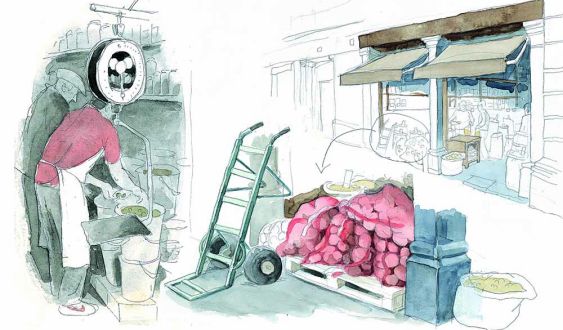
s inhabitants of large cities increasingly opt for consumption through networks, small businesses are disappearing. Every time a small business closes, not only does a place to buy and stock up disappear, but also a space for meeting, dialogue, and sharing emotions for its regular users who had turned it into an extension of their homes. As people's life expectancy is rising above 82 years, one of the few public spaces where older people are treated as citizens and protagonists is in the small businesses that have managed to take root in the neighborhood. There is no greater pleasure for the ears than to hear a wise reflection on life in an improvised chat between the shopkeeper and the neighbor; reflections on that life of joys and pain that claim the surface to reach the depth. In small businesses, one can still physically and mentally find the counter, marking that border that separates the seller from the buyer, defining a space of respect and attention.
There was a time, vestiges of which still remain, when upon entering a store, one could distinguish the seller because they knew all the details of what they were selling, knew they were at the service of the client and clientele, and equally respected those who bought as well as those who greeted them in passing.
The longing for a technological world is moving us away from personal attention that transfers values of civility in every purchaseThe gradual unawareness of citizens about the value of small businesses in our country is as serious as the lack of sensitivity, on the part of some, to the consequences of climate change. Before, the relevance of something was ignored, but its importance was appreciated when it was lost; now, not even when it is lost, is one aware of its importance. Drugstores, greengrocers, bookstores, delicatessens, tailor shops, shoe stores, or neighborhood bakeries are increasingly exposed, not only to the competition from large commercial establishments and the inability to adapt in time to new technologies, but also to the gradual loss of the cultural value that small businesses represent by giving human scale to public space.
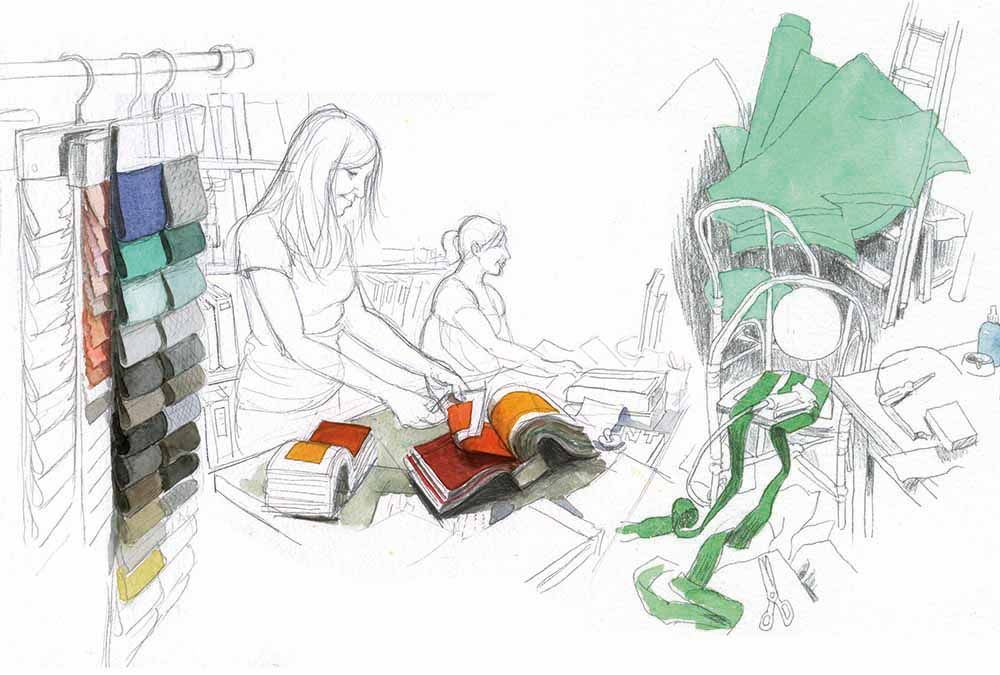
The longing for a technological world is distancing us from the personal attention that transfers values of civility in every purchase. Knowing that many stores on Rambla de Catalunya and Passeig de Gràcia in Barcelona already sell almost 30% of their product via the internet and that many of the big clothing brands have accepted that their future is on the web, maintaining the stores as simple advertising billboards, should make us reflect on the expansion of the use of the web without incorporating the human factor. To ignore this human factor, to dismiss the small scale and direct contact with the customer destroys bonds and affections that the web may try to simulate, but not replace.
Santiago Rusiñol in L'auca del senyor Esteve offers an accurate reflection around what it means a "taulell that will be lost in the hands of progress." The economy of the taulell is the economy of direct dealings, of kindness, of attention and correct service; to understand that when someone enters the store it is not always to buy but that, many times, it is to continue feeling that one is part of a community.
Add The New Barcelona Post as your preferred Google source for free
Stay informed with the latest news.