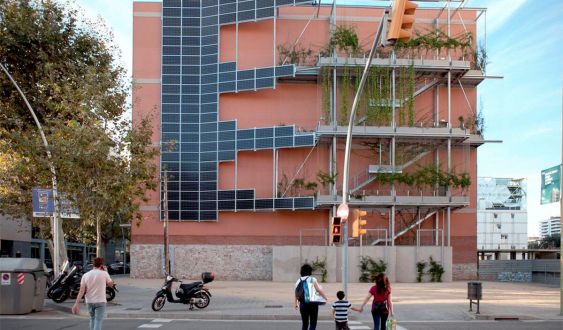
Today we are going to break a cliché: it is now possible to start the house from the roof and it can even be a safer form of construction. This is one of the conclusions of the book presented in Barcelona Buildings of the new energy paradigm. Evolution and perspectives, whose author is Juanjo Catalán and which has been published by the cable multinational Prysmian Group and Schneider Electric, a European group specialized in digital solutions and automation for energy efficiency and sustainability.
The work analyzes the profound changes that the building sector will experience as a consequence of the application of new technologies and measures aimed at fighting climate change. From there, it anticipates what the main impacts will be in this sector, so important for our country's economy, from construction methods to the generation of new professions.
One of these impacts will be the industrialization of building. This means that a new way of building will be imposed that will allow greater optimization of a work by working on different parts of the building in parallel. Thus, at the same time, the foundations can be built and the rest of the parts of the property, including the roof, can be built in a factory. You could even start with the roof and leave the foundations for last.
This new system will offer many advantages. The most obvious is the saving of construction time, between 30% and 50%. In addition, all details can be controlled in the factory, which will result in higher quality of the building and an increase in the sustainability of the entire process by allowing energy optimization and concentrating materials, many of them reusable, at the same point. And, of course, there will be an improvement in safety, by not having to work at height, which would reduce accidents by 55%, according to the Ministry of Labor.
[subscribe_newsletter_esp]The book starts, among others, from the premise that buildings are large energy consumers. In Spain, between 25% and 35% of total consumption, and represents up to 12% of greenhouse gas emissions. Therefore, any strategy to reduce them involves a thorough reconversion of the building sector, from construction to its residential, commercial or industrial use.
According to UN forecasts, 70% of the world's population will live in cities by 2050, with 15% of them in megacities of more than 10 million inhabitants. In Spain, 40% will live in 15 cities of more than 300,000 inhabitants by 2030, and a quarter will do so in the metropolitan areas of Madrid and Barcelona. Therefore, cities will be key to combating climate change, and with them, their buildings.
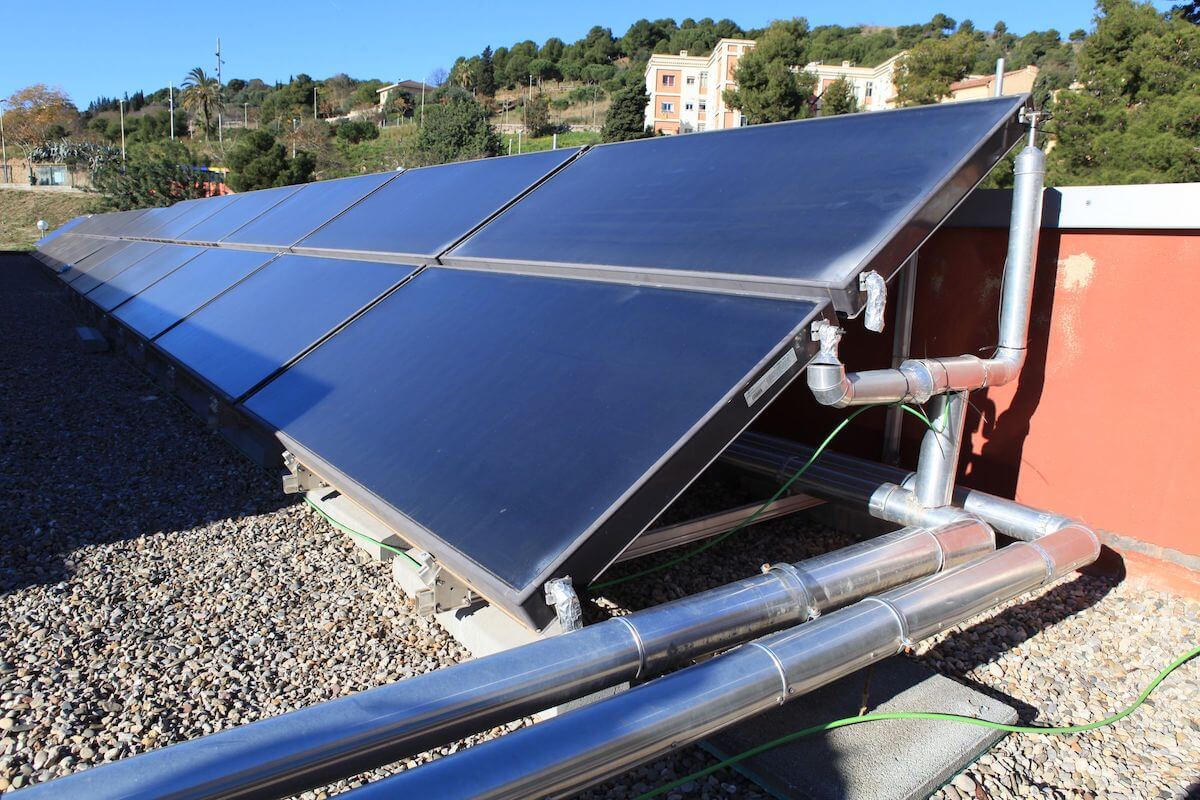
To decarbonize this sector, it is necessary to move towards 4.0 buildings, that is, intelligent, digital, and hyperconnected. The goal is called nZEB (nearly Zero Energy Building). These are buildings with a high level of energy efficiency and very low consumption that can be covered by renewable sources from the building itself or its immediate surroundings. It will even be the case that many properties will also become energy generators whose surplus will serve, for example, to charge our electric vehicle in the parking lot or supply it to third parties. It will be the collaborative energy economy, and there is even talk of virtual power plants.
The Internet of Things and Big Data, which some call the oil of the 21st century, will fully enter into the construction and management of modern buildings. According to a report by the Swedish consulting firm Berg Insight, it is estimated that by 2022 there will be some 483 million connected devices worldwide for building automation.
Nearly Zero Energy Buildings are buildings with a high level of energy efficiency and very low consumption that can be covered by renewable sources from the building itself or its immediate surroundings.One of the most interesting impacts that new construction will have will be on employment. New professions are going to be created aimed at the technical management of buildings, as well as new specialties in construction processes. This will in many cases involve professional retraining and the emergence of new training programs.
In short, we are already on the verge of a revolution that will undoubtedly change our way of life. We will also have to erase that proverb that says that starting a house from the roof is a bad way to start something. We will have to find another simile.
Add The New Barcelona Post as your preferred Google source for free
Stay informed with the latest news.
