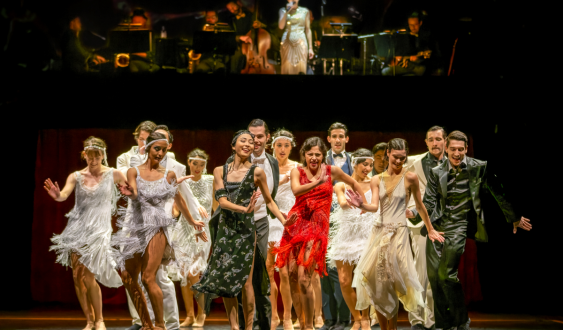
The adaptation of The Great Gatsby in dance format arrives at Teatre Victòria, within the framework of the "Victòria xDance" cycle. Enrique Gasa Valga is the choreographer and director of this emblematic piece that has opted to reinterpret this classic with songs that move from Duke Ellington to Freddie Mercury in an organic and natural way.
The beginning of The Great Gatsby was under the pen of F. Scott Fitzgerald
But, first, we must travel a century back in time. In 1925, F. Scott Fitzgerald portrayed the "roaring twenties" like no one else in his novel The Great Gatsby. Apparently it was a love story but, deep down, its story analyzed a society obsessed with easy money, prohibition, wild parties and, above all, pure appearance.
The book puts us in the shoes of Nick Carraway, a normal guy who arrives in Long Island and is amazed by his neighbor, Jay Gatsby. Gatsby is a mysterious millionaire who organizes the wildest and most luxurious parties in New York. The reason? To get Daisy, his youthful love and now married to a rich man named Tom, back into his arms.
What begins as a game of seduction and gushing champagne ends with betrayals, class clashes and tragedies that culminate in blood and a crime that is already mythical in the history of literature. Fitzgerald made it clear to us that the "American dream" was a very brilliant lie.
Enrique Gasa Valga, the choreographer behind the adaptation at the Victòria
Now, we can enjoy Fitzgerald's story in a totally unprecedented way: under the language of dance. And the person in charge of carrying out such a feat has been Enrique Gasa Valga, a renowned Catalan choreographer born in Esparreguera who, currently, is one of the figures with the most weight and international projection.
Gasa Valga trained conscientiously: he went through the María de Ávila Dance School in Zaragoza and then got a scholarship for the Cuban National Ballet School, even dancing in the island's national company. But the great leap in his career was made in Austria. For more than fourteen years he has been the director of the Innsbruck Opera Ballet (the TanzCompany of the Tyrolean State Theater), where he has signed more than fifty productions that mix dance, opera and musical, such as Jesus Christ Superstar or Madama Butterfly.
Last season, he already premiered his proposal of Frida – Passion for Life in our city at the Teatre Coliseum, and now, settled with his own independent company and with residence at the Deutsches Theater in Munich, he returns home to close the season in style.

The Great Gatsby at the Victòria is jazz and movement without ties
How is Fitzgerald's universe translated to a stage where no one speaks? That is the magic of this version, titled The Great Gatsby – The Show. Gasa Valga, along with Birgit Edelbauer-Heiss in the libretto, has chosen to make a different adaptation of the book: on stage, characters are not seen reciting texts; desire, greed, and frustration are seen through the choreographies of the 23 dancers on stage. The proposal transforms the literary drama into a visual and musical experience.
One of the secrets to the success of this production is the live music: a top-level jazz and swing band is located at the top of the stage, in its own set. This means that the musicians also play a fundamental role in the dramaturgy, interacting with the dancers to the rhythm of the music and the emotion of the plot.
It is a spectacular work, especially musically, where the singer and the principal dancer make the performance shine on all sides.
Luxury, excess, and the hidden face of the curtain
The staging of The Great Gatsby - The Show is impressive. The show brilliantly presents party scenes, with the sparkle and luxury typical of 1920s dance and jazz clubs. Especially the first 20 or 25 minutes immerse us fully in that atmosphere: there is swing music, very lively dances, and an energy typical of excess, seduction, champagne, and that unrestrained luxury in abundance. It is clear that for the choreographer himself, entering the Teatre Victòria is a major event for the summer, as he told us in the interview we were able to do with him, moments before the premiere: "This is a party, it has to be a party, and we are going to have a good time."
But the staging also has another side at a scenic level, it is a great success. When the most intimate, romantic, or dispute moments between the characters arrive, the opulence stops dead: the curtain falls, the lights change and those more private moments are created. With the fall of the curtain, the necessary intimacy is achieved to delve into the conflict of the characters: this resource shows us what is behind all the luxury, what is hidden behind the scenes. In that space is where the most emotional and poetic moments of the work are witnessed, such as the dance that accompanies the song Ne me quitte pas.
In this song there is a combination of voices that works perfectly: Locke Venturato (the artist who plays Gatsby) delights us with his voice full of power and emotion that merges with that of Greta Marcolongo, who sings in French. The two achieve a very powerful fusion with an intensity that reaches you straight to the chest. It is the perfect way to capture the betrayal and emptiness of the novel through dance, something that the choreographic director blindly trusts his cast with: "Live music already transports you to every feeling, to the party, to melancholy, to tragedy... My people are very good and transporting emotions to the public is their quality."
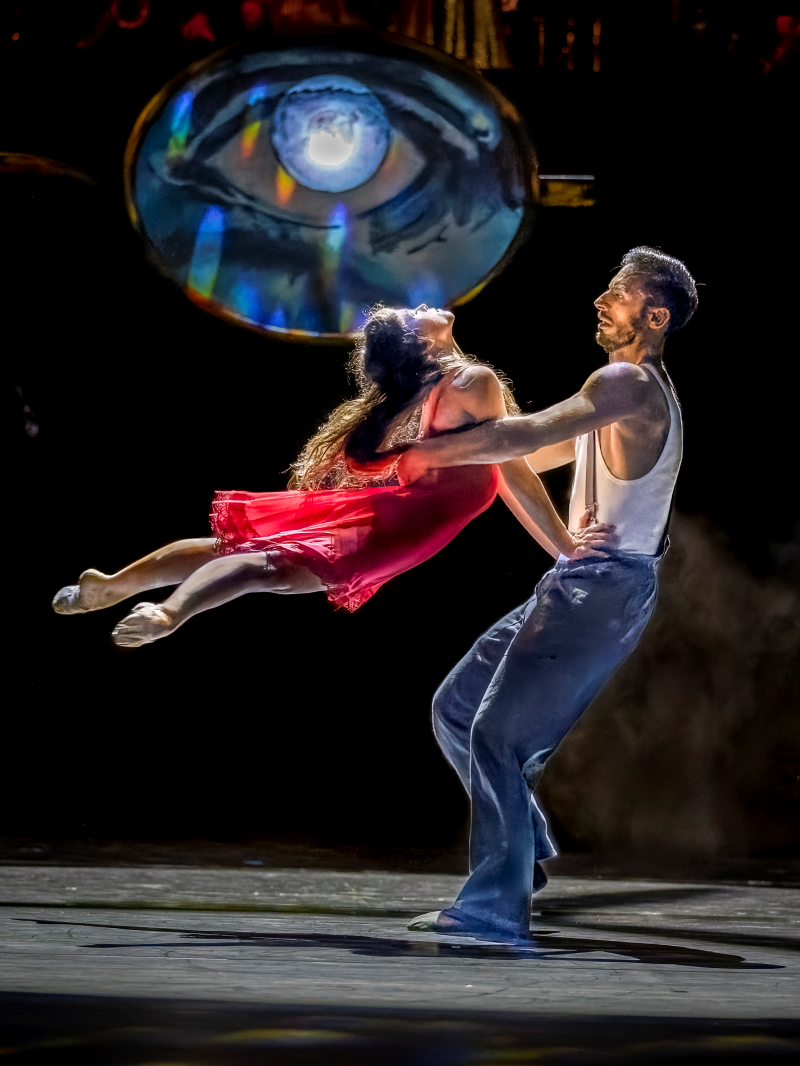
The unexpected co-starring of Locke Venturato and Greta Marcolongo
Locke Venturato possesses an imposing stage presence. He dances with a mix of energy, strength, and elegance; there are moments when he only needs to move his back or waist to capture the attention of the entire theater. The role of Gatsby fits him perfectly because he knows how to play very well with the two sides of the character: the seductive and romantic part, and that darker, possessive, and confrontational side in the fight scenes. Although he is fantastic in group moments, where he truly shows what he is made of is in the intimate scenes behind the curtain. That's where he takes absolute control of the show, dares to sing, and finishes off an impeccable performance.
Special mention goes to Greta Marcolongo, the singer. And it is that, unintentionally, she is the co-star of the work, another character who has a great presence and magnetism. Music runs through her and it shows because she vibrates with every note, feeling each song and traveling with the story. Her presence managed to eclipse the dance itself at times. She conveyed the songs in an impressive, almost awkward way, letting herself be permeated by the music with brutal dedication.
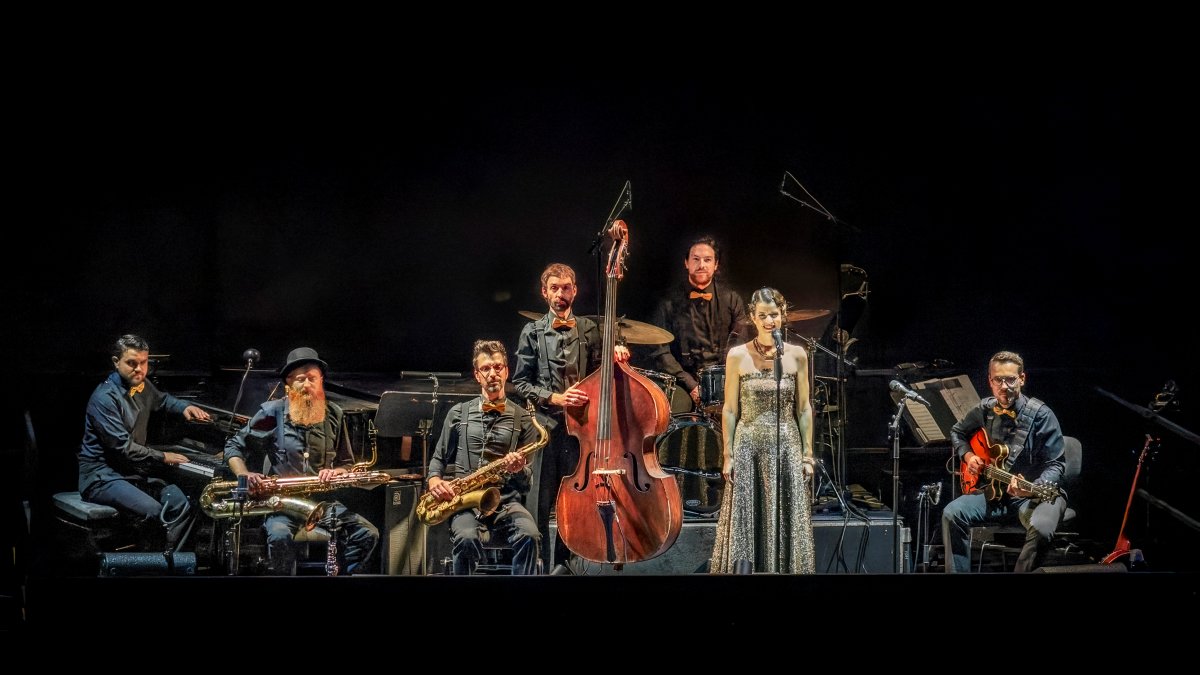
An impeccable musical selection
The musical selection is, without a doubt, another of the great achievements of this production. I asked the choreographer precisely how they could combine in the same show everything from Duke Ellington classics to songs by Freddie Mercury or Meghan Trainor, and the answer was clear: "The luck is to have a fantastic composer and band director, Roberto Tubaro, who manages to make everything always have that perfume of the Roaring Twenties and Prohibition era."
The musical and dramaturgical journey is so fluid that current songs fit perfectly, without breaking the atmosphere of the era. Enjoying a live band with this technical level is wonderful; musicians who already won over the audience in the lobby's pre-show and then sustain the rhythm during the almost two hours the show lasts.
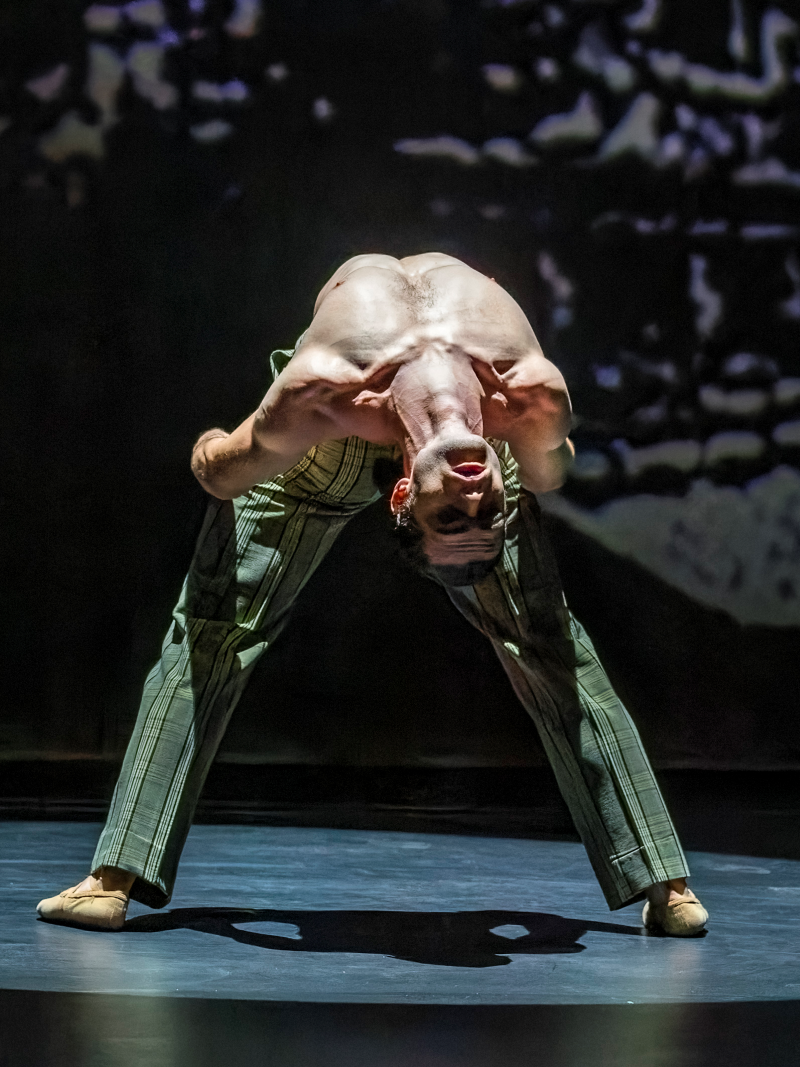
At a dance level, the choreographies define the characters very well according to their style. For example, it is perfectly understood who the prostitute character is by her boldness and her very unsubtle way of moving, more linked to jazz, tap, or contemporary dance. In contrast, the upper-class character chooses to move with an elegance much closer to classical ballet. The dance style is perfectly chosen for each character and each moment, helping you to understand who is who without the need for words.
A difficult story to follow
The absence of text or a voice-over takes its toll when it comes to understanding the development of the story. Those who do not have the book or the movie fresh in their minds will find it difficult to connect all the pieces of the show. The jealousy scenes, the club atmosphere, or the final tragedy are interpreted and enjoyed, but the chronological thread of the plot becomes difficult to understand.
Taking advantage of the fact that we are at the Teatre Victòria, which is a large format, it would have been a great success to opt for subtitling the song lyrics. After all, The Great Gatsby is a story, and if the English songs are what explain the dramaturgy through dance, being able to understand and read them would have helped prevent the story from being diluted for the audience.
Classics in the Instagram Era
Beyond these script inconsistencies, the production boasts great scenic power: it captivates you visually and audibly, and knows how to lead the audience between excess and melancholy.
It's inevitable to connect Gatsby's emptiness with our own reality. And precisely, I asked the choreographer this question before going on stage: Are we today, with TikTok and Instagram, a bit like Gatsby living in pure appearance? His answer was a perfect closing that made me reflect: "Exactly, that's what classics have, they were written 100 years ago and are just as relevant today. Everything is a party, everything is about appearing and being on Instagram, all this posturing. But in the end, the last party of your life should be with the people you love and who love you, and not end up alone. Superficiality, sometimes, can cause those friends you thought were there, to no longer be."
The Great Gatsby – The Show is a spectacular work, especially musically, where the singer and the principal dancer make the performance shine from all sides. Furthermore, its message is very related to the current world: it shows us that posturing was not invented by social media and that the drama of living for appearances is to end up completely alone.
Add The New Barcelona Post as your preferred Google source for free
Stay informed with the latest news.