An exhibition by the Photographic Archive brings together dozens of images of the city's evolution in the 19th century, but one photo is missing. We tell you the story of the first daguerreotype taken in the city.
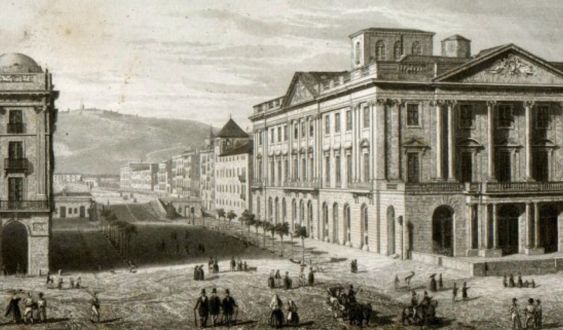
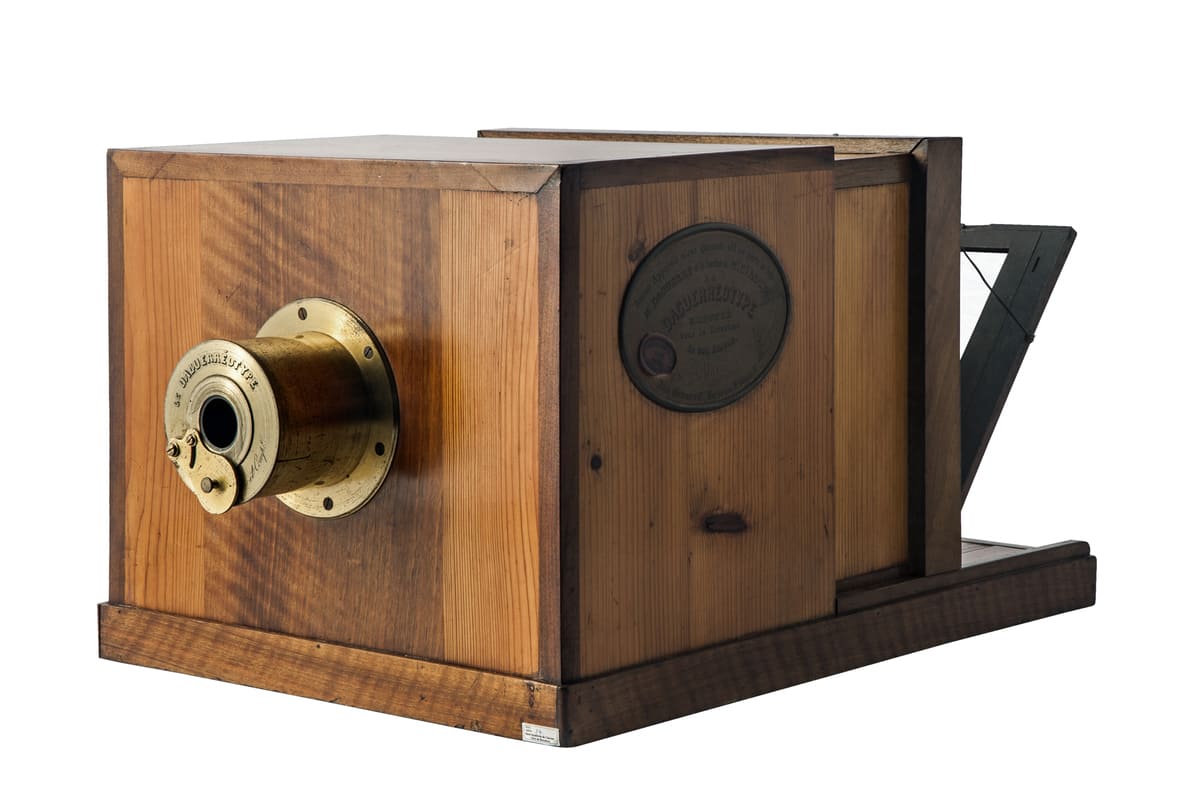
The Photographic Archive of Catalonia, in the old convent of Sant Agustí, offers until next October 23 a magnificent exhibition with photographs that in the second half of the 19th century document the transformation that Barcelona experienced in those years, with the demolition of the walls that prevented its growth, the expansion of the Eixample and the 1888 Universal Exhibition, the first major international showcase of the Catalan capital. The selection of images is very carefully curated, with scenes only known by our ancestors. But a very important photo is missing, the first one taken in the city, raffled and lost. This is its story.November 10, 1839 marked a milestone. That day, a citizen's party took place in which the great protagonist was the first photograph to be taken in Barcelona and also in the entire state. The chosen setting was Palau square, a monumental space with buildings that still survive, such as the Porxos de Xifré, La Llotja and the Duana, current headquarters of the Government Delegation undergoing an endless rehabilitation. Others no longer exist, such as the Palau Reial and the Portal de Mar of the old wall, whose space is now occupied by the Faculty of Nautical Studies. Specifically, it was decided to focus the camera from a terrace next to General Castaños street and to capture a corner of the Porxos de Xifré and La Llotja.Only three months earlier, Louis Daguerrehad presented to the French Academy of Sciences a revolutionary invention, the daguerreotype, with which an image could be taken on a copper plate where small silver nodules were fixed according to the light. It so happened that at that time they were in ParisEnric Monlau, correspondent of the Acadèmia de Ciències i Arts de Barcelona, and the engraverRamon AlabernThe latter, amazed by the invention, acquired a camera and both brought it to Barcelona. Monlau convinced the academy to buy another and the operation to take the first photograph began to be organized.
It was widely announced in the newspapers of the time and with flyers throughout the city. Tickets were even sold for a raffle whose winner would take that first daguerreotype as a souvenir. The undertaking was not easy. Taking the image required 22 minutes of exposure, so the logistics were complicated. Residents of the Porxos de Xifré were asked not to lean out onto the terraces and for no one to walk through the square.
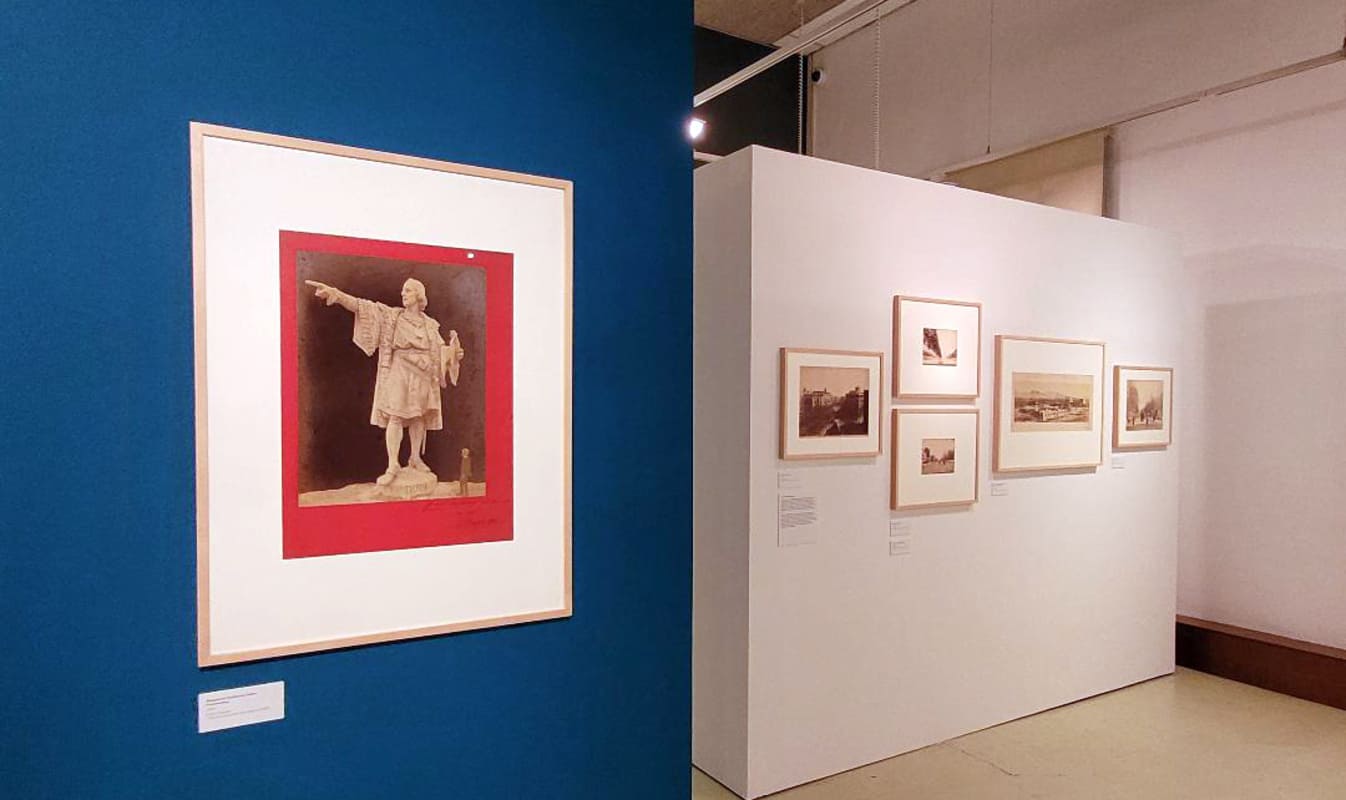
The passing of a carriage frustrated the first attempt and it had to be repeated. The second time was the charm and the image was fixed on the plate. Number 56 turned out to be the winner of the draw. The lucky winner took the daguerreotype as a souvenir and was never heard from again.Who knows if it still lies in an old trunk in some attic. In any case,Antoni Rocamanaged to make an engraving from the photo in 1842, which is the image that circulates. But it is not the original image. Of that feat, a modest plaque remains, placed in 1975 by the Agrupació Fotogràfica de Catalunya at the place from which history was made. The camera with which the first photo of Barcelona was taken can be seen at the Acadèmia de Ciències, on La Rambla. Despite this absence, the exhibition La ciutat davant la càmera. Imaginaris urbans al s. XIX is a must-see for lovers of vintage BarcelonaThey will be able to contemplate other images of Pla de Palau, of the sea wall and the port, of the Ciutadella fortress, views from Montjuïc and the cathedral without the current façade financed by the banker Manuel Girona. The exhibition panels also display photographs of an unknown Estació de França and the construction of the pavilions of the Universal Exhibition, as well as one of its symbols, the Columbus monument.
In short, an exhibition that recovers the memory of a Barcelona that no one remembers anymore and that was so eager to open up to the world that it even enthusiastically welcomed that invention of photography. By the way, the camera with which the first daguerreotype was taken can still be seen at the headquarters of the Acadèmia de Ciències, on La Rambla, above the Poliorama theater.
Image of the exhibition that can be visited at the Arxiu Fotogràfic de Catalunya, in the old convent of Sant Agustí. @X.C.
Add The New Barcelona Post as your preferred Google source for free