Twelve women in a pressure cooker
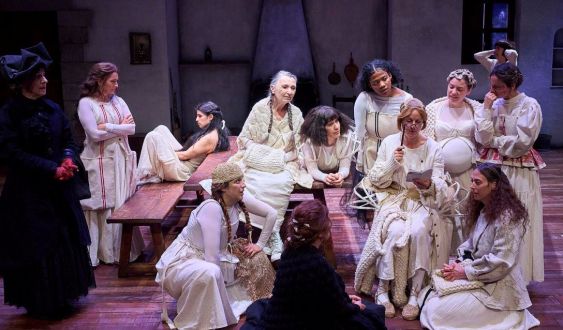
The plot of The Firmamentplaces us at a very specific moment: the return of Halley's Comet. But while men look to the firmament seeking scientific answers,on earth a woman is being judged.Sança Ponsa, a young woman accused of a brutal murder, has been sentenced to death. The only thing that can postpone the execution is her claim of being pregnant. To resolve the dilemma, the judge convenes a popular jury formed exclusively by twelve women from the town, tasked with examining the accused's body and determining whether there is life or not.The show locks us in with them in the meeting room.It is in that space where the twelve women must speak, discuss, and end up deciding whether Sança will live or die. These women, who represent all ages of life (from 9 to 83 years old), have spent their entire existence being invisible, relegated to domestic tasks and defined by their bond with men. Now, suddenly, they have the power to decide over life and death.It is there that Kirkwood puts us in front of the mirror:do we really know how to decide among all of us? And, more importantly, are we capable of helping each other as women when the system pressures us?A choral cast
One of the strong points of the play is its cast. The thirteen actresses maintain a high level of energy throughout the performance, and that makes the viewer unable to look away. Each character is built with their own personality and trauma, thus moving away from the cliché of the "unique female voice."
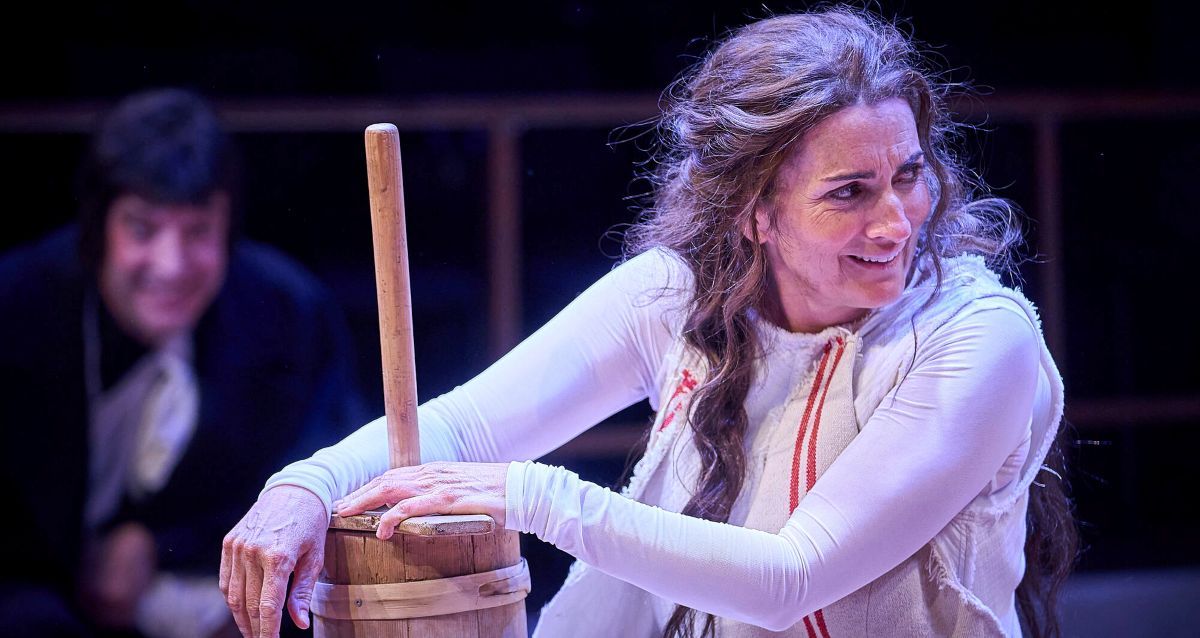
In the midst of this display, the work of Sílvia Abril deserves special mention. The actress, often typecast in comedy, demonstrates enormous dramatic versatility here. Her role as a midwife, the voice of common sense carrying the weight of thousands of births and bereavements, is interpreted with a restraint and truth that are moving. Abril nails the character and gives her a painful and authentic depth.
Opposite her, Anna Castells plays Sança Ponsa with impressive physical and emotional ferocity. This "bad woman" does not seek redemption or forgiveness; she seeks the truth, and she does so with a rage that pierces the stage. The chemistry between the two is the great engine of the play.
https://www.youtube.com/watch?v=76oQ591viAkA coven of wise and imperfect witches
The play presents us with a society in which women are defined as "wife of…" or "mother of…". But when the courthouse door closes, those labels dissolve. Lucy Kirkwood works on the idea of sorority from a non-idealized point of view: there are reproaches, there is fear of "what will people say" and also envy. But, in the end, they decide to stop competing to understand that they are all on the same side of history.
It is a coven of wise and imperfect witches who embrace each other to defend life from a human and feminine ethic.
From tradition to rave: the Mecano moment
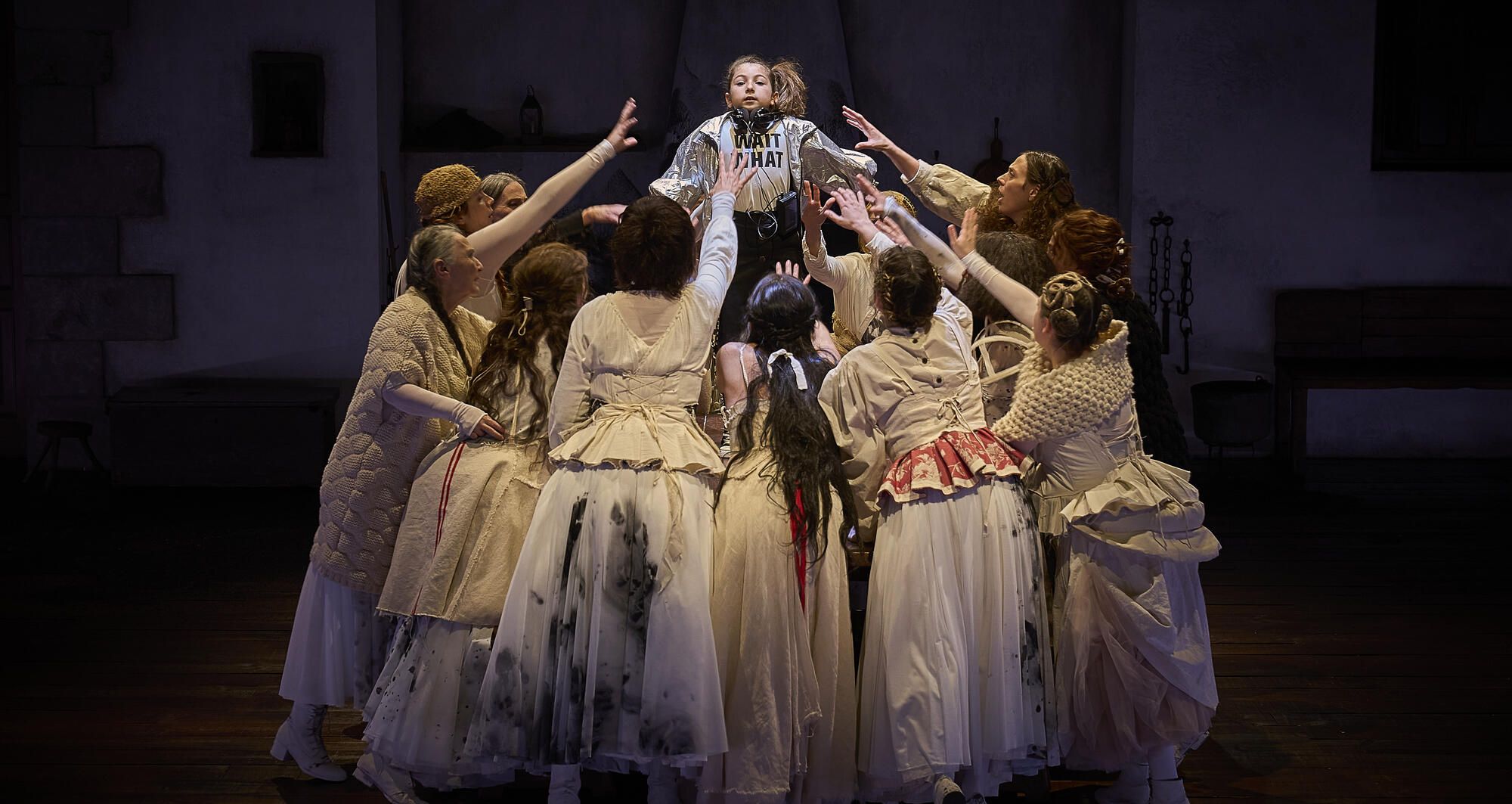
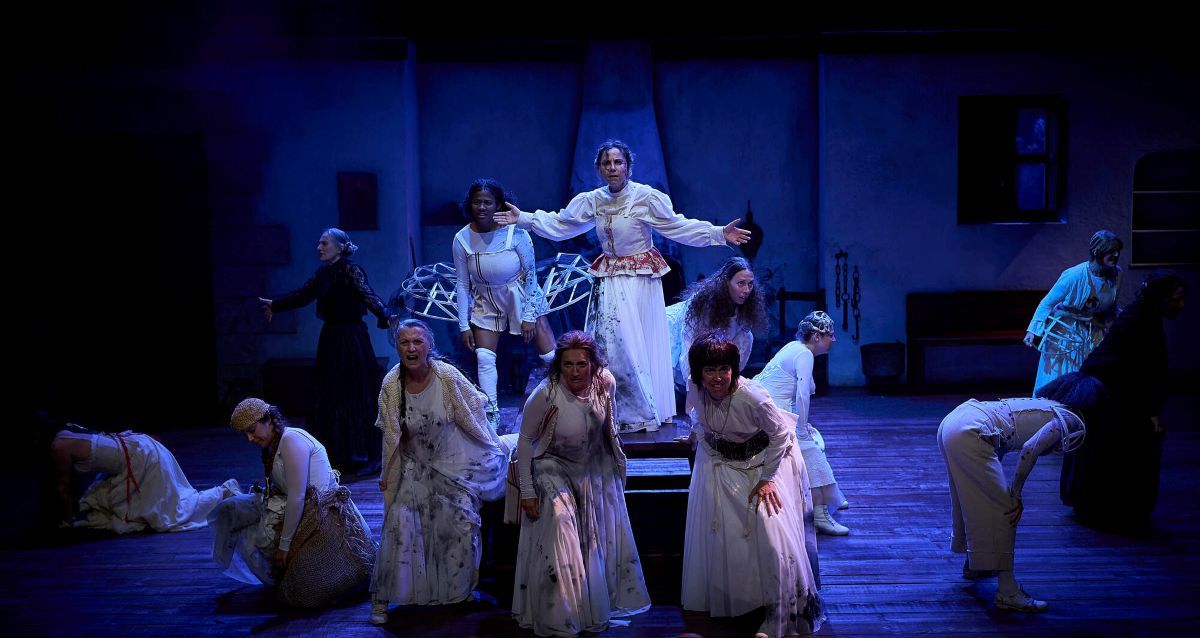
Gara Roda's direction is visually striking. The set design by Laura Clos and the costumes by Cristina Fernández, with a symbolic palette that plays with white, black, and red, create images of enormous poetic force. The beginning of the play is a choreography of perfectly rehearsed movements that already sets the tone for what is to come: a millimeter-precise transition between the work of cleaning sheets and the trial.
But the moment that defines the modernity of the staging is the version of No es serio este cementerio by Mecano. The composition by Andrea Mir begins with a classical solemnity that is unexpectedly interrupted by a completely updated version. The scene ends up leading to a rave in the purest Rosalía style, and the result is a total success.
The identity of the word
The success of this adaptation also lies in the language. Lucy Kirkwood wrote the original with a rich dialectal nuance of rural England in 1759. Gara Roda's challenge was not only to translate, but to find the "color" of those words within our own imaginary. The decision to move the action to a Catalan geography (with the author's permission) allows the text to feel much closer and more recognizable to us.
The director has sought the emotional equivalents of that old way of speaking, recovering words and idiomatic turns of phrase that transport us to a rural Catalonia, where life is hard and people keep their feet on the ground. It places us before a peasant reality, dry and forceful, in which each word has a weight that pierces the stomach. This linguistic rigor is the basis on which the truth of the entire show rests.
Theater that truly shakes
El Firmament is an essential proposal that highlights the voice of femininity in a space of power. A production that breathes art, beauty, and overwhelming sincerity. We are facing a major work that demonstrates that stories from the past are, many times, the best mirror to understand our present.
Add The New Barcelona Post as your preferred Google source for free
Stay informed with the latest news.