We have to believe it. Barcelona has enormous potential in many scientific fields and a clear example of this is the biopharmaceutical sector, where companies like AbilityPharma lead some of the most promising international research in areas such as the fight against pancreatic cancer, one of the most difficult to cure, with a very low survival rate.
In the laboratories of this company based in the Vallès Technology Park, they have been investigating since 2009 the potential of a molecule called ABTLO812 that has already proven effective for the treatment of lung and endometrial cancer. Now, AbilityPharma will start a clinical trial in Spain, the United States, France and Israel to validate that the molecule is also indicated for the treatment of pancreatic cancer, which is considered an "orphan disease", since beyond chemotherapy there are no effective and safe therapies.
[subscribe_newsletter_esp]
The powerful US drug agency, the Food & Drug Administration (FDA), has blessed the potential of AbilityPharma's molecule and has not only authorized the start of the clinical trial, but has also decided to grant the drug a scholarship of 1.2 million dollars, a very important milestone considering that the promoting company is not American. The European Commission has also embraced AbilityPharma and will grant it 5 million euros through the Horizon 2020 program and through the European Investment Bank (EIB), which will contribute more than half of this amount (2.8 million) and will also enter the capital.
The results of the clinical trial will be known at the end of 2022 and if it is confirmed that ABTLO812 is a valid drug against pancreatic cancer, we could be facing one of the greatest recent successes of Catalan science, since the molecule could be sold to a large pharmaceutical company that could pay between 300 million and 500 million euros to AbilityPharma to be able to commercialize it.

"Barcelona's biopharmaceutical ecosystem is fabulous; the key is that we have a lot of talent to execute these projects and we are building a very powerful hub that is now emerging," says Dr. Carles Domènech, scientific director, co-founder, and executive chairman of AbilityPharma. According to Domènech, AbilityPharma "is the Catalan oncology biotech with the most advanced product," and has already secured the necessary funding, until the end of 2022, to scientifically demonstrate the success of the developed drug.
We are building a very powerful hub based on talent that is now emergingA biologist by training and with a long career in companies such as Almirall and Barcelona Emprèn, Domènech joined AbilityPharma after it was born as a spin-off of AB-Biotics, another of the successes of Catalan biotechnology (the firm was acquired a year ago by the Japanese pharmaceutical company Kaneka). The link with AB-Biotics was undone in the sense that AbilityPharma ceased to be a subsidiary and became an independent company, but they retained many common shareholders. Thus, the creators of AB-Biotics are partners of AbilityPharma,Sergi AudivertandMiquel Àngel Bonachera; the investorsLuis Sánchez-Lafuente---former owner of Laboratorios Gelos--- andJosep de Marfà, and Domènech himself. Thanks to the various funding rounds undertaken so far ---they have raised 13.8 million euros---, other relevant investors have also entered the capital, such as venture capital fundsInveready, Fitalent (Everis Group) and Sodena, so the shareholding is very fragmented.
The work done so far
But let's go back to ABTLO812. What is it and how does it work? It is an innovative anti-cancer compound that is taken orally and causes the death of cancer cells through a process called autophagy. It has low toxicity and enhances the effects of chemotherapy treatments.
In 2014, phase 1 trials were conducted at Hospital Clínic and Bellvitge. There, its efficacy for the treatment of any type of very advanced cancer was proven. In 2017, the molecule began phase 2 studies, but this time focused on two indications: the fight against endometrial cancer and a type of lung cancer (squamous). The trial was conducted in several Spanish and French hospitals and concluded this year with very good results.
According to Domènech, it has been shown that the AbilityPharma molecule provides an advantage over treatments that only use chemotherapy. In the case of endometrial cancer, the effectiveness of chemotherapy is 51%, while if the AbilityPharma drug is also administered, the percentage rises to 66%. The same has been found with lung cancer patients: it goes from a historical 31% in patients who received only chemotherapy to 54%.
Now, phase 3 would have to be carried out, which is the most expensive, as it would require an investment of more than 25 million euros. To undertake it, AbilityPharma could license its molecule for these indications to a large pharmaceutical company or ally with a large fund specialized in the health sector, which would dilute the current shareholders.
AbilityPharma, however, has chosen to put on stand by the progress in its treatment for lung and endometrial cancer to focus on evaluating efficacy in pancreatic cancer, one of the great challenges facing global oncological pharmacology. The company is convinced that they will also obtain positive results, so once this new trial is finished and the three indications are validated, by the end of 2022, it will be time to sell the molecule for several hundred million euros. Another option is to list the company on the stock exchange to obtain financing and directly lead phase 3 or merge with another biotechnology company that is already listed.
"If we repeat with pancreatic cancer the results obtained so far, we will have made a great contribution to science," assures Doménech.
Trial in hospitals in Catalonia, USA, France, and Israel
The FDA and the Spanish Agency of Medicines and Medical Devices (AEMPS) have just authorized the start of the phase 2b clinical trial (multicenter, international, double-blind, and placebo-controlled) to investigate the efficacy of the ABTLO812 molecule in combination with Folfirinox chemotherapy in patients with advanced and metastatic pancreatic cancer. Half of the patients will receive chemotherapy plus a placebo, and the other half will receive chemotherapy plus ABTLO812.
The trial will be conducted with 140 patients, of whom 45% will be American, 45% European (from Spain and France), and 15% Israeli. The participating hospitals will be Vall d'Hebron (Barcelona), Dr. Josep Trueta (Girona), and Germans Trias i Pujol (Badalona), as well as reference centers located in Paris, Marseille, Tel Hashomer (Israel), and the American cities of Cincinnati, Massachusetts, Dallas, and Rochester.
"We are very happy to have achieved this great milestone, being one of the first Spanish biotech companies to obtain approval for a phase 2b study in the USA, rewarding the great work and effort of the team that forms AbilityPharma," emphasizes Doménech.
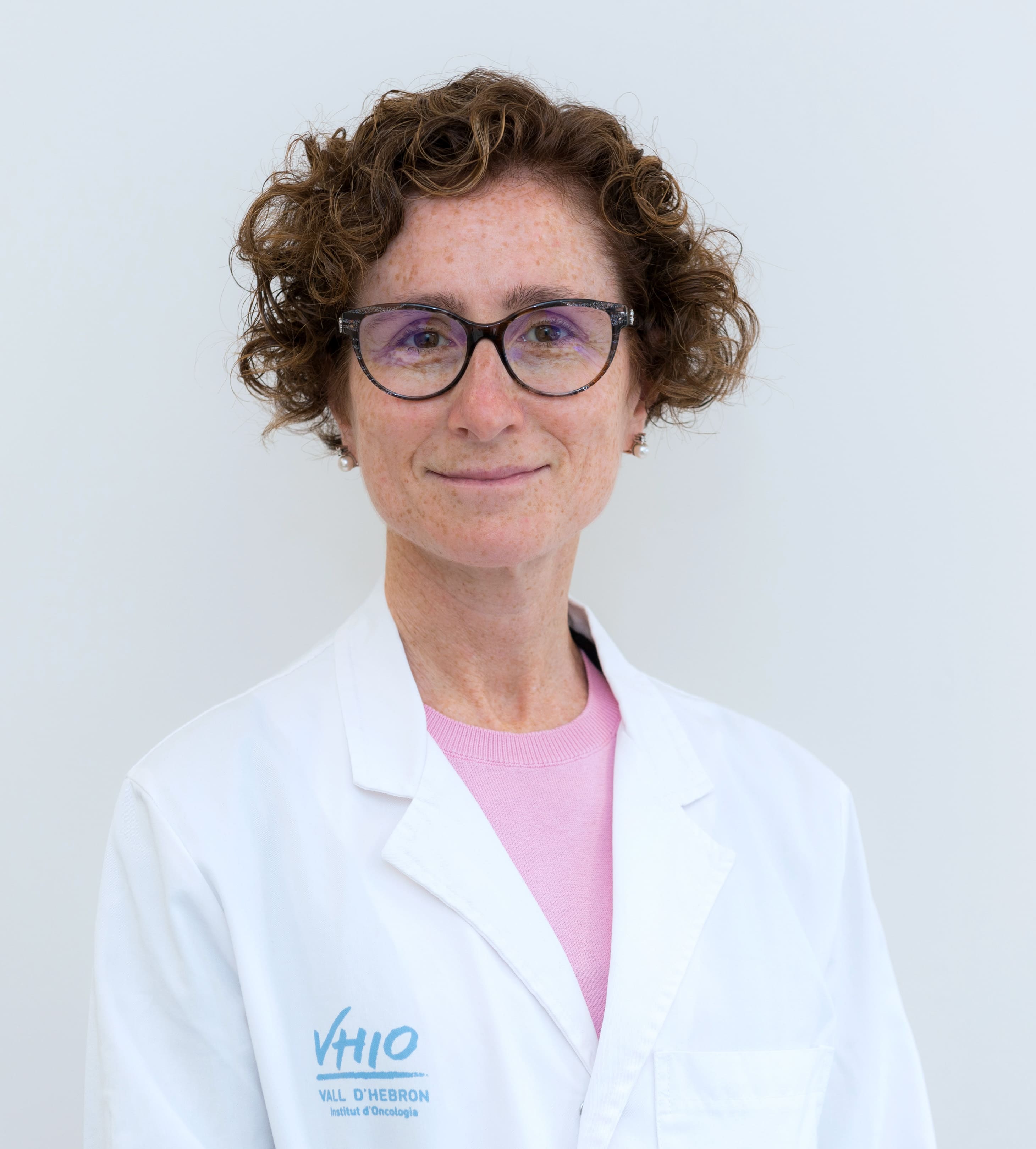
"Pancreatic cancer is one of the tumors with the fewest advances in recent years, and it maintains a dismal prognosis. It is necessary to continue investigating new strategies to improve the survival of our patients. In this sense, the opening of this study with the ABTL0812 molecule in combination with Folfirinox is very good news. The objective is to improve the results that chemotherapy treatment has given us to date, which is the treatment we currently have available to treat most of our patients," argues Teresa Macarulla, oncologist at Vall d'Hebron and VHIO and principal investigator of the study in Spain.
Pancreatic cancer is one of the tumors with the fewest advances in recent years; the opening of this study with the ABTL0812 molecule in combination with Folfirinox is very good newsPancreatic cancer mainly affects people between 65 and 70 years old and has a high mortality. It is not the most frequent, but it is the one with alowest survival rate among major cancer types; patients survive an average of six months and only 15% reach one year of life and 4% five years.It is estimated that by 2030 its incidence in Spain will be around 9,000 annual cases, 40% more than at present. In 2020, it is expected to be the second cause of cancer death in Europe, where an annual mortality of 128,000 people is estimated for this typology, which makes it urgent to find innovative treatments.
New fundraising through Capital Cell
Since its foundation, AbilityPharma has raised 13.8 million, of which 6.5 million are resources in the form of capital, 2.7 million public aid and 4.6 million credits. The biotech expects to close this year with a fundraising of 9.2 million euros to finance its research. Of this figure, 5 million come from the European Union (Horizon 202o and EIB); 1.6 million from the FDA; 1.6 million from a collective investment campaign that is now underway on the Capital Cell platform; and one million euros that will be contributed by a new international industrial partner whose identity will be revealed shortly and with whom new contributions have been agreed in the future.
Of the crowdfunding round open in Capital Cell, more than 70% has already been subscribed, with average subscriptions of 2,500 euros per investor.
Add The New Barcelona Post as your preferred Google source for free
Stay informed with the latest news.
