Much has changed since the average Barcelonian would go to a fabric store to buy fabric by the meter to cover their walls, furniture, and accessories, when Gancedo opened on Rambla Catalunya nearly 80 years ago. That daily routine has become anecdotal, giving way to the work of interior design and decoration professionals, in a market that has opened up to establishments ranging from hotels and restaurants to company and institutional headquarters.
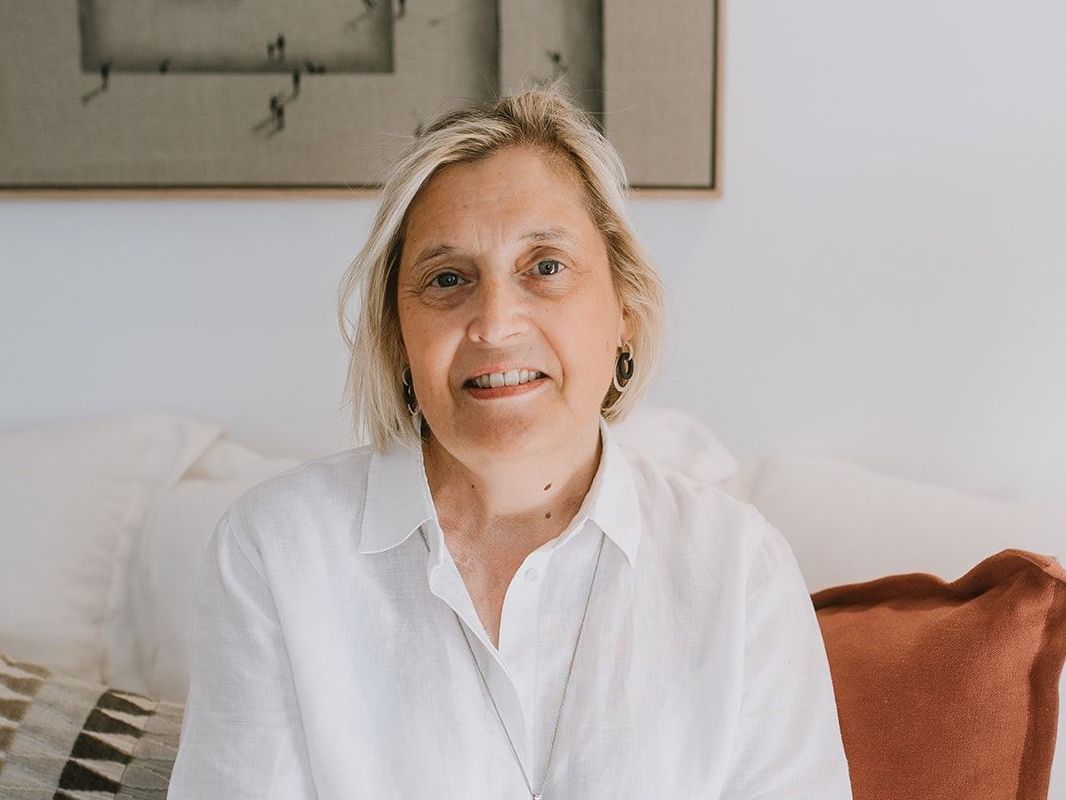
Given the new trends and dynamics of the sector, the historic Barcelona family company of quality fabrics has redirected its strategy and renewed its concept in the Catalan capital. It began with the closure of the premises in autumn, and has culminated with the opening of a new custom-designed showroom at number 115 on Pau Claris street. Thus, closing the shutters of the almost centenary premises "was not a closure, but a change and a modernization", claims Beatriz Gancedo, third generation in a family business with an international vocation that manufactures all its sophisticated products from Valencia.
The location of the premises on Rambla Catalunya and the influx of visitors attracted by its age and authenticity made it difficult to provide an adequate and individualized service precisely to professionals in the sector, she explains in conversation with The New Barcelona Post. Thus, they left behind the premises where the grandfather of the current generation of Gancedo opened the company's first store in 1945.
The firm has accumulated projects that have dressed places as varied and relevant as the Congress, the Zarzuela Palace, and Iberia planes, in addition to dozens of hotels and restaurantsIts expansion began five years later, when Pepe Gancedo, son of the founder and father of the company's current directors, opened on Madrid's renowned Recoletos street. That opening was the first of a network that has four establishments in Spain and two in Mexico, to which distributors are added, especially in Latin America, but also in Europe, the United States, India, Japan, China, Dubai and New Zealand, among other locations.
The Barcelona showroom excludes itself from the list of retail stores: "This is not a store," proclaimed the company's new CEO, Julián Lázaro, who took office three months ago. In the presentation of the new space, he emphasized that it is a venue focused on professionals. "We are renovating much more than a space," and the brand has not limited itself to relocating its establishment, but rather the change of location and concept reflects a change in vision, in a change of era.
The model by which the showroom operates, which will attend by appointment, follows the one already in force in the sector in other markets, such as the French and British. In the rearview mirror, the brand has accumulated projects that have dressed places as varied and relevant as the Congress, the Palacio de la Zarzuela, and Iberia planes, in addition to dozens of hotels and restaurants. For the future, it focuses on maintaining this line and promoting internationalization.
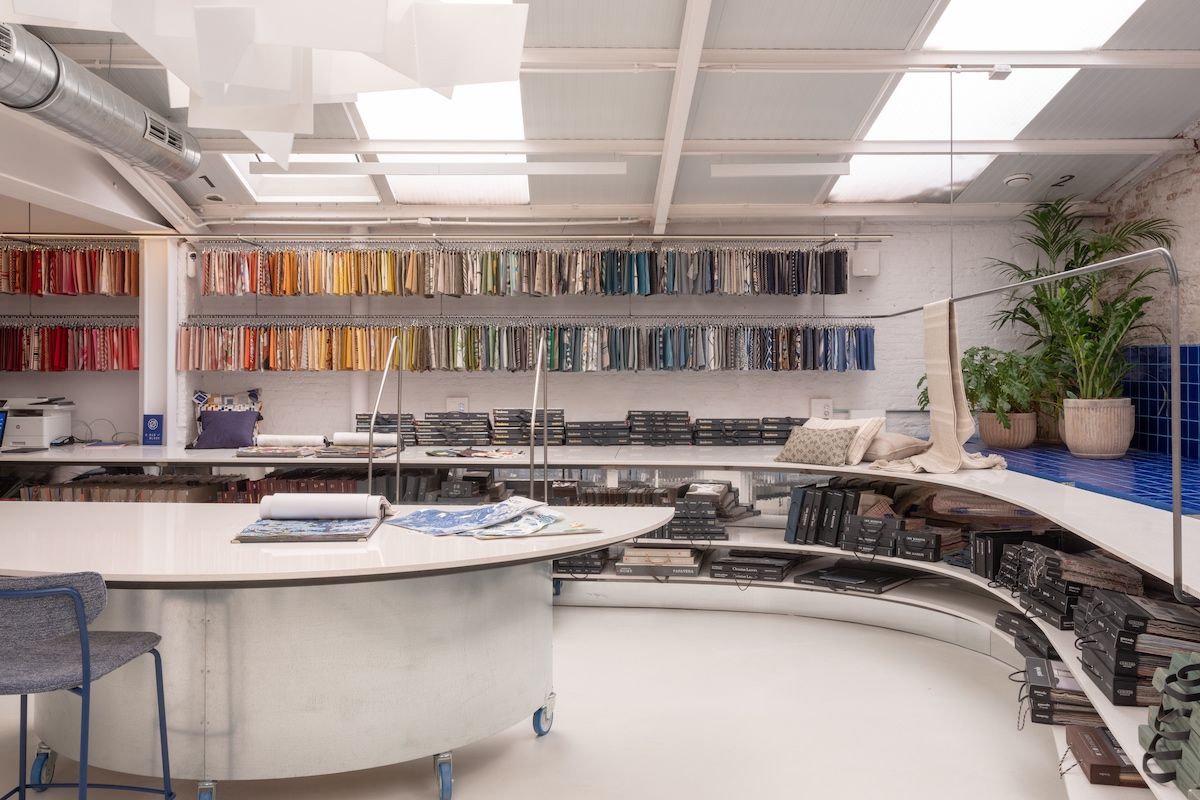
With the change of premises, 80% of the current references that the brand has, which in total has more than 10,000, have been transferred.Within the framework of this transformation, the iconic store on Rambla Catalunya has been replaced by a space that aims to provide a sensory experience that inspires and propels the creativity of professionals. The old wooden furniture and the characteristic shelves designed by the architect Curro Inza, which will be kept in the premises by the new tenant, have given way to a light and bright space with multifunctional furniture, located in what was an architecture studio and a garage. The Acto team of architects, who designed the project, has given lightness and dynamism to a dense and heavy product such as fabrics and carpets, through a carefully designed exhibition system ad hoc and inspired by the original from Rambla Catalunya. With the change of premises, 80% of the current references that the brand has, which in total has more than 10,000, have been transferred.
It is no coincidence that the architects thoroughly understood the company's needs. The team is made up of Maria Figueras, Cristina Marcos, and Alejandro Sanjuan, and the latter is part of the fourth generation of the family business. Now it is managed by five of the six siblings of the third generation, and members of the fourth have occasionally participated in certain aspects and projects of the company. In this sense, family continuity is guaranteed, as Beatriz Gancedo comments.
The opening of the new showroom after the closure of the Rambla Catalunya store has culminated a 2023 in which Gancedo increased its turnover by 20%, according to the company, which declines to reveal the total invoiced. For 2024, it will focus on internationalization, prioritizing the United States and the Caribbean, according to Gancedo. It will do so taking into account that 20% of its business comes from exports, while 25% corresponds to interior design and decoration clients and professionals, and 15% comes from online sales.
The majority weight of the remaining 40% falls on projects for organizations, institutions, and establishments such as restaurants and hotels. Gancedo has precisely worked in recent months on hotels not only in Barcelona but also internationally, in cities such as Venice, Florence, and Amsterdam. The family business does so from its eagerness to collaborate with influential artists, creators, and designers, something that began in the 70s by allying with artists such as Aurèlia Muñoz, Modesto Cuixart, and Gustavo Torner. Thus, the third generation of Gancedo transforms the company maintaining the essence and DNA that created it, in the same city from which its concept and vision now reborn.
Add The New Barcelona Post as your preferred Google source for free
Stay informed with the latest news.