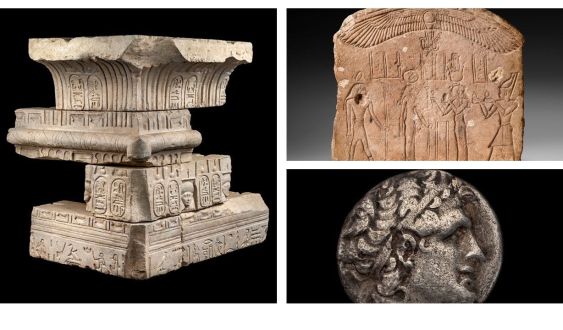
The Egyptian Museum of Barcelona, managed by the Clos Archaeological Foundation, has managed to inscribe its name in history. After several archaeological campaigns in Egypt and Sudan, the excavation project it is developing in the necropolis of Kom El-Akhmar, in the city of Sharuna, has become the most important for the cultural institution. After 16 years working on this site, it has been able to reveal unprecedented information about the figure of Pharaoh Ptolemy I (367-283 BC), the most relevant discovery made by the foundation since its creation.
This discovery is the protagonist of the new temporary exhibition at the Egyptian Museum of Barcelona, Ptolemy, Pharaoh of Egypt. The discovery of his temple, which can be visited from this Thursday until August 2022. The exhibition includes a recreation of the remains of the temple dedicated to Ptolemy that the Barcelona institution discovered in Sharuna, made from hundreds of photographs of each original element and life-size. Three years ago, seven stone blocks of a pharaonic temple built during the reign of Ptolemy I were found at this site. From this, several campaigns were launched in 2019 and 2020, with the pandemic in between, to deepen this discovery, which allowed collecting up to 60 more blocks.
Beyond finding one of the few temples built in the Ptolemaic era, the great contribution of the Egyptian Museum has been that it has come across the most complete name of Ptolemy I ---pharaonic titulature---, formed by a total of five elements. The first and second had already been documented in other remains, as well as the fourth and fifth, but the Egyptian Museum's expedition has added the third, which attributes to the pharaoh the title He of the strong arm. A discovery that, in addition to being pioneering and unique, is almost miraculous, considering that this inscription is found in a very damaged part, as highlighted by the museum's conservator Luis Manuel Gonzálvez.
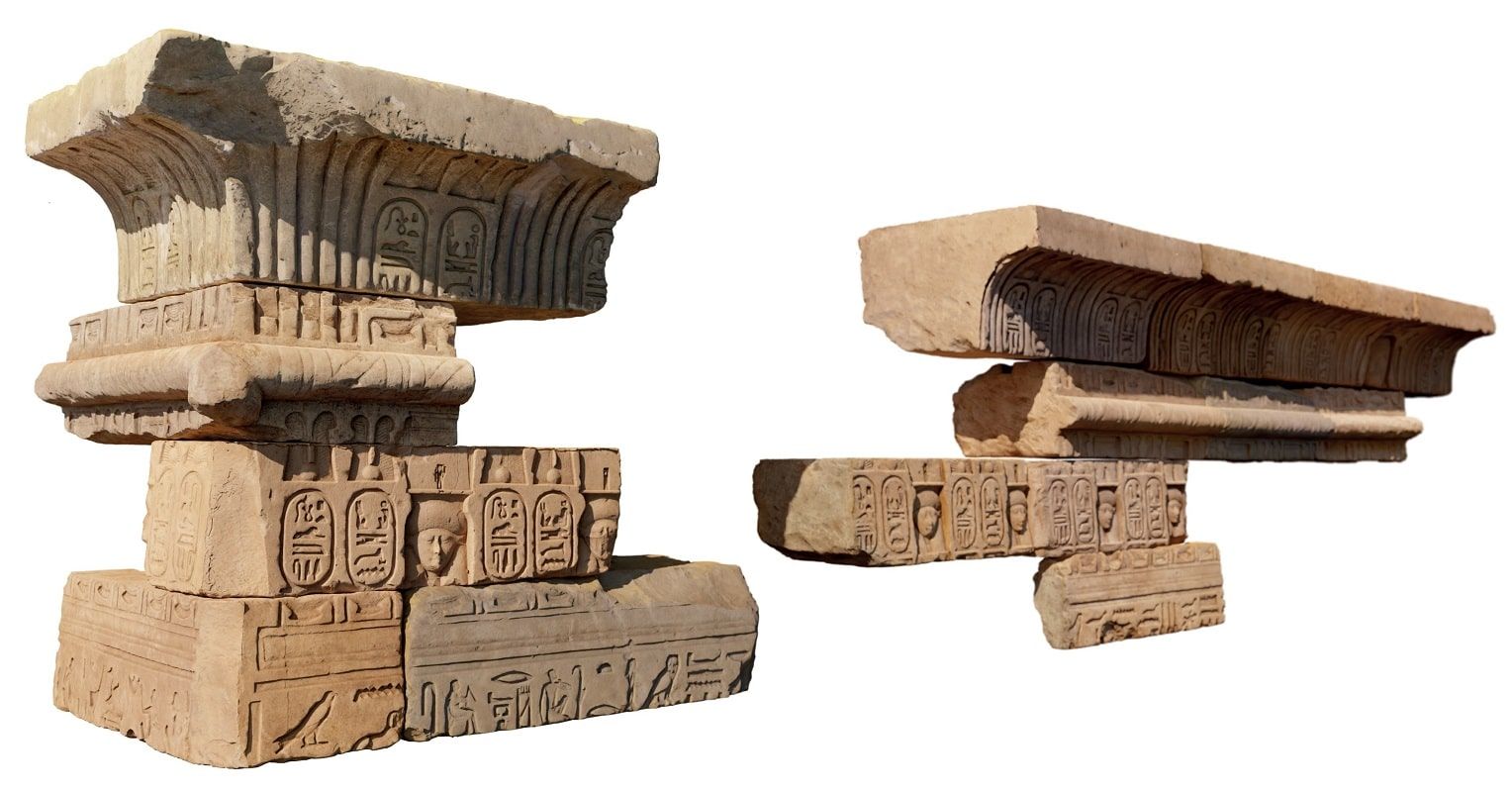
Another virtue of this Barcelona discovery is the large number of blocks found that correspond to this lost temple. In Egypt, only eight temples erected totally or partially by Ptolemy I are known. In the case of the Sharuna monument, with the contribution of other institutions, such as the University of Tübingen, a total of 120 blocks have been recovered, a figure that doubles the total number of blocks corresponding to the other seven temples of this pharaoh in the rest of Egypt.
50 pieces about the dynasty of Ptolemy I
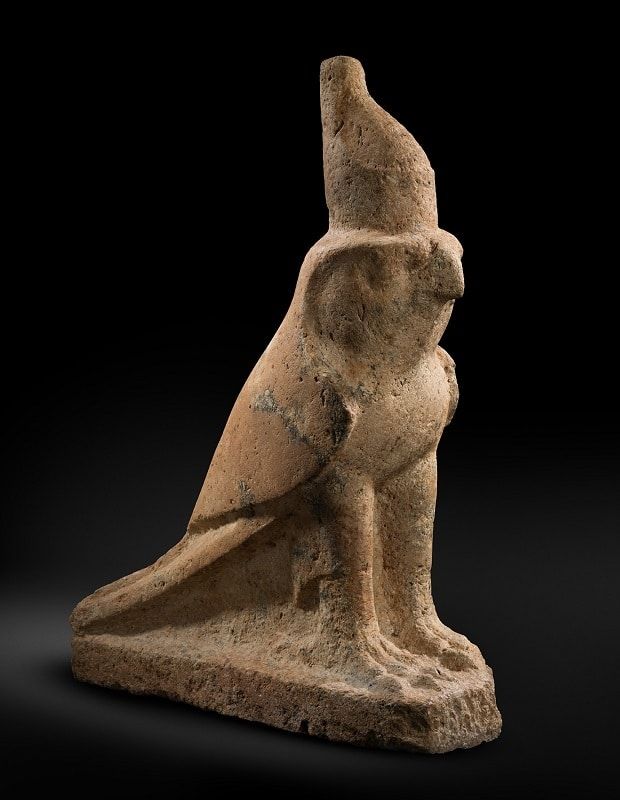
The remains found in Sharuna are complemented by pieces that contextualize the Ptolemaic dynasty (305-30 BC), the first of foreign origin and the longest in ancient Egypt, which survived for 300 years until the famous Cleopatra. Through about fifty works from the Egyptian Museum of Barcelona, the three centuries of prosperity that Egypt experienced with this dynasty are explained, as evidenced by the splendor of Alexandria, the introduction of a monetary economy, commercial dynamism, or the construction of temples dedicated to the gods, such as that of Sharuna, in honor of Horus.
In the exhibition, coins with the image of Ptolemy I and the almost two-century-old plaster copy of the Rosetta stone in the British Museum can be seen, a sample of the cultural diversity that this dynasty initiated. There are also busts, sphinxes, statues, coffin lids, and mummies for those looking for Egyptian classics.
The exhibition also explains the three centuries of prosperity that Egypt experienced with the Ptolemaic dynasty, as evidenced by the splendor of Alexandria or the introduction of a monetary economyAnother of the outstanding pieces of the exhibition is the small stone monument where Pharaoh Cleopatra VII can be seen. 25 years ago, during a visit to the Egyptian Museum, Dr. Jeam Yoyotte identified the figure of Cleopatra, taking into account that she appears placed before the deities and, at the same time, the pharaoh himself, a position that can only correspond to a sovereign of the highest rank.
For Clos, the exhibition inaugurated this Thursday closes the circle, from Barcelona's contribution to solving the figure of Ptolemy I to the representation with the most famous pharaoh of the Egyptian empire. All this, while waiting to continue finding more secrets in Sharuna. "The work has only just begun," warns Gonzálvez. For now, the excavation will continue and they will begin to think about a proposal for the restitution of the pieces that have been found from the temple.
Add The New Barcelona Post as your preferred Google source for free
Stay informed with the latest news.
