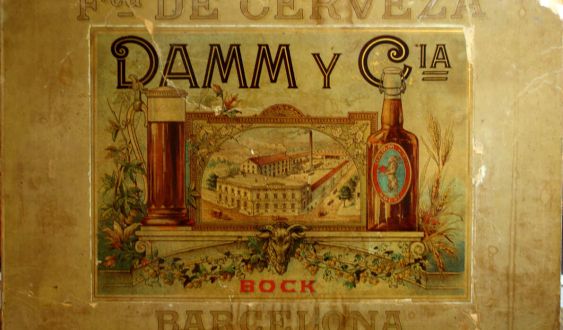
Damm treasures one of the largest private historical archives in Spain. This is a little-known facet of the brewing company, but now it wants to be promoted with a digitalization plan that will make a unique heritage available to the entire society, testifying not only to the evolution of the company itself, but of society as a whole. Damm's legacy is made up of more than 140,000 pieces, among which 118,000 digitized old photographs and hundreds of films totaling more than 6,100 hours of continuous viewing stand out.

The history of the company, which can be followed through the extensive legacy of the archive, is also the history of Barcelona society, of changing habits, of the evolution of means of transport, the history of advertising, of cultural events, of sporting triumphs and also of solidarity and responsibility towards a society with which the group has evolved in parallel. In this sense, the investment being made by the Damm Foundation aims to convert the historical archive into a resource accessible to all citizens, whether for personal interest or for research, academic work and even audiovisual productions, explains the president of the foundation, who recalls that "our objective is to be able to share and make available to the entire society the 144 years of the company's history. The digitalization process will allow anyone who wishes to access this heritage from anywhere in the world."
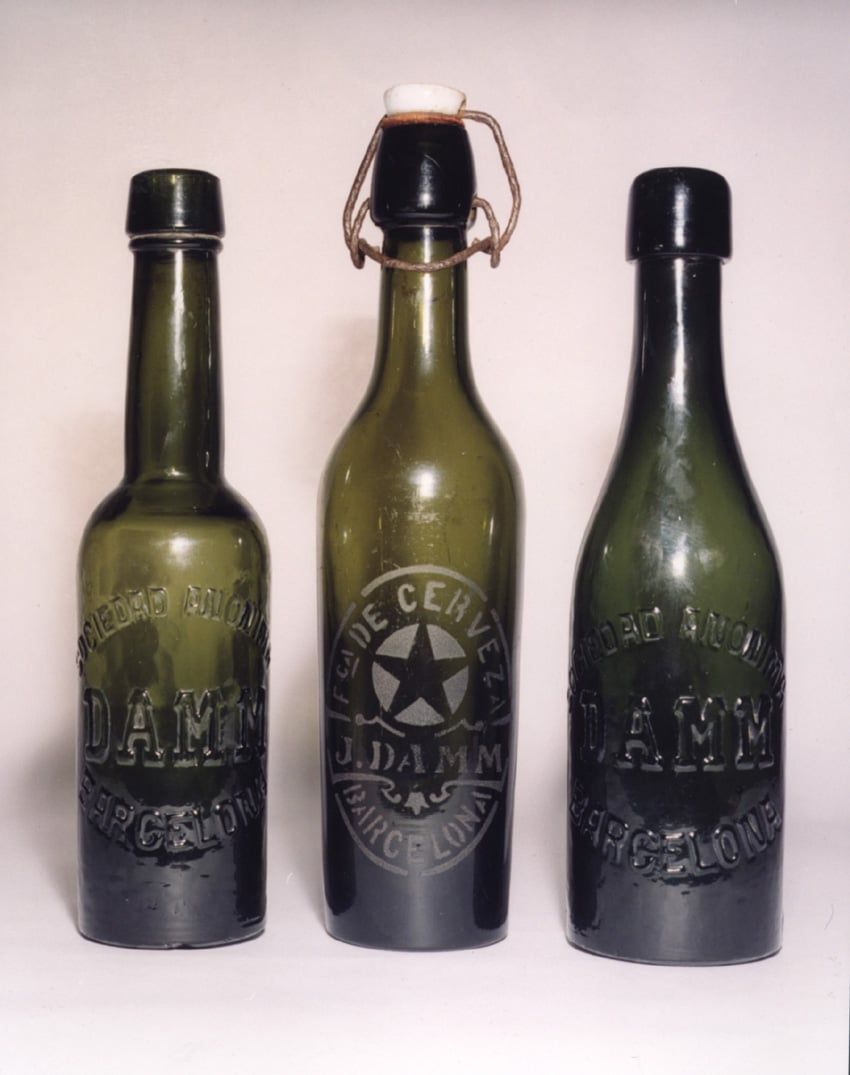
And what kind of objects does the collection gather? Old bottles, old posters, refrigerators, calendars, soccer boots, scales, boxes, blueprints, telephones, t-shirts, parasols... up to 24,170 pieces that transport us to other eras and document social, cultural, economic, historical, and gastronomic changes from the late 19th century to the present day.
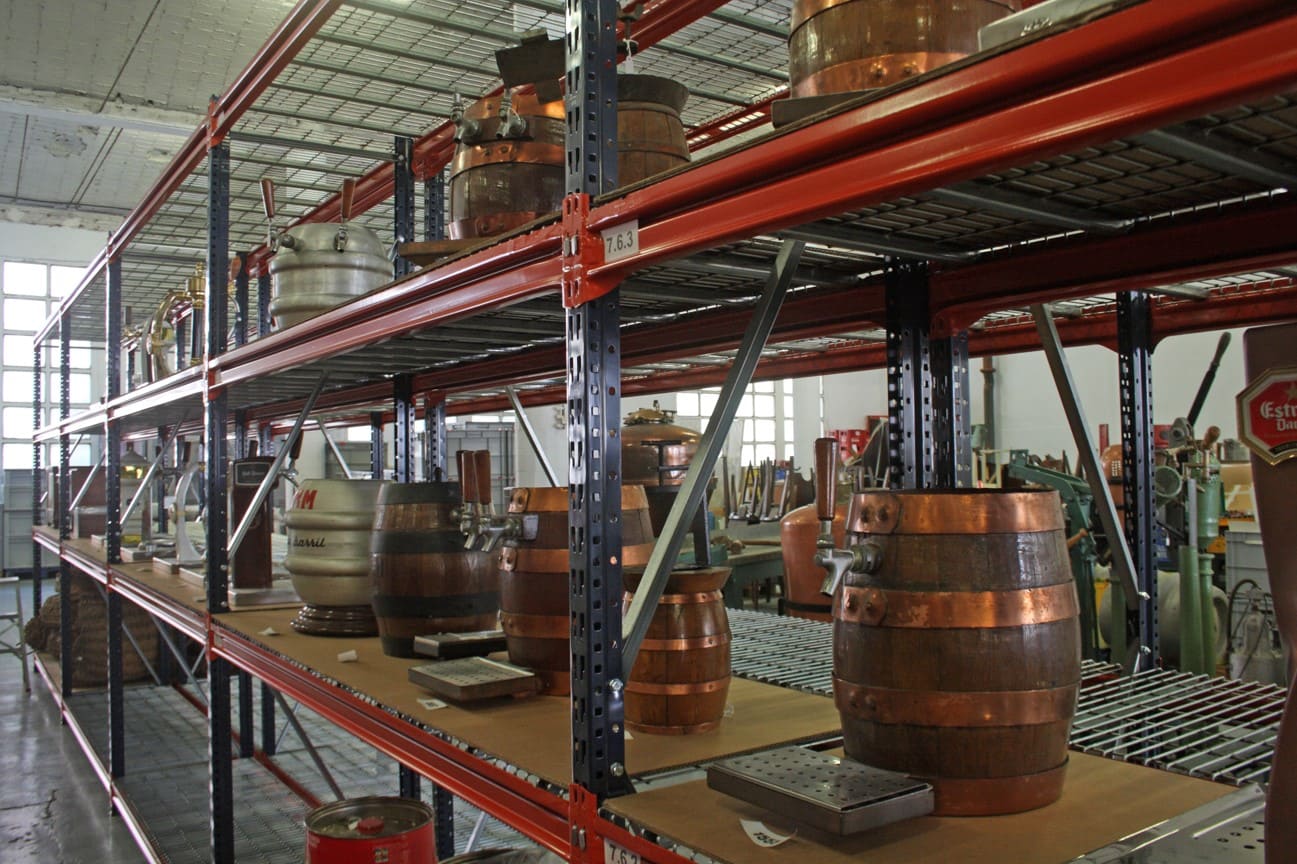
Recently, for example, some of the archive's pieces had their golden minute by appearing in the Netflix series Hache. The Teatro Real in Madrid also used some boxes of 1970s beer bottles to set the scenes for Bizet's opera Carmen. Recently, the jacket and boots worn by actor Peter Dinklage —the popular Tyrion Lannister from the series Game of Thrones— in one of Estrella Damm's latest summer commercials have been added to the legacy.
The Damm Foundation archive began to be gathered when the company stopped manufacturing beer in the historic building on Rosselló Street, known as La Bohemia, which operated as a factory between 1905 and 1992. The building, which is currently a social and cultural meeting point in Barcelona, has accumulated all kinds of objects in its warehouses that could perfectly have ended up in the trash. However, all those thousands of junk items were saved thanks to three company employees who had the vision to realize that if these objects were lost, the essence of the company would also die.
This is how Carlos Cervantes, Pedro Peiró, and Manuel Peribáñez decided to rescue all these materials from oblivion and give them value thanks to the support of the Damm Foundation, thus forming one of the most powerful historical collections both in terms of size and variety in our market. Along with photographs and films, among the thousands of pieces that make up the collection, the first Estrella bottle, produced in 1876, or an invitation sent for the inauguration of the Damm factory on Rosselló Street in 1905 stand out. The first advertisement Damm aired on television, in black and white, on TVE in 1970 is also preserved. Another curious object is a wooden box in which a carving of the Virgen de la Viña, patron saint of beer and wine, which was taken out annually in procession, is preserved.

The Damm Foundation, more than 65 years committed to society
The historical archive is one of the actions promoted by the Damm Foundation, but its link with society is also established through sport. Last year, Club de Fútbol Damm celebrated 65 years of instilling values such as sportsmanship, camaraderie, the desire for self-improvement, professionalism, and gender equality, being a training school but also a hotbed of talents who have reached the highest competition.
Club de Fútbol Damm is, without a doubt, the most well-known face of the foundation chaired by Demetrio Carceller. In 2019, it had 231 male and female players from U10 to U19. The club was founded in 1954 thanks to the impetus of a group of amateur workers and has achieved recognized prestige thanks to its formative spirit and promotion of grassroots sports. Damm's teams are also a recurring quarry for major clubs. Last year alone, 32 CF Damm athletes were signed by professional teams such as RCD Espanyol, FC Barcelona, and Girona FC.
And despite its youth, the Club de Pádel Damm, founded in 2012, is already a formative benchmark in this sport at a Spanish level.
In addition to all this, the Damm Foundation collaborates with social, cultural, and sports entities that share a common goal: to help improve people's quality of life to contribute to the construction of a better society.
Add The New Barcelona Post as your preferred Google source for free
Stay informed with the latest news.
