[dropcap letter="C"]
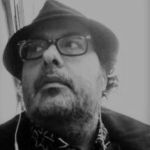
Four years after Un altre jo, Guillamino releases Fra Júpiter, a splendid album mostly written and recorded during the artist's stay at the guesthouse of the Poblet Monastery. Pau Guillamet (Barcelona, 1976) sought peace and focus within the venerable walls of that place, where he also found inspiration by sharing the liturgies of the Cistercian monks. The result can be savored live - and in the company of the same children's choir that participates in the album - on February 1st at Nave B1 in Granollers, and on the 3rd of the same month at the Barradas Auditorium in L'Hospitalet de Llobregat, in this case as part of the XXIV Barnasants Festival program.
Why did you decide to go to Poblet to make the songs?
I needed creative stress, to put myself in a situation. When you're at home, you end up doing nothing, because now you have to take care of this and then that. Inspiration at home is complicated: exceptional events must happen and, at home, there is usually nothing exceptional, everything is routine. I knew that if I set myself a temporal and spatial limit, it would work, because it has worked many times doing it that way. I thought Poblet was a good idea, since it's close and at the same time very far, in the sense that it's very different. Some friends had already told me it was a good place to work. I made a special request to make music. Although I thought they would say no, they said yes, but that I would have to work in the music room of the Torre Real, which is a fantastic, spectacular place. It's a very large room with a Gothic ogive, with a very beautiful reverberation, where there is practically nothing: a music stand, a tapestry, a chair...
How was the experience?
There was a whole liturgy every day between singing with the monks and eating with them. I arrived on a Sunday night and went directly to vespers mass. I thought those people would start praying, but they sang. A very beautiful modal chant that immediately made me think a lot about auto-tune and trap... The guitars and voices of the entire album are recorded there except for the Sangtraït version [Senyors de les pedres] and Cançó [adaptation of the homonymous poem by Màrius Torres]. I also imposed a technical limitation on myself, which was to work directly with the small microphone of the laptop I was carrying.
What did living with the monks and being in a place like that bring you?
Following their routines was part of the charm of it all. I went to three services a day out of the six or seven they do, and my life was quite ordered. I would get up at seven and go to eight o'clock mass. That's three quarters of an hour without breakfast. After breakfast, I would go to the music room, which had no heating: I had to work with my jacket on, and it was tough. At noon I would go to another very sunny chapel, take a break and could go for a walk through the vineyard, but when I finished I had to go back to work immediately, because at a quarter to seven the vespers mass was already starting. I had to get electricity from outside the room, with an extension, and every time I rehearsed I had to dismantle everything: I couldn't even leave it to go eat! You have to adapt to these small privations, and they condition your perception and decisions. The difficulties led me to focus more. And in the masses I found fabulous ideas. I have written my own lyrics, but the album also contains fragments from the Old Testament: Perdura eternament el teu amor, in Càntic d'entrada… all of this is literal but then I add my own verses. Then there are songs that are one hundred percent my own.
Are you a man of religious beliefs?
No, no. Liturgy and spirituality attract me, but I don't believe in God.
The album's sound moves through acoustic, electronic, and soul. How do you find this formula?
In principle, this album was supposed to be just voice and guitar, recorded entirely there. A completely folkie album. But after my stay in Poblet, I showed the demos to friends, acquaintances, and some told me: "but man, are you sure you won't put any rhythm? This isn't exactly folk, eh! I see it a bit as soul...". In the end, I thought that in some songs I saw an organ, and when I started doing the organs, things took on another color. Then it occurred to me that I could do guitar, organ, and that instrument from Trinidad and Tobago called steel drum, but in the end, I decided on drums and bass, which I recorded myself.

The album also features the Petits Cantors de la Societat Coral Amics de la Unió de Granollers. What contribution do they make? I wanted to confront the reverberated folkie atmosphere with these clear voices. I looked for a young age range so that the voices would still be unpolished, with a certain tremor. I found some very well-prepared and disciplined children, with brutal memory and retention, but who, at ten years old, still had the timbre that interested me to evoke a certain point of innocence.
Earlier you mentioned the Sangtraït version and the adaptation by Màrius Torres. Why did you want to include them on the album? I felt like looking for a version of something very much our own, and also an adaptation, because I hadn't done one since eXile and Pere Quart ten years ago. As a youngster, I was a fan of Sangtraït and, in the case of Màrius Torres, I found one of his poetic anthologies and I liked it because this was the last poem he wrote. I read a bit and found a very beautiful story. Torres finished Cançó a few days before dying very young of tuberculosis and he was also studying harmony and solfège to compose. I thought that perhaps he would have set this last Cançó to music… since he couldn't, I would set it to music for him.
Fra Júpiter… why is it called Júpiter?
The euphony somehow comes from Poblet. They are all friars there: I was attended by Fra Borja, there was also Fra Rafael, Fra so-and-so... Fra [friar, in Spanish] is nice. Friar sounds different, but Fra can be like DJ Fra... it's cool, it's very exotic: eff-arr-ay… what language is it? I named it Júpiter basically so it would sound good.
Now it's fifteen years since you released your first album. When you look at the work you've done, how do you see yourself?
I see myself well, happily out of the industry. I've never done the same thing, each album is different, and I play at that. Since I started working, I've gotten involved in all kinds of projects, some of them commissions, and that's how time has passed. My consistency is to be very inconsistent. There are people who build careers with a formula and keep repeating it with small variations, but not me. I don't pretend anything and I don't have any strategy.
Add The New Barcelona Post as your preferred Google source for free
Stay informed with the latest news.