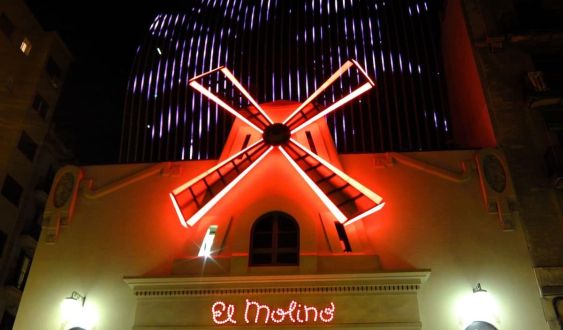
After economic difficulties forced its closure two years ago, a situation aggravated by the pandemic, a key institution for the city's history like El Molino will reopen next year. The Barcelona City Council has acquired it without outstanding debts for 6.2 million euros to prevent its disappearance and give it a new use.
For the mayor of Barcelona, Ada Colau, it was essential to save El Molino, a "symbol" for all Barcelonans. "It is part of the memory, the present, and the future of the city," she defended. An immediate future in which the council wants to bet on culture as a way to overcome the coronavirus crisis, where this music hall will be integrated into the new centrality that they want to promote in Paralelo, with new approaches for other spaces such as the current Sala Barts and the Teatro Arnau.
El Molino will become a new municipal cultural space, designed to host different contemporary artistic expressions, without losing the "rascal" spirit that has always characterized it, according to the delegate of Cultural Rights, Daniel Granados. It will be integrated into the network of Culture Houses that the council is developing in the city, along with the future Casa de la Música in Barts, a model characterized by public ownership of the space and its private management.
Thanks to the recent renovation carried out in El Molino, the new facility will be able to open quickly. In the coming months, the public tender for its direction will be held, where the project will be fully defined. The Arnau, next to Barts, does not share the same fate, as it continues without a calendar for the pending comprehensive renovation. The executive project is already finished, but the budgetary allocation for the works needs to be found. "We don't have a clear deadline," Granados explained.
A 21-year-old son
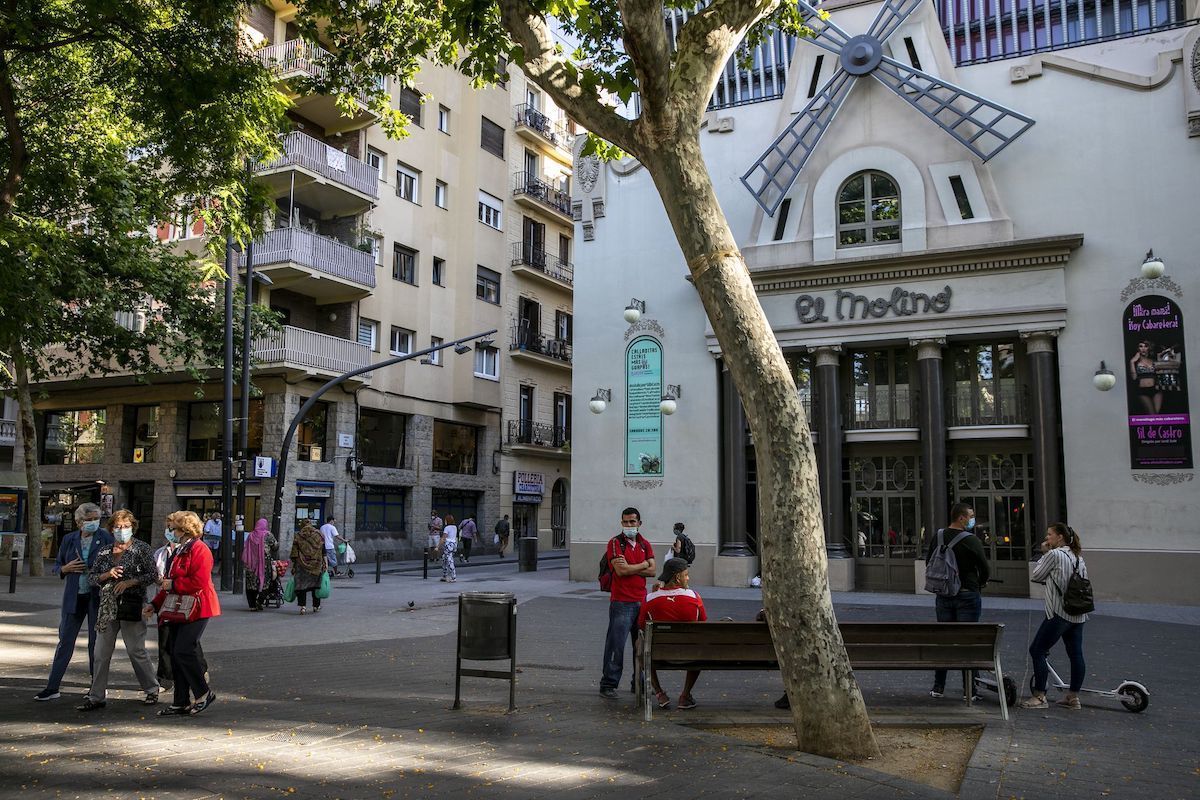
The until now owner of El Molino, Elvira Vázquez, who presented the purchase agreement with "a broken heart," despite being aware that it was the best option, has asked the City Council to take care of "her son" and treat him with love, allocating all necessary resources to guarantee his future. On this matter, the CEO of the company Ocio Puro placed special emphasis on the need to improve the condition of the square in front of it.
To keep the traditional identity of the music hall alive, Vázquez has brought red feathers, "my son's suit," for Colau and the different municipal representatives involved in the operation, for whom she only had words of gratitude, especially for the Deputy Mayor for Urban Planning, Janet Sanz, a figure she assured was key to making it possible.
In that sense, the former owner explained that she has received many purchase offers, and higher than that of the city council; she even indicated that she received one yesterday. But Vázquez did not want its essence to be lost in the hands of foreign investors. She did not want to reveal any names, but she promised that she will start writing a book about the 21 years of history she has lived with El Molino since she took over its management.
Add The New Barcelona Post as your preferred Google source for free
Stay informed with the latest news.
