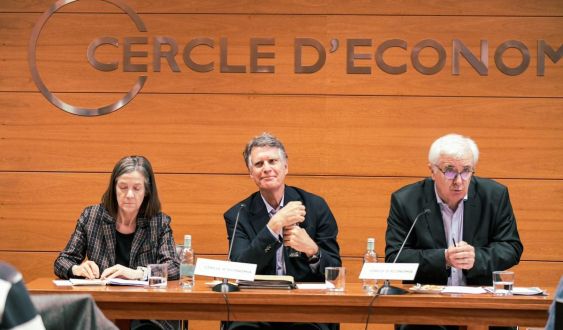
The Cercle d'Economia is once again calling for a reform of the financing system. According to the institution chaired by Jaume Guardiola, "the opportunity cannot be postponed or missed" to materialize it, taking advantage of the fact that it is at the center of political debate, since the current model "is outdated and does not work."
According to the Cercle, this reform must pursue a federal model that ensures interterritorial solidarity. Thus, the business entity opts for this model to the detriment of one similar to the Basque "concierto económico." "The Cercle has always had this more federal vision and has defended that the provision of services must be done with equity," Guardiola highlighted. And it is that "in the Basque and Navarrese model, the contribution to solidarity is so small that it would not be sustainable if it were done throughout the State," emphasized the vice president of the Cercle, Teresa García-Milà, also alongside the entity's general director, Miquel Nadal.
To redefine this interterritorial solidarity, the Cercle has reiterated that the system must respect the principle of ordinality and promote transparency and effectiveness, and proposes calculating it strictly based on population. However, if corrective criteria are applied as currently occurs ---based on population dispersion, insularity, and other factors---, it calls for adding the cost of living and price levels in the different territories.
In addition, the institution has advocated for an independent committee of experts to evaluate the calculations on which the distribution of resources between the Generalitat and the central administration is proposed to be established. "We are facing a great opportunity and, if it ends up materializing, it will mean a paradigm shift and a fundamental change in financing systems," Nadal insisted.
To undertake this reform, the Cercle emphasizes that the Catalan Tax Agency must be strengthened, which, in turn, will pose two challenges: the need to provide it with more resources and personnel, and to ensure an orderly and coordinated transition. To guarantee this, the institution proposes that members of the state Tax Agency be integrated into the governing bodies of the Catalan one, and that automatic payment settlement mechanisms be generated, in order to optimize tax management and facilitate the fight against fraud.
"The new system we advocate does not mean that the central administration disappears from Catalonia, but rather that it retains a large part of the tax regulatory capacity and requires collaboration mechanisms, which ensure that the State Administration remains very present in Catalonia at a fiscal and tax level," Nadal pointed out. The general director also noted that the financial reform opens the door for the system to extend to other autonomous communities, although "few have their own agency or the scale to sustain it." Thus, the Cercle proposes a reform that keeps Catalonia within the common regime, in which other particular cases already exist, such as that of the Canary Islands.
An "arbitrary" debt compensation
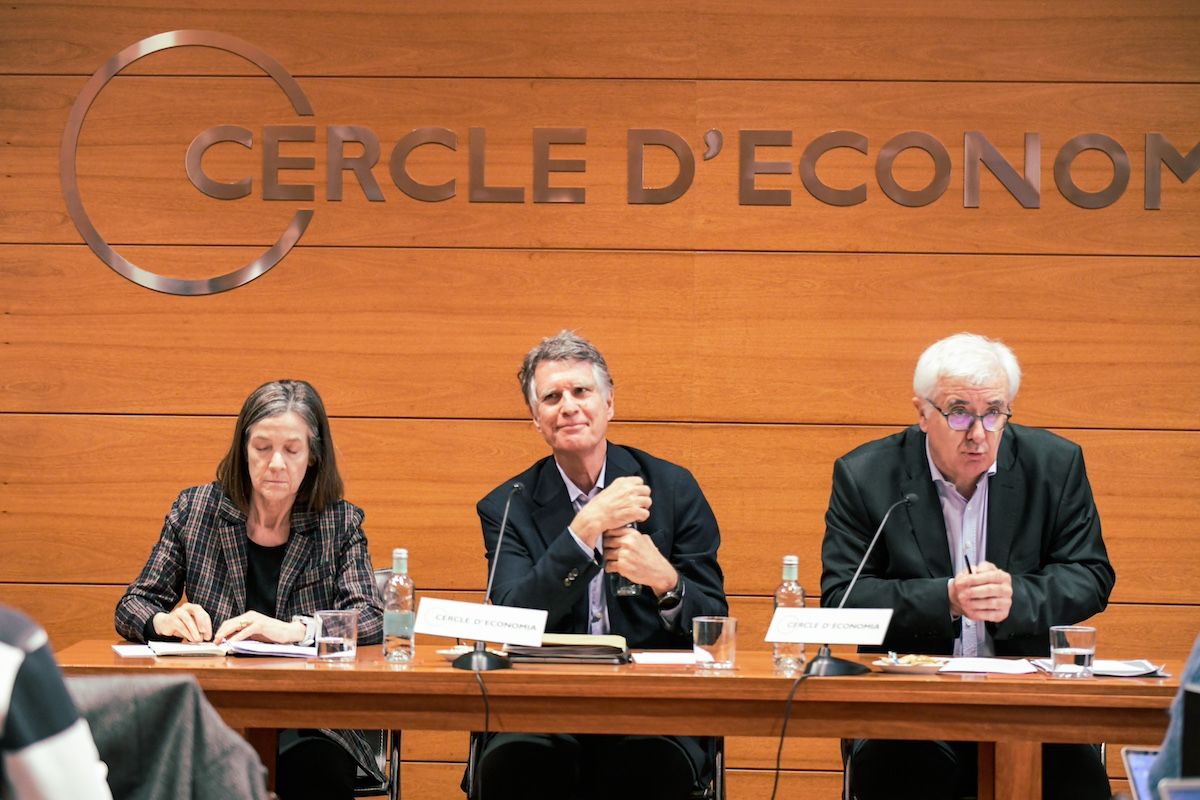
And the Cercle goes beyond the financing of Catalonia: it advocates for increasing the levels of resources received by the autonomous communities by increasing their participation in taxes to break with the vertical imbalance that has led the State to collect more while the autonomies have increased their need for spending. In this sense, the entity proposes using debt forgiveness as a way to compensate for this imbalance, in line with the proposal of the Ministry of Finance. However, it considers that this proposal has been decided "arbitrarily," and only "partially compensates the accumulated underfunding of recent years" of the autonomous communities, according to the institution.
"Experts estimate that, if debt forgiveness had been done taking into account this underfunding, it would be 20% higher than what is being proposed," Nadal added. All with one goal: "What must come out of the reform is a significant increase in resources for all autonomous communities."
More solidarity from Madrid
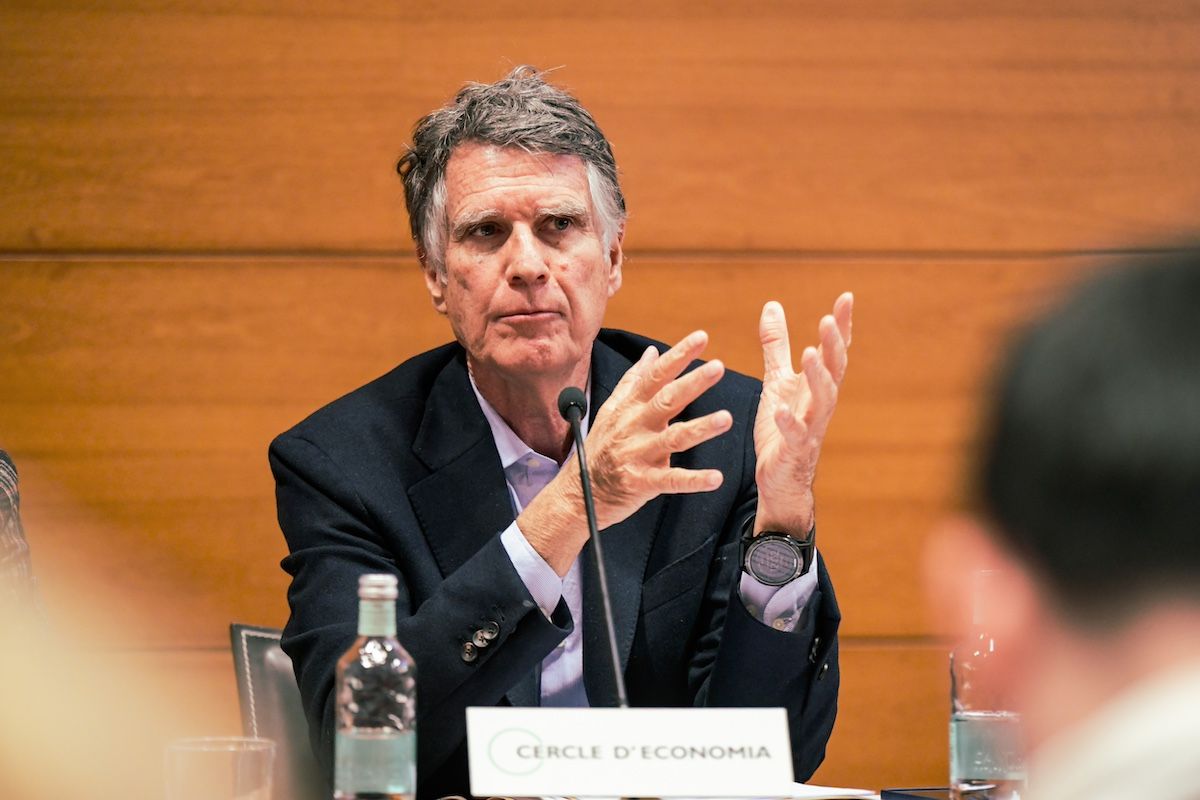
Among these territories, the Cercle pays special attention to one of them: the Community of Madrid. "Being the capital implies responsibilities and also advantages, both intangible and tangible," as Nadal stressed. For this reason, the Cercle proposes evaluating the impact of being the capital and hosting a large part of the central administration, to study compensating it with interterritorial solidarity mechanisms.
And Guardiola has gone further: "Each community can decide on its taxes and its bonuses, but what doesn't make much sense is that the advantages of being a capital city can be used to transfer them to a tax offer that causes a 'vacuum cleaner effect'," he concluded.
Add The New Barcelona Post as your preferred Google source for free
Stay informed with the latest news.
