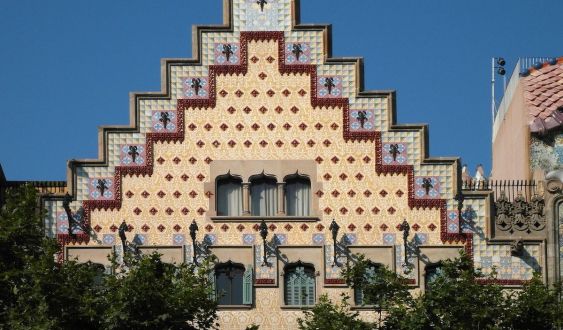
Science, although it has tried on not a few occasions, has not yet found the formula for time travel. While the solution to go back and mend a past mistake, or even reunite with those who are no longer here, is not found, the only way remains series, books, and movies, which teleport us to remote eras and even make us imagine future lives. However, in the heart of Barcelona, without having to resort to those movies and books, one can travel to the 20th century by simply entering Casa Amatller.
Entering this building becomes, in itself, a temporal journey, as its interior and furniture seem to have been frozen in the last century, with no trace of mobile phones or laptops, and long before the big luxury brands, the intense traffic of modern life, and fast-food chains filled the street where it is located, Paseo de Gràcia. The building hides, in fact, the only modernist interior in all of Barcelona that preserves all its original furniture. Four hundred square meters of time travel, with furniture from 1900, when Puig i Cadafalch's modernist renovation took place. A hidden gem of Barcelona, often overshadowed by the fame of its neighbor, Casa Batlló.
However, not only has its furniture been frozen in time, but Casa Amatller, to commemorate ten years since it opened to the public as a house-museum on March 12, 2015, has celebrated a modernist party to bring its owners, the chocolatier Amatller and his daughter Teresa, back to life. A theatrical visit, together with the historical reenactment group Llum i Color del 900, in which its original owners come to life, dressed in top hats, tuxedos, large hats, and pompous floral dresses, and still sleep in their rooms, manage the chocolate factory from their office, celebrate parties in their living room, and play the piano.
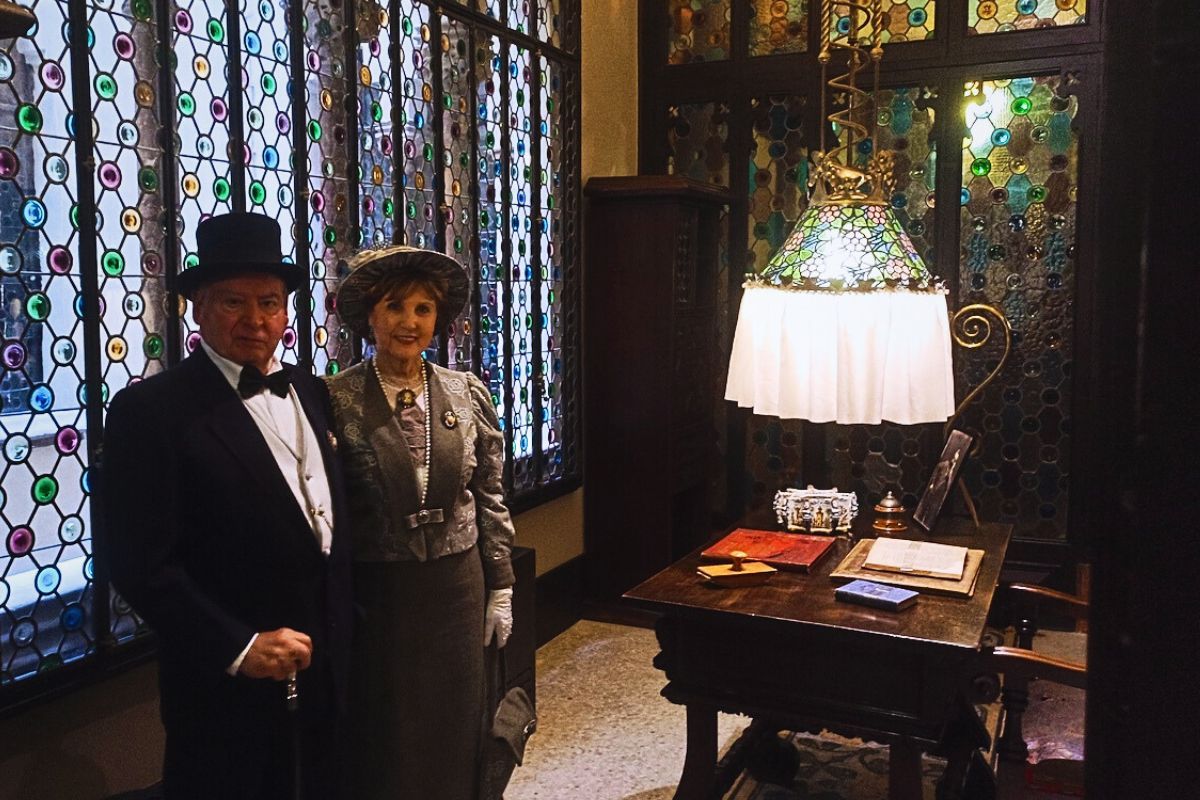
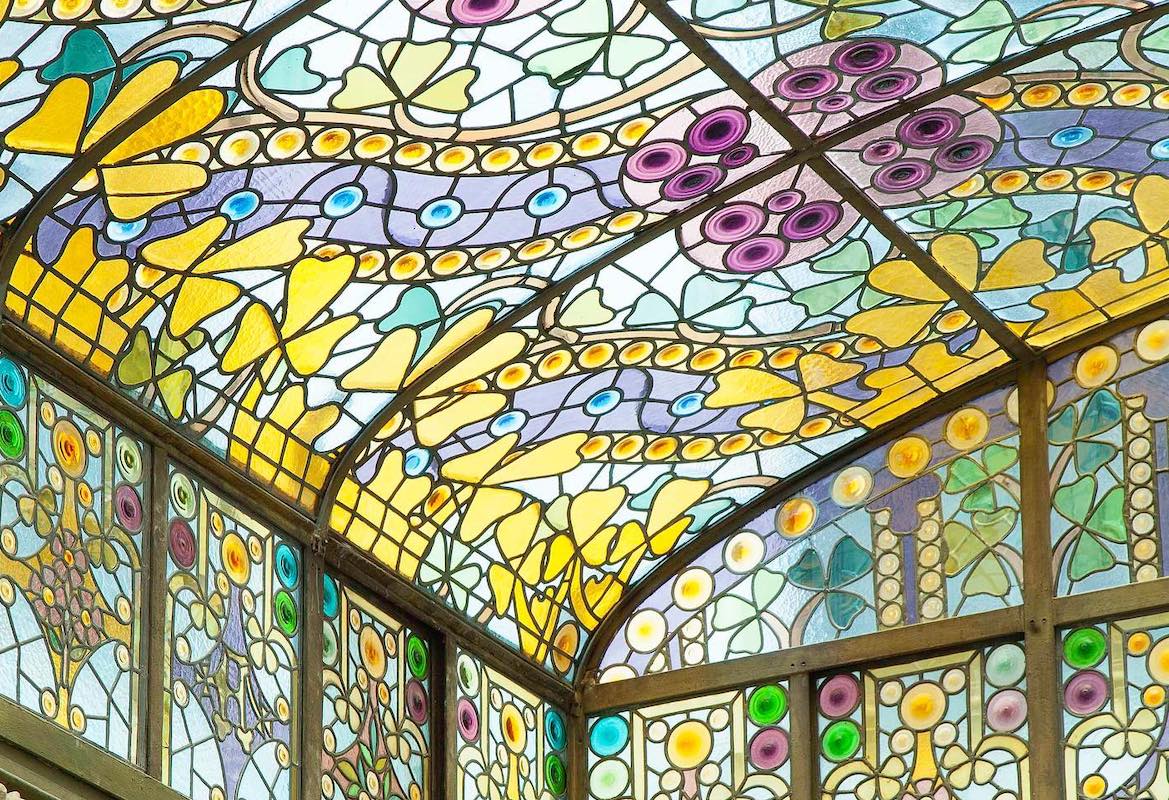
To enter the house, in fact, we must put on plastic shoe covers to ensure we do not damage the original 19th-century parquet. After ascending the staircase presided over by an imposing floral skylight, we are greeted by Teresa Amatller herself, immersed in a dress fitting to attend the Liceu that same Sunday. Teresa, a great enthusiast of theatrical arts, was the daughter of Antoni Amatller, a third-generation master chocolatier, who decided to buy this house on Paseo de Gràcia, until then known as Casa Martorell, to convert it into his residence. A building that had been built in 1875 following the prevailing neoclassical style of the time, after Cerdà's reform, and was located in a strategic place since at that time Paseo de Gràcia was already being configured as the main urban axis of the city.
To settle in, Antoni decided to reform this building to adapt it to the modernist aesthetic of the era. Thus, he hired one of the most renowned architects of the time, Josep Puig i Cadafalch, creator of other imposing buildings, such as the Casa de les Punxes or the Palau Macaya. Cadafalch intervened in the property between 1898 and 1900, in charge of reforming the first floor, the main floor, where the family would live, the main hall, and the grand staircase. After the reform, Antoni could only enjoy the house for ten years, as he died in 1910, so Teresa became the sole inhabitant of this first floor, while the other floors were inhabited by families who rented them; a model that is replicated today, as the house-museum shares a building with other offices and uses.
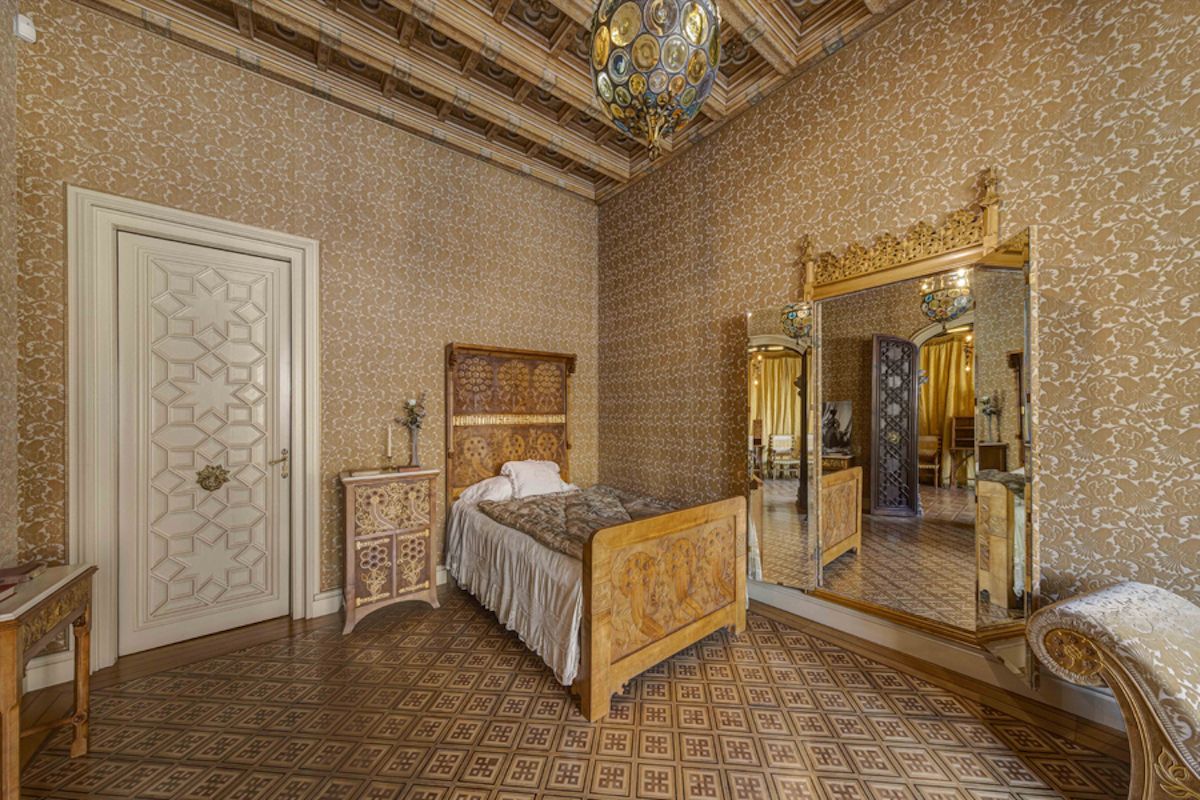
The entire interior is as Antoni and Teresa left it, with Teresa enjoying the house alone until her death in 1960, except for the dressing room which she decided to reform in 1934. During the visit, Teresa is in charge of showing us her room, completely decorated with gold, a material found even on the headboard of the bed, decorated with gold leaf, and presided over by a lullaby by Jacint Verdaguer, "feu-li, orenetes, cançons d'amoretes". A golden room that contrasts with Antoni Amatller's quarters, more faithful to Cadafalch's medieval taste, which are darker, though always adorned with large floral lamps of modernist aesthetic or large floral stained-glass windows.
Throughout the house, visitors find clues not only to the family's surname, with almond leaves as decorative elements in several rooms, but also to their chocolate-making profession, such as a sculpture presiding over the dining room with a European queen and an Aztec one, referring to the long journey this ingredient makes from the Americas. After Antoni's death, and to preserve this valuable heritage, Teresa followed her father's orders, who had expressed that if she had no descendants, "the house should belong to the city of Barcelona."
Rumors explain that perhaps Teresa was shocked by her parents' separation when she was still a child, and her mother's subsequent departure to Italy, following an opera singer she was in love with. Whether this is true or not, the fact is that she never married or had children, so she decided to create the Amatller Foundation and the Amatller Institute of Hispanic Art, to preserve the house's heritage and its private collection and encourage research in art history, foundations that are located on the main floor, where she and her father had lived. In 2010, the foundation decided to open the house to the public, restoring the essence of 1900. After five years of renovations, in which the furniture was returned to its original place and its original decoration was restored, the house-museum reopened to the public ten years ago.
The house is one of those jewels that Barcelona residents, even if they have walked past it on numerous occasions, still do not know about. The building is located at the intersection known as 'the block of discord' because it contains the three most famous modernist testimonies of the Catalan capital: Casa Lleó Morera, by Domènec i Montaner, Casa Batlló, by Antoni Gaudí, and Casa Amatller, by Puig i Cadafalch. Of these three, Gaudí's house takes the greatest prominence among neighbors and tourists.
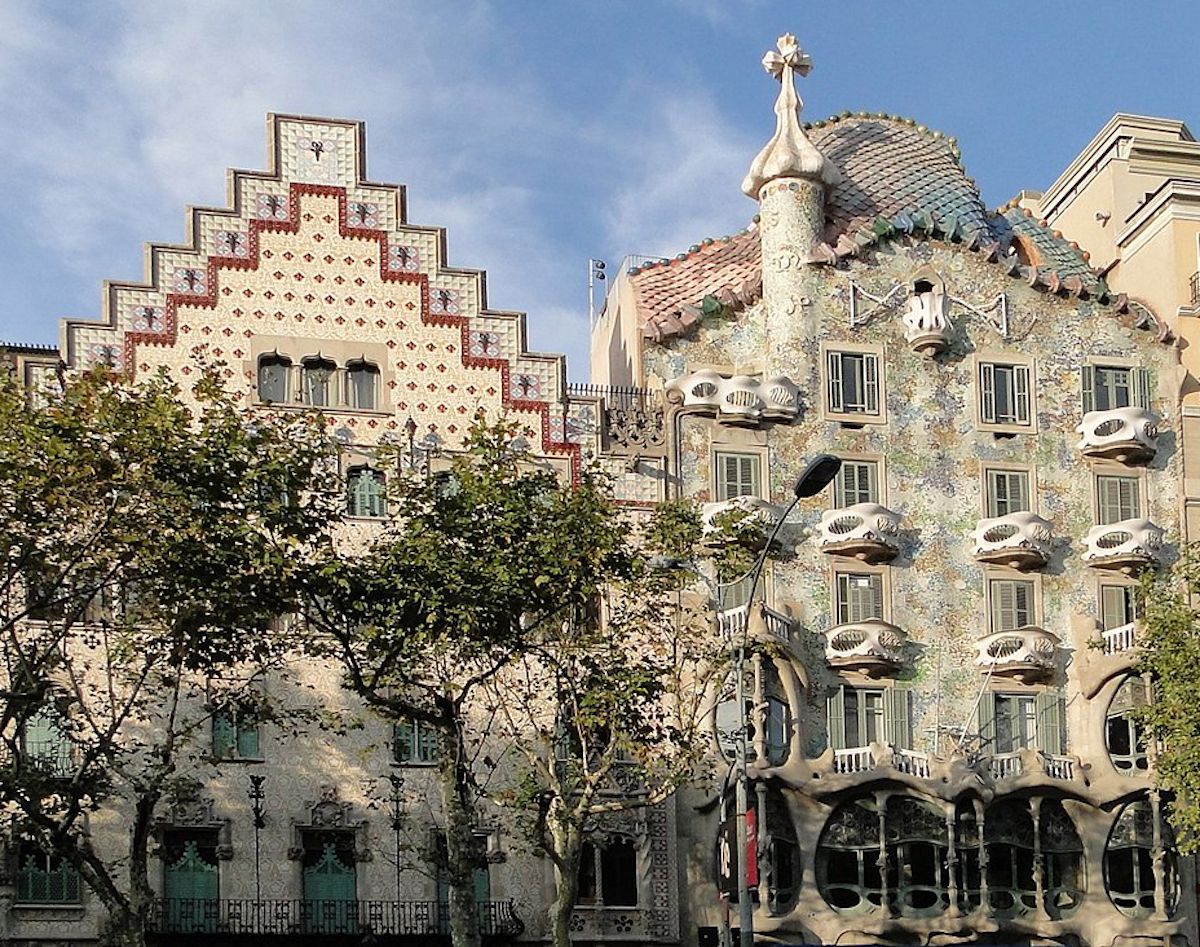
"Nor do we want to compete with Casa Batlló, as we have a very different visiting model. We are great advocates of guided tours in small groups, with an important museological discourse, because we must be very respectful of heritage," explains Isabel Vallès, promoter of Cases Singulars, the company that manages visits to Casa Amatller. Thus, access is only possible in small groups every half hour and in a guided manner, either with a guide or an audio guide.
A model, therefore, different from that of Casa Batlló, which increasingly opts for technological innovation and reality, and also contrary to the ground floor occupied by Casa Amatller, now converted into a digital arts space, which, until April, explores the lights and shadows of Goya. In fact, visitors enter directly into the art center to be illuminated by virtual reality or head to the cafeteria on the ground floor without even observing the house's ceiling, which is presided over by an impressive skylight.
Thus, the only part that has changed from the original is its garden which, if at the time it was eight hundred meters of plants and nature, has now been reduced to a terrace, with a few flowers, overlooking Eixample buildings full of neighbors oblivious to the centenary history hidden behind Casa Amatller. A terrace from which the back of Casa Batlló can also be seen. History relates that, although they were neighbors, the Amatller and Batlló families did not have much of a relationship, as they coincidentally never attended the public parties that both organized. In the garden, very different from the original, we can indeed taste a cup of this drink that enriched the Amatller family, following the original recipe of Antoni's grandfather, although the company is now in the hands of Simon Coll, to whom Teresa sold it.
The visit also allows one to delve not only into its furniture and characters, but also into its hobbies. Antoni was a great lover of collecting and travel, and in his rooms, one can observe souvenirs from distant lands, letters, and even invoices, handmade and calculated in pesetas. Antoni was also passionate about photography, as demonstrated in his photographic studio located on the fourth floor, where the theatrical visit ends. A studio for which he had to pay a fine, as he built one more floor than allowed by the Pla Cerdà, but he didn't care because his passion for the camera was such that he even participated in exhibitions in New York or Berlin. Thanks to these photographs, in fact, the interior of the house has been faithfully reproduced.
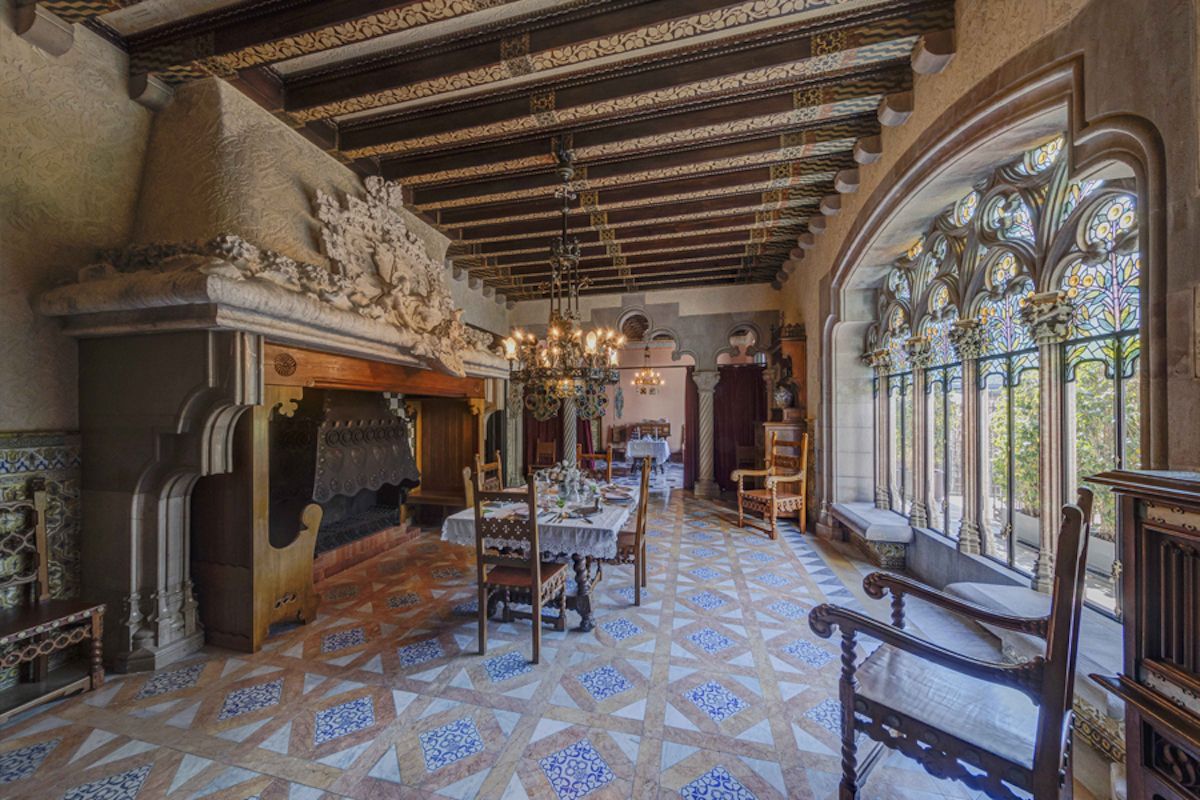
"Any day you have time, stop by and I'll take some portraits of you," Antoni Amatller bids us farewell before leaving his house. However, Casa Ametller does not need to dress in period costume, as it has done on the occasion of the tenth anniversary of its opening to the public, to offer us a journey through time without leaving the center of Barcelona. Its imposing interior, faithful to the original and to modernist aesthetic criteria, which make it the only original modernist interior preserved in the entire city, speaks for itself, without the need to revive Antoni and Teresa.
Add The New Barcelona Post as your preferred Google source for free
Stay informed with the latest news.
