
A journey of almost 200 photographs explores its limits in Expanded Visions. Photography and Experimentation, an exhibition that can be seen until August 20 at CaixaForum Barcelona. The exhibition squeezes everything that defines this art, forgetting about just having to look good or portray reality, and forging alliances with other approaches, from science, cinema and social criticism to surrealism, constructivism and futurism. And, above all, daring to play, whether using the mouth as a shutter, as Jeff Guess did, or filling a washing machine with developing and fixing products in the detergent drawer and seeing what happens, as Steve Pippin thought of. But it is not necessary to propose such imaginative experiments and, sometimes, you just have to turn things around and stop to look at the artistic beauty hidden in what a microscope or an X-ray shows.
The exhibition, made in collaboration with the Centre Pompidou, as was already done for Camera and City. Urban Life in Photography and Cinema (2020), confronts the different elements that make up what is considered a good photograph, forcing and overcoming them, demonstrating that if it is poorly lit or blurry it can also be worthy of admiration and be full of content. The tour begins by cheating the light with one of the main exponents of experimental photography of the early twentieth century, Man Ray and his photograms ---photography obtained by placing an object between the sensitive paper and the light source---, also known as rayograms in his honor. The American artist subverts the photographic process and also the meaning of the objects he represents, completely everyday but decontextualized, giving them other readings and relationships.
Vera Lutter raises the stakes with Rheinbraun I, August 21-22, 2006 to construct a mega negative image made with a pinhole camera ---a black box into which a photosensitive surface is introduced---, creating a phantasmagorical interpretation of the reality of a coal extraction point in Germany. Through a different technique, she transforms it into an imposing monster, with people turned into specters that roam around it due to the extended exposure time. Other artists present in the CaixaForum exhibition who inject new life into infrastructures or urban and natural spaces are Tacita Dean, modifying a real landscape to turn it into a fictional and apocalyptic one in Quatemary, and Thomas Ruff, with images captured with thermal cameras in Nacht that he manages to make almost alien-like.
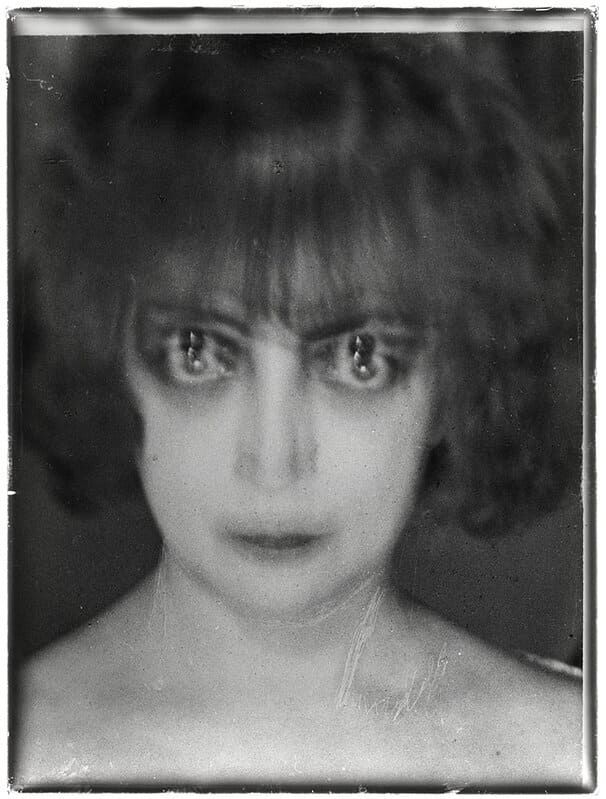
Then comes the turn of movement, a characteristic that causes an allergy to any photographer, but which in the CaixaForum exhibition serves to express oneself from another point of view. There are the more aesthetic compositions like those of William Klein, better known for his role as a fashion photographer, and Raymon Hains, close to pictorialism with Les deux croix.
There are also more reflective and intimate proposals, especially that of Alix Cleo Roubad, who wanted to self-portrait through her breathing, placing the camera on her chest and letting her breath fog up the snapshots she captured of the landscape in front of her, obtaining a dark and mysterious piece, again a bit phantasmagorical. Lighter, but no less loaded with meaning, is Olafur Eliasson with his Pedestrian Vibes Study, in which seventeen photogravures show with very fine lines how his own body moves, full of led lights that draw his movements in a completely dark room. The result could be the reports emitted by a heart monitor, a seismograph, or even a polygraph.
Alix Cleo Roubad wanted to self-portrait through her breathing, placing the camera on her chest and letting her breath fog up the snapshots she captured of the landscape in front of herAnother stop of the exhibition analyzes the malleability of photography, using classic techniques in a different way to try new approaches and, by rebound, make visible a great ignored aspect of this art, the process behind it. Among them, the impressive and overwhelming photogravure ofBeatrice Caracciolo, with granulated black and white flames that seem like they could escape the frame. Also noteworthy is the strange composition ofPierre Cordier. It is a chemigram ---an image produced by applying chemicals directly and in full light onto sensitive paper--- that could be many things and resembles organic forms, like the drops seen on windows with rain. Finally,Curtis Mann withTwo Attemps (Olive harvest, Palestine) evoking the Palestinian conflict in an everyday image, the olive harvest, by simply pouring bleach on the image, staining it with fire by damaging it.
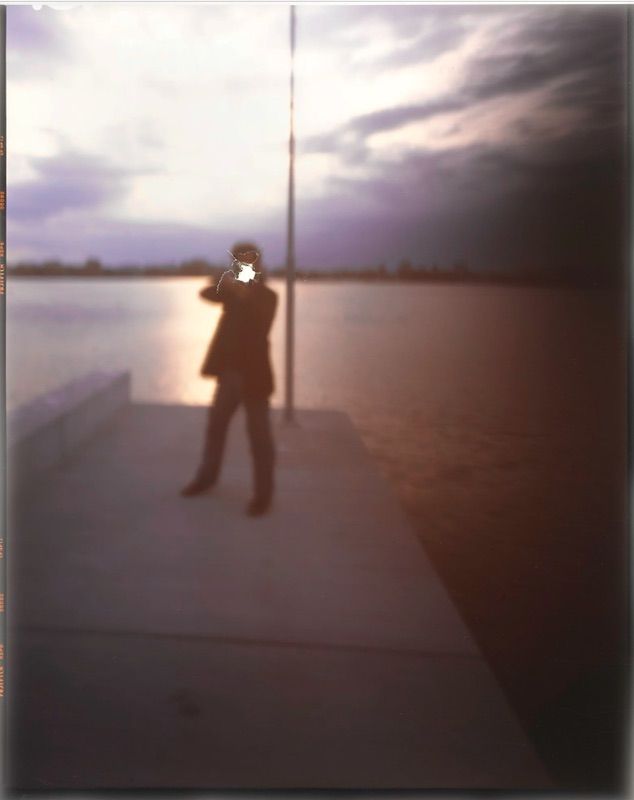
Expanded Visions. Photography and Experimentation at CaixaForum explores multiple alternatives by a hundred artists from different eras, ranging from the early 20th century to the present day. The exhibition is tinged with a somewhat macabre touch, either because it breaks with the usual or because black and white dominates, but it also presents suggestive and profound images, far from easy, constantly raising questions. From how to give a second chance to discarded negatives and pair them with others (Lisa Oppenheim) to how to represent something as immutable as a stone from many reflections (Noémi Goudal). And there are even those who dare to shoot at the lens, clearly, pushing the limits of photographic technique.
Add The New Barcelona Post as your preferred Google source for free
Stay informed with the latest news.
