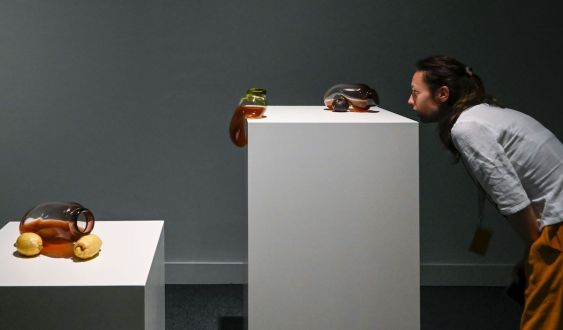
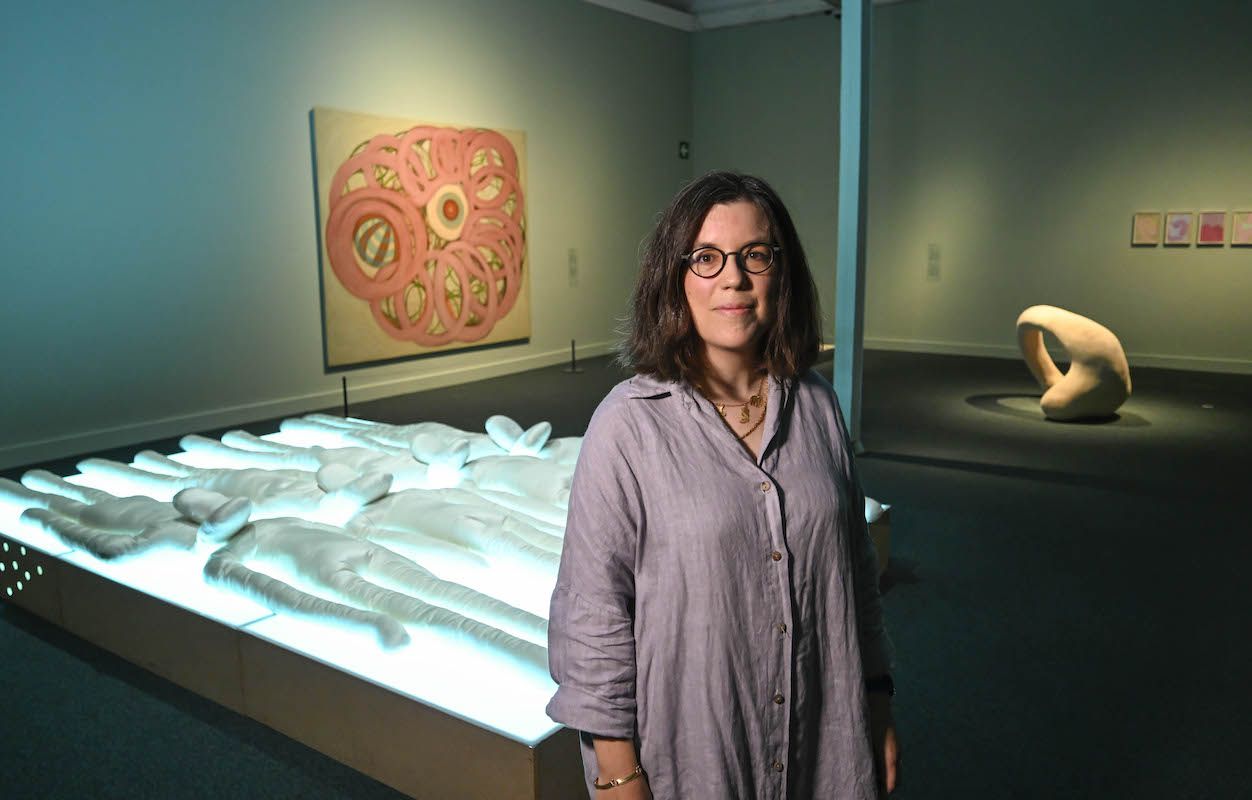
There are many elements that affect life that one doesn't even think about because they are not seen. One of them is fungi, essential for allowing human existence and that of most planetary companions. With a collective imaginary that depicts them as unattractive ---and even dangerous---, preventing them from being able to claim their essential contribution, Alba Colomo wants to reverse this paradigm and put the focus on these organisms, teaching about them and dignifying them. Digerir el mundo donde está (Digesting the world where it is) is the exhibition she has configured for this purpose, made up of about twenty works, including paintings, sculptures, drawings, installations, textile works, and audiovisual material. It can be seen at CaixaForum from this Wednesday until October 30.
"An art exhibition has to serve to tell stories, and this one seems urgent to me," defends Colomo, current director of the creation factory La Escocesa. Not only because of the vital function of fungi but also because of the context of climate emergency that threatens the present, with extremely high temperatures that give no respite and a multitude of fires that destroy everything. She does so from an ecofeminist reading, present both in the discourse of the exhibition and in its composition and selection of artists.
As a door to this reflection, the exhibition begins with two fungi at the entrance, a sculpture by Gabriel Alonso formed by an accumulation of organic materials growing on the wall. It is followed by one of the living works that have been included, with three kombucha mothers fermenting in glass containers by Inês Neto dos Santos. "For me, it was essential to bring life into the room and for the bacteria to coexist with the rest of the works," remarks the curator. Following the spirit of the exhibition, nature imposes itself and, given the fermentation that this drink produces and the growth it implies, the content will have to be changed every ten days. The fruits that accompany it are also alive. To prevent their deterioration from affecting the work, they will be replaced.
But not everything is about fungi. Colomo interprets the contribution these organisms make, as well as the collaboration they establish innately, and equates it with care, another invisible element in society, but essential for its functioning. This is seen in Sue Williams' painting Isolated and Elongated on Green, in which an infinity of bodies float together, merging with each other, without distinguishing their limits, highlighting the interdependence that humans have with others and the impossibility of their isolation.
The bodies, naked, also show their vulnerability. Sue Williams captures this, but also Tacita Dean's film, Géllert, in which a group of women bathe in thermal baths in Budapest. Again, collectivity and interconnection with others, always inexcusable. And this natural dependence is even more represented when others are our support, as in Victoria Civera's Va y ven: miradores de estrellas. Teresa Lanceta closes the chapter with a never-before-exhibited work, the tapestry Verano de 2017, another example of relationships, collectivity, and anonymous stories. To Colomo, the forms of the tapestry remind her of fungi.
New readings
Colomo's exhibition is part of the Comisart program, designed for emerging curators to configure an exhibition that provides new readings of the art collections of Fundación La Caixa and Macba. Digerir el mundo donde está is the third of this season, after ¡Ratas! ¡Ratas! ¡Ratas! and La próxima mutación.
Add The New Barcelona Post as your preferred Google source for free
Stay informed with the latest news.
