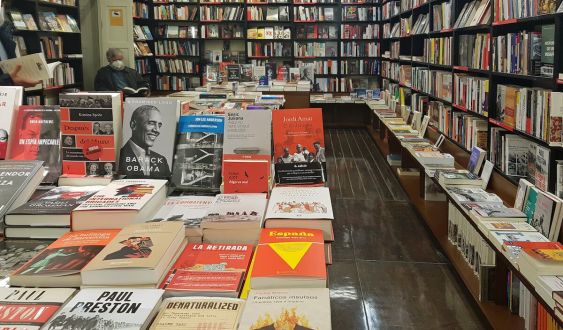
The great Jorge Luis Borges used to say that, of all the instruments invented by man, the most astonishing is the book. I couldn't agree more, and to the merits that the Argentine writer attributes to the book, we should add its capacity for resilience, as it has withstood great onslaughts. For example, that of the technological revolution. Let's remember that just a few years ago, all the gurus of the publishing sector predicted that by 2020, 80% of books would be digital. We are already in 2021, and paper books are the ones that represent that 80%. Not even the coronavirus could defeat the book, and in 2020, the sector maintained the previous year's turnover, which, given the circumstances, is a resounding success.
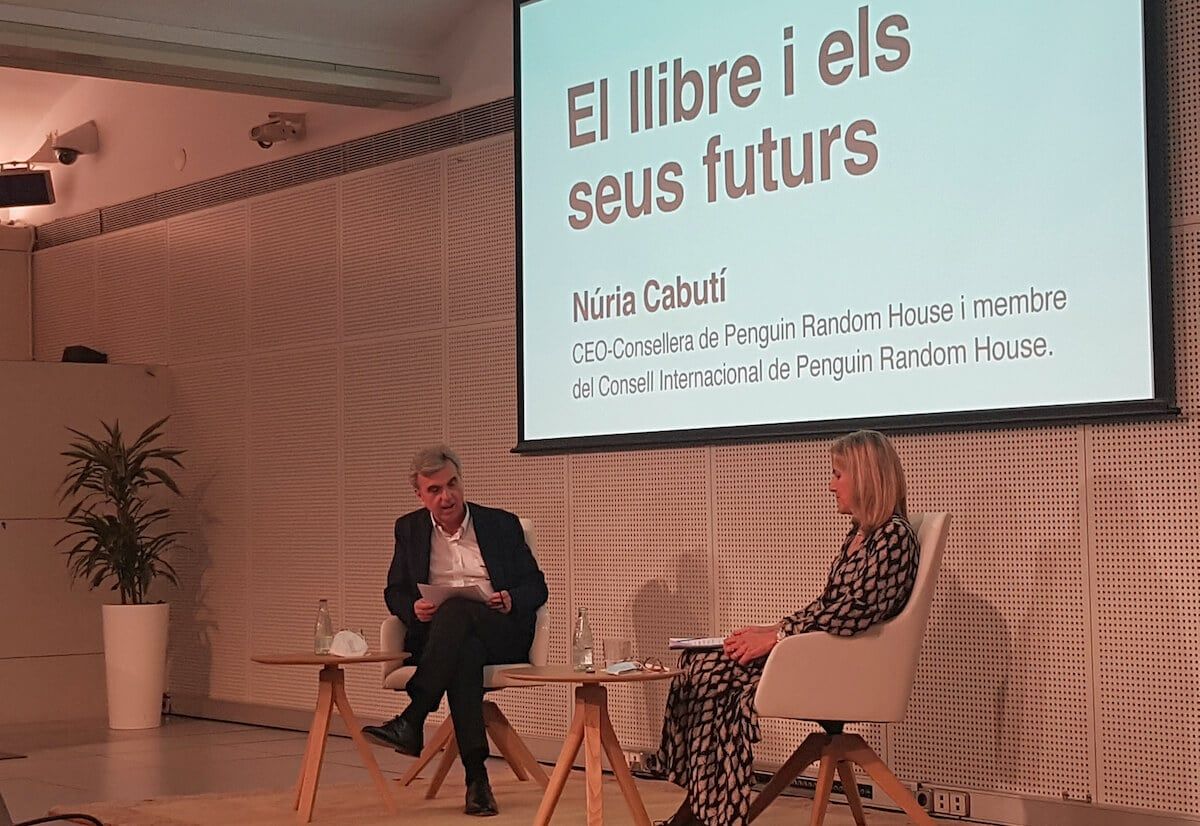
This was certified last Tuesday by Núria Cabutí, CEO of Penguin Random House, who spoke about this issue with the co-director of Hansel* i Gretel* Félix Riera, at an event held at Caixafòrum. Cabutí analyzed the current situation of the book sector and was optimistic about the future, which the pandemic seems to have even strengthened, despite the fact that bookstores have been a segment of the commercial sector that has suffered severe opening restrictions at certain times.
Cabutí explained that the lockdown at the beginning of 2020 caught publishers with warehouses full of new releases for Sant Jordi. As a consequence, in the following weeks, sales drops of up to 70% were recorded. But after this initial impact, there was "a great return" of readers to bookstores; during the summer, the market picked up, and finally, a good Christmas campaign came. In short, the book has behaved like Asterix's Gallic village in the culture ecosystem, one of the great victims of the virus.
Reading, during this tough health crisis, has even acquired a therapeutic role, so to Borges' astonishing attributes, we will have to add that the book heals. Cabutí revealed a Penguin Random House survey according to which the habit of reading has increased by 37% and there is a willingness to maintain it. She also pointed out that in recent times there has been an increased demand for content from the audiovisual sector, in order to adapt books for film and television, which has represented complementary income from rights, although it is still a small percentage of turnover.
Wow, the book has behaved like an Asterix's Gallic village in the ecosystem of culture, one of the great victims of the virusCabutí revealed other positive data about the publishing market. For example, that paperbacks grew by 20% last year and that audiobooks are also increasing sales, although for now they represent only 3%, but with very solid future forecasts. Likewise, during confinement, sales of digital books increased by 40% despite piracy.Another revealing fact: young people opt for the printed format.
The CEO of Penguin Random House also referred to Amazon, and opted to consider this platform not as a threat but as "an engine of innovation" in distribution. Although it is true that it has initially harmed traditional business, it has opened a path from which we must learn and which can benefit the entire value chain.
[subscribe_newsletter_esp]
She also advocated for implementing protection measures for bookstores and strengthening their differential role, which is based on the experience and "authority" of the bookseller over the reader when recommending new releases. According to Cabutí, online sales work very well with those books that are already generally sold, and this is where the bookseller's role is very important to promote other titles beyond the best-seller lists. Finally, she regretted that the fact that Barcelona is a UNESCO World Book Capital is not being taken advantage of.
In short, the book is in good health despite COVID, as the newspaper Le Monde already reported a few weeks ago, on a page where it analyzed the sector in France, with almost identical trends to those that Cabutí pointed out for Spain on Tuesday.
And lo and behold, in these days of street violence and looting of businesses, no one has thought of attacking a bookstore. This leads to many and diverse conclusions. I had to say it.
Add The New Barcelona Post as your preferred Google source for free
Stay informed with the latest news.
