
The Palau Robert hosts the exhibition Underground and counterculture in Catalonia in the 70s. It can be visited until November 28 and I sincerely believe that it is one of the must-see exhibitions of the season. Understand me, everyone does what they please, but if you want to discover or remember the irruption of the countercultural or underground movement in Barcelona half a century ago, you cannot miss it.
The exhibition was conceived and curated by Pepe Ribas, co-founder of Ajoblanco magazine and one of the undisputed countercultural references in our country. The first thing I want to highlight is its thoroughness. It doesn't look like an exhibition at the Palau Robert, not because this center doesn't program interesting and quality shows, but because ---I imagine with the aim of reaching the general public---, the exhibitions it usually hosts are something like a small tasting. In this one, however, we are offered the full menu! Underground and counterculture in Catalonia in the 70s is a very complete exhibition, rich in exhibition material ---more than seven hundred original pieces from the era, which are worth observing carefully--- and with a perfect atmosphere that allows visitors to feel that they are stepping on some of the main stages of that explosion of freedom and creativity: the hippie communes, the Zeleste hall, Canet Rock...
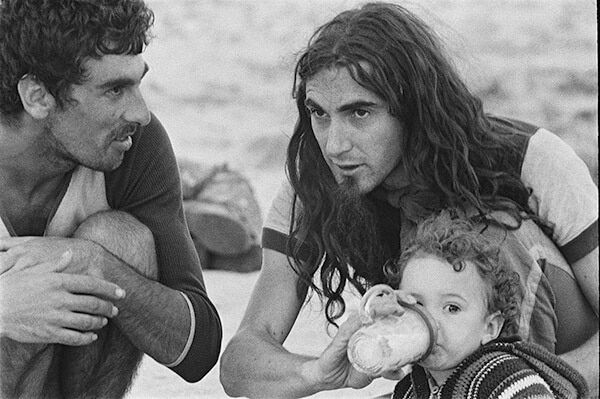
The exhibition is full of photographs of very young men and women who are credited with a crazy desire to change the world and a wide variety of cultural concerns (literature, cinema, theater, comics...). I wonder if that youth of the seventies was made of different stuff or, simply, did what they did because they had no other choice. In 2014, I interviewed the cartoonist and painter Nazario Luque, one of the prominent protagonists of that movement, and I remember him telling me verbatim: "We were underground because we couldn't be anything else." Well, there you have it.
I wonder if that youth of the seventies was made of different stuff or, simply, did what they did because they had no other choiceI also wonder what happened to all those anonymous people who, in the seventies, starred in the undergroundand the counterculture: Will they have preserved that rebellious spirit, so many years later? Do they remain committed to activism and the struggles for social rights? Have they become bourgeois and now remember with a mixture of nostalgia and shame those youthful sins? When they became parents or grandparents, have they become everything they criticized about their respective parents? Have they continued living in communes and practicing free love or did all that end up like the rosary of the Aurora?
When they became parents or grandparents, have they become everything they criticized about their respective parents? Have they continued living in communes and practicing free love or did all that end up like the rosary of the Aurora?I leave the Palau Robert thinking thatI would love for someone to dare to do an exhibition or, perhaps even better, a documentary that shows what they are like now, fifty years later, those enthusiastic Barcelona residents ofundergroundand counterculture. It could be an interesting exercise and we would surely get some surprises.
Anyway, whether or not they have lost that rebellious spirit over the years, we are all a bit children of those long-haired underground and countercultural people who, during the last years of Franco's regime, reflected in the hippies who stopped in the city before going to Ibiza and also inspired by the French May '68, raised the flag of sexual liberation, feminism, homosexual rights, antimilitarism, environmentalism and I don't know how many more.
Add The New Barcelona Post as your preferred Google source for free
Stay informed with the latest news.