Rethinking Barcelona is an exercise in imagination and future. Of how one wants to live the city and what city model one wants to build. But it is also, and above all, an exercise in the present: of what decisions one is willing to make —or avoid— today so that the city is truly more livable tomorrow. From this perspective, Barcelona Global's Barcelona 2040 program set an ambitious goal: to transform the future reflections of the city's young people into concrete, real, and viable proposals to move towards a more livable Barcelona.
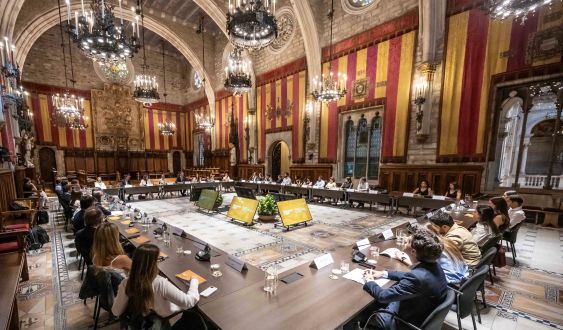
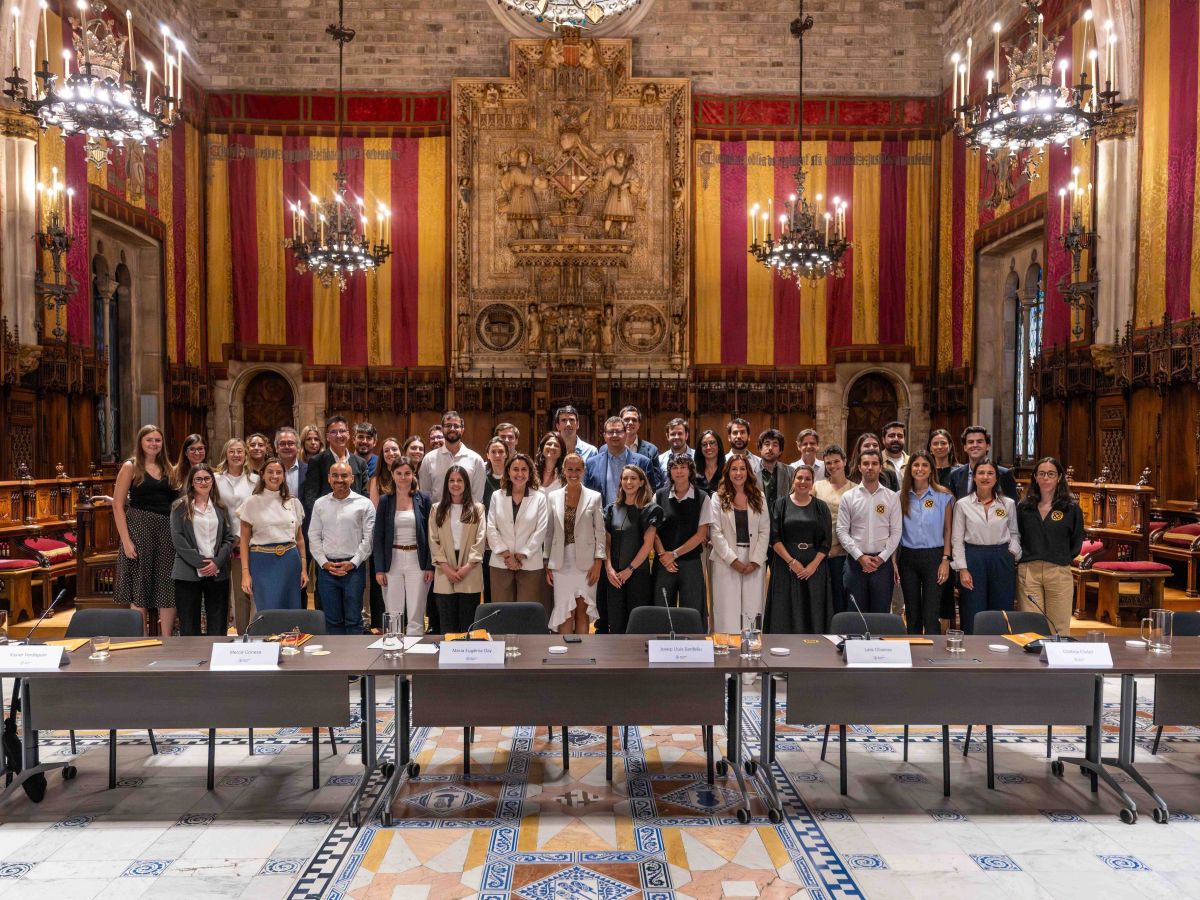
Proposals to face challenges that are not easy to solve, which are located in four key areas of the city: tourism, the preservation of neighborhood commerce, participation in major sporting events, and adaptation to climate change. Four proposals that, moreover, have not remained a simple theoretical exercise, but that the young participants in the program have presented in the Saló de Cent of the Barcelona City Council, before the second deputy mayor, Maria Eugènia Gay.
The presentation of these proposals has also served as the closing of the program Barcelona 2040, promoted by Barcelona Global to train and connect young talent with the institutional and business fabric of the city. In its seventh edition, the program has brought together 33 young professionals between 27 and 33 years old —who join the more than 250 participants from all editions—. Specifically, the program has been developed between October 2025 and May 2026, with 11 sessions in different spaces of the city, 42 executives and experts as speakers, and two group dynamics led by Xavier Verdaguer, CEO of Imagine Creativity Center.

One of the great challenges for the Barcelona of the future is the management of tourism, in a city consolidated as one of the main urban destinations in the world. The continuous increase in visitors, the pressure on public space, and the tension between tourist activity and the daily life of neighborhoods have placed this area at the center of the debate on the city model. This has also been the first challenge that young participants have worked on with the Real BCN proposal, which suggests the creation of a distinctive mark to identify establishments and experiences authentically linked to local identity. The seal would take into account criteria such as culture, sustainability, local gastronomy, or innovation, with a public-private certification system.
Closely linked to this issue, the second major challenge is the preservation of local commerce, as a large part of historic and neighborhood establishments face difficulties not only in surviving the passage of time but also in ensuring generational succession. Faced with this challenge, the young participants in the Barcelona 2040 program propose the creation of the Commercial Succession Platform to connect historic businesses looking for succession with young professionals interested in continuing their legacy.
Beyond the economic and commercial sphere, the third major challenge for the city moves to the field of sports and major events. Young people have observed that, although Barcelona stands out as a city organizing major international competitions and events, residents have difficulties participating in them, either due to high ticket prices or access limitations. Furthermore, they often have to deal with disruptions such as street closures, mobility problems, or occupation of public space, without always perceiving a direct return.
Given this context, young people propose Barcelona Esperit92, a program that aims to recover the participatory spirit of the 1992 Olympic Games, with preferential access, bib number reservations, activities, and experiences linked to major events to reinforce the sense of belonging.
The last challenge is not exclusive to Barcelona, but it occupies a central place in the debate about its future: the impact of climate change. Faced with this reality, young people propose the creation of Fresc.cat, a navigation application that calculates routes prioritizing streets with more shade, vegetation, and climate shelters. In addition to facilitating more comfortable commutes during heatwaves, the application would generate useful data to detect areas of the city lacking shade and plan new interventions to make urban spaces more resilient.
Add The New Barcelona Post as your preferred Google source for free
Stay informed with the latest news.