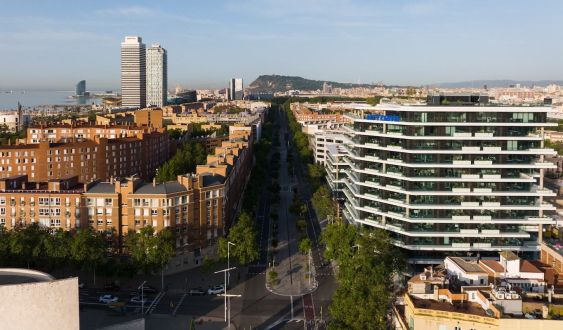
It is increasingly common to read headlines announcing the opening of technology hubs in Barcelona by large multinationals. HP was the first company to establish a development center in the Barcelona area, specifically in Sant Cugat del Vallès, in 1985, but in the last five years this trend has intensified, consolidating the Catalan capital as one of the leading cities in Europe to locate a center of these characteristics thanks to the existence of local talent and also due to its strategic location, good connections, and quality of life.
Nestlé, Pepsico, Ocado, Roche, Amazon, Bayer, Cisco, Danone, IBM, Enel, Zurich, Schneider Electric, Festo, King, Lidl, Sanofi, Dedalus, Microsoft, Alexion, MiR Robots, Porsche Digital, Scopely, Teladoc, Veriff, Ypsomed... are just some of the companies that have established global reference centers in the technological field in Barcelona and have made headlines, but, in total, how many companies have taken this step? Close to a hundred, according to a study just published by the Mobile World Capital Barcelona Foundation, carried out in alliance with the Barcelona City Council and Acció, the competitiveness agency of the Generalitat.
According to the report, in Catalonia there are a total of 96 global technology development centers, a figure that has more than doubled in the last five years, as at the end of 2018 there were 43. Their economic impact exceeds 1.4 billion euros annually and they employ more than 15,000 people. "The growth has been exponential. It is a booming sector that positions Barcelona as a clear pole of attraction for investments and talent," highlights the CEO of Mobile World Capital Barcelona, Francesc Fajula. It is estimated that, only in the landing and opening phase of the hub, each company invests an average of six million euros, a figure that translates into a global accumulated investment volume of more than 600 million euros in these types of centers.
Almost 8 out of ten of these 96 companies have chosen to physically locate the hub in Barcelona city (78% of the total) and, specifically, in the 22@ district, where 46% of the technology centers have been installed, followed by the Eixample (28%). The rest are located in other municipalities of the metropolitan area (Baix Llobregat and Vallès Occidental) and there is also one in Sitges (Garraf). According to the third deputy mayor of Barcelona, Laia Bonet, companies choose the Catalan capital for its "very important capacity to attract multidisciplinary talent, for the high level of local talent, for the business and industrial ecosystem established in the city and also for its geographical location."
Overall, these technology hubs have generated more than 15,000 jobs and the forecast indicates that by 2025 this figure will have grown to 20,000 people. In 2022, the average hub had a team of 160 people, with a majority of professionals between 31 and 40 years old, of whom 30% are women. 40% of the 96 centers exceed one hundred employees. Likewise, according to the study, they have an average of foreign people equivalent to 38% of the staff. Professionals from Europe and South America are the majority, but the average number of nationalities coexisting in a hub is 18, although in some centers there are people from more than 60 countries. In this type of office, hybrid work predominates, with a weight of less than 30% in the case of full remote workers, that is, professionals assigned to these centers, but who do not physically work or live in Barcelona.
According to the CEO of Acció, Albert Castellanos, it is estimated that these technology companies generated an economic impact of 1,450 million euros in 2022, a volume that is expected to increase by 40% by 2025, up to 2,000 million. The average turnover of each center is around 15 million. "These knowledge-intensive reference centers energize the local startup ecosystem and their explosion has been associated with the attraction of international investment projects in Catalonia," Castellanos states. "The old call centers were transformed into shared service units and now they have become technology hubs and international R&D centers," adds the director of the Department of Business of the Generalitat to explain the evolution of the sector.
The multiplier effect of this type of centers
According to the study, beyond the economic impact, these hubs are highly beneficial for the territory, since they attract and incentivize digital talent; generate a call effect for international talent; import and implement innovative work cultures; promote the arrival of new large multinationals; and enhance the so-called multiplier effect. In this sense, it is estimated that for every new professional in the technology sector, five additional positions are created in the services sector.
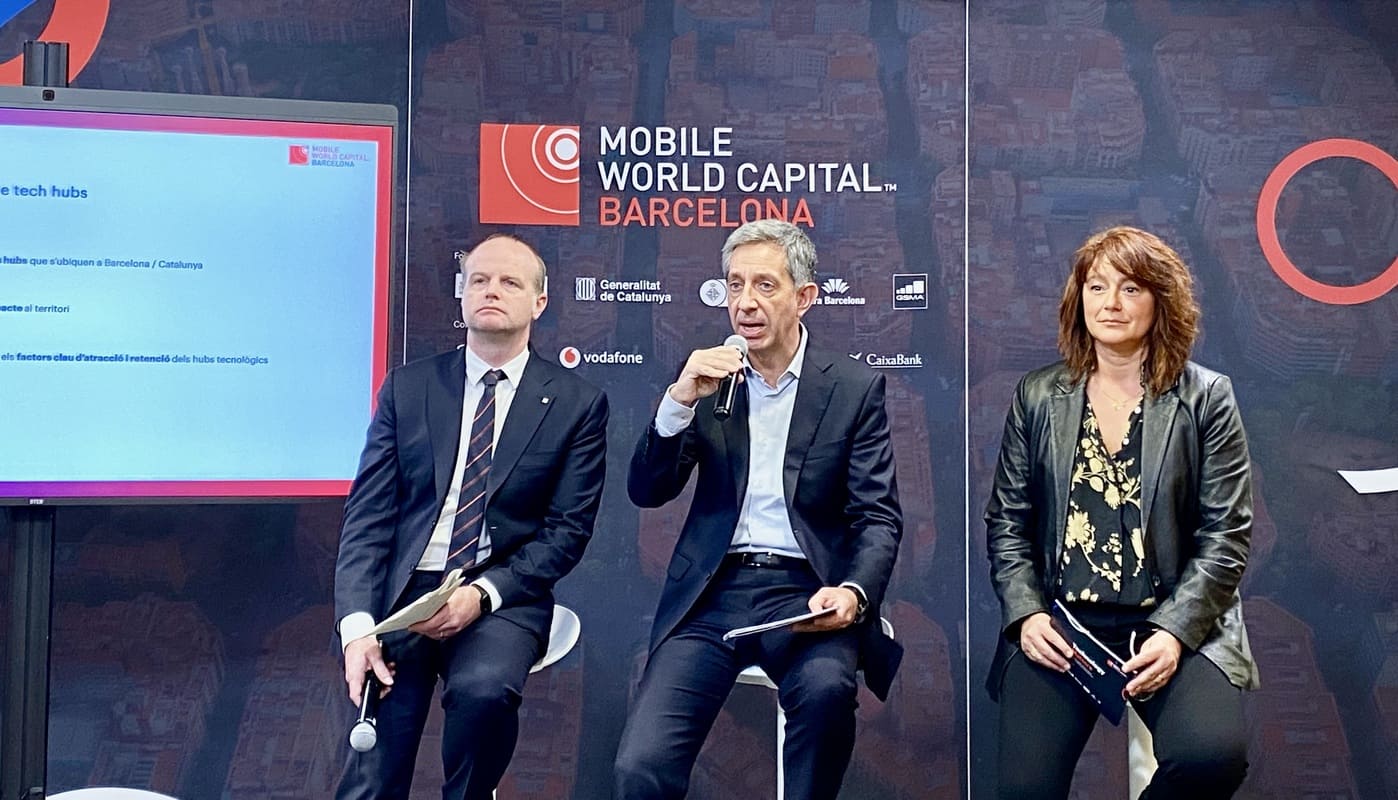
65% of the technology hubs located in Catalonia belong to three sectors: video games (32%), industrial sector (21%) and health (13%). And what do these centers do? In 60% their activity is based on mobile application development, user experience design (57%), artificial intelligence (55%) and web development (54%). According to the study, in 8 out of 10 cases, the technologies and applications developed are exported worldwide, that is, to all the subsidiaries of the multinational, to which they provide both products and solutions for the end consumer, as well as internal use applications to accelerate digitalization and improve the processes of commercial, operations or finance departments.
By country, it stands out that the United States (23%) is the main country of origin of the multinationals that have opened a hub in Barcelona, although, overall, 65% of the hubs depend on companies from European countries such as Germany (18%), France (15%) and Switzerland (7%).
Barcelona's competing cities
According to Jordi Arrufí, director of the Digital Talent program at Mobile World Capital, when a multinational has to choose a city in Europe to locate its technology hub, it ends up making a short list that, in addition to Barcelona, may include cities such as Madrid, Lisbon, Paris, London, Berlin, Amsterdam, Dublin, Warsaw, Budapest and Prague. "Barcelona is the only city on this short list that is not a state capital, which demonstrates the great potential of the city in relation to its competitors," stressed Laia Bonet.
And for what reasons do companies finally choose the Catalan capital? The most important factor, according to the report, is the city's ability to attract talent, which is internationally appreciated for its quality of life, good air connections, and other elements such as sun and beach and gastronomic appeal. In second place is the availability of local talent, an element linked to the existence of good universities and business schools. Other factors that large companies take into account are Barcelona's strategic location, Catalonia's business and industrial ecosystem, cost competitiveness compared to other cities, and the company's prior presence in the territory, either because it already had a factory or the headquarters of a subsidiary here. Tax benefits compared to other cities are one of the least influential factors in the selection criteria.

Arrufí emphasizes that Barcelona "has competitive salary costs" for multinationals and that "the cost of living in relation to other cities is well balanced" for employees. The average salary of professionals working in these hubs is 56,000 euros, a figure that is between 8,000 and 10,000 euros above the average salary of the ICT sector.
Once established, the hubs interact with other agents in the Barcelona ecosystem, especially with universities (69%), other companies in the sector (52%), and with fairs such as MWC (49%).
Finally, the study includes a series of recommendations resulting from conversations and surveys conducted with the different hubs that have been identified. Facilitating talent attraction and strengthening the relationship with universities are the most frequent demands. In this regard, the managers of these centers ask for improvements in the regulatory framework and in the procedures associated with the hiring and arrival of this international talent, an element that can significantly improve thanks to the new startups law recently approved.
Add The New Barcelona Post as your preferred Google source for free
Stay informed with the latest news.
