
To recognize and bring to light young researchers who are the future of science. This is the main objective of the awards annually convened by the Banco Sabadell Foundation, which were presented this week at a ceremony held on Tuesday night at the financial institution's corporate headquarters in Sant Cugat del Vallès. This year, the XVIII Banco Sabadell Foundation Award for Biomedical Research has been awarded to Manuel Valiente, a doctor in neurosciences and leader of the Brain Metastasis Group at the Spanish National Cancer Research Center (CNIO). In parallel, the winner of the VII Banco Sabadell Foundation Award for Sciences and Engineering is Juan Miguel Morales, a doctor in industrial engineering and leader of the Optimization and Analytics for Sustainable Energy Systems (OASYS) group at the University of Málaga. Each award is endowed with 50,000 euros.
According to the president of Banco Sabadell, Josep Oliu, "it is very important to recognize the trajectory of young researchers in the middle of their careers, before they turn 40," as the visibility of their work contributes to boosting their projects and laboratories and represents an stimulus for all the young talent in the country. "The day these awards are presented is a very important day for the bank, not only because it is a commitment to excellence and young talent, but because by being in contact with these scientists we learn a lot, we learn fascinating things from their research," explained Oliu.
The banker also claimed that the paternity of these awards lies with Dr. Josep Baselga, promoter of the biomedicine award, and Andreu Mas-Colell, who encouraged the launch, in collaboration with the Barcelona Institute of Science and Technology (BIST), of the award that recognizes the trajectory of young researchers who excel in fields such as mathematics, chemistry, physics or engineering.
According to Dr. Óscar Marín, current president of the jury for the Biomedical Research award, Dr. Manuel Valiente "is one of the most brilliant scientists of his generation" and his work is especially commendable for being dedicated to fighting brain metastases, one of the most lethal diseases with practically no prospects of cure.
"My passion is to understand the brain. Learning about brain metastases and discovering how to fight against them is a fascinating process," asserted Manuel Valiente in his words of gratitude after receiving the award, which he dedicated, in a very emotional way, to his mother, now deceased. From his laboratory at the CNIO, named Valiente Lab, the scientist and his team carry out different lines of research and clinical trials to understand the mechanisms of generation of brain metastases, identify therapeutic targets, and evaluate their potential translation to patients.
According to the neuroscientist, who worked alongside Dr. Joan Massagué at the Memorial Sloan Kettering Cancer Center in New York, 30% of cancer patients can develop a brain metastasis, "a problem that today is lethal" due to the resistance of malignant cells that colonize the brain to different treatments. "There is no way to eliminate them," he said graphically. Valiente assures that the program he has launched to understand what happens with metastases in the brain is pioneering worldwide and emphasized that his priority is not only to focus on basic research, but to try to transfer discoveries to patients as soon as possible, which is why he already has various clinical studies underway.
Thus, one of the main initiatives led by Dr. Valiente's laboratory is the creation of the National Network of Brain Metastasis (Renacer), made up of 20 hospitals throughout Spain that daily send samples of cancerous brain tissues to the laboratory so they can analyze them and test new drugs.
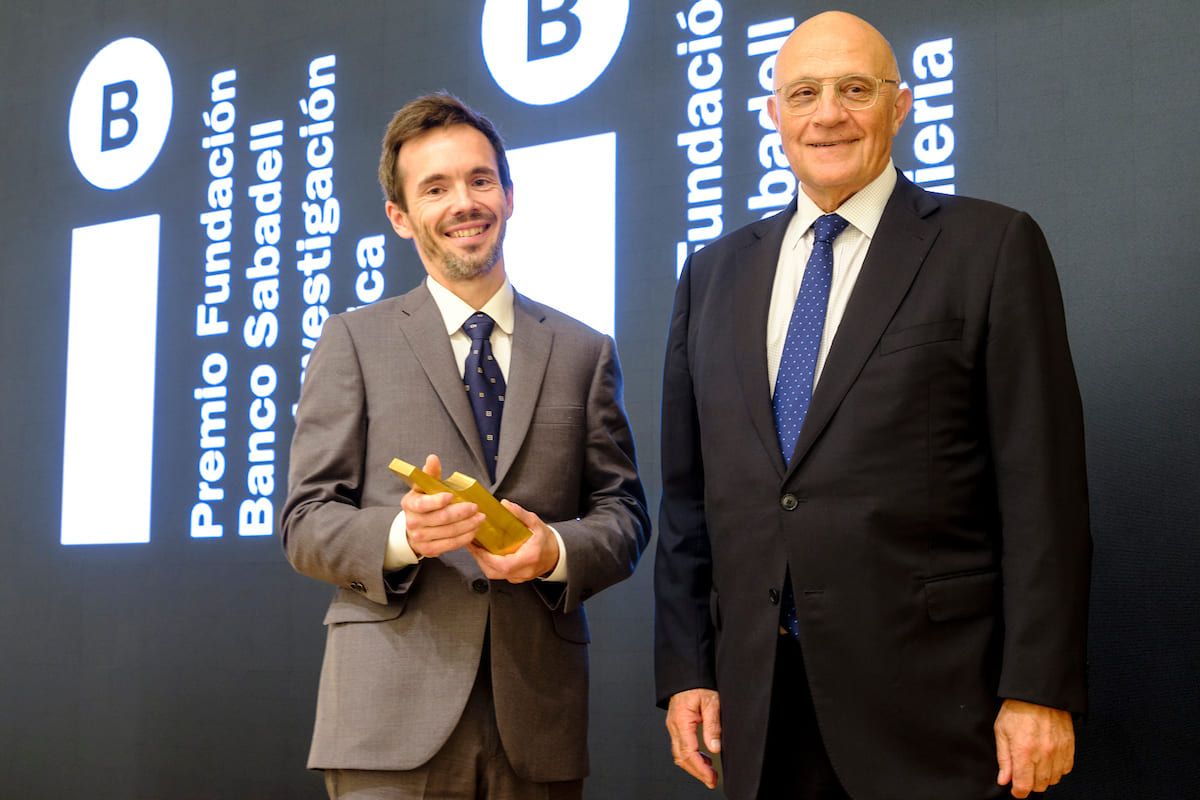
Valiente, who graduated in Veterinary Medicine from the University of Zaragoza in 2003 and received his doctorate from the Institute of Neurosciences of Alicante in 2009, put the number of discoveries made so far by his laboratory at four and explained that he has three clinical studies underway. On the one hand, he has shown that to attack metastasis, it is not only necessary to attack cancer cells during brain colonization, but also to use drugs "that cut communication" with the so-called microenvironment, where molecular changes occur that affect cells such as astrocytes, turning them into protumoral components. According to the award jury, this discovery translates into a "novel therapeutic strategy" currently in clinical trial phase.
The laboratory has also developed a new drug screening platform (METPlatform) that allows testing and discovering new drugs, and has defined a new strategy to improve the response to radiotherapy in patients with brain metastasis through the use of a new biomarker that allows knowing whether the patient will experience resistance to radiotherapy or not. The validation of this biomarker, detectable through a blood test, is also in clinical trial phase.
Finally, Dr. Valiente has initiated a study of neurocognitive symptoms associated with brain metastasis, with a finding that represents "a paradigm shift" and opens the way to the development of a therapeutic program aimed at preserving the quality of life of patients by blocking the possible neurocognitive impact. To do this, they apply artificial intelligence and computational techniques that allow identifying functional patterns in neural circuits that inform of the presence of metastasis.
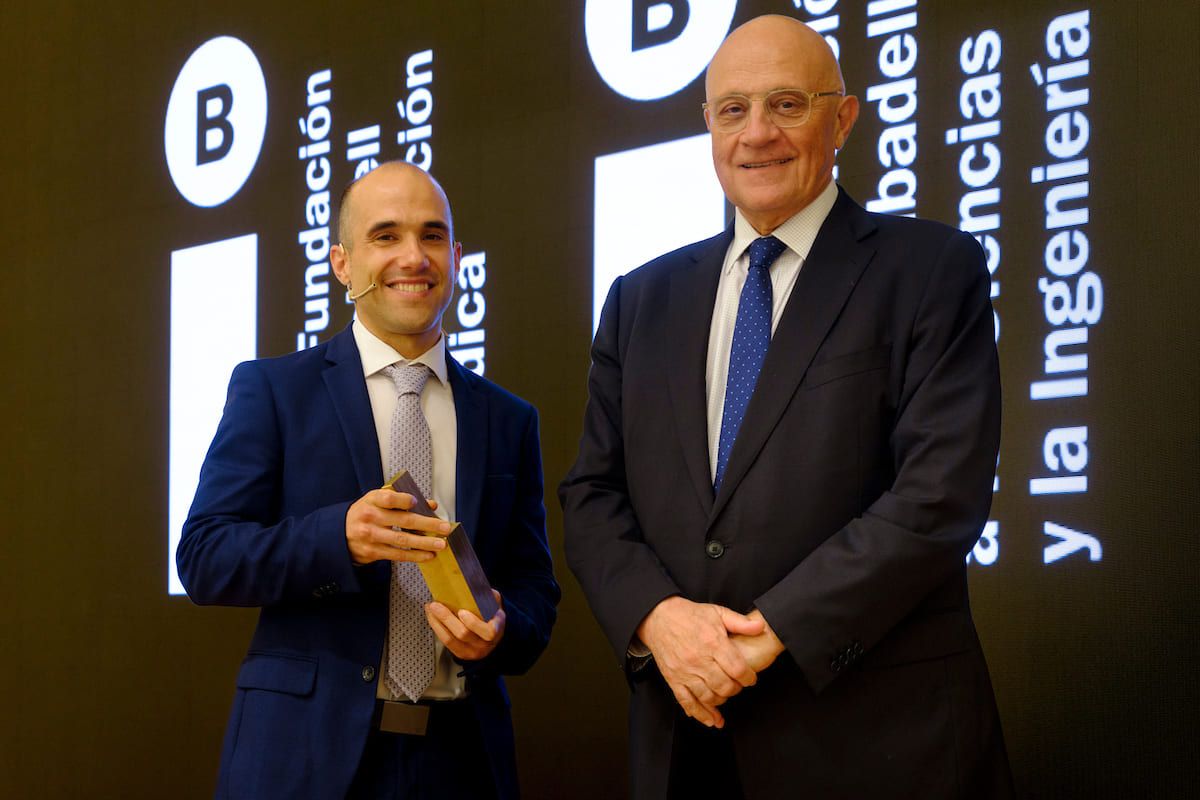
For his part, Dr. Luís Torner, who this year replaced Mas-Colell as president of the Science and Engineering award, assured that the laureate, Juan Miguel Morales, "is at the forefront of world science" thanks to combining engineering with applied mathematics, and assured that the choice of the winner was "extremely difficult" due to the very high level of all candidates.
According to Morales, receiving the Fundación Banco Sabadell award "represents a boost to continue researching" and to raise the morale of his entire team, based at the University of Málaga. "This award puts the focus on the social value of science and highlights the role we researchers have in society," he pointed out, before detailing his lines of work, focused on developing computational tools that allow optimizing the implementation of renewable energies.
Dr. Industrial Engineer from the University of Castilla-La Mancha, the scientist has also developed a good part of his career at the Technical University of Denmark and is the author of two monographs on the large-scale integration of renewable energies in the electrical system that are a reference in the sector. "Electricity distribution networks are the most colossal infrastructure created by man", Morales stated, who leads a team of young engineers, mathematicians, and statisticians focused on the development of algorithms, models, and optimization techniques aimed at achieving the decarbonization of the energy sector. His greatest achievements focus on elements such as decision-making under uncertainty, taking into account that the sun and the wind are two renewable resources with high uncertainty and variability.
Add The New Barcelona Post as your preferred Google source for free
Stay informed with the latest news.
