
My friend Esther Casademont has been dedicated for thirty years to what was called selection and human resources, and she is an expert in reinventing herself and in accompanying companies and professionals in their reinventions (adapt or die?). For years, her work at Hunivers consisted of finding the best candidates for client companies that needed to hire executives. Until technology, covid, millennials, climate anxiety, teleworking, mental health, and the Great Resignation, and artificial intelligence (exactly, what is artificial intelligence?), changed everything. "Companies still need people, but talent has other demands. And we are all very disoriented."
A few days ago, Esther gathered a good group of entrepreneurs, SME owners, general managers, and HR directors, to explain how they should do it to get out of this dead end. Her recipe has two ingredients: technology and emotions. But is this a magic formula, or an oxymoron? "The strategic plan for the future will only make sense if it achieves a balance between artificial intelligence and emotional intelligence," says Esther, well accompanied by two experts in technology and people, Genís Roca and Joan Quintana. And to top it off, Víctor Martín Font also speaks, who was a falconer and now helps organizations transform, and he does so by seeking the teams' contact with nature. The name says it all: Desconexiones (Disconnections). He takes work groups to do survival in the mountains, and no tensions resist.
But, what should we disconnect from? Is everything that happens to us the fault of technology?
It seems that Chatgpt is already the fastest-adopted technological product in history (although I asked Chat GPT itself, and the machine answers me that "No, it cannot be stated that ChatGPT has been the fastest-adopted technological product in history. Although ChatGPT is an impressive example of applied artificial intelligence, its adoption has not been as widespread as other technologies such as the Internet, smartphones, or social networks").
Artificial intelligence has been with us for years in multiple industrial or business processes, at a B2B (business2business) level. But now it's B2C, it's a consumer product. "The Internet, in reality, is just starting now," says Aleix Valls, mathematician and civil engineer, expert in fluid mechanics and, above all, provocateur, in a session organized by Tech Barcelona with innovation managers from top-tier corporations. Aleix reviews some of the technological leaders of recent years to understand where they are taking us. He talks about the omnipresent Elon Musk, the radical Sam Altman, who wants us to swallow that nascent artificial intelligence must be regulated for him to have the competitive advantage... or the almighty Mark Zuckerberg, who suspiciously combs his hair like Emperor Augustus and has named his three daughters Maxima, Augusta, and Aurelia (it is known that he is a fan of the Roman Empire, but is he trying to tell us something more?). In whose hands are we?, Aleix asks.
What we know is that we are trapped in this social Internet based on the attention economy, "which permanently forces us to live from memories or to be projecting a future life," Aleix Valls pricks. We see technology and emotions as two antagonistic forces in a struggle that, if the villain wins, leads us to destruction.
The social Internet harms us and we don't know how to escape. We definitely live in an attention crisis. Read Stolen Focus: Why You Can't Pay Attention/The Value of Attention, by Johann Hari. As the master says, it's on the exam. Hari puts us before a mirror and we see ourselves hooked on our phones, and the planet will go to hell if we don't react soon. We no longer know very well where what we eat comes from. Pollution surrounds us. We are all suffering, individually and collectively, a hacker attack that affects our attention, our capacity for reaction. Hari calls it an attention crisis. And he talks about fossil fuels. About processed foods. About values and the educational system. About algorithms and perverse business models. And too often we think we can't do anything, that the world is like this, and at most, we make an individual decision: we turn off our phone for a while, or we eat organic. But it's not enough!
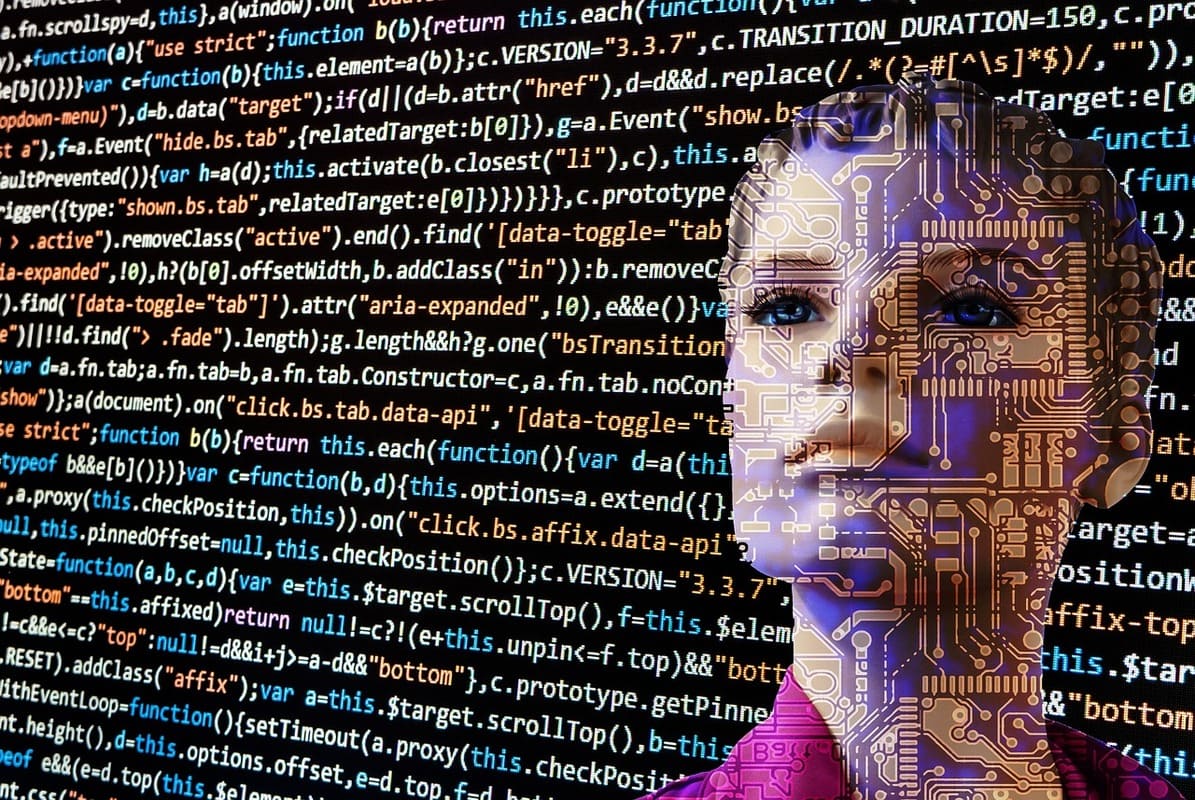
We don't know where we are, we don't live in the moment. And if we didn't have enough with malevolent technology, in general, now artificial intelligence threatens us. But, what if artificial intelligence was more the solution than the problem?
We don't know where we are, we don't live in the moment. And if we didn't have enough with malevolent technology, in general, now artificial intelligence threatens usAleix Valls poses it: "Living in the past is immutable, solid, but it doesn't allow evolution. Living in the future is ephemeral, it's being permanently in planning, without being able to enjoy the here and now. The social internet, that of networks, permanently leads us to remember the past or project the future, but it is not designed to enjoy the now. Instead, artificial intelligence has the capacity to give us additional time: it takes on part of our daily tasks, which translates into an increase in productivity. Artificial intelligence, for the moment, does not permanently fight for our attention, as social Internet does, but rather it is an Internet more of the now: getting the answer you need at this moment.I think that the change from the social Internet to the artificial intelligence Internet can allow us to recover the present, recover the now, and be here and now."
Esther tells her directors: "We have spent so many years fighting to be up to par, but, up to par with what? And now we think, what do we want to be when we grow up? I want to be ME, with purpose. Consistent with the community, with Nature. With the Present." Now and here.
And perhaps everything does fit: a present based on the balance between artificial intelligence and emotional intelligence.
"I am optimistic about the future, but we have 30 years ahead that will be bitches," says Genís Roca.
Considering that Homo sapiens was programmed to live 38 years, and now we have the challenge of being on the planet until past 80... as Aleix Valls says: "Looked at minute by minute, and especially looked at through Twitter/X, the world has gotten worse. But if we look in perspective, the world has improved in the last 100 years."
Well, since we are here, and we have all this time, let's enjoy it and take care of ourselves.
Add The New Barcelona Post as your preferred Google source for free
Stay informed with the latest news.