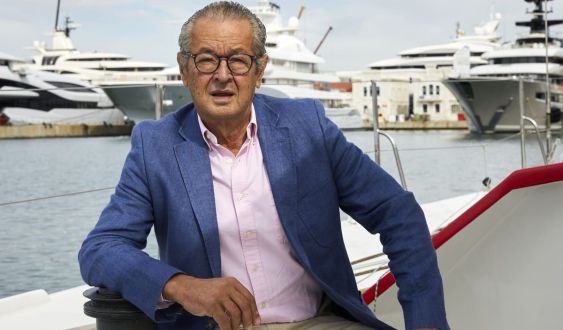
The Barcelona International Boat Show, organized by Fira de Barcelona, in collaboration with the National Association of Nautical Companies (ANEN), brings together from today 221 exhibitors and more than 700 boats, 182 of them in the water, among which there will be 28 catamarans and 14 candidates for best European boat of the year. The event, which will run until October 16 in Port Vell, celebrates its 60th edition, a commemoration that will be attended by King Felipe VI at the inauguration ceremony.
--- The Boat Show reaches this anniversary with its sights set on the America's Cup, a competition that will be held in Barcelona in 2024. Do you see it as a boost for the event you preside over?
--- Much more, it will be a boost for the sector. What the America's Cup brings is innovation, which is what the mayor of Barcelona, Ada Colau, has understood. The deep analysis of the technology in a championship that is the Formula 1 of sailing is then transferred to the industry. What the America's Cup will bring are new ideas, new technologies such as, for example, the boats that accompany the competing vessels are hydrogen-powered and do not touch the water... perhaps that is the future. It will also awaken the fans and will have a great impact in America, where it is followed with enthusiasm. In the United States it will be seen and many will discover a city like Barcelona and surely we will have more American tourism, which is the one that spends the most when traveling. The America's Cup is an important milestone and it will be done well, because these things in Spain we know how to do them well.
--- What would you highlight about this year's Boat Show edition?
--- Many aspects: we gain dimension, we provide innovation, we bet on sustainability... We will have the most important exhibition in Europe of catamarans, one of the most demanded products. And, in boats, we have 14 of those that aspire this year to be the best in Europe.
--- In the years you have been at the helm of the Boat Show, since 2009, the show has moved to the sea, has gained surface area and visitors... What are your future objectives?
--- What we have to achieve is that whoever sells boats learns that nowadays you have to sell differently. 30 years ago boats were not sold, they were bought. Now what rules is marketing and the Nautical is the best marketing window to sell. What we have to do as a sector is a macro campaign aimed at buyers and politicians to make them aware that boating is not a luxury. You can rent a boat for 100 euros a day, with capacity for six people. Transmit to politicians and citizens that it is within everyone's reach, that sailing is easy, that it is not elitist. If politicians find out about this, then they will remove the registration tax, which is the only country in Europe that has it and which is 12% of the value of the boat. That is why, for large length boats, there is a lot of purchase outside of Spain.
"Boating is not a luxury, we should launch a campaign to raise awareness among buyers and politicians"--- What would you say to those who consider it a luxury, a rich people's hobby?
--- Having a good car is also expensive and no one says that motorsports is a sport for the rich. Instead, they do say that about nautical. In Spain we have more than 200,000 boats and 90% are less than eight meters long. It's like comparing a Formula 1 car to a passenger car that drives on the streets. The same thing happens in nautical practice. We have the big yachts, but the usual is the boat or the launch, or small length boats. Spain has a very good passion for nautical, not only because of its 8,000 kilometers of coastline. This year 100,000 new licenses have been issued and, with 6,000 more registrations, it means that there are 94,000 people who do not own a boat, but have obtained the license. And that happens for a reason. It happens because someone has invited them to get on their boat, they liked it, they learn, they rent a boat, then they buy a second-hand one and finally they own a boat.
--- Of these 94,000, many rent, does that outweigh buying?
--- Who buys more boats? The companies that rent. These are companies that come to the show and buy. The rental market represents 35% of the nautical market. Because what happens is that the boat is not used much. A boat does not last four years; a boat is for a longer time because on average it is used about seven or eight days a year. That's why the owner, if they do good maintenance, doesn't have to change it every four years, like a car.
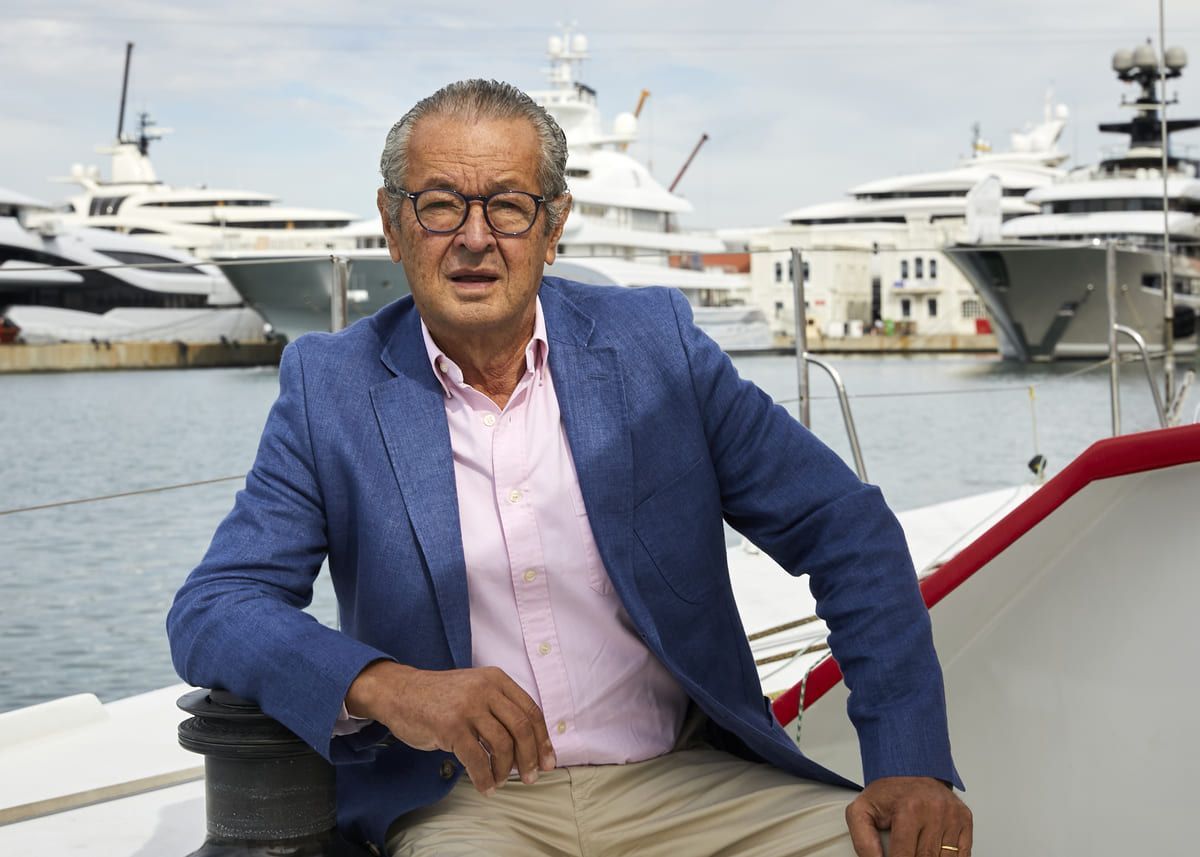
--- Do sustainability promotion policies affect the evolution of the sector? The limitations on the coast, the moorings… local administrations are regulating… Well?
--- The coves on the Spanish coast are small and fit small boats; large ones have to go to the Balearic Islands. For example, on the Costa Brava there are only ports in Palamós and Cadaqués. The policy of the city councils, in general, of placing buoys to limit space forces boats to stay outside, which prevents them from docking there. This needs to be solved; it doesn't make much sense.
--- How can it be solved?
--- What they should put instead of buoys are dead weights, so they act as heavy anchors to moor boats further from the coast. But it is true that mooring on the coasts is becoming a problem. As are buoy fields. Boat users or owners complain about the increased cost of buoys because many concessions have had to be renewed and prices have gone up a lot. So, why doesn't the user look for a port? It would be best, because mooring on a buoy, if not done well and in the right place, damages the seabed and destroys posidonia. It would be very good if mayors and ministers knew something about nautical, or sought advice, before regulating certain things.
--- So, the solution is to put the boat in a good port.
--- In a port, or in a dry marina, which is the future. It is true that a dry marina is more expensive, but it extends the useful life of the boat, since when the boat enters the marina it goes through a cleaning and maintenance process before being placed in its spot and, once there, it doesn't get sun, the upholstery doesn't crack, the deck doesn't get dirty from seagull droppings, nor does barnacles get on the engine; the boat lasts longer. The culture of this country has to change, because, in addition, if the sale of boats grows more than the scrapping of boats, we will have a space problem for keeping boats. We will have to do something to absorb the growth of six or seven thousand more boats a year, because we are not going to have more ports; more dry marinas and ramps will have to be built to take the boat out and move it.
"The growth of the sector will lead to the construction of dry marinas, given the lack of new ports"--- How is the sector evolving in Spain?
--- Now there is a lot of uncertainty about what will happen with the economy and consumption, which affects us a lot, like all sectors that are not essential. In recent years, the market has recovered, despite COVID, and we are already slightly above 2019 figures, but the boom was recorded in 2007, with 12,600 annual registrations; now we are around 5,200 units (at the close of the third quarter of the year).
--- The Boat Show is the main sales point for the sector, basically for the Spanish customer?
--- Yes, we have many more Spanish visitors than international. It's natural, because in Europe there are several shows and we are the fourth in importance. Although we do have many French, Italian, and some German visitors.
--- Can the Boat Show climb positions, then?
--- Barcelona is among the Top fifth. We will continue to gain dimension, with a product of less than 20 meters, with an economy that pulls, that does not fall into recession. The market is well distributed in Europe. The main show is Dusseldorf, because it offers large lengths and is aimed at investors with great capacity; the second is Genoa, which is where design is focused; the third is Cannes, which is characterized by being an area with a lot of wind, and the fourth, the Barcelona Boat Show. There are others behind, like La Rochelle, Monaco… but they don't compete with the same product.
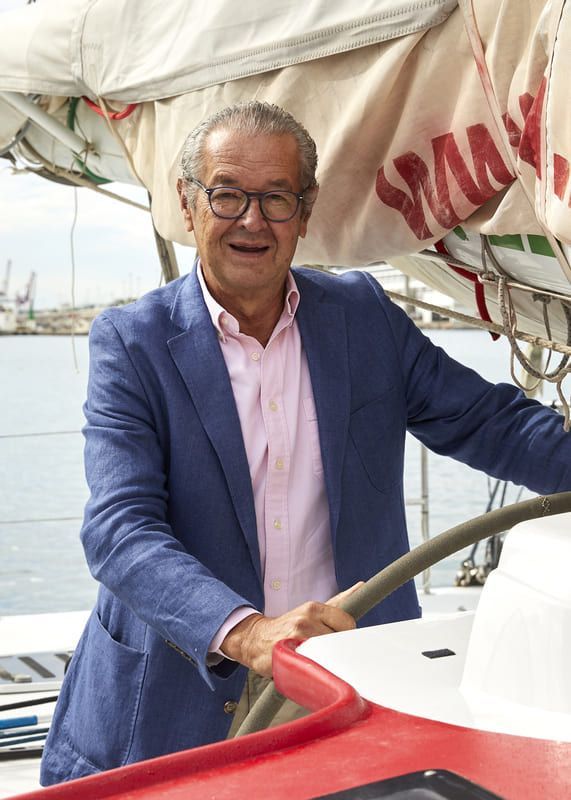
--- Also in terms of sustainability, the Show addresses innovation.
--- Sustainability is a must and makes sense, a lot of sense. We have 15 startups that are going to present products that make the seabed more friendly, to eliminate waste; others to make boat handling easier, safer, it must be taken into account that 85% of accidents that occur in boating happen in ports because it is very difficult to stop a boat. All the most innovative proposals are gathered in the Innovation Dock, with the most disruptive proposals in the field of digitalization and environmentally friendly boating, and various electric, hybrid, and hydrogen boats will be exhibited.
--- But, will electric boats be within reach of the buyer?
--- Surely they will arrive, but it's slow, we will have to wait 15 years for it to be something massive. In Palamós, for example, the port has been remodeled and out of 600 berths, eight have been allocated for electric boats, because for now it's like with cars, there is no infrastructure to support the purchase of an electric one. The price will not be a problem, just as it isn't for cars. There is still much to do regarding batteries, their weight, autonomy, and the handicap of being in the sea, with salt water.
Add The New Barcelona Post as your preferred Google source for free
Stay informed with the latest news.
