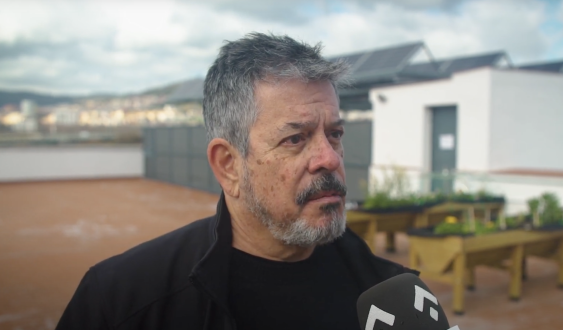
Albert Gassull is an architect and heads the Public Space Department of the Barcelona Metropolitan Area (AMB), a relatively young entity created in 2010 with the aim of responding, from a supramunicipal scale, to challenges that extend beyond the administrative limits of cities.
From the management of metropolitan beaches and parks to the development of architectural projects requested by city councils, the AMB intervenes where the territory is fragmented, stigmatized, or loses continuity. In this conversation, Gassull explains how a metropolitan perspective is built, what it means to structure the territory today, and what role sustainability, international cooperation, and new paradigms play in public architectural practice.
— What does the AMB's Public Space Department do?
— The department has two sections: on one hand, it manages the entire network of 30 km of beaches and 55 metropolitan parks; on the other hand, we develop architectural projects for the municipalities of the Barcelona metropolitan area according to their own needs and through our own investment plan.
— Does the AMB propose projects or do municipalities ask for help for specific cases?
— From the management of public space, the AMB proposes maintenance and improvement actions. In the case of projects and works, the city councils request our help.
— Among the projects you have carried out, there are various facilities. Are they considered public space?
— We defend it because, although they are covered places, they are public buildings for public and collective use.
— What is the territorial structuring that the AMB seeks?
— That interventions in public spaces and facilities seek to cohere the territory: on one hand, a more egalitarian territory is being built, because projects have the same category regardless of their location. On the other hand, these are projects that emphasize the territorial and urban continuum which, at the same time, presents physical fractures (such as infrastructures designed for fast, long-distance transport that were built during the 20th century) or social ones. It is about integrating all structures into a more urban fabric and destigmatizing spaces.
— What projects can you share that represent these ideas?
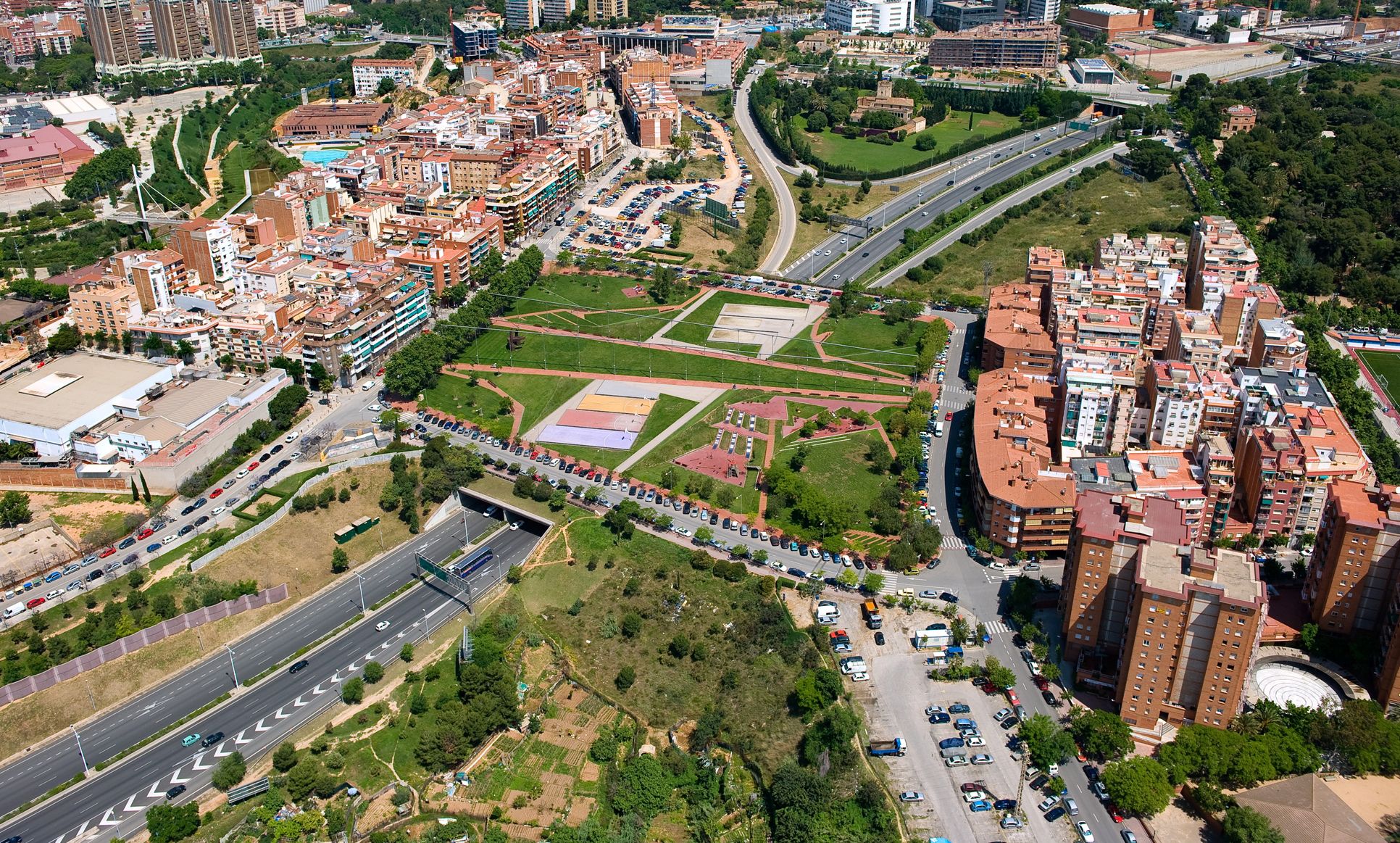
— The Parc de la Solidaritat in Esplugues de Llobregat covers the Ronda de Dalt, in the space previously occupied by the Can Clota stream. It was a ravine that divided the municipality, which was further fragmented by the Ronda: it was a brutal fracture. The park integrates the parts and makes them accessible: the intervention became a mechanism to unite the city.
Right now, a large housing project is being developed where the old Montesa factory used to be in Esplugues de Llobregat. This area borders the Sant Ildefons neighborhood of Cornellà de Llobregat, an area stigmatized by insecurity that has transformed and left that condition behind. So the mayor's office proposes that the new residents, from the contiguous city, participate and use the facilities of their municipality. The task then is to integrate both parts through the creation of routes that invite the inhabitants of this new area to approach the metro, the market, and the closest facilities and services. It is a case of a social fracture that could be created, but we are getting ahead of it with a clear and very explicit invitation to explore places that have been transformed.
— What are the international collaboration projects?
— On the one hand, we develop cooperation projects through small investments made by the AMB in territories in Africa, South America, and the Middle East. We have developed, for example, public space projects in the metropolitan area of San Salvador and Guatemala City, or mobility and access projects in Mozambique together with Arquitectura sin Fronteras.
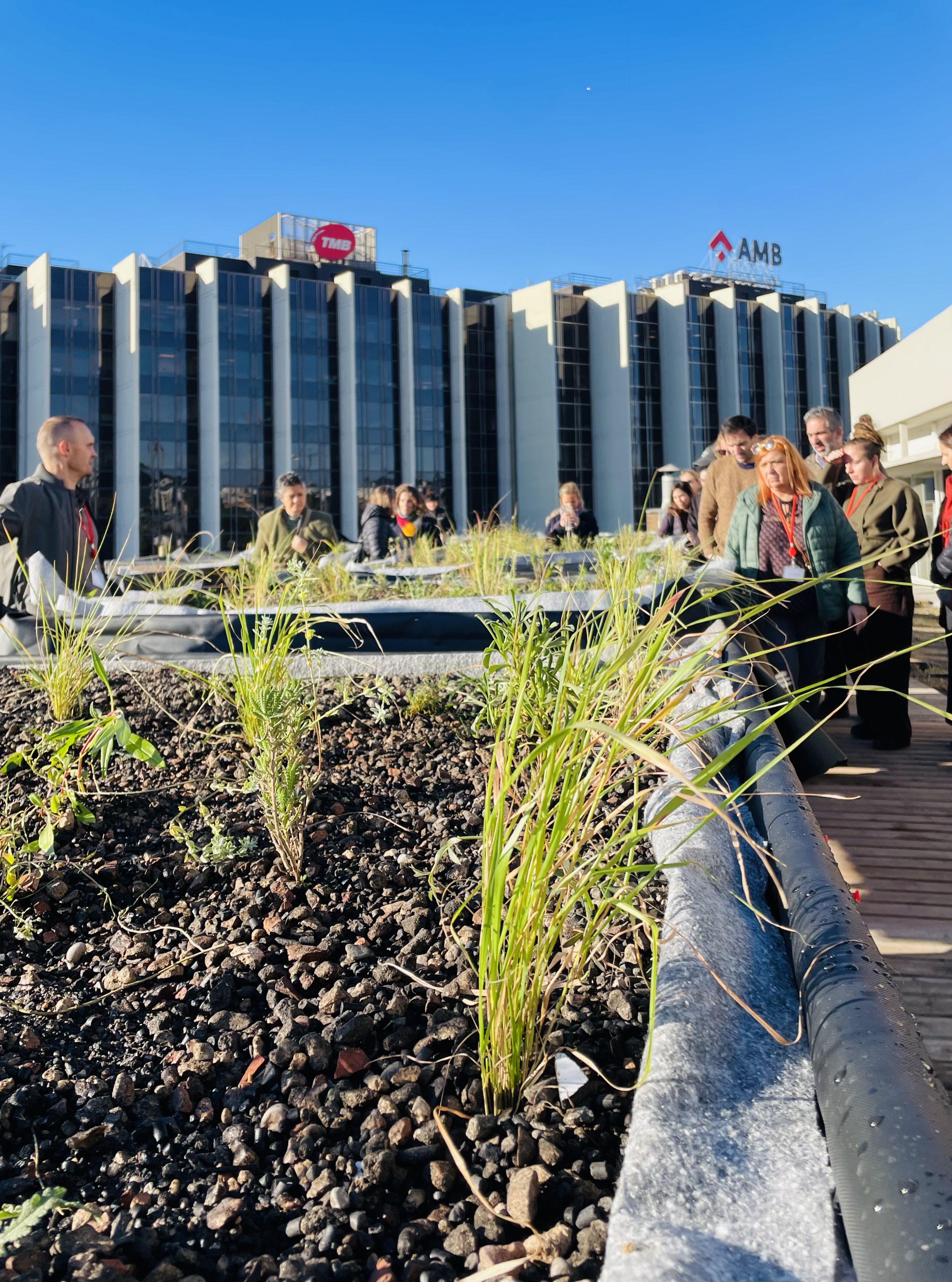
On the other hand, we work on projects financed by the European community, in collaboration or in association with other cities. Currently, we are the promoters of the TOP SEC project, which consists of composing green roofs with a substrate derived from organic waste and mixed with soil. We are concerned both with developing green infrastructures and solving the issue of irrigation in a city like Barcelona, so we have tested different solutions for green roofs without irrigation, which provide all the climatic benefits for insulation and biodiversity. We will carry out several tests at the AMB headquarters and then take the project to three specific buildings in the metropolitan area.
— Is there another entity of this type in Catalonia or in Spain?
— Metropolitan areas exist as territory but, right now, it is the only one as an administrative entity of the Spanish State.
"The sustainability protocol we have developed has been a finalist in the New European Bauhaus awards"— What assessment can you make of these 15 years?
— There are two crucial factors that have changed the perspective on things: digitalization, both of architectural production itself and of information and data management. The other factor is sustainability: I believe there is already a clear paradigm shift, with an explicit will.
In this sense, we have developed our own sustainability protocol, which has been a finalist in the New European Bauhaus awards. This is an initiative that starts from professional and institutional responsibility in the face of little legislation and control, taking into account that construction and the use of buildings are responsible for almost 40% of greenhouse gas emissions. We must try, from here, to work to ensure this is not the case.
— How do you see the AMB in the next 15 years?
— The future of the AMB is to continue working on these projects, such as waste reduction, water management, and multi-scale mobility. During 2026 and in the context of the world capital of architecture, we will have an exhibition that explains how the AMB responds to the contemporary challenges of public space.
Add The New Barcelona Post as your preferred Google source for free
Stay informed with the latest news.