
The Barcelona Metropolitan Area (AMB) wants to boost its historical and natural heritage to attract tourists visiting the Catalan capital, as well as open up to its neighbors and show them the spaces they have just around the corner, often unknown. With this objective, the metropolitan heritage network has been born, initially made up of 11 facilities and parks. "We want to give more tourist value and more brand to the offer we have at a metropolitan scale," defends the head of Institutional Relations of the AMB, Xavi Tiana.
The AMB metropolitan network has started with a budget of 12.5 million euros, of which 4.6 million come from the European Regional Development Fund (FEDER). The resources have been allocated to rehabilitate the 11 spaces, both to restore their splendor and to make them more accessible. Currently, works have already been completed in the Unió de Cooperadors de Gavà, and in Can Bagaria and the Can Mercader park in Cornellà de Llobregat. The remaining eight are in the process of execution, with the forecast of having all works finished by the end of this year.
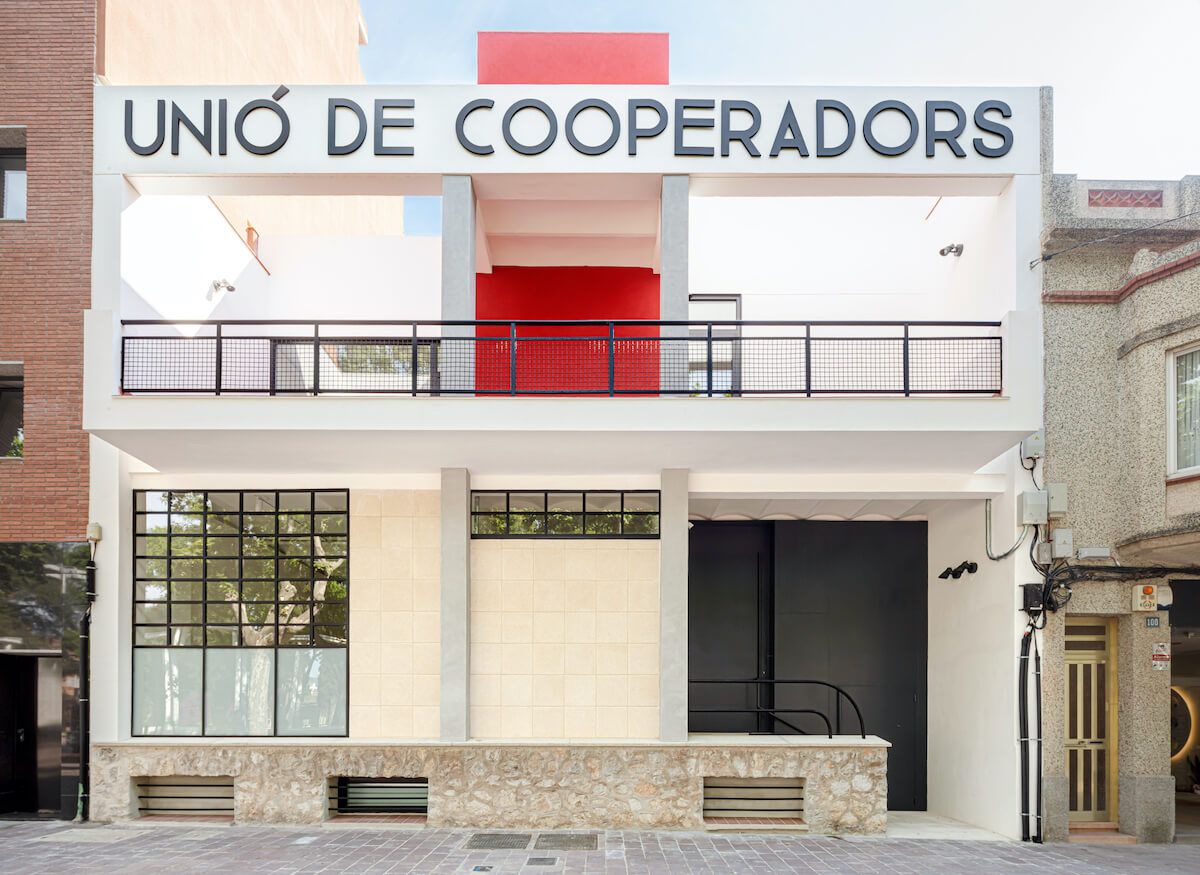
In the Unió de Cooperadors, a building by Josep Lluís Sert and Josep Torres Clavé dating from 1936, the intervention has served to recover the characteristics of the original architecture, altered and damaged by the passage of time, according to the architect who drafted the rehabilitation project, Meritxell Inaraja. The rehabilitation has allowed it to once again be a space open to the Rambla de Maria Casas, to be open-plan and to have a light structure and a free floor plan. All of this, accompanied by the minimum elements that characterized Sert, such as a curved staircase and a very rationalist facade.
In contrast, in Can Mercader park, a destination chosen by residents of Cornellà but also of L'Hospitalet for outdoor activities, the works have consisted of improving access and routes, often used by runners and bicycles. The vegetation, characterized by centenary plane trees, and its fountains have also been restored. Continuing in Cornellà, the industrial complex Can Bagaria has been restored to be transformed into a music school, maintaining the features of early 20th-century modernism.
The rest of the spaces that complete the metropolitan heritage network are El Molí in Molins de Rei, Casa Larratea in Montcada i Reixac, and the Monastery of Sant Cugat del Vallès, with almost 5,300 square meters of rehabilitated surface area, along with the Unió de Cooperadors and Can Bagaria. In the parks chapter, there are the parks of Can Vidalet in Esplugues, Can Solei i Ca l'Arnús in Badalona, Can Buxeres in L'Hospitalet, Les Aigües in Montcada i Reixac, and Torreblanca, between Sant Feliu, Sant Joan Despí, and Sant Just Desvern. In total, improvements have been made to more than 40 hectares of parks.
All the restorations and improvements that have been made in these facilities and parks are accompanied by a series of initiatives to make them known, such as a podcast that will explain the history behind each of them. Theatrical activities and visits will also be organized to get to know them, starting at the end of this year and extending throughout next year. The forecast is to increase visitors to these public spaces by 4,000 by the end of 2023.
Add The New Barcelona Post as your preferred Google source for free
Stay informed with the latest news.
