Water is key in the agri-food industry, and transforming its management is a challenge. From irrigating crops to producing and transforming food, it is an essential resource for the sector. So much so that the way water is used in this area represents a key factor in a scenario where water can present itself as a scarce yet vital resource.
Thus, maximizing efficiency in this industry represents a priority. In this context, Aigües de Barcelona collaborates with Impact Hub to launch the new Water Resources Transition Lab, with the aim of transforming water management in the agri-food industry. To advance in this line, the Lab brings together experts, administrations, and entrepreneurs to co-develop innovative solutions that can be applied to the agri-food industry. In this way, it emerges as a collective innovation program that aims to move towards more resilient and regenerative solutions.
"The objective is to bring together people from different entities linked to the agri-food sector with different visions who share the problem of water," highlights the Director of Innovation at Aigües de Barcelona, Joana Tobella. In this way, the Lab constitutes "an innovative way of working on the challenges and solutions" linked to water management in this area, where regenerated water can play a relevant role, according to Tobella: "What interests us at Aigües de Barcelona is to promote the sustainable use of water, in this case within the agri-food chain."
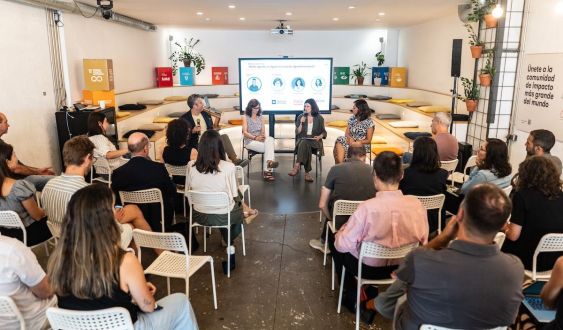
To do this, the Lab has set four key challenges, which have been defined and prioritized through workshops, as detailed by the head of the initiative at Impact Hub, Ramón López, in the presentation of the challenges at the hub's headquarters in Barcelona. To begin, the Lab aims to increase water efficiency, in order to optimize water use to produce more with less, reducing the water footprint to obtain the same or even better results. It also aims to increase reuse, betting on circular systems of water use, as well as advancing in new public-private governance and financing models for the agri-food sector and exploring innovative solutions for water treatment.
Once these challenges have been defined, the call for solutions has been opened, in a process that will be open until autumn and that appeals to startups, companies, experts, universities, research centers and any actor that "has something to contribute" to this model transformation, highlights López. Once the various initiatives that want to contribute to this process have been selected, the challenges will be addressed in workshops and meetings through which solutions to each of these challenges will be built. The Lab will work for a year together with companies in the sector, in co-creation spaces designed to develop pilot initiatives with real impact. "If the solutions demonstrate their effectiveness and coherence, the following year we will seek funding to put them into practice," López anticipates.
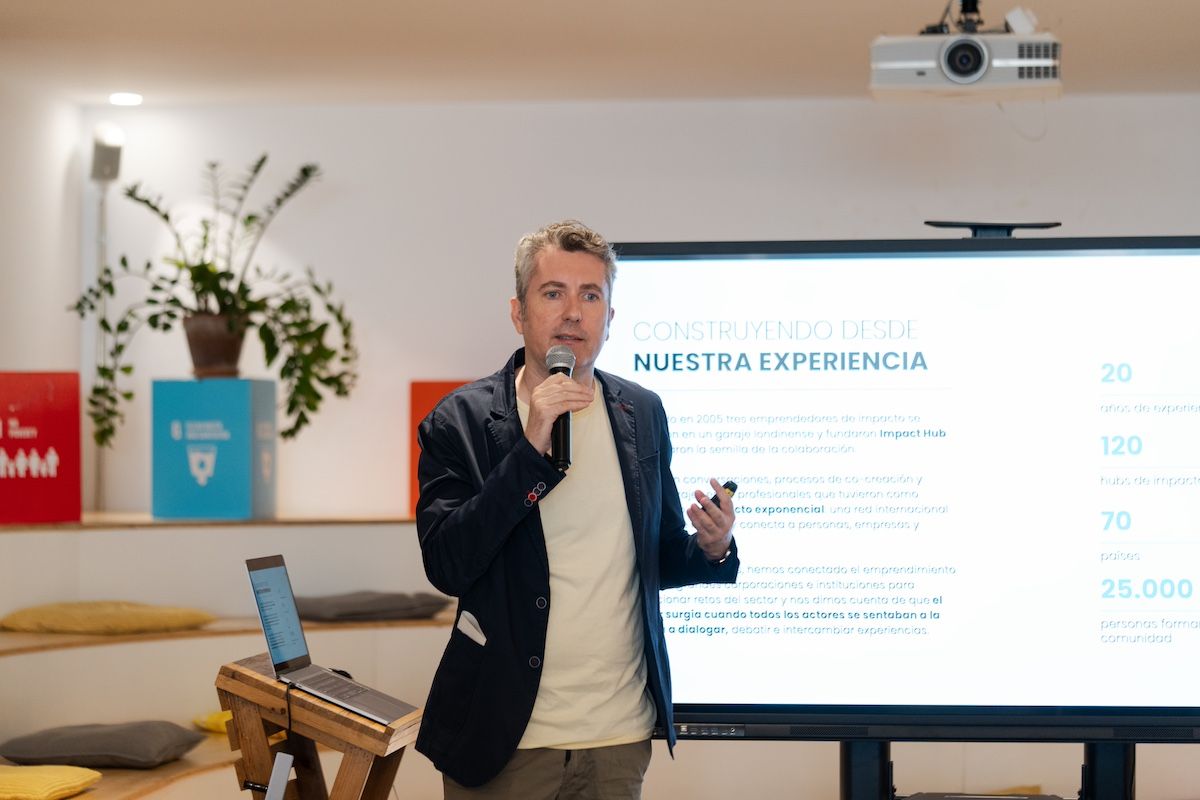
The Lab, which has Coca-Cola and Lainco as strategic partners, will work in collaboration with companies and entities in the water sector. Specifically, it has the collaboration of Familia Torres, BonÀrea, BonpreuEsclat, L'Institut Agrícola de Sant Isidre, the Cooperativa Agrícola de Viladecans, the Catalan Water Partnership, the Cluster Food Retail de Catalunya and the Agència Catalana de l'Aigua, which will contribute to the development and application of these solutions. "We have agents from the entire value chain, from production to industry and distribution," highlights the project manager from Impact Hub Barcelona, integrated into a network of 120 hubs with a presence in 70 countries.
In fact, this collaboration between Aigües de Barcelona and Impact Hub did not begin with the Lab: both had already allied previously to seek solutions to specific challenges of the company, and now they have gone further. As López highlights, "taking into account that water management is strategic for many companies, instead of identifying challenges for a specific one, we have gone on to identify shared challenges for a large sector."
Add The New Barcelona Post as your preferred Google source for free
Stay informed with the latest news.
