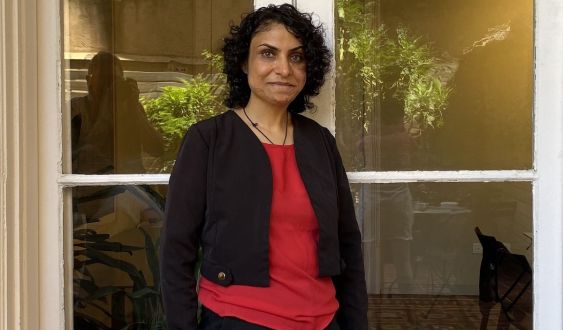
Less than a year ago, Afghanistan occupied all news reports and front pages, and everyone had a formed opinion on what the return of the Taliban to power meant. As a society addicted to current events and breaking news, that interest and moralizing vocation vanished when other headlines arrived, and now few are concerned about what is happening there. In her constant fight for peace, Afghan activist Nadia Ghulam (Kabul, 1985) raises her voice to refocus attention on her native country.
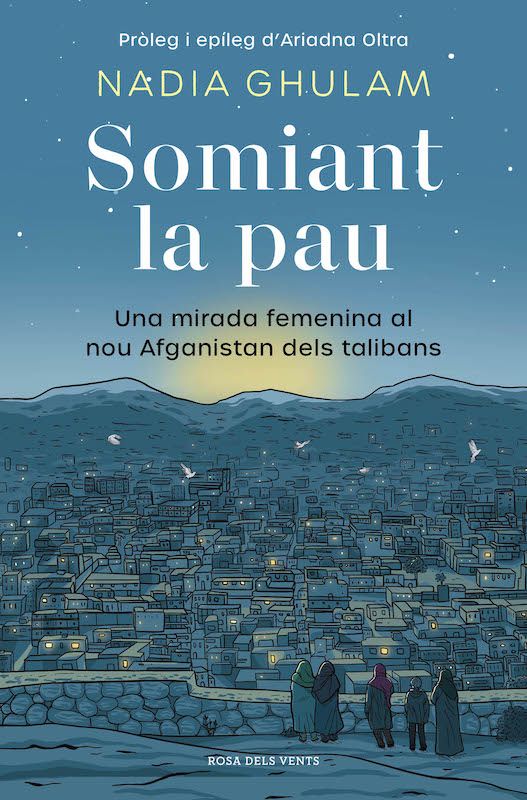
In Somiant la pau. Una mirada femenina al nou Afganistan dels talibans (Rosa dels Vents), the author reflects on the life she had to abandon when she was only 21 years old and how it has been shaken again with the return of the Taliban. It is not her first book and follows a literary career initiated with El secret del meu turbant (Columna), Prudenci Bertrana Award; La primera estrella del vespre (Rosa dels Vents); and the children's story El país dels ocells sense ales (La Galera). She, who at 16 did not know how to read and asked for books just to touch them.
Ghulam had to flee Afghanistan because she had been posing as a boy for ten years to bring food home, after her only brother died and her father fell ill. "When we had nothing, we fed ourselves with the mud from the walls of houses. Maybe that grit filled our stomachs and fooled them as we did, imagining that what we were sucking was delicious food," she narrates.
She survived as best she could in the first Taliban regime, in an era without cameras or mobile phones that helped her keep her secret, an advantage that Afghans have now lost. A victim and survivor of a bomb, Ghulam has made her wounds, both visible and invisible, her best weapon to defend peace: "I thought the same as you, that it would never touch me, that war was far away. Until I was eight years old. Sometimes I wonder how I managed to get out from under the destruction caused by the bomb that fell on my house and how I got on with life in a country where violence was —and is— our daily bread."
Ghulam was able to flee Afghanistan thanks to the help provided by journalist Monica Bernabé. She landed in Barcelona on November 11, 2006. "I took my house keys, in case my mother wasn't there when I returned," she says. For now, 16 years have passed. "I had left Kabul dressed as a man and thought that in Europe I would have to continue pretending to be a boy to be as free as I had been allowed to be in Afghanistan," she continues.
It was not like that and, with the support of her host family in Badalona, she was able to get ahead. Although with difficulties. Like realizing that her high school diploma was not valid here. But it didn't matter and she earned two higher degrees, a university degree, and a master's. All of this to dedicate herself to bringing peace to her native country and to creating "agents of peace" wherever she goes, with talks and participating wherever she is called. She works as a social educator at Fundesplai and leads the Ponts per la Pau association, through which she provides shelter to some 300 Afghan girls, facilitating money for them to study. Now, with the return of the Taliban, she also dedicates herself to covering more basic needs.
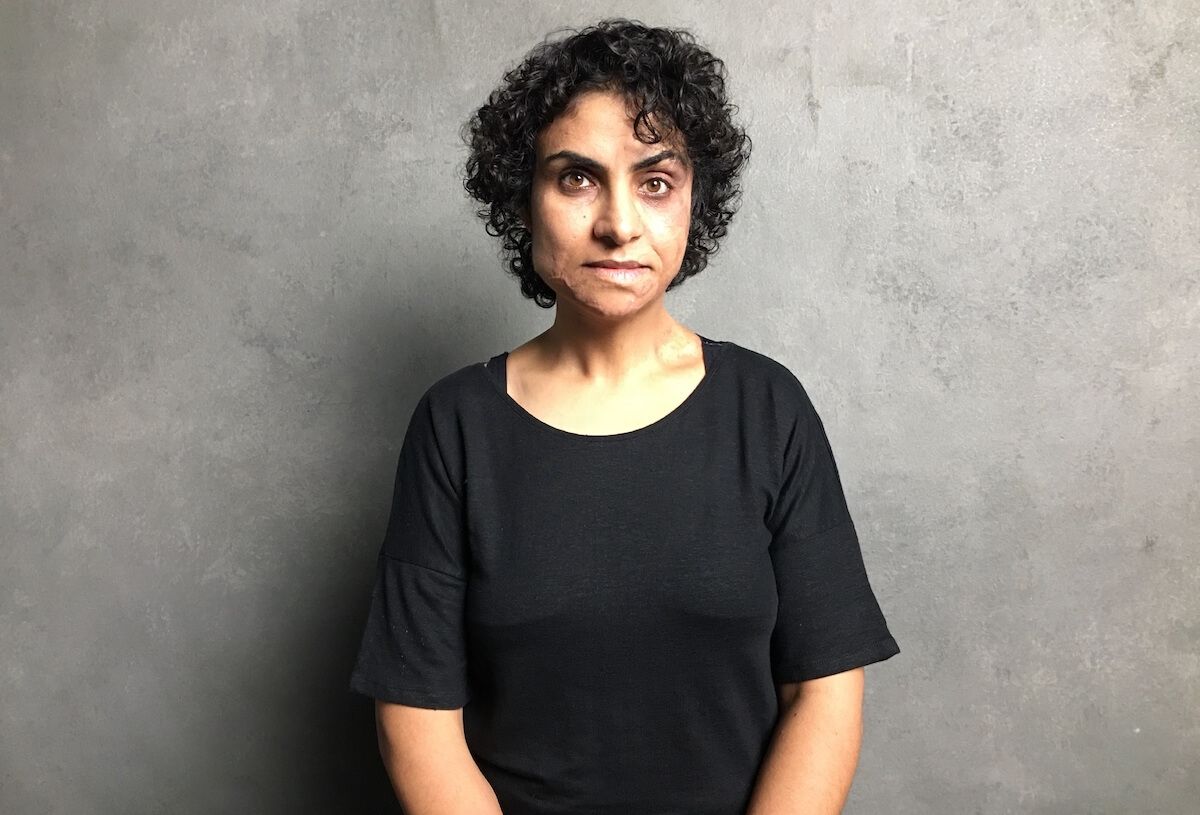
She works as a social educator at Fundesplai and leads the Ponts per la Pau association, through which she provides shelter to some 300 Afghan girlsThe aftermath of the bombing has led Nadia Ghulam to undergo surgery 21 times, twelve in Afghanistan under very harsh conditions and without anesthesia, and nine more in Barcelona and Mallorca. The last time she did it, in April 2021, she thought she could give herself a summer for herself, free from the pains the bomb left in her body: "I decided that I would not go to any refugee camp or return to Afghanistan to help, but that I would dedicate myself to myself and enjoy my free time. For once in my life, I wanted to take care of myself, like my friends in Europe do."
Her Catalan father's illness and the return of the Taliban disrupted her plans. She went out of her way to try to bring her family to Barcelona, who had already lost that hope years ago: "I always told them that soon I would have the necessary documents and work permit and I could do family reunification and bring them here." And Ghulam has always been treated as an illegal immigrant, even though she met all the requirements to be recognized as a refugee. She was five years without a work permit and still does not have Spanish nationality. "If it hadn't been for my host family, my Catalan parents, I wouldn't even be able to live here," she criticizes. The last time she applied for nationality, it was denied because she lacked a birth certificate and a criminal record certificate: "Does anyone who knows my story (...) really think that the Taliban will issue a criminal record certificate in my name so that I can live in peace anywhere in the world?"
With a tweet addressed to the President of the Government, Pedro Sánchez, speaking of the danger that would threaten her family if they stayed, she received many responses, which led to her being called by the Ministry of Foreign Affairs. She could not bring her mother, who preferred that she save a cousin who had been widowed with two children in her care, "how will she be able to survive in the Taliban regime?", and one of her sisters. They arrived in Torrejón de Ardoz and, when Ghulam was heading there, called by chef José Andrés' NGO to cook for the refugees, her family was moved to Salamanca. They are still there, in a foster home, where it is very difficult to see them. Nor can they come to Barcelona with Nadia Ghulam, even though she offers them a home and pays for their journey, because they would leave the international protection circuit without yet having a resolution of all the procedures.
She could not bring her mother, who preferred that she save a cousin who had been widowed with two children in her care, "how will she be able to survive in the Taliban regime?", and one of her sistersAn abandonment that does not seem to be improving. Without forgetting that the situation of those who could not leave Afghanistan only worsens, with child malnutrition and extreme poverty growing by leaps and bounds, which leads many to sell organs or their own daughters. "The queues for bread are long for those who haven't been paid anything for months and the international community has decided to turn off the spotlight on this part of the world," she denounces.
The worst part is seeing how Western media obsess over controversies that, for Nadia Ghulam, are not controversies. "If I put myself in the shoes of a 12-year-old girl in Kabul who is starving, I cannot understand that the headline is about mannequins being decapitated," she criticizes. A media interest that, moreover, is increasingly diminishing with the war in Ukraine. "I see how Ukrainians are treated at the border with Poland, how they are waited for with a flower and hot food. And I think, why aren't all refugees treated in an equally humane way? Could there be categories of refugees?"
Add The New Barcelona Post as your preferred Google source for free
Stay informed with the latest news.
