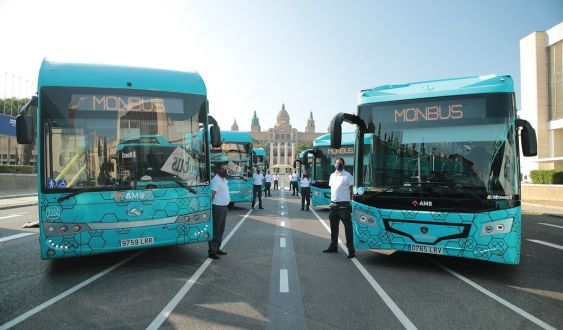
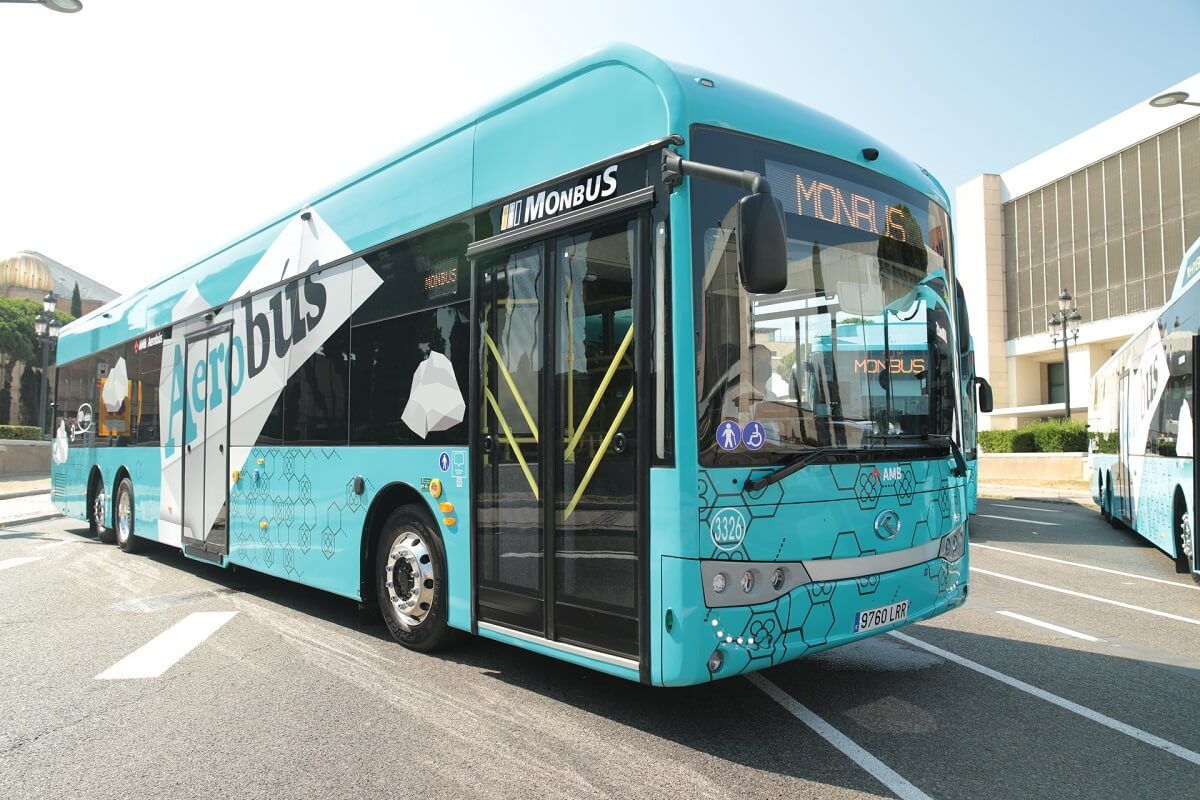
For a week now, new Aerobuses have been circulating between Barcelona Airport and the center of the Catalan capital. At first glance, the big change that can be detected is that their characteristic blue color is now more vibrant, but the fleet renewal has also allowed the extension of this service's operating hours. The Aerobús will now operate 24 hours a day, covering the time slot from 1 AM to 5 AM. Until now, the available options to reach El Prat by public transport during these hours were the N16, N17, and N18 Nitbus lines, which will continue to offer this service.
The route the Aerobús will take will remain the same. Departing from T1 or T2, it will stop at Plaza Espanya, Gran Via with Comte Borrell, and Plaza Catalunya. To go to the airport, it can be taken from Plaza Catalunya, Sepúlveda street, and Plaza Espanya. The journey will last 35 minutes and the average frequency of the Aerobús will be between five and six minutes. During peak hours at T1, it will be reduced to four.
The renewal has also allowed the incorporation of less polluting buses, with 27 hybrids and six fully electric. The Barcelona Metropolitan Area (AMB) has invested 15 million euros in the purchase of these new 33 buses. For the Vice President of Mobility of the AMB, Antoni Poveda, the changes that the administration is promoting in daily metropolitan mobility, with the renewal of the urban and interurban bus fleet and the Low Emission Zone (ZBE), must also translate into "improving the management of mobility flows around large infrastructures, such as the airport".
The Aerobús incorporates other novelties such as Wi-Fi connection throughout the journey and USB charging zones inside the vehicles. Likewise, combined tickets have been established: a single ticket with the option to link with the metro or bus (7.10 euros) and different travel packages that include the Aerobús round-trip ticket and the Hola Travel Card, a card that allows unlimited travel on public transport for 2, 3, 4 or 5 days. The single ticket will cost 5.90 euros and the round-trip ticket, 10.20.
A service that moved 5.7 million passengers
This connection between the airport and the center of Barcelona began operating in 2002. Since then, it has not stopped growing, with 5.7 million registered users in 2019. The pandemic has brought a halt to this trend. This summer, the city is between 40% and 50% of its tourist capacity, a figure that is also being detected in the demand for Aerobús, according to the first deputy mayor of Barcelona, Jaume Collboni.
This service has ceased to be managed by Badalona-based Tusgsal and has passed into the hands of a UTE (Temporary Business Union) made up of three companies affiliated with Monbus. This Galician company manages the urban transport service of the Barcelona port area and the Logistics Activities Zone (ZAL), the interurban services that connect the city of Barcelona and the municipalities of Baix Llobregat, and the lines in the upper part of Barcelona city. In the rest of Catalonia, it also operates regular lines between Barcelona and cities such as Manresa, Igualada, Reus, Vilafranca, or Tarragona.
Add The New Barcelona Post as your preferred Google source for free
Stay informed with the latest news.
