[dropcap letter="L"]
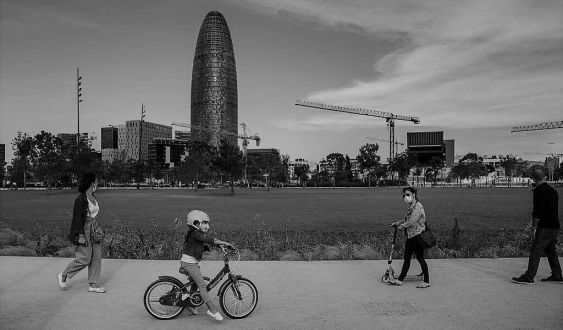
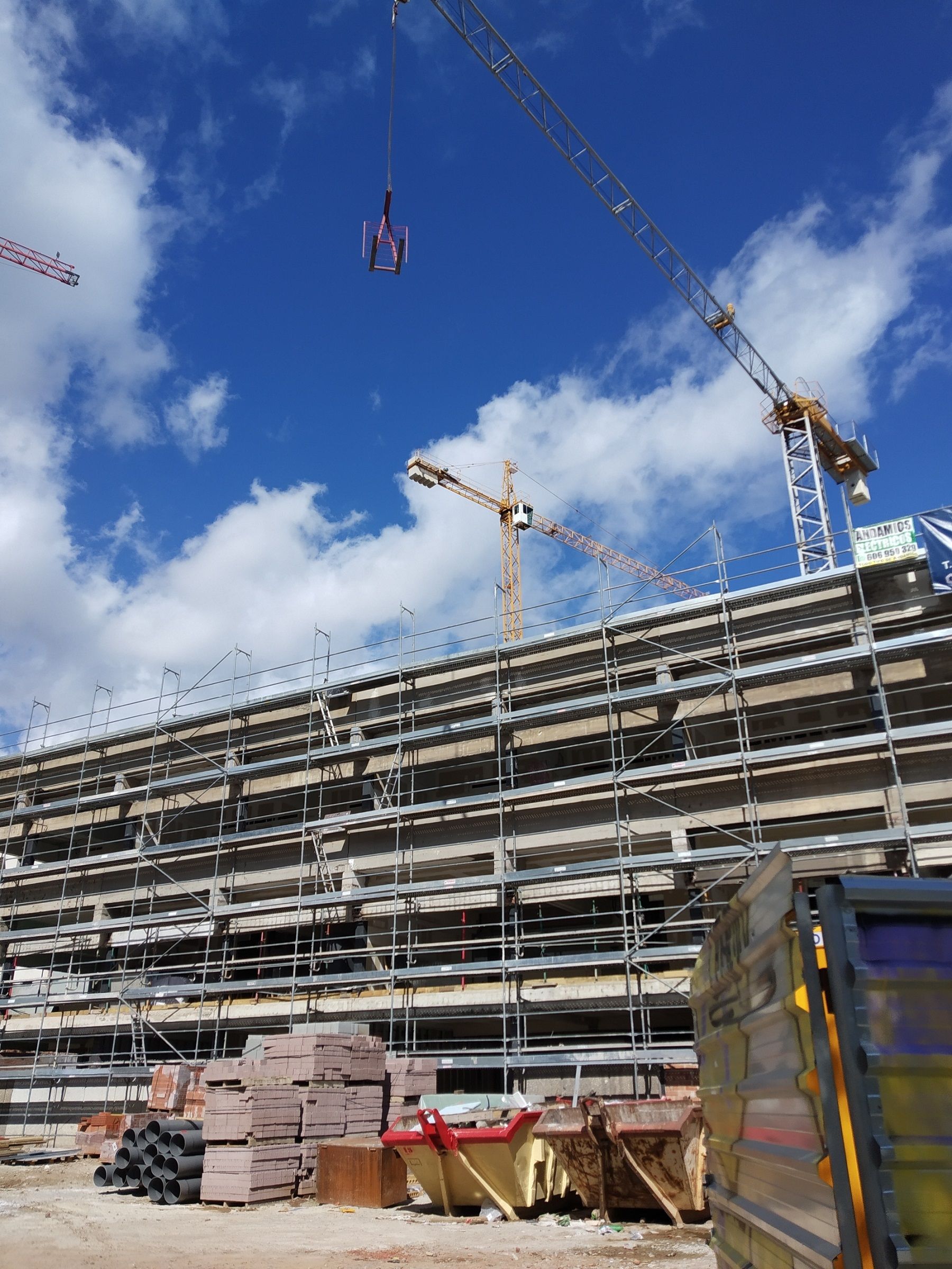
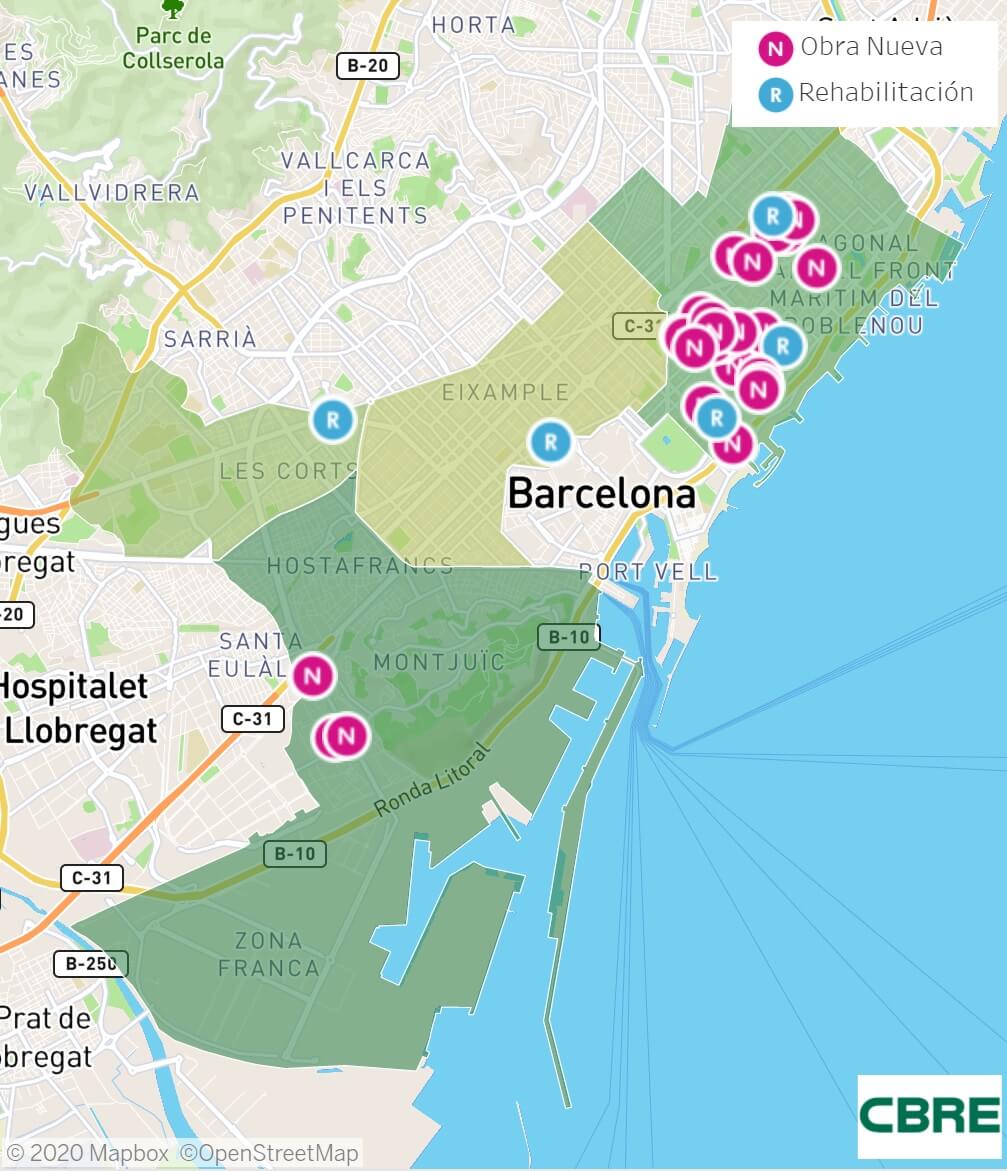
he cranes, the most visible element of a large construction project, have increased by 21% in Barcelona compared to 2019, reaching a total of 134 machines present in the city. The Sant Martí district, where the 22@ area is located, continues to lead the ranking, with 43% of the total. And it keeps growing: the district has added 32 cranes in the last year and now has almost 60.
Sant Martí is also at the forefront of the number of projects being carried out, about thirty more than a year ago. This is stated in the fourth edition of the report 'Barcelona from the sky' by the consultancy firm CBRE, which highlights that construction has not yet assimilated the effect of the coronavirus crisis, considering that it is a sector characterized by long development periods, with many processes involved from the start of a project until its final delivery.
[subscribe_newsletter_esp]
In Sant Martí, the construction projects in 2020 have been divided between residential and office spaces. The balance between these uses is one of the pending issues to resolve in the district, where the impulse of 22@ has led to a large concentration of companies, universities, and research centers.
At the presentation of the report, the director of the CBRE Barcelona office, Xavi Güell, indicated that one of the "weak points" in the conception of 22@ is the lack of proportionality between housing and offices. Despite its success, with the revitalization of a completely forgotten area of the city, Güell stated that correcting this imbalance can have a positive effect for the entire district, especially if the administrations end up making the optimal decisions to do so.
According to Güell, the future of 22@ is framed within the global trend that has accelerated as a result of the Covid-19 crisis: the prominence of cities in decision-making. For him, the current panorama has led to "the era of the revolution of cities," in which urban centers have taken the power and strength that states once had. "A new race has begun where cities will compete in a new scenario, above all, to attract talent. And attracting it is not easy, there are many variables at play and how cities are redefined and redrawn in the new context will determine whether they lead or not," he maintained.
In this equation, the balance of uses in 22@ is key to prevent inequalities from increasing. "In an area that is very polarized, where there is a huge concentration of offices, it is always good to be able to balance it with more residential," he emphasized. Despite all this, he assured that Barcelona has a "very good DNA" to emerge well-positioned in this post-coronavirus context, offering a quality of life that few cities in the world have.
The coronavirus crisis can also influence the evolution of the office sector in the city, where 365,000 square meters of new surface area will be delivered in the coming years, with Sant Martí once again leading the ranking. CBRE believes that these projects may be delayed due to Covid-19, leaving behind the pre-leasing operations that had been seen in recent years. In this regard, Güell pointed out that we may be heading towards a "more organic and tidy" absorption of these new buildings.
Add The New Barcelona Post as your preferred Google source for free
Stay informed with the latest news.
