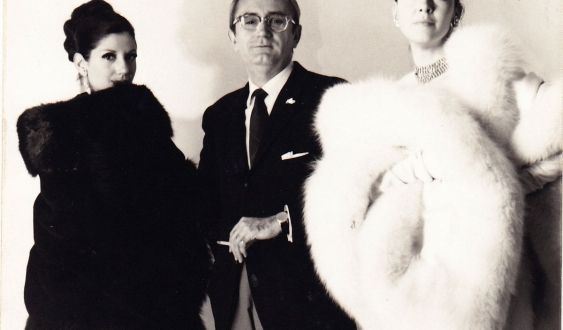
- For its importance in the world of fashion
Unlike most of his colleagues, who saw mass-produced clothing as a great enemy, Rovira understood that he could not stop the future and took advantage of the situation. "He takes prêt-à-porter very seriously and from 1968, with the most important fabric commercial in Spain, he creates entire collections that include coats, suits, evening dresses...", says Josep Casamartina, director of the Antoni de Montpalau Foundation and curator of the exhibition. He likes the system because he can offer more affordable prices and with greater production. For Rovira, clothes were meant to be worn, regardless of the price. He understood the haute couture workshop as a laboratory but knew that ready-to-wear would prevail. In fact, the same haute couture clients also bought simpler pieces.
Pertegaz, on the other hand, only made some prêt-à-porter pieces for the daughters of clients. And other greats opted to make some knitwear and little else.
That innovative vision made some very recognized fashion designers look at him with reluctance. "But he was as good in haute couture, with a very correct body of work, as in prêt-à-porter, where he was daring and adapted to the times, placing himself at a European level," says Rosa Maria Martín i Ros, textile and clothing historian.
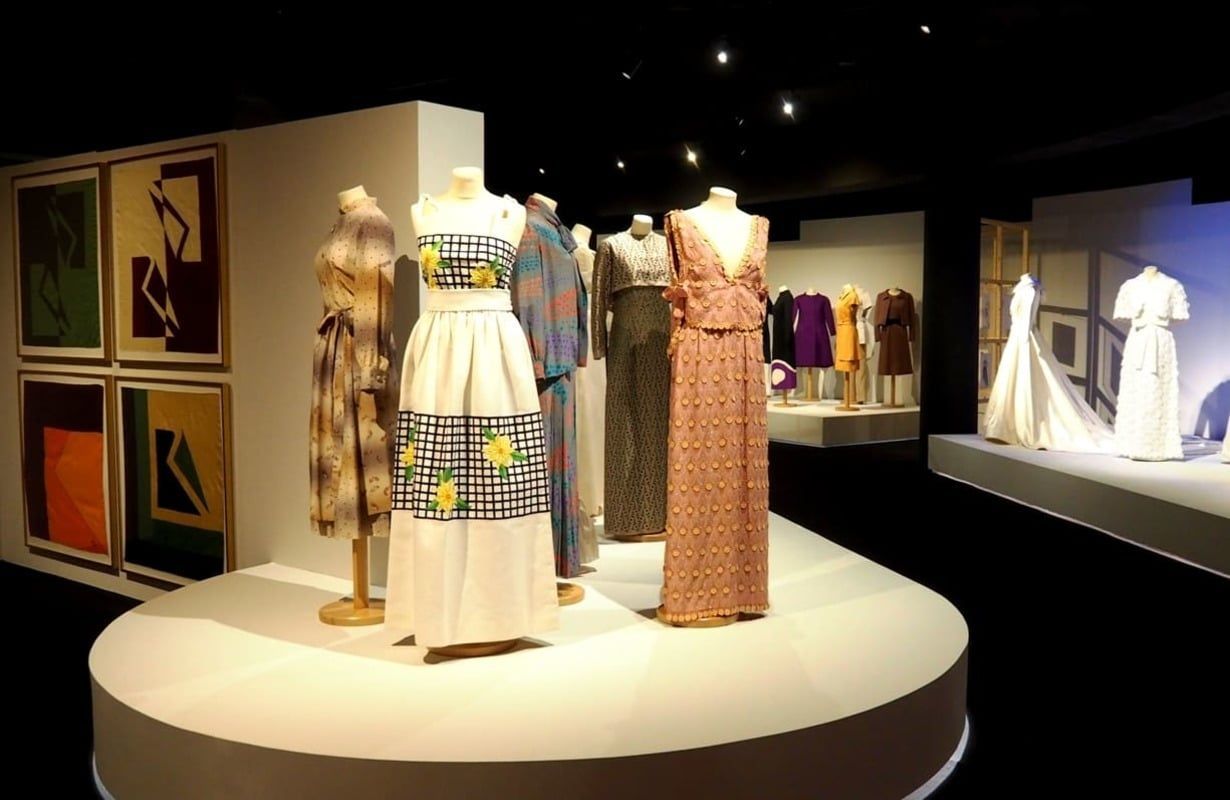
Rovira was also a standard-bearer for the concept of brand creation, including fashion accessories. In the seventies, he had two stores in Madrid and points of sale for his prêt-à-porter throughout the State. His premature death cut short a path that could have taken him much further.
- For the ambition of the exhibition in his hometown
The idea for the exhibition, with which Badalona wants to celebrate the centenary of his birth, stems from the one held in 2017 at the Museo del Traje in Madrid, also with funds almost entirely from the Antoni de Montpalau collection, directed by Josep Casamartina –curator of both exhibitions along with Ismael Núñez, the foundation's conservator—and which currently holds more than 16,000 pieces of clothing.
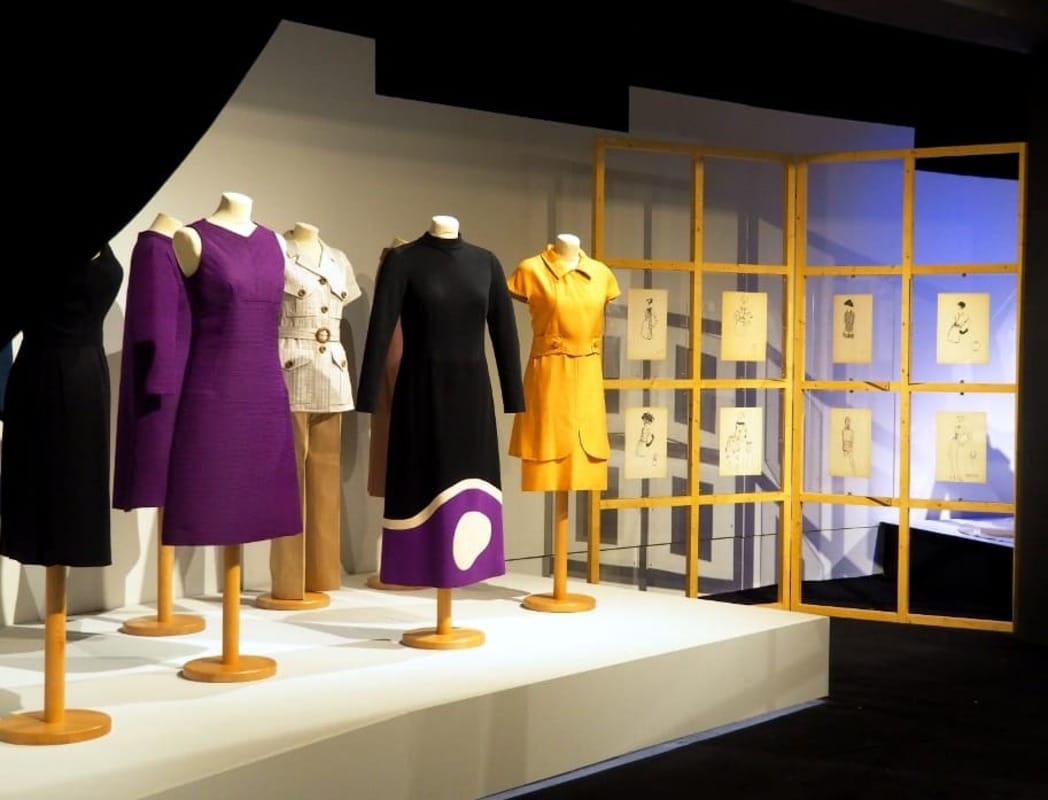
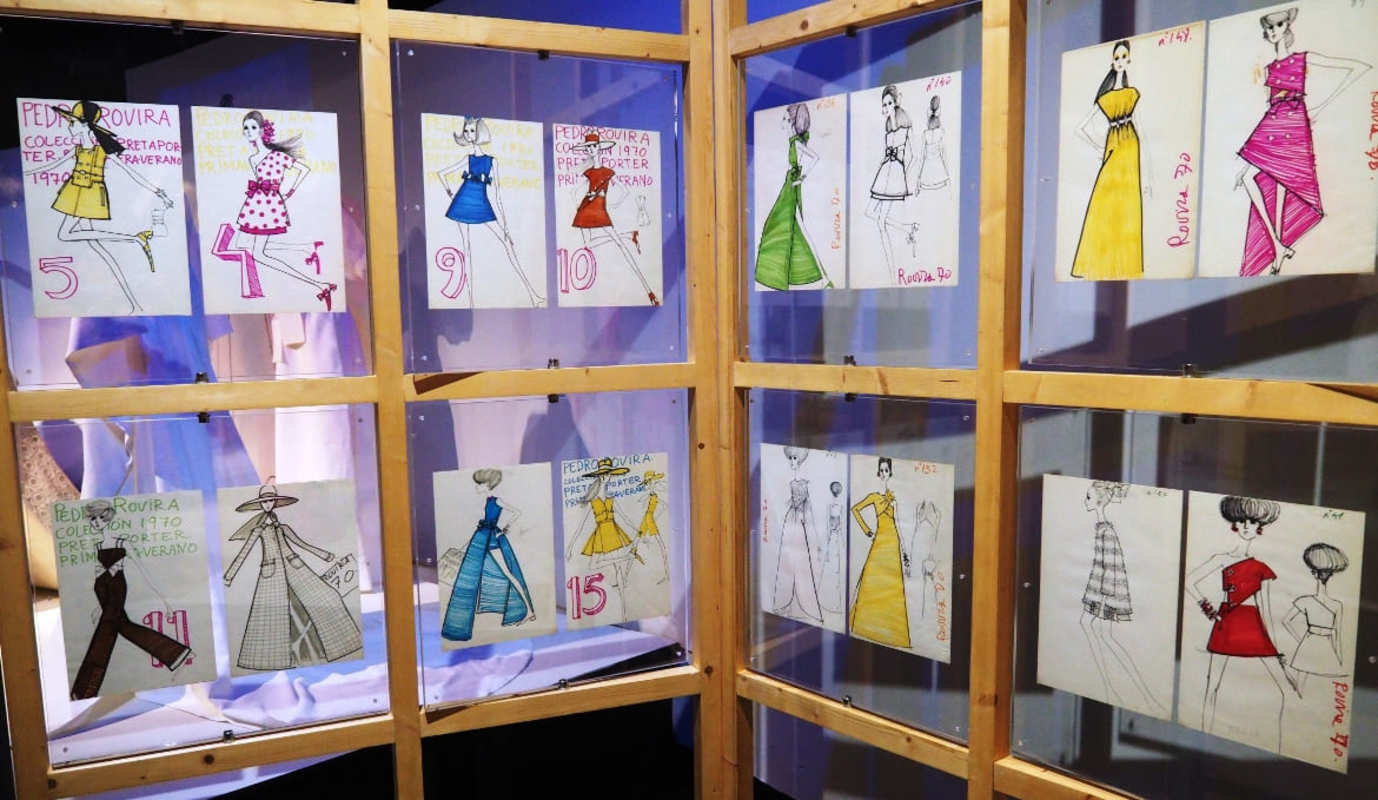
"It is a broad and complete review of Rovira's work from the 50s to his last collections in the late 70s," explains Casamartina about the exhibition, which occupies two floors of the museum. In addition to garments, we can enjoy various accessories (shoes, bags, hats, scarves…), more than one hundred original drawings, period photographs, and even a documentary.
Casamartina, historian and art critic, also signs the book about Rovira published by the museum and presented by Caprile. The volume, which is amply illustrated, reviews the biography and production of the Badalona designer, with testimonies from family members and clients.
- Because he was true to himself since childhood
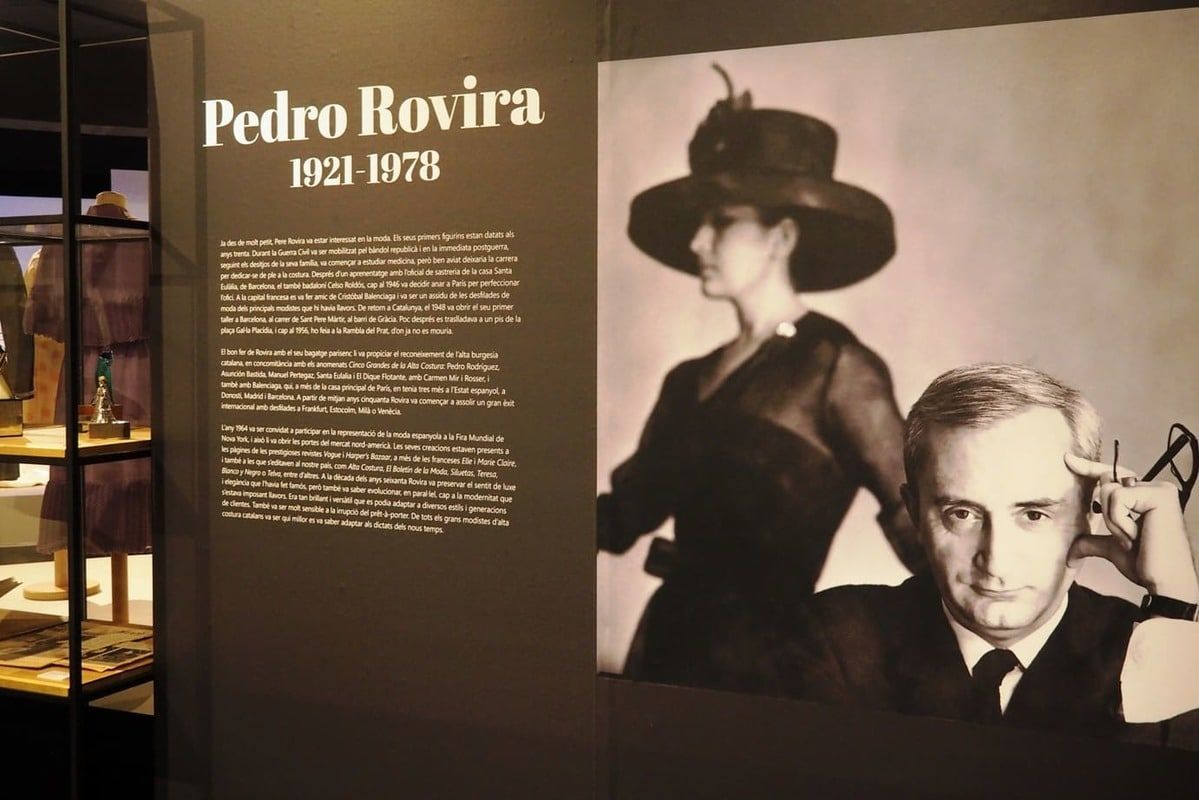
Pedro starts the degree but abandons it to learn tailoring from Celso Roldós, also from Badalona, who worked as a master tailor at the prestigious Santa Eulalia.
A great admirer of Cristóbal Balenciaga, he moved to Paris for two years to closely follow his work and that of other designers he admired. "It was something that no other creator did in those years," says Casamartina.
When he felt ready, in 1948, he opened his first haute couture workshop with a partner in the Gràcia neighborhood, although he continued to live in Badalona. He didn't take long to contact bourgeois families and became their go-to designer. His good clientele allowed him to move to Gal·la Placídia in two years and develop his career. In 1956 he moved to Rambla del Prat, his definitive location. "He never stopped being who he was, an affable, attentive person with great personal magnetism," says Casamartina.
- For his well-known clientele, his models…
The designer dressed clients with renowned surnames from the Catalan bourgeoisie such as Trias de Bes, Uriach, Ensesa, Trueta…
They trusted his good taste but were also delighted with his kind treatment and conciliatory spirit. "He adapted to each client's style and also to their needs."
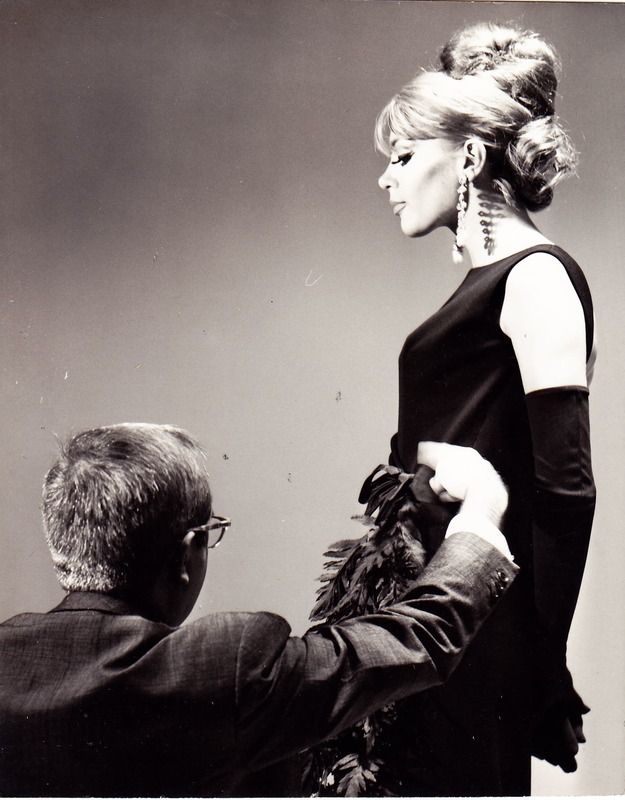
Style icons of the era and celebrities such as Bibis Salisachs de Samaranch (especially in the sixties, before becoming a client of Pertegaz), Tita Cervera, Silvia Itoiz (wife of Carles Rexach), soprano Joan Sutherland, Adolfo Suárez's wife, Amparo Illana, and even Encarnita Polo or Queen Sofía herself passed through his workshops.
- Due to his controversial relationship with Pertegaz
Good proof of his rejection is that he repeatedly vetoed the entry of the Badalona designer into the High Fashion Cooperative, where he was proposed as a new member by Pedro Rodríguez. The Barcelona association, created in the manner of the Chambre Syndicale de La Couture Parisienne, organized fashion shows at the Hotel Ritz, provided prestige and was a very important element for the promotion of creators even abroad. Among its members, in addition to Pedro Rodríguez and Pertegaz, were Asunción Bastida, Santa Eulalia and the El Dique Flotante store.
"Only when the designer from Teruel left the Cooperative, Rovira was accepted," Casamartina points out. It was already 1964.
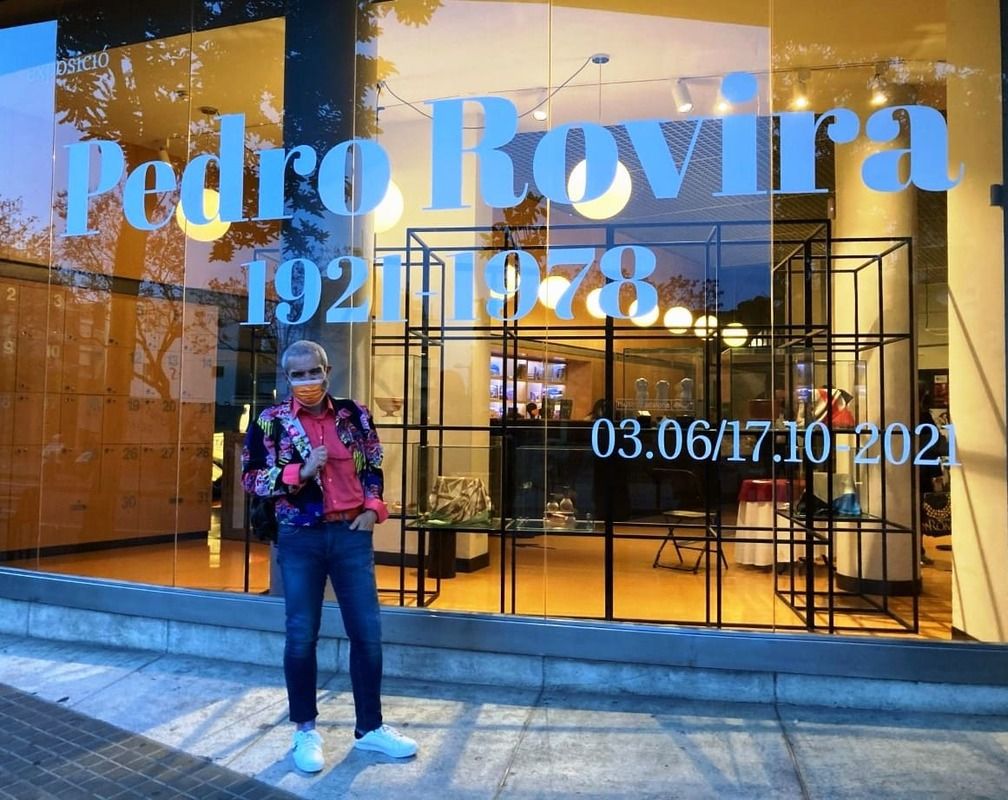
- For his friendship with Balenciaga (who influenced him)
The confusion has probably been generated because Rovira's style draws heavily from the exquisite Balenciaga in perfectionism and elegance. Everything he learned observing the designer in Paris, he used throughout his career. Casamartina explains that even in his designs from the 70s, sought-after influences from the 50s can be found.
Unlike the relationship he had with Pertegaz, he got along very well with Balenciaga. The creator whom many consider the best of the 20th century, was generous and not at all competitive, although he also had no reason to be because his clientele was of very high status.
With Pedro Rodríguez, Rovira will also have good chemistry, and they will even share a fashion show in S'Agaró.
When Balenciaga closed his stores in 1968, Rovira naturally inherited many of his clients. One of them would be Carmen Ferrer-Cajigal, Countess of Torroella de Montgrí and Marchioness of Robert (a relative of Robert Robert i Surís, first owner of Palau Robert).
- For the category of the exhibited pieces
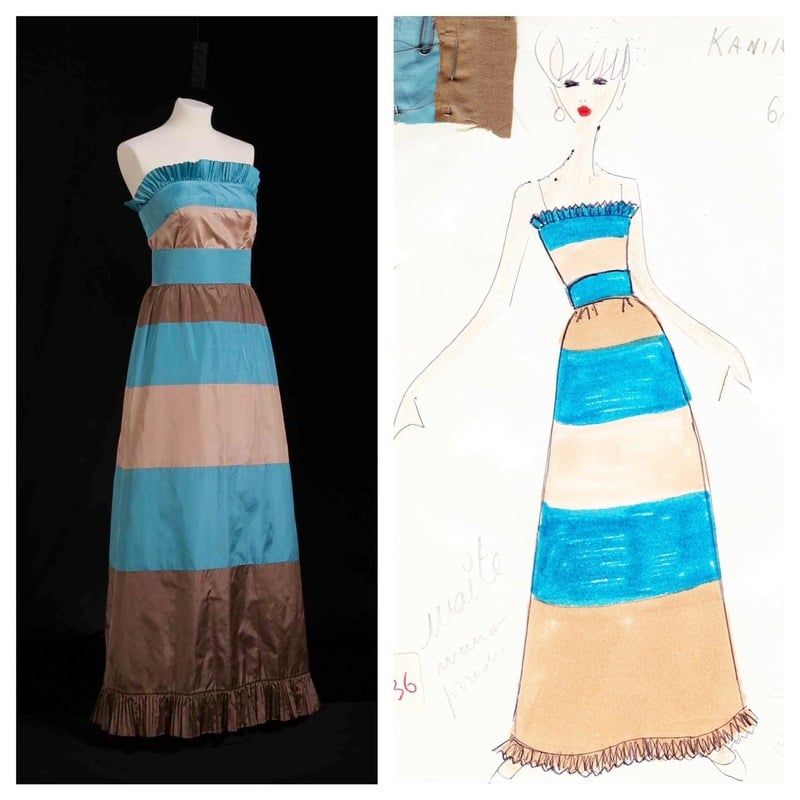
1--The 1971 striped silk shantung evening dress with a boat neck that Carmen de Robert, daughter of Carmen Ferrer-Cajigal, Countess of Torroella de Montgrí and Marchioness of Robert, has donated to the Antoni de Montpalau Foundation.
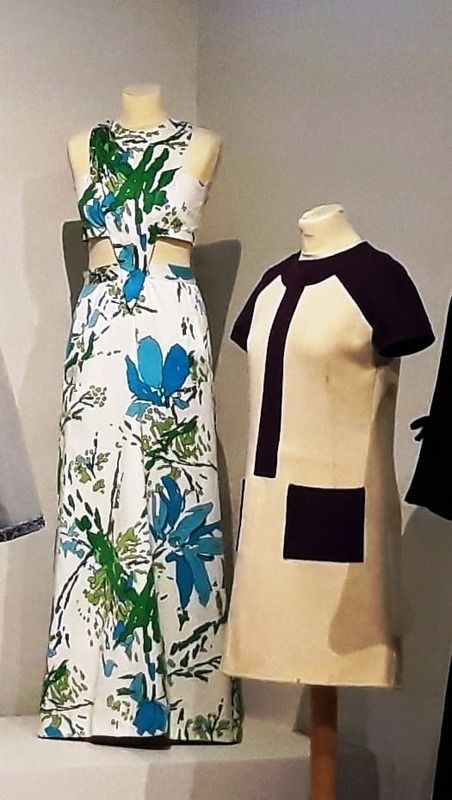
2-- The summer dress from Lorenzo Caprile's private collection (1974). A beautiful long floral cotton dress with a curious triangular piece on the chest.
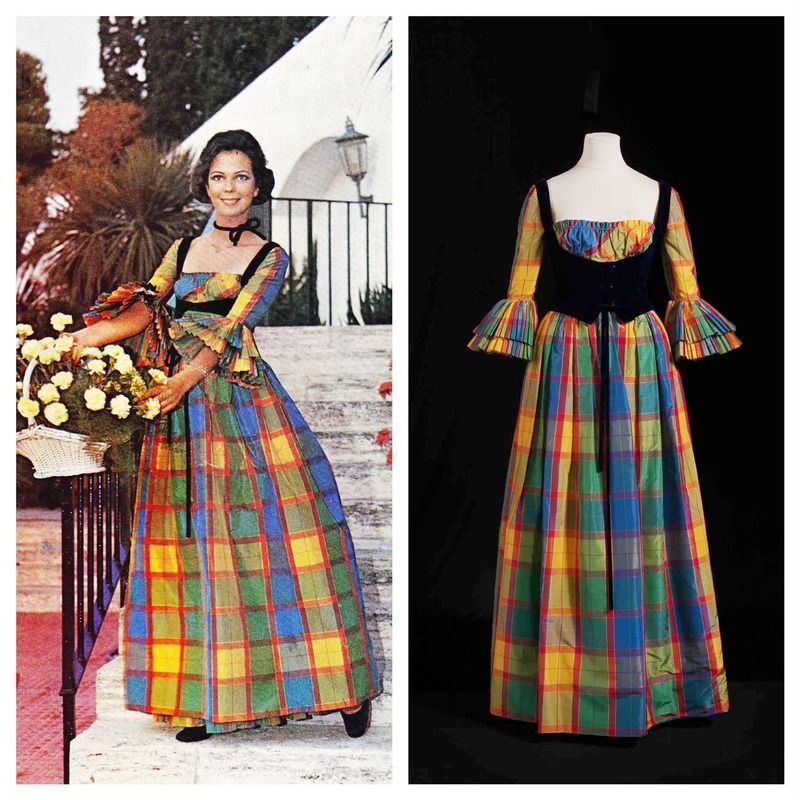
3-- The design donated by Isabel Cordero, one of the house's models, also an art historian. With a very Tyrolean air, the then Princess Sofía loved the model and ordered a slightly more modest one to wear to the Liceo.
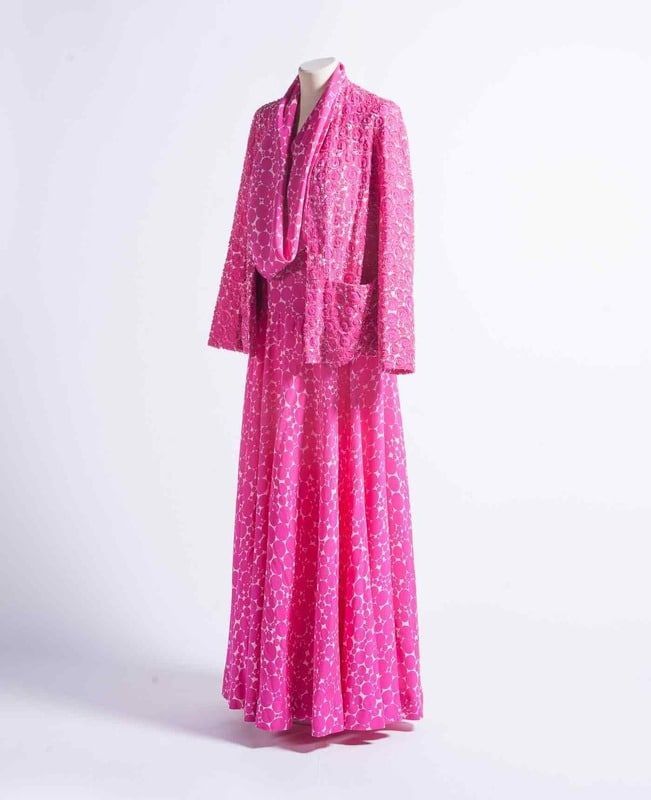
4--The fuchsia pink long dress from the Badalona family Heredero, from 1973. The former owners of the historic Piher factory and Mobba scales have donated 4 more designs to the Antoni de Montpalau Foundation.
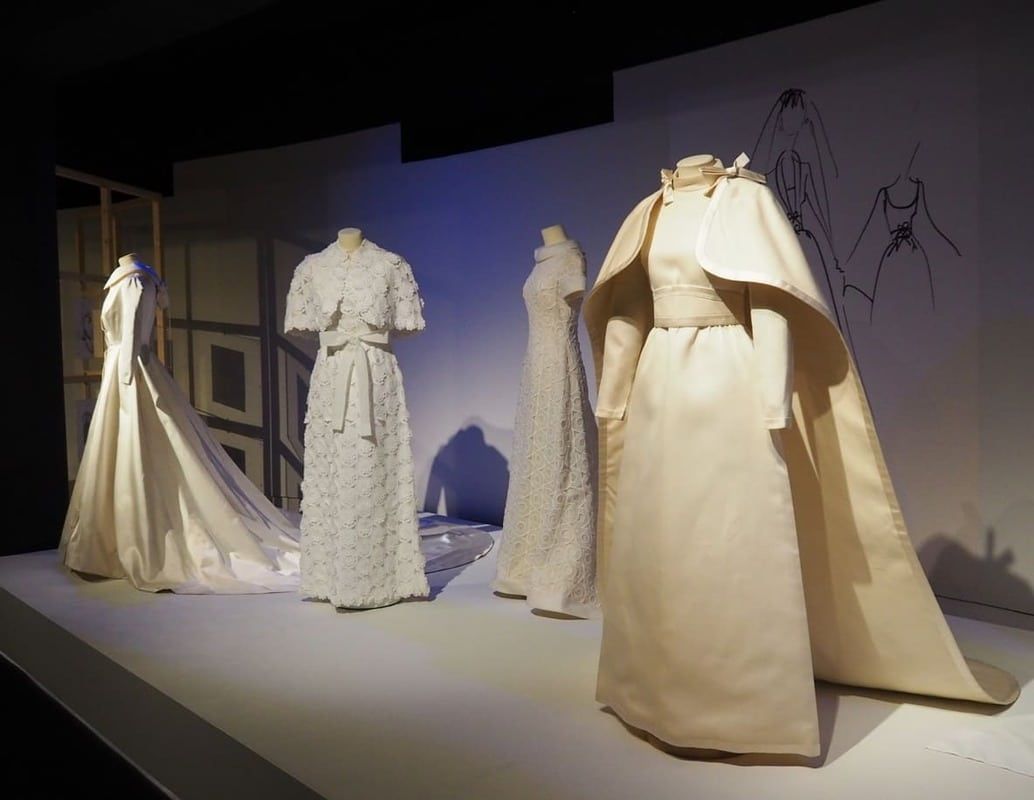
5-- Mercedes Albert's wedding dress, former director of Armani and Pomellato stores in Barcelona (1971). It was presented at the S'Agaró Fashion Festival where Rovira showed a preview of his collections. It was held at the La Gavina hotel of the Ensesa family. The rigid capeline from which the train emerges is very reminiscent of the designs of his admired friend Balenciaga.
- To enjoy his versatile style
As fashion photographer Antoni Bernad, who worked alongside him, says, his fashion was distinguished "by its natural, cheerful sophistication, one could say in line with the new times, less rigid."
His style, with precise cuts and great refinement, was subordinated to the needs of women. Because practicality was always present in his designs, with patterns as comfortable as they were well-constructed. In some way, he also lived between two worlds, that of the old dictatorship that was leaving and that of the democracy that was yet to come.
In his creations, his love for craftsmanship, pleats, embroidery, and ruffles was noticeable. He always worked with beautiful and exquisite fabrics, and his tailoring was impeccable. "He plays with geometric and romantic lines without any problem," says Casamartina, who defines his garments as very "versatile," some with tremendously current patterns that were groundbreaking in their day.
- By the opinion of Gimpera and Caprile
The exhibition gathers Rovira's vision of one of his models and great muse of the time, Teresa Gimpera: "She died too young, because she was still in full bloom, she had a small workshop in a discreet place, it was not a large space like Pertegaz's. If she had been able to continue, she would have gone much further. I liked her clothes, they were classic and very elegant, without frills, like her character, very simple and well made, sober, very beautiful fabrics, which was very important at that time."
- So that his name is not forgotten
To stay in the collective memory, it is necessary to remain in the market with your brand, as is the case with Pertegaz or Balenciaga, now under the charge of new creative directors. In Rovira's case, "he had not created an infrastructure large enough for it to have continuity without its founder, he was not a Dior, so the brand continued for a year and in 1980 it closed."
The exhibition in Badalona is a good way to recover his legacy, as happened with Pedro Rodriguez, who has been periodically remembered. The inauguration – which took place over two days due to Covid-19 – was attended by 216 people, including clients, family, friends, designers... "The other day a group of 8 dressmakers from Pedro Rovira came and it was very emotional," says Casamartina.
Add The New Barcelona Post as your preferred Google source for free
Stay informed with the latest news.