Yuja Wang: kaleidoscopic virtuosity (January 14)
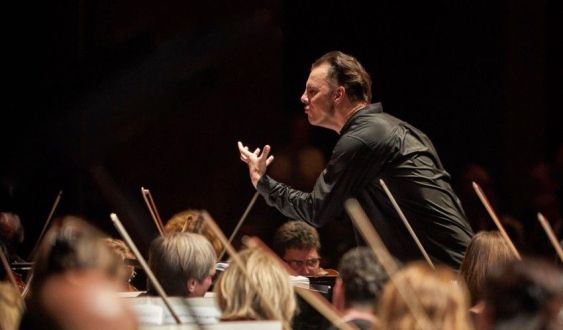
The first concert of the year that we recommend features Yuja Wang, a virtuoso pianist with a fiery temperament, who, together with the Mahler Chamber Orchestra, proposes a program of extreme contrasts. Two piano concertos, György Ligeti's and Frédéric Chopin's No. 1, allow us to appreciate the breadth of registers of an interpreter capable of moving from the most incisive contemporary writing to romantic lyricism without losing her identity. In both cases, her technical voracity emerges, but also a way of understanding musical expression from risk and maximum exposure. The Mahler Chamber Orchestra will accept its share of prominence with the performance of the suite Pulcinellaof Stravinsky and orchestral passages from the Idomeneo of Mozart, extracted from his ballet, resulting in a thrilling and generous proposal full of incentives -within the Palau 100 cycle- that crosses classicism, romanticism, and modernity.The truth without words of Wagner, by Currentzis (February 2)
Teodor Currentzis presents The Ring Without Words, an orchestral immersion into Richard Wagner's universe based on Lorin Maazel's arrangements. For 75 minutes, some of the most emblematic passages of Wagner's tetralogy are articulated as a grand symphonic fresco without voices, where the leitmotif retains its symbolic capacity intact. Objects, characters, and ideas emerge solely through the orchestral fabric, allowing the listener an almost mythical, concentrated, and immensely intense experience. Currentzis, known for his radical approach and extreme attention to detail, transforms this selection into more than a synthesis: it is an organic reading, of great expressive density, that invites listening to Wagner from another perspective, where the narrative is placed at the service of the magnetism of the sonic archetypes.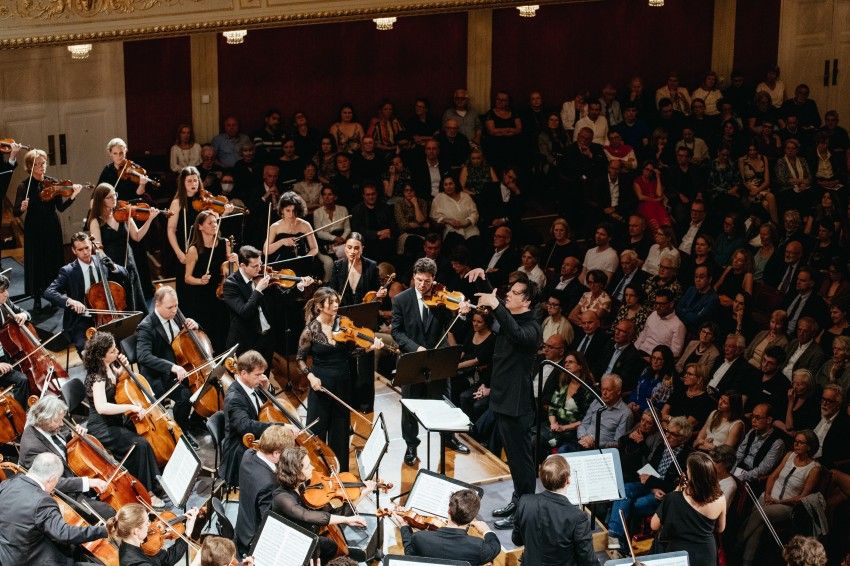
Zubin Mehta's 90th birthday, twice (February 16 and 18)
The celebration of Zubin Mehta's 90th birthday is structured around two complementary concerts with the West-Eastern Divan Orchestra. On February 16, at the Auditori, Mehta will tackle a fully romantic program with Max Bruch's Violin Concerto, performed by María Dueñas -one of the most sought-after soloists on the current scene due to the depth and maturity of her interpretations, which possibly enhances her alarming youth-, and the Symphony No. 4 of Tchaikovsky, a work of enormous emotional impact, in which the thunderous display of the wind section stands out. Two days later, the February 18 at the Palau de la Música, the celebratory journey continues with the overture LeonoreNo. 3 and the Symphony No. 8 of Beethoven, in a no less exciting program that culminates the monumental Symphony No. 9 of Schubert. Nicknamed "The Great", it is a visionary work that the composer never got to hear in his lifetime. A double portrait of the European symphonic legacy under the historic baton of Zubin Mehta.Martha Argerich and romanticism in expansion (March 16)
The much-loved Martha Argerich returns to Barcelona in the BCN Classics series as the visible head of a program focused on two pillars of romanticism. The Piano Concerto No. 1 of Beethoven, composed in 1796, already reveals a formal ambition that overflows the margins of classicism, anticipating the sensibility of the 19th century. Although the language still retains Mozartian traits, the scope of the discourse and the expressive tension clearly point towards the future. The Symphony No. 4 "Italiana" by Mendelssohn completes the program with a romantic look at Italy: luminous, vital and celebratory, but also crossed by shadows, by the awareness of an idealized past -the disconcerting immensity of the ruins- contemplated from a distance. A vehement dialogue between memory and emotion.Mahler's farewell, an "abyss that overflows" (Hitchcock)
Those responsible for programming that imposing Wagnerian immersion -the promoter Ibercamera- have also prepared one of the great moments of the season, on March 23: the Symphony No. 9 of Gustav Mahler, performed by the Frankfurt Radio Symphony Orchestra under the direction of Alain Altinoglu. Considered as a Requiem without words, the work approaches both the consciousness of death and the dissolution of tonal language. Mahler pushes harmonic relationships here to a limit that announces new ways of thinking about music. The sound space is colonized from darkness with an intoxicating frenzy: an extreme writing, driven by a monumental orchestra that, however, never loses sight of the deeply human component, that of the individual affected and transcended in their finitude. More than a conclusion, the Ninth seems like a threshold: a step into the unknown, which turns listening into an experience of rare emotional intensity, for many unquestionably spiritual.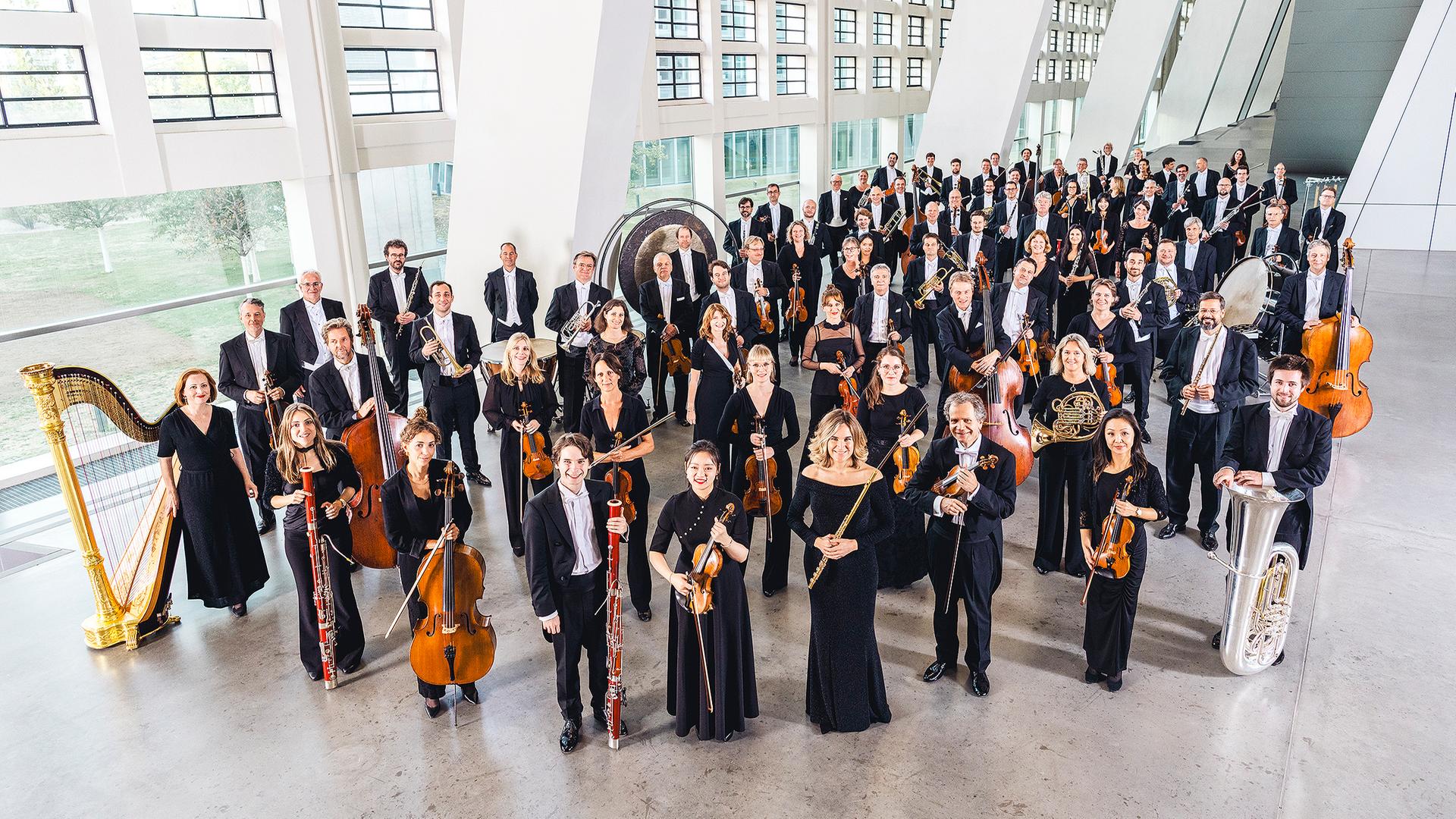
Bach and Concentus Musicus Wien, or the happiness of interpretive risk
The Palau de la Música hosts the complete performance of the Brandenburg Concertos by Johann Sebastian Bach performed by Concentus Musicus Wien, an emblematic ensemble, a paradigm of the interpretive revolution initiated decades ago by a handful of daring, but exquisitely trained young musicians, among whom was Nikolaus Harnoncourt, its founder, who passed away in 2016. Under the direction from the harpsichord of Stefan Gottfried, the group maintains that fierce and precise character that seeks to strip scores of any superficial patina. Tempi agile, rhythmic tension and a very physical sense of dance reveal a playful Bach and also -on the relevant occasions, of course- with his touch of lyricism. Far from all comfort, these readings opt for the risk and vitality of a language jazz-related, which continues to strongly challenge the current listener.Jordi Savall takes us to Vivaldi's Ospedale (May 11)
In our latitudes, the name of Jordi Savall shines as the one responsible for that interpretative shake-up, which happened decades ago, that updated with fascinating vehemence the way of making ancient scores -Renaissance and Baroque, though not only- vibrate and dusting them off the patina of a certain outdated romanticism, without life or truth. Also recognized as the architect of the recovery of lost or forgotten manuscripts, Savall delves in this case into popular music, specifically some of the most spectacular pieces that Antonio Vivaldi composed for the Ospedale della Pietà: sacred works such as the Magnificator the Gloria in D majorwith instrumental concerts such as "Per la Solennità di San Lorenzo" or the Concerto in E minor for violin. This vibrant and vital repertoire celebrates temporal existence with the characteristic joy of Venetian music, but also opens up to the solemn and the mysterious. Savall, a master at revealing the chiaroscuro of the Baroque, proposes a listening that goes beyond the ornamental and restores to these works all their emotional depth.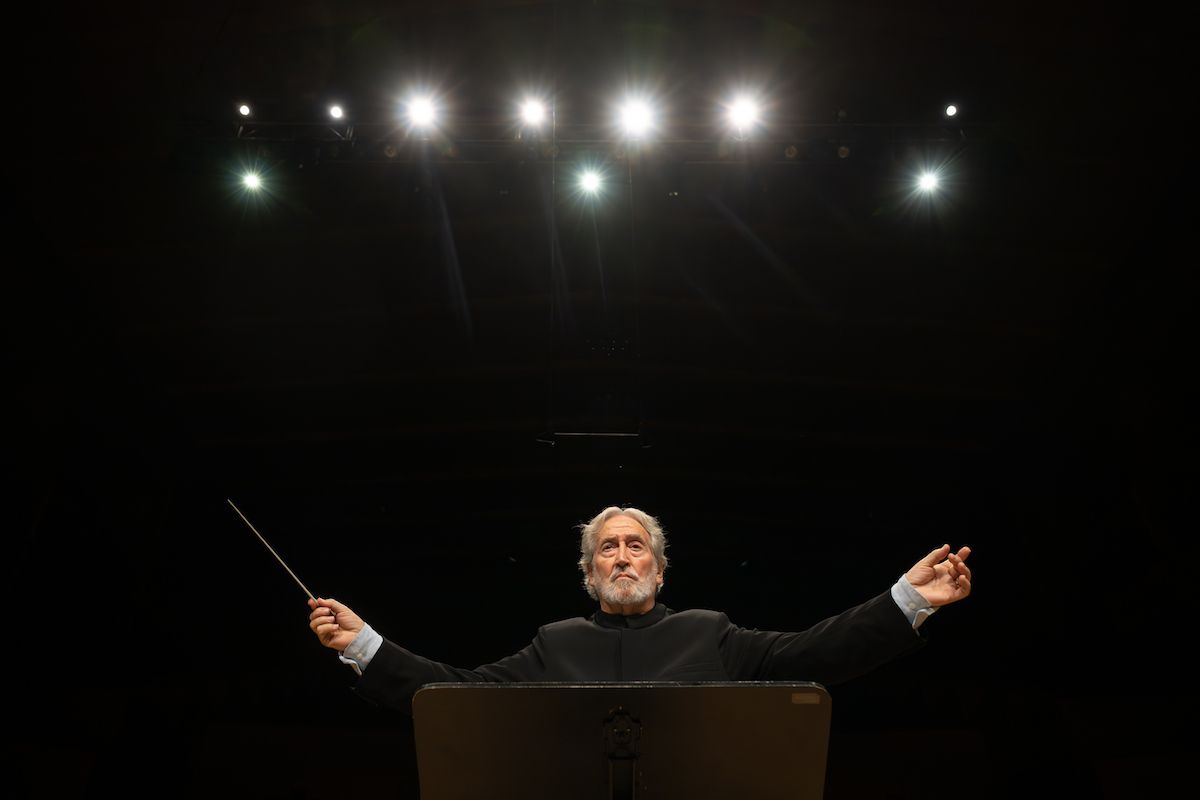
Mahler I: the birth of a world (May 18)
The First Symphony of Mahler represents the beginning of a sound universe with its own rules in each of its conformations, being compared to a "bildungsroman" (Bildungsroman) musical. Inspired by materials from an early cycle ofLieder -the Songs of a Wandering Comrade- the symphony develops a plot without words, but full of narrative energy (in fact, the denomination "Titan" was added to it, in honor of a text by the author Jean Paul), where a hero seems to emerge who progressively becomes aware of himself. The concert program opens with the overture of The Flying Dutchmanby Wagner, which slides the listener into a tempestuous journey, and continues with the Capriccioby Richard Strauss, whose final scene will be sung by Christiane Karg. Andrés Orozco-Estrada, leading the Gürzenich-Orchester Köln, will officiate an evening of great dramatic coherence and communicative power.Verdi's Requiem: impressions of the final dramaturgy (May 19)
Arrives at the Palau de la Música, the "House of Songs", the Requiemby Giuseppe Verdi, under the direction of Daniele Gatti, leading the Staatskapelle Dresden, with the collaboration of the Orfeó Català. A unique work in the program, this requiem stands out for an unparalleled dramatism within the genre: here death is not only contemplated from a distance with justified apprehension, but seems to be staged with a paradoxical beauty and vividness, at certain moments unsettling. The writing is almost operatic, visceral and of an intensity that can disturb the listener. The solo quartet -Eleonora Buratto, Elīna Garanča, Benjamin Bernheim and Michele Pertusi- brings a first-class dimension, in a performance that promises to be deeply moving.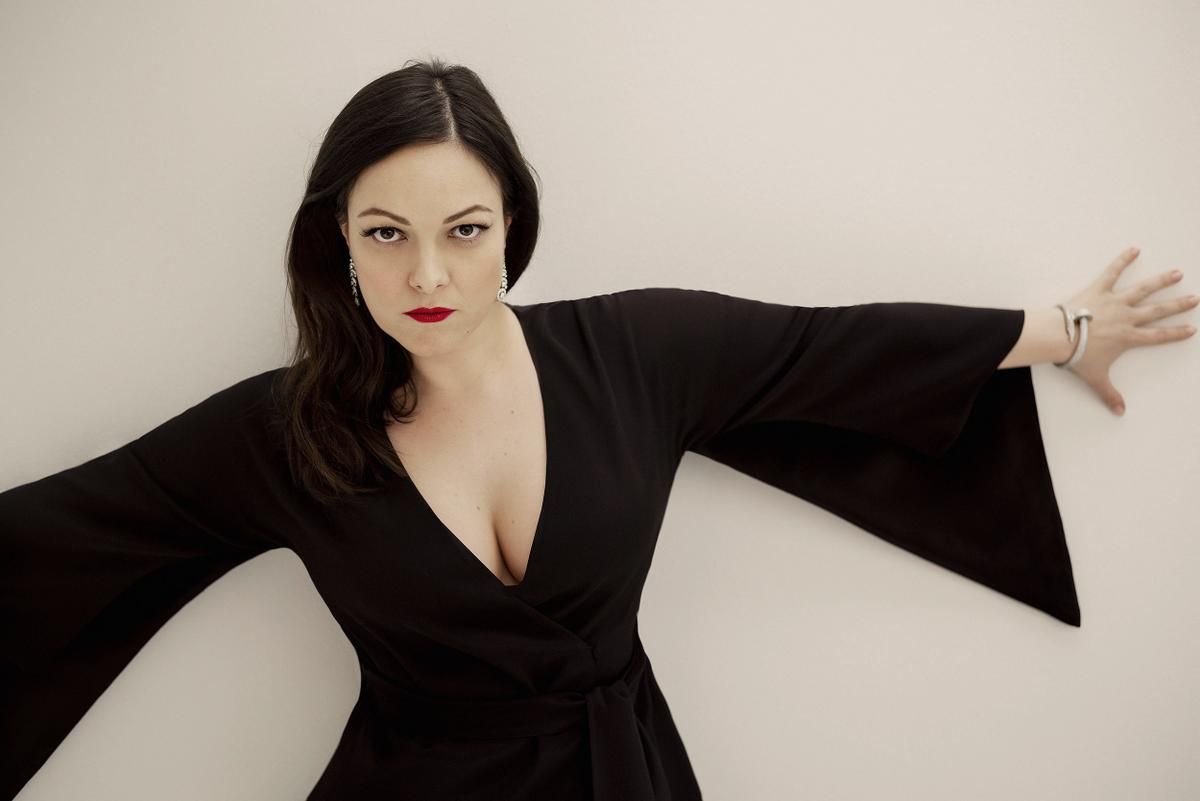
Gardiner and classicism in tension (May 28)
The close of the 2025-2026 season approaches with the return of John Eliot Gardiner and his new ensemble, The Constellation Orchestra. The program brings together works by Mozart, Haydn, and Juan Crisóstomo Arriaga in a revealing dialogue of the internal tensions of Classicism. The Symphony in D major de Arriaga, often labeled the "Spanish Mozart," perhaps comes closer to early Schubert for the subtle sensibility of his expressive flight. The Concerto for Clarinet by Mozart explores the timbral versatility of an instrument decisive for Romanticism, while the Symphony No. 49, "The Passion", of Haydn shows the vehemence of the Sturm und Drang, movement that anticipates the agitation and vital commitment of the artistic paradigm to come.As a final bonus, we cannot fail to highlight and congratulate ourselves on the level of our closest ensemble, the Orquesta de Barcelona i Nacional de Catalunya (OBC), internationally consolidated during 2025 in concerts such as the one in Hamburg. We highly recommend a couple of events at l'Auditori, representative of their versatility and interpretive power: for example, the one on March 6 and 7, with Pablo González ---one of the maestros, former principal, who have contributed to its evolution---- conducting Dvořák's monumental Seventh; or the one on May 29 and 31 ---already in the final stretch of the season---, where Bartók's Concerto for Orchestra and Brahms's Violin Concerto will be heard, under the baton of the current conductor, Ludovic Morlot. Works in which the density and richness of the orchestral fabric coexist in tension with the solo voice. An intense and promising ending, a door that closes to sow the desire for a new beginning; and, with it, the omen of other transport experiences… That subtle levitation or spiritual rapture that comes from the connection with oneself, made possible by the in vivo impact of the musical phenomenon.
Add The New Barcelona Post as your preferred Google source for free
Stay informed with the latest news.
