
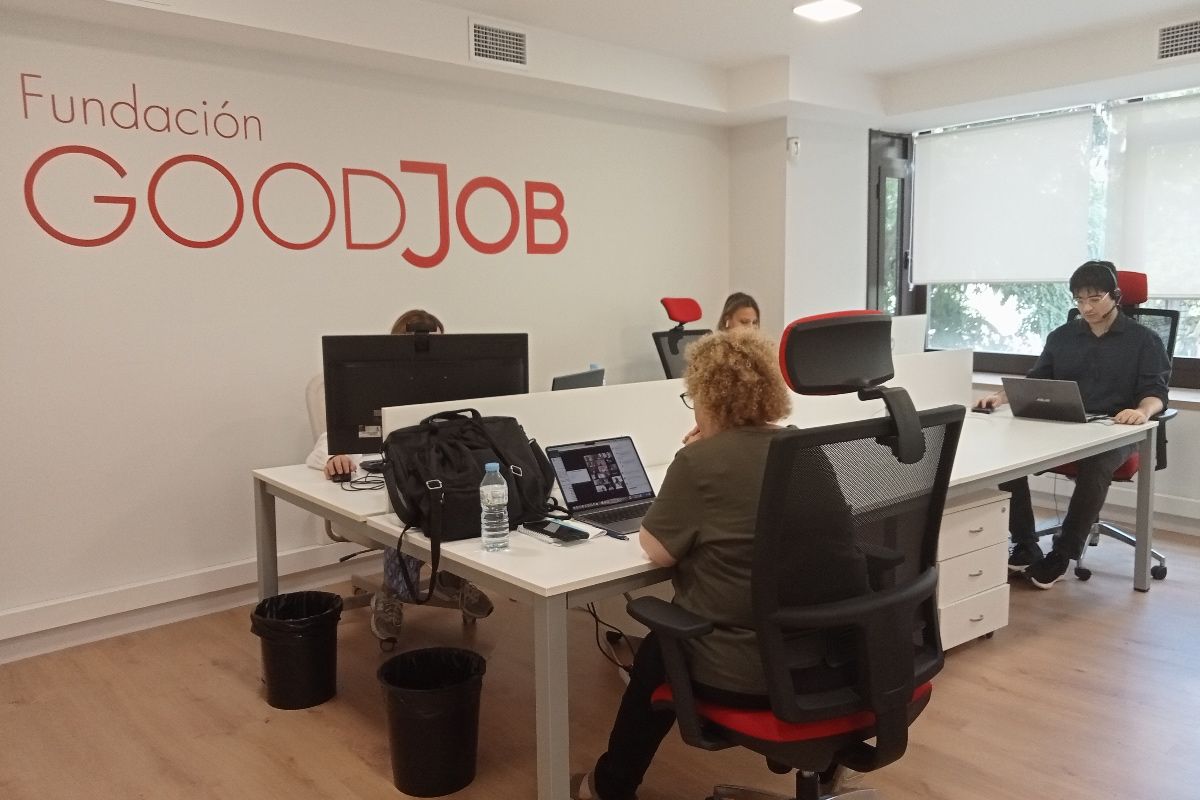
To promote the integration of people with disabilities into the ordinary labor market, and to do so in professions with added value. With this objective, the Catalan businessman Jordi Albalate decided in 2015 to divest from one of his companies to promote a social initiative. From that determination, GoodJob was born, which works to "improve the employment position of people with disabilities," as explained by its general director, César López.
The foundation works in a context where the unemployment rate in this group is 10% higher than the general rate, and where 75% of hires of people with disabilities are made in special employment centers, outside the ordinary market. "And mostly they are linked to areas such as facility services and auxiliary or manual activities, assuming that they lack sufficient capabilities to work in other professions. That is what we want to prove is not true," López tells The New Barcelona Post.
"Technology, digitalization, and the digital society offer the opportunity for this paradigm to change," proclaims the general director. With this objective, GoodJob launched in 2019 a cybersecurity employability program that aims for people with disabilities of all types and without prior experience to integrate into the ordinary staff of technology companies. The entity, whose organization employs people with and without disabilities, has since expanded its programs, and trains people in in-demand technological profiles, which can range from refining databases to tasks linked to AI.
The foundation is especially focused on Catalonia, due to the strength of its technological ecosystem and the field of cybersecurityAnd how do they materialize it? Through employability programs that allow people without previous experience or knowledge of the sector to integrate into it professionally. These programs include an initial eight-week training and coaching phase, during which users acquire skills required for the jobs they aspire to.
After these eight weeks, participants embark on an integration process within companies, where they perform their new technological functions for 12 months. After this year, during which users have a support team, the time comes for hiring by the company, which occurs in 75% of cases for the foundation.
Focus on Catalonia
The non-profit entity located its headquarters in Madrid due to its ecosystem linked to disability and greater ease for opening special employment centers. It currently operates in Castilla León and Cantabria, in addition to Catalonia and Madrid. Now, the foundation is especially focused on Catalonia, due to the strength of its technological ecosystem and the field of cybersecurity.
Although the programs linked to technology started with this initial cybersecurity one, they did not stop there; they continued with another on data analytics and another on cloud, in addition to a basic technology program that facilitates access to the rest. All of them add up to between 250 and 300 annual participants. 85% of those who start the program finish it and, from the moment they begin the process within the company, all start earning 19,000 euros during the 12 months that the integration process lasts.
The users of these programs respond to very diverse profiles. With physical or intellectual disabilities, more than half accessed the itinerary without prior experience or training in technology. In programs with 31% women, 56% are between 35 and 65 years old. In fact, 28% are over 45. "So we are not talking about a first job for young people, but about people with disabilities of all ages, and we serve the entire collective," López asserts.
This is also the case for people with acquired disabilities, who represent 70% of this group. Of these, some may have previous experience and knowledge in the technological field, but encounter barriers to accessing certain jobs due to their disability. "Our work also involves eliminating these entry barriers."
And this work of the foundation not only improves the labor integration of people with disabilities, but also contributes to alleviating a situation that affects a large part of companies that demand technological profiles: the lack of sufficient talent to fill their job positions. "Companies have been forced to broaden their range of recruitment formulas," and the foundation's programs allow the incorporation of junior professionals after this brief eight-week training period.
In addition, participating in the foundation's programs allows companies to comply with the General Disability Law, which establishes that companies with more than 50 employees must have at least 2% of workers with disabilities. The alternatives include donating 10,000 euros per person not hired for three years, or buying goods worth 20,000 from special employment centers.
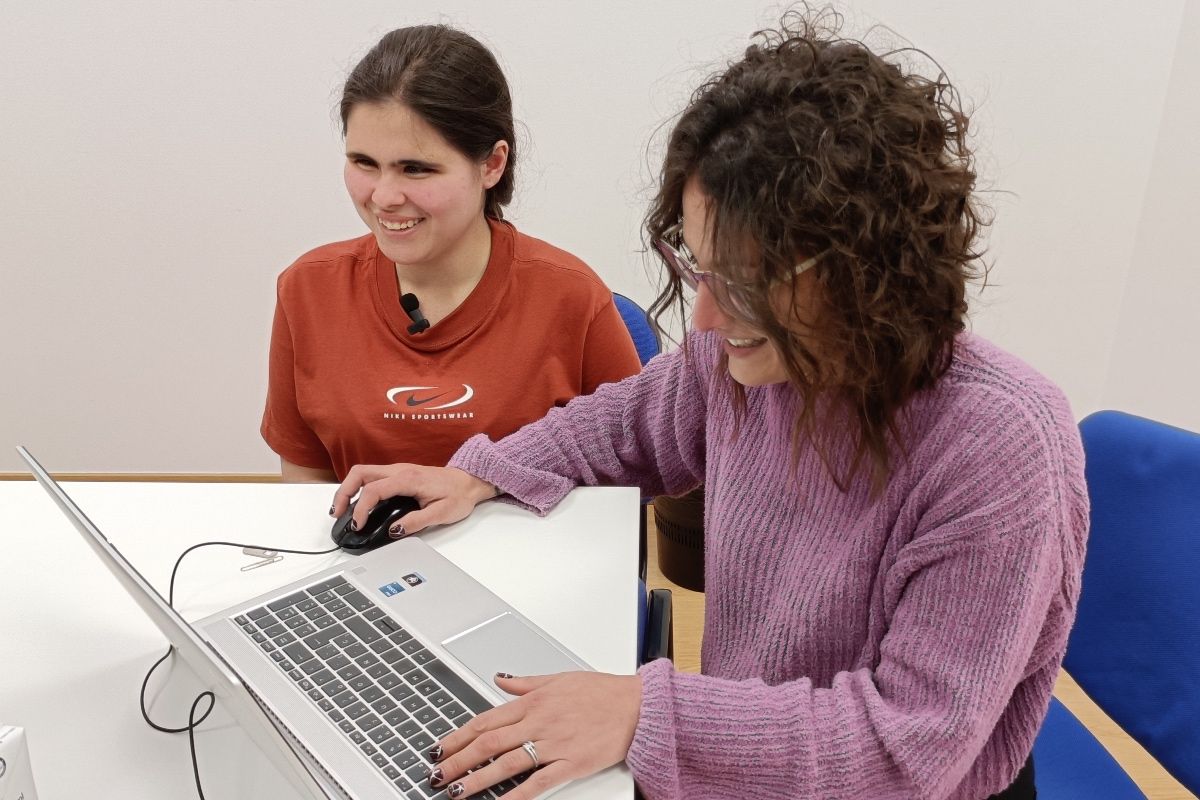
To carry out its work, GoodJob collaborates with multiple companies, including multinationals and large corporations. The entity, which has recently opened its training programs to other groups at risk of exclusion, such as long-term unemployed women, also relies on the collaboration of volunteer professionals, institutional support, and the involvement of all stakeholders. Thus, the entity's programs "are ecosystem programs, not programs that GoodJob does alone."
In this sense, the foundation conceives its programs based on "what companies need and the support they require to incorporate people with disabilities," and they are taught by professionals from the technological ecosystem. The entity does this with the aim that "there is a transfer of knowledge by a professional, and not by a teacher, to prepare participants for the real environment they will encounter." Thus, GoodJob articulates a "virtuous circle with a self-sustaining ecosystem," with a clear purpose: to improve the job prospects of people with disabilities so that they integrate into the workforce of ordinary companies.
Add The New Barcelona Post as your preferred Google source for free
Stay informed with the latest news.
