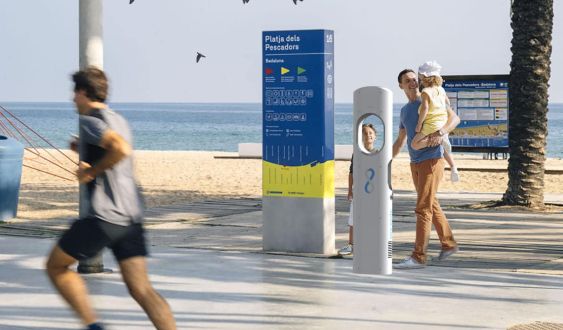
The climate emergency, the growing awareness of the need for all economic activities to be sustainable, and the concern for reducing the volume of waste, especially plastic, are accelerating the birth of new companies and initiatives that want to provide solutions to face these great challenges of society. This is the case of Taiga, a startup recently established in Barcelona with the purpose of reducing the high consumption of bottled water consumed in the streets of large cities. Under the motto The best packaging is the one that is not generated, Taiga has designed a model of an intelligent and connected public fountain that offers a drinking water service with maximum hygienic safety and without generating waste.
The idea is to be able to install these fountains in public spaces so that citizens or the thousands of tourists who visit cities like Barcelona every year can drink water at any time without having to buy bottles and generate thousands of plastic containers. Although they are designed to be part of urban furniture, Taiga fountains can also be installed in gyms, stations, airports, fairs, shops, or inside museums or all kinds of facilities with a high volume of people.
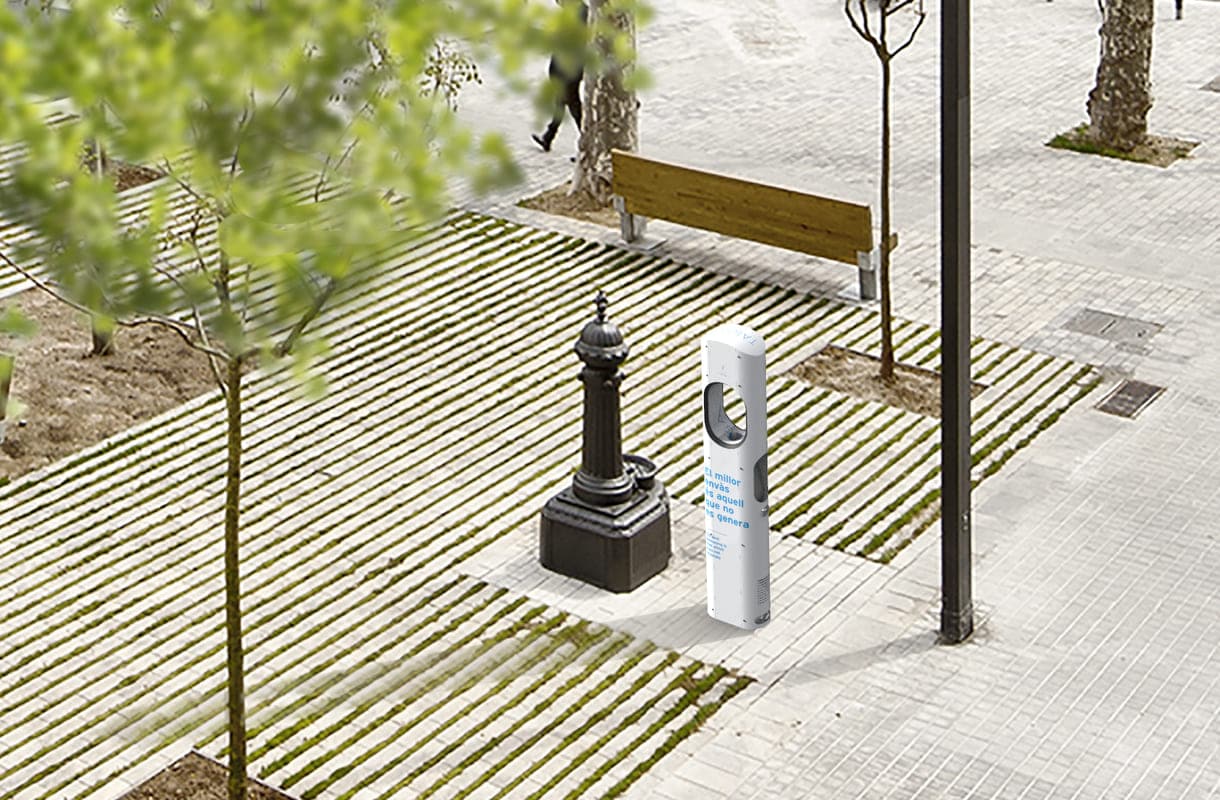
"Taiga is a filtered water fountain, which dispenses it fresh and with good taste and offers maximum hygienic guarantees, since its design only allows filling bottles; in no case can one drink directly from the stream or fill carafes," explains Ivo Sans, the ideologue behind Taiga. According to the entrepreneur, who is a musician by profession, unlike the municipal fountains currently in public spaces, Taiga fountains are not accessible to dogs, nothing can be washed in them, and they have a fully protected dispenser. "The dispenser from which the stream comes out cannot be touched and water only flows if it detects a bottle," Sans points out. He also notes that Taiga fountains are 1.60 meters high and have active carbon filters to improve taste and ultraviolet light to ensure total disinfection.
Taiga is a smart city project, as it is a fountain connected to the Internet and communicates with users through NFC technology. The idea is that to activate the fountain, consumers identify themselves using a user card or through their mobile phone, since there are no buttons on the fountain; everything is automatic thanks to sensors that detect when a bottle is placed for filling. "Nobody touches anything, water doesn't come out if there's no identified user, and not if there's no bottle either," Taiga points out.
The company has developed a mobile application to access the fountains and to manage the payment or tariff system behind each dispensation. This model is totally flexible, as one can opt for an annual subscription, similar to that of users of other municipal services like Bicing, for pay-per-use, or for other formulas adapted to tourist habits or any type of group. For example, a Taiga card can be included in the packs received by people attending a congress, as is already the case with passes for public transport access.
"The price will be very accessible, very economical in relation to the cost of bottled water, a maximum of five euros per month for a regular user or one euro per day for tourists; we do not want to penalize water consumption," assures Sans. Filling a reusable bottle would cost between 10 and 15 euro cents, although city councils or other private Taiga clients can always offer the service free of charge to the end user. "We want to focus on citizen awareness, on the need to reduce waste generation," considers the entrepreneur, who also recalls the savings in terms of management and recycling that the reduction in the volume of plastic bottles that end up on the ground or in city bins every day means for municipalities that opt for their fountains.
"City councils are very receptive to our model because this is the future and we see how the trend is to ban all single-use plastic packaging", highlights the owner of Taiga. After two years of technical development, Taiga has already validated its fountain prototype and is now finalizing the start of a pilot test with the installation of the first unit in a public place, which it cannot yet reveal.
Sans emphasizes that the fountains will be manufactured locally, although he says that Taiga does not want to be a seller of urban furniture, but a company that offers a service and a solution to access fresh water in cities without generating waste.
The founding partner of Taiga, Ivo Sans, has been professionally dedicated to music for twenty years, is a jazz drummer, and has decided to undertake to contribute to improving society and helping to face the climate emergency. To design the Taiga fountain, he hired industrial designer Santi Ferrés and the startup's team is completed with Rosa Carretero, who assumes coordination tasks, and with Eduardo García, in charge of financial management. Once the testing phase has begun, Taiga now wants to create its own commercial structure to publicize its model among public administrations and private operators of spaces where its fountains can be installed. "In two or three years we hope to see many Taiga fountains on the streets of Barcelona and other cities, I am convinced," concludes Sans.
Add The New Barcelona Post as your preferred Google source for free
Stay informed with the latest news.
