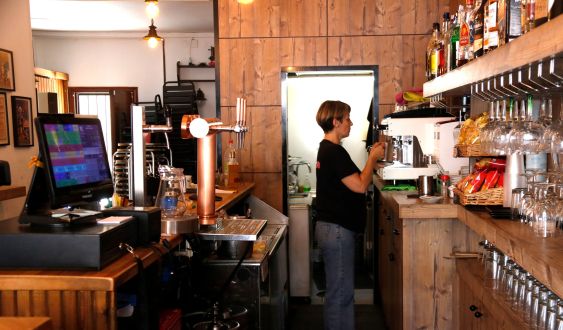
Faced with the great challenge that climate change represents, it is easy to think that small gestures, by themselves, can hardly make a difference. But it is precisely in these daily actions, often discreet and almost invisible, where change also begins: a tap that saves water, a container that is reused, an LED bulb that consumes less energy or food that is used to the last ingredient. Actions that, separately, may seem insignificant, but that, when multiplied by thousands of businesses, can end up generating a real impact.
Bars and restaurants are much more than places where coffees and menus are served: they are part of the social and economic fabric of the city and, at the same time, play a role in the transition towards more sustainable habits. As Nadia Quevedo, Commissioner for Economic Promotion, Commerce and Restoration of the Barcelona City Council, points out, “restoration is much more than an economic activity: it is identity, it is life in the neighborhoods, it is employment and it is a tool for transforming consumption habits”. In addition, since their daily activity implies a significant consumption of water, energy and food, these establishments also have room to introduce changes in their way of working and contribute to reducing the environmental impact of the city.
A green transformation that, as Joaquim Edo, Head of Communication, Public Affairs and Sustainability for Catalonia at Coca-Cola Europacific Partners Iberia, points out, is already a reality: “Sustainability in restoration is not a project for the future, but a reality of the present”. This is corroborated by the data from the Hostelería #PorElClima initiative, to which more than 4,300 bars, restaurants and other hospitality establishments in the Barcelona area have adhered.
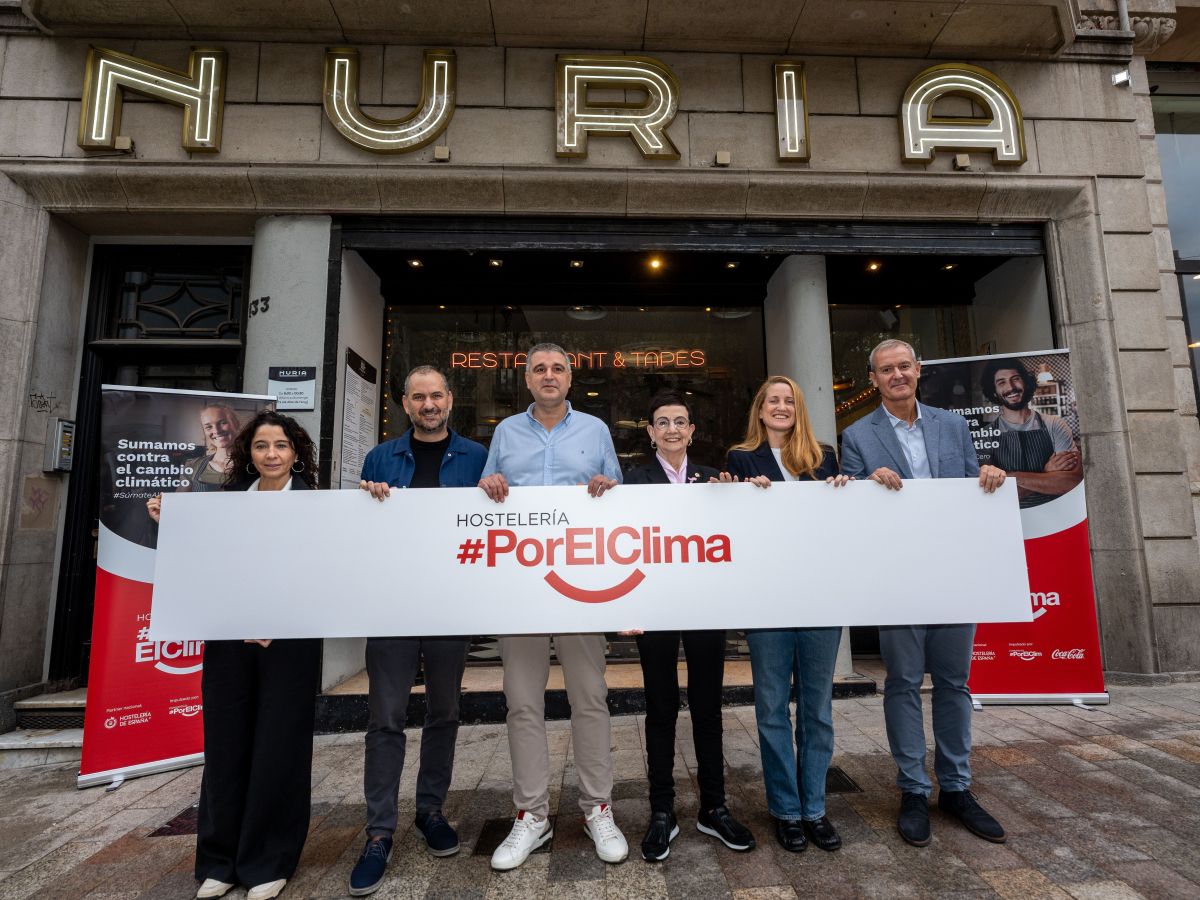
Driven by ECODES, with the strategic collaboration of Coca-Cola and the support of Hostelería de España, the initiative was born in 2017, with the aim of accompanying bars, restaurants, and cafes in reducing their environmental footprint. In the Catalan capital, the project was launched in 2019 and, since then, promotes measures adapted to the reality of each business, from small changes in daily habits to investments to improve energy efficiency and water saving. Today, Hostelería #PorElClima already has more than 21,800 businesses adhering throughout Spain, of which almost 20% are concentrated in the Barcelona region, a figure that reflects the weight of the territory in promoting a more sustainable restoration.
The initiative aims to make bars and restaurants understand that the commitment to sustainability does not always require big changes or high investments, but can also start with small daily gestures. “We want Barcelona to be a territory that other cities can look up to: a benchmark in the commitment to sustainability in restoration,” Edo affirmed during the meeting Tornada als territoris: Barcelona, held at the historic restaurant Núria, on La Rambla. The day brought together representatives of the promoting entities, hospitality associations, sector professionals, and institutional representatives to highlight the initiative's journey and share the progress in sustainability of Barcelona's restoration.

And it is precisely in these small gestures that a large part of this transformation is concretized. The data collected by Hostelería #PorElClima in the Barcelona region show that the analyzed establishments have already incorporated more than 55,000 environmental measures. Among the most widespread practices, 96% recycle glass containers, 78% use LED bulbs, and 73% have installed flow reducers in taps to save water. Small actions that, multiplied by thousands of businesses, can contribute to reducing resource consumption and the environmental impact of the sector.
But the transformation does not end with small daily gestures. For establishments that want to go a step further, Hostelería #PorElClima also offers tools and resources to identify their environmental impact and drive improvements. In the Barcelona area, 25 carbon footprint calculations have been carried out and 19 climate bonds have been granted to help finance actions in refrigeration equipment, lighting, and air conditioning. In addition, Coca-Cola has contributed to offsetting more than 900 tons of CO₂ linked to hospitality establishments in the territory.
Caring for the planet also benefits business
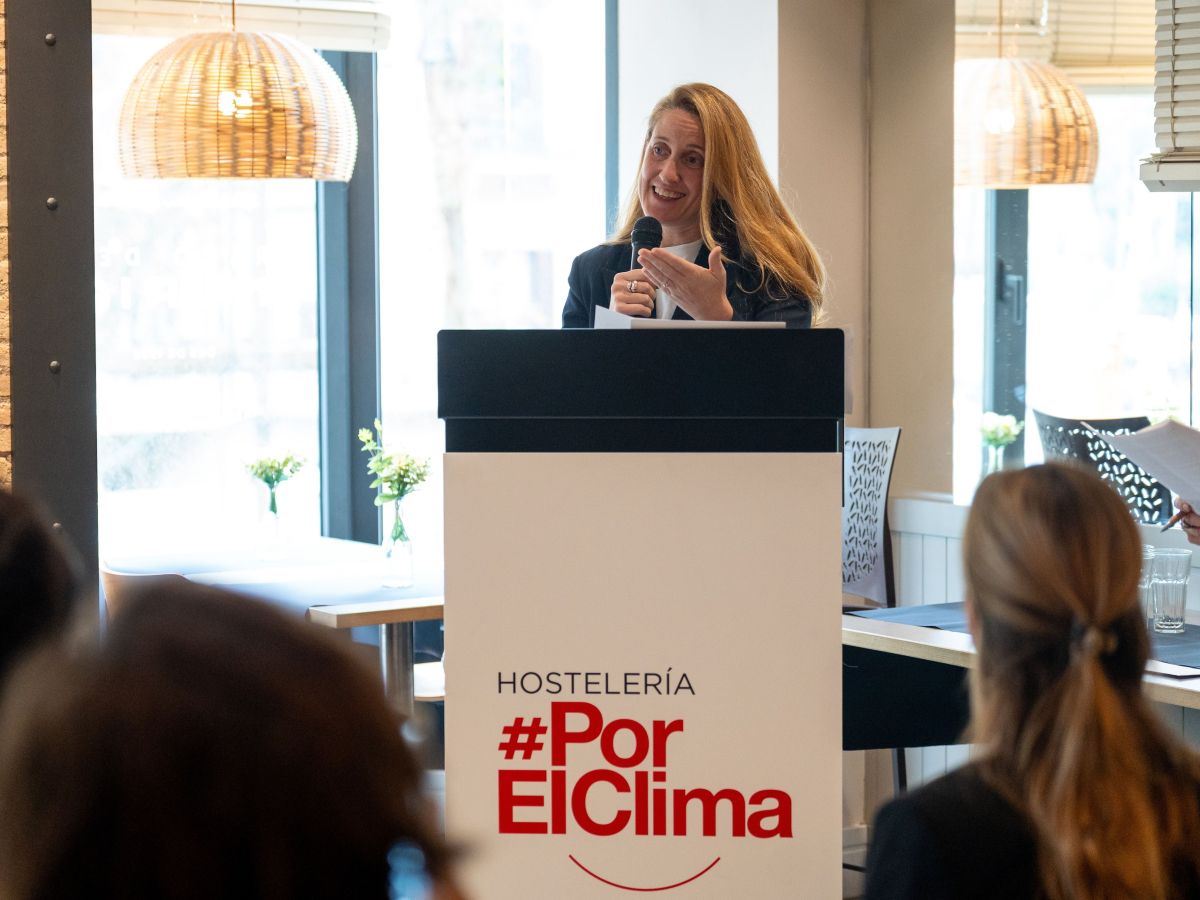
The first results indicate that sustainability measures can generate tangible benefits: the monitoring of five establishments that have introduced improvements shows an average reduction of nearly 12% in emissions associated with electricity consumption. But the advantages are not only environmental. More efficient resource management can also help reduce costs and improve the economic profitability of businesses. “Sustainability improves restaurant management and also the bottom line,” said Juan Ortiz, general director of ECODES, during a round table after the presentation of the data.
This energy efficiency is not limited to the premises but also extends to the kitchens themselves, where making better use of food to create different recipes can help, on the one hand, to reduce waste and get more out of resources. Chef and restaurateur Carme Ruscalleda highlights that new generations of professionals are increasingly seeking a connection with nature through the food they serve at the table. “New generations are increasingly opting for this communion with nature,” she points out.

But for this transformation to take root, consumers must also be involved: "We need the future consumer to have this training," defends Ruscalleda, who recalls that customer preferences can guide the future of restoration. This transformation therefore requires a shared effort: consumers, restaurateurs, and administrations must work together to face extreme climatic episodes that, as meteorologist Gemma Puig warns, will be increasingly frequent and intense. "What once seemed like an isolated phenomenon, now happens more and more often and with greater intensity," Puig alerts.
Juan Ortiz (ECODES): "Sustainability improves restaurant management and also the profit and loss account"
For this reason, she emphasizes the importance of anticipating: "We must mitigate the effects of climate change and adapt to it, but, above all, it is important to anticipate the risks." However, for establishments to be able to take on this challenge, they also need conditions that allow them to make it viable. This is pointed out by Roger Pallarols, from the Gremi de Restauració de Barcelona, who vindicates the sector's role as a generator of employment and wealth, but also as an essential part of social life and the city's identity.
"No restaurateur will get involved in the challenges if the viability of their business is not guaranteed," he warns. For this reason, he demands that administrations combine proportionate regulation with support measures: "It is time to give the sector the confidence it deserves and the tools for businesses to be viable." Only with conditions that make it possible, he defends, will establishments be able to move towards a more sustainable activity.
Add The New Barcelona Post as your preferred Google source for free
Stay informed with the latest news.