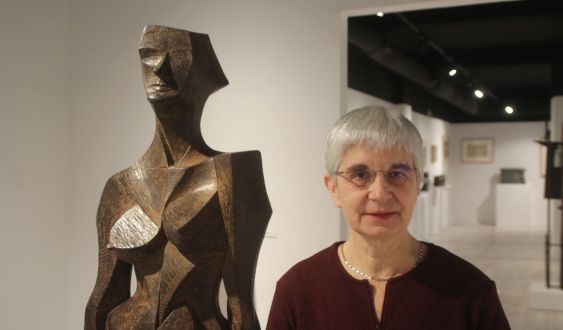
Judit Subirachs-Burgaya (Barcelona, 1959) is a doctor in Art History from the Universitat de Barcelona (UB). She has curated numerous exhibitions and has given lectures on Catalan sculpture from the 19th and 20th centuries. She has also written multiple articles and publications dedicated to the work of her father, the sculptor Josep M. Subirachs. Since 2004, she has been the conservator of Subirachs' work and directs the Espai Subirachs in Barcelona, a private space located in Poblenou, the artist's birthplace. This facility aims to disseminate and bring closer to the public the work of one of the most international Catalan sculptors of the second half of the 20th century.
On the occasion of the Espai Subirachs' five years of existence, we spoke with Judit Subirachs-Burgaya to learn more about the purposes and challenges of this space, as well as the work of this extraordinary sculptor, who has left a great sculptural legacy inside and outside our city. In Barcelona, he has one of his most monumental works: the sculptural ensemble of the Passion façade, sculpted in the Sagrada Família basilica.
--- What is the artist's connection to the Poblenou neighborhood?
--- Josep M. Subirachs was born in 1927 in Poblenou when it was a completely different neighborhood from what it is today. It was an industrial neighborhood so full of factories that it was called the Catalan Manchester. When he was already a recognized artist, he had a house-studio built at the foot of Tibidabo, specifically on the Carretera de la Rabassada. Despite no longer living in Poblenou, he remembered and championed his origin throughout his life until he died. The permanent exhibition we offer at the Espai Subirachs is titled Subirachs. Return to Poblenou because it is as if he had returned through his work.
--- How did Subirachs turn to sculpture? What are his professional origins?
--- In 1941, at fourteen years old, aware that his humble family could not afford a university career, Subirachs had to give up his aspiration to study architecture and began to work. His first job was in the workshop of a gilder who was fond of sculpture. It was then that he began to model clay figures that he took to be fired in an oven and, in March 1942, he entered the workshop of the sculptor Enric Monjo to work as an apprentice. In that workshop, he acquired a lot of technical knowledge such as the processes of modeling and carving, molding and casting. But, in fact, he was never attracted to that type of work, so his true commitment to sculpture would come from 1947, when the sculptor of Catalan Novecentismo Enric Casanovas chose him as a collaborator. Despite the brevity of that apprenticeship and the fact that Subirachs soon distanced himself from the Novecentista sobriety, from the rotund, full and rounded work, he always remembered Casanovas with great respect and, on numerous occasions, declared that he considered himself a disciple.
--- What importance does drawing have in Subirachs' work?
--- Subirachs considered himself a cerebral artist who did not believe in inspiration or intuition. Everything he created responded to deep reflection and, for that reason, he made many studies and sketches before moving on to the definitive work. He gave great importance to drawing because he considered it to be the seed, the origin and the foundations, the truth. He also said that, in drawing, the material is so scarce that nothing can be hidden.
"Everything he created responded to deep reflection and, for that reason, he made many studies and sketches before moving on to the definitive work"
--- How did the idea of opening a space dedicated to Subirachs' work come about? Is it something he had always had in mind?
--- When Subirachs died in 2014, his heirs found ourselves with an immense artistic legacy, a patrimonial content, but we lacked a container, a dignified space with the adequate conditions to be able to make it available to the public, which was the artist's wish. We offered the legacy to institutions, but they were not interested. The heirs, and especially I as an art historian, have compensated for the indifference towards the figure and work of Subirachs that institutions have shown. And we have done so by opening a private cultural facility in the city of Barcelona, without any kind of support, without sponsors, without patrons, without public subsidies. We have found that, unfortunately, art is not on the political agenda, it is not a priority, because politicians, in general, think that culture does not provide them with votes.
--- What was your goal when you decided to open Espai Subirachs?
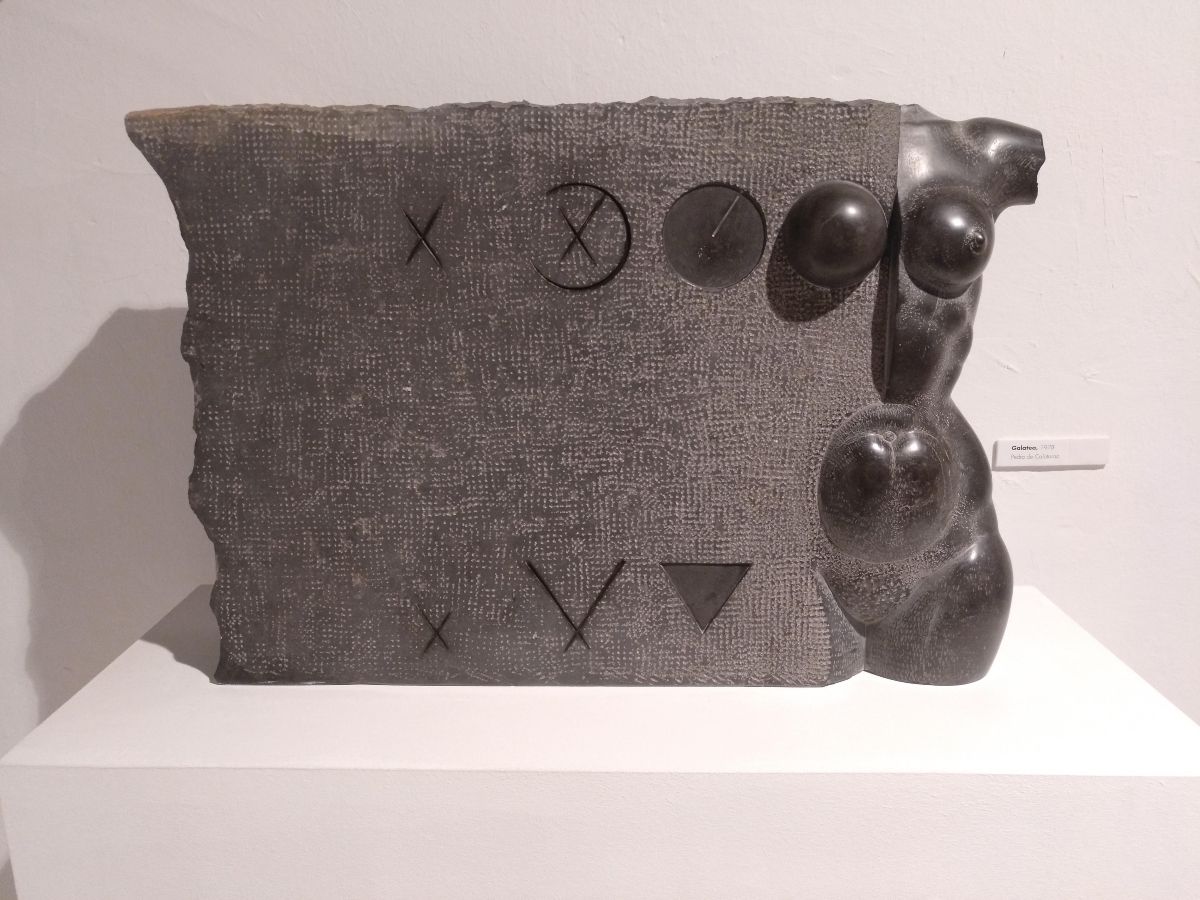
--- It was about rediscovering one of the most representative exponents of Catalan art of the second half of the 20th century. Subirachs was an artist with a prolific and extensive career, a multifaceted creator whose focus of interest was not only sculpture. His extensive production includes thousands of drawings, as well as paintings, engravings, lithographs, posters, tapestries, set designs, jewelry designs, and medals. Our task is to conserve, catalog, study, and disseminate his legacy.
--- After five years, do you think you have achieved it?
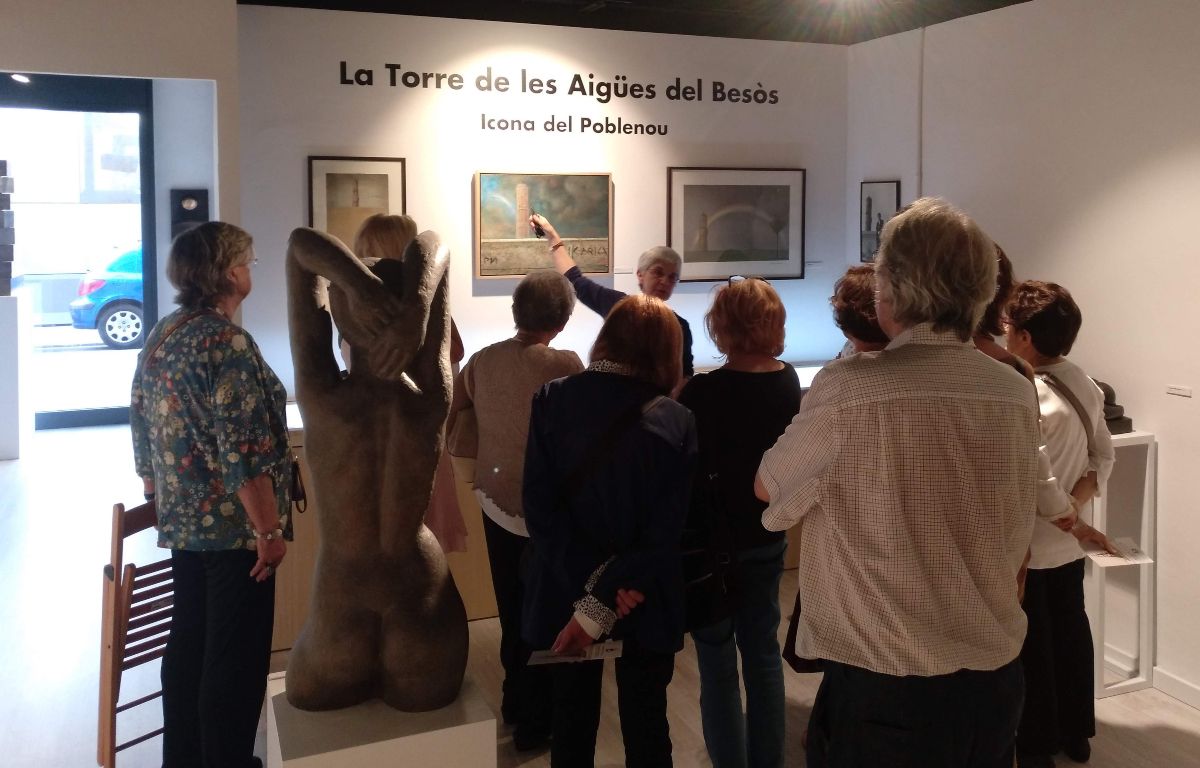
--- Most of the visitors that Espai Subirachs has received have been anonymous people, both local and foreign. I liked that they entered without prejudice and contemplated and analyzed the works freely. Likewise, I have always valued quality more than quantity, so what has pleased me most is that most of the people who have come have stated that they left very satisfied with the visit, with the feeling that the content had interested them and, in many cases, that they had discovered a Subirachs they did not know. I would have liked to have more visitors, of course!, but I am aware that, in any case, what has failed has been the dissemination because, without any support, it has been impossible to finance advertising.
--- What are the future projects of Espai Subirachs?
--- Our current economic situation is delicate due to lack of support. People, in general, do not imagine the cost of keeping a public access facility open. In fact, for five years, we have been offering visits with free admission. We have only charged for guided tours that we have done for groups and for which it was necessary to book in advance. As we have found that, curiously, visits by appointment have worked better and, given that we cannot hire staff, from now on the Espai Subirachs can only be visited by appointment and by paying, even if it is a symbolic amount, because it is clear that what is free is not valued enough. On the other hand, we will continue to host presentations, conferences, readings and debates, and we will participate in all those events where we are invited such as the Night of the Museums or the Open Workshops of Poblenou. Of course, we will continue with the work of conservation, cataloging, study and dissemination of the legacy of Subirachs.
"He was an artist with a prolific and extensive career, a multifaceted creator, and his focus of interest was not only sculpture"
--- Currently, there is an exhibition dedicated to the work of Subirachs in one of the spaces of the Vila Casas Foundation. Does his figure still arouse interest in other cultural facilities?
--- Subirachs was an artist who has left his mark on public space in numerous monumental works, whether they are freestanding sculptures or interventions in buildings (friezes, murals, reliefs, doors...). Undoubtedly, his public and monumental work is what earned him public recognition. Even so, there is another Subirachs more unknown, with a more human-scale work, who also created many medium-format pieces destined for collecting. This work, more experimental, is what we exhibit in the Espai Subirachs because there are few cultural facilities that have shown interest in exhibiting it.
--- Do you think his work has the recognition it deserves at an institutional level?
--- In this country, an unusual event has occurred that affects not only Subirachs but all the generation of post-war artists, creators who, in an extremely difficult artistic and social context, at a time when it was not easy to access international avant-garde arts, broke with academicism and made innovative and extraordinary contributions to the history of contemporary Catalan art. But this generation is not well represented in museums. It must also be added that, for some time now, the Museu Nacional d'Art de Catalunya has made various efforts to break the chronological barrier that ended the museographic discourse with the Civil War and, little by little, is incorporating some post-war artists into the halls. But, as always, the lack of space and lack of funding eternalize the project.
--- And, at the public level? Do you believe that, over the years, spectators view his work with better eyes than when the façade of the Sagrada Família was made?
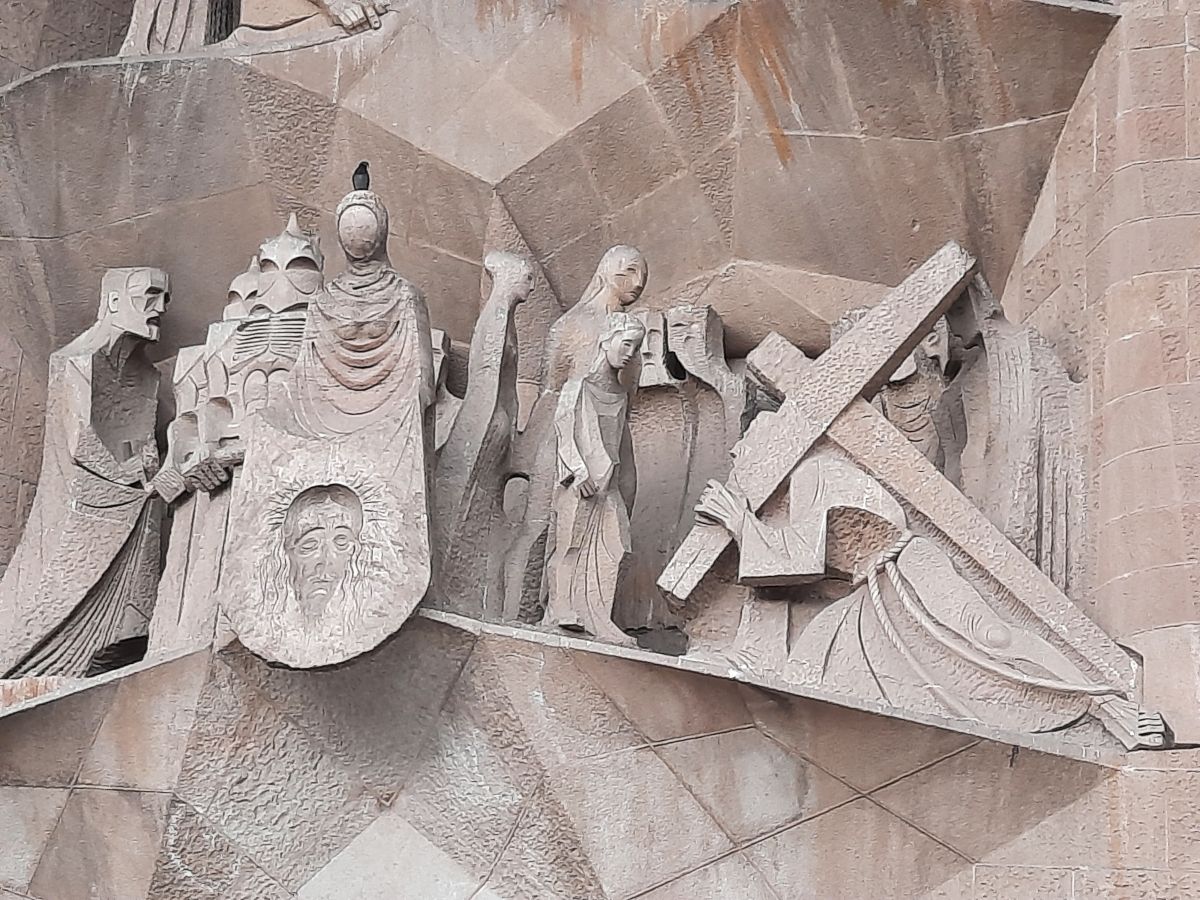
--- Among the numerous works that Subirachs created, his last great challenge stands out, without a doubt: the sculptural ensemble of the Passion façade of the Sagrada Família Basilica. This work, of extraordinary dimensions, was a commission that Subirachs received when he was already sixty years old and had a consolidated career. It is evident that a work of such magnitude, so celebrated and at the same time so controversial, has eclipsed the rest of his immense production, but it has also brought him international recognition. Subirachs risked making a very personal work because he did not want to imitate Gaudí's style in any way, precisely because of the respect he had for him. Initially, logically, his contribution caused a great impact, with great admirers and detractors. What I have observed is that the Passion façade is increasingly liked by people because it has been understood that Subirachs's strategy was honest. On the other hand, already in the sixties, Subirachs was an artist who, with groundbreaking creations radically different from conventional statuary, knew how to integrate contemporary sculpture into public space and, in fact, managed to connect with a wide audience.
"What I have observed is that the Passion façade is increasingly liked by people because it has been understood that Subirachs's strategy was honest"
--- As an art historian, what is your favorite work by Subirachs?
--- To date, we have cataloged some ten thousand works by Subirachs, but it is a work in progress because we have been discovering pieces that were in unknown locations. Given this quantity of works, it is difficult for me to choose just one. More than specific works, I prefer to highlight stages of his career and, personally, I believe that the expressionist and abstract stages are the most interesting due to the innovative plastic proposals he contributed.
--- Personally, how did your father's figure influence you when choosing your professional path and dedicating yourself to Art History?
--- My father always wanted to have the workshop connected to the home and, therefore, at home we closely followed everything involved in the creative process. The artistic and cultural environment was part of our daily surroundings. They took us to museums and art galleries to see exhibitions and to the workshops of my parents' friends who were also artists. From a very young age, I knew that techniques can be learned, but creativity is something we carry within. I realized this by seeing that my brother Roger, two years older than me, filled blocks with magnificent drawings that flowed out of him, never using an eraser, while I couldn't do it. I therefore ruled out studying Fine Arts and opted for the theoretical part, Art History. In 1992, I earned my doctorate with a thesis on 19th-century Catalan sculpture.
Add The New Barcelona Post as your preferred Google source for free
Stay informed with the latest news.