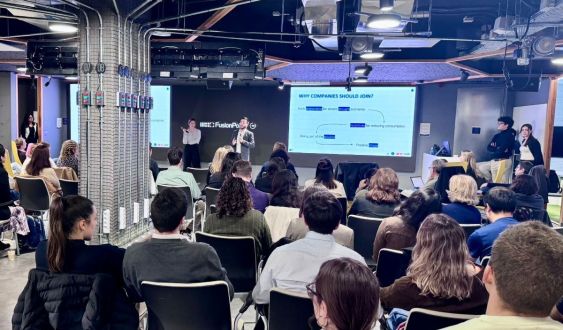
Solving challenges that hinder access to clean water has been the challenge faced by students from Esade, the Universitat Politècnica de Catalunya - Barcelona Tech (UPC) and the Istituto Europeo di Design (IED Barcelona) within the Challenge-Based Innovation (CBI) program. To design these solutions, six university teams have worked with the European Organization for Nuclear Research (Cern) on specific cases, which have included exploring ways to add additional value to the water service in the Catalan capital, in an initiative with the collaboration of Aigües de Barcelona.
A total of 34 students have participated in the program distributed in six university groups, from which proposals have emerged such as a tool for water monitoring in hotels through gaming, an innovative shower head, an environmental control kit, and a solution for agriculture that provides real-time weather updates.
The eleventh edition of the CBI program, promoted by IdeaSquare and Cern's innovation department, has focused on the sixth Sustainable Development Goal: guaranteeing access to water and sanitation, on which students have focused for 15 weeks.
Specifically, the university groups have included members aged 20 to 37 from 14 nationalities, from Esade's Full-Time MBA program; from the degrees in Telecommunication Technologies and Services Engineering and Telecommunication Electronic Engineering from UPC, and from the Master in Design Management from IED Barcelona.
Proposals for hotels, companies, and sports centers
The first challenge has focused on identifying new proposals for the water service in Barcelona, and it has been proposed to generate added value through the analysis of urban water consumption data. With the collaboration of Aigües de Barcelona, the initiative has worked to provide information for industry, commerce, households, municipalities and services and centers such as universities, hospitals and sports facilities, to advance towards a more sustainable use of water.
Given this challenge, students have promoted proposals such as Metrio, a solution focused on hotels. Designed by the Inglorious Aliens team, the proposal features smart meters to encourage good water use through gaming: a gamified application allows guests to compete, conserve, and earn rewards based on their consumption.
Looking at companies, the Drop team has developed AquaxChange, which generates an ecosystem in which companies are expected to reduce their consumption beyond drought restrictions, with the aim of obtaining monetary incentives and investing in external water solutions.
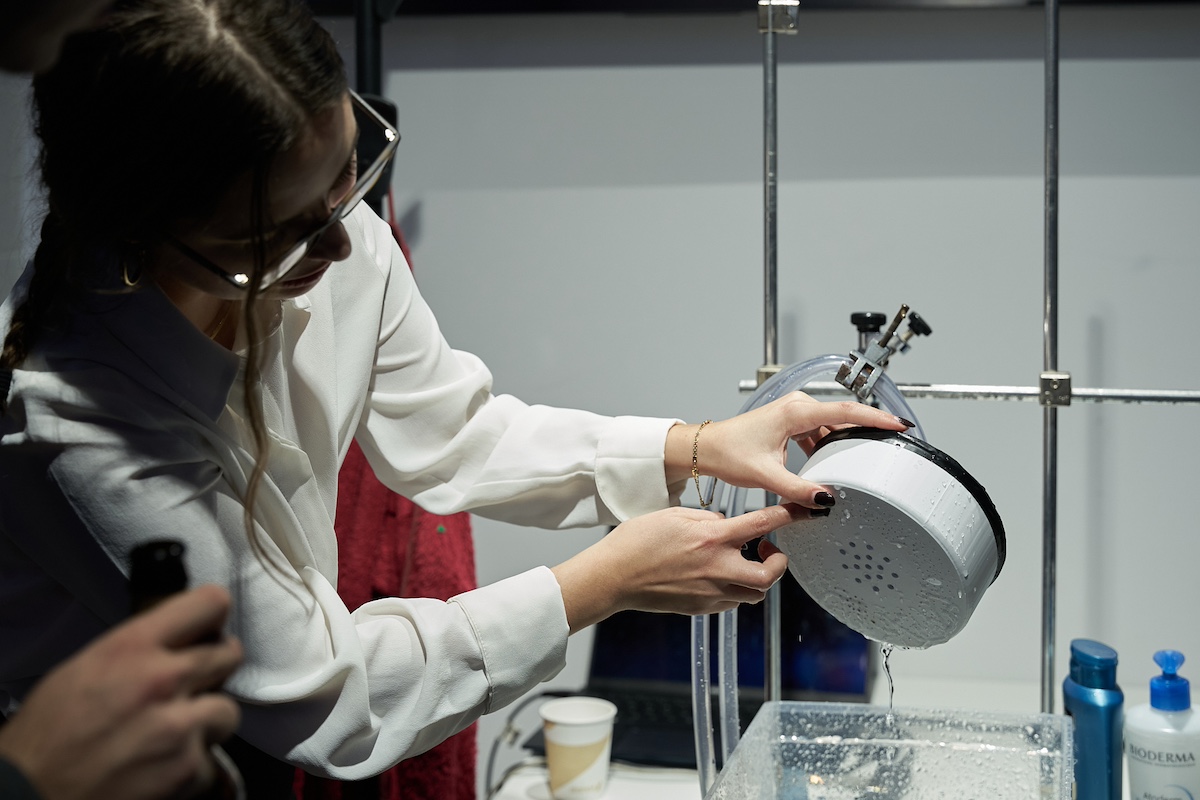
And the 4Award team has brought savings to the showers of sports facilities. With the innovative AquaMist shower head, it aims to reduce water consumption by 50%, and energy consumption by 27%. With advanced light rain and misting systems, gym users activate the shower through NFC-enabled wristbands, allowing the center to track water consumption in real time.
The challenges of Gambia
But the challenges of this edition have not stayed in Barcelona, but have gone much further, and Gambia's water and its salinization has been another of the protagonists. In collaboration with the CSIC-IDAEA research group and the Sankandi association, the second challenge has sought to understand how salinity affects agriculture, local communities, biodiversity and greenhouse gas emissions, and has invited students to develop strategies to address this environmental problem.
With this objective, the Team Delta team has developed a project to empower the Sankandi Youth Development Association and local NGOs with innovative and cost-effective tools to improve Gambia's mangroves. The Root Kits consist of environmental monitoring packs through which communities can measure various factors to identify optimal planting sites and select the most suitable mangrove species, in order to restore the ecosystem, while fostering community empowerment.
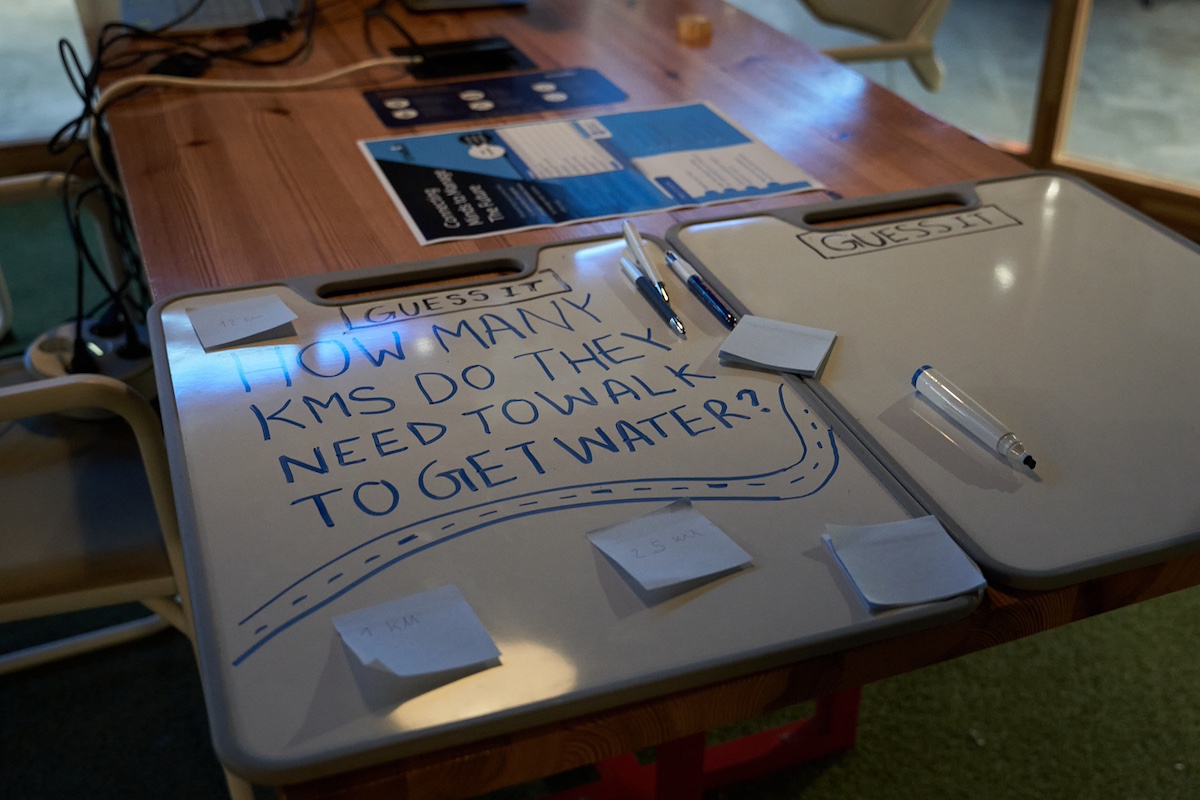
In addition, The Catalysts team has created Banku, which provides weather updates to farmers, with the aim of reducing crop losses and increasing income and environmental sustainability. The system thus aims to ensure long-term food security and improve the livelihoods of farmers in Gambia, where 75% of the population depends on agriculture.
In addition, the Pluto team's Symbio platform wants to connect global experts with local NGOs and community leaders in Gambia to foster collaboration in addressing water management challenges. With AI, simultaneous translations, and meeting analysis and summaries, the platform aims to maximize the contribution of these experts and local agents to tackle the challenge of ensuring access to water without linguistic or technical barriers.
Add The New Barcelona Post as your preferred Google source for free
Stay informed with the latest news.
