To begin, I repeat that for me Plaça Catalunya should be a kind of park. Zero cars, hyper-island, fully adapted for pedestrians and full of trees and grass (except for the central circle and accesses): to recover, in short, its function as a square where one can transit and meet. A place to have a chat on the terraces, to meet up, to celebrate events that are not blocks and awnings announcing the umpteenth "F1 Barcelona-Catalunya Grand Prix" or other tacky things. Once this has been clarified, it is not about taking anything away from what it already has but, quite the contrary, about complementing its sculptural heritage (of no lesser value) with a truly friendly environment. To make it truly connect La Rambla and Passeig de Gràcia, instead of acting as a bizarre wall in between. But anyway: whoever can do it, let them do it.
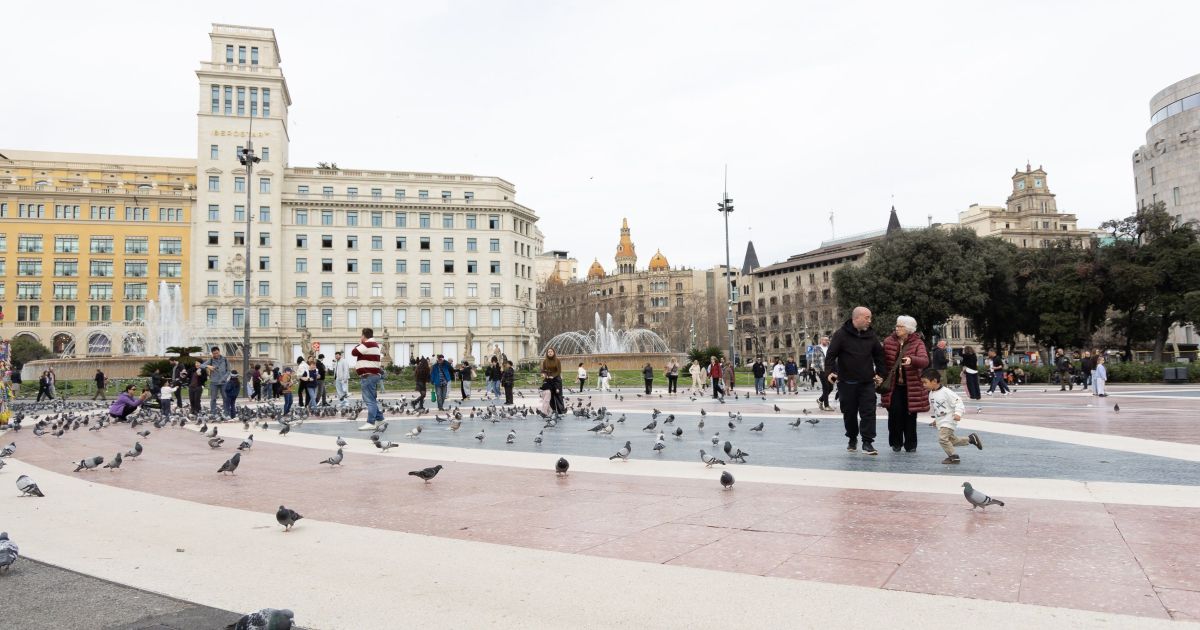
Since we pass through the square quickly (to catch the metro, to get to a meeting, to meet someone at the Zurich), we don't stop to look at this large vestibule that unites the old city with the Eixample (the childish frieze saved by Modernism), and which therefore crowns the heart of the city (as intended by the Rovira Plan, unlike the Cerdà Plan, which still absurdly points to Plaça de les Glòries). And because we pass quickly, we miss many things, among others one of the most important sculptural ensembles in the city. A true open-air museum.
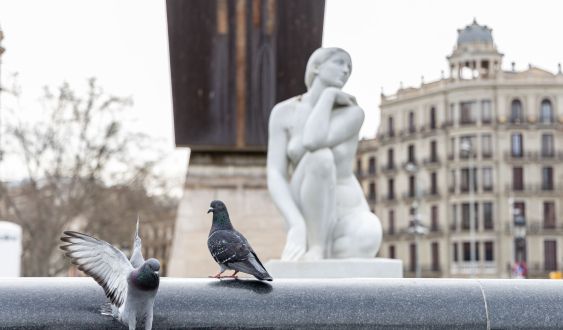
When Barcelona was preparing for the 1929 International Exposition and wanted to showcase itself to the world as a modern, elegant, and culturally ambitious metropolis, a competition was called to decorate the square with a large sculptural ensemble. Some of the best Catalan artists of the time participated, and the result was twenty-eight sculptures distributed throughout the perimeter, a symbolic repertoire intended to explain what Barcelona was and what it aspired to be.
Many of these figures represent, after all, Catalonia itself. Barcelona, by Marès (naked woman on a robust horse, brandishing a ship); Girona, by Parera (livestock and agriculture); and Lleida, by Borrell (little symbolism, three women and two children) and Tarragona (with wine references, commissioned out of competition to Jaume Otero), all appear converted into mostly female, solemn characters, between noucentisme and neoclassicism. The city was thus projected as the capital of a country, that is, proud of its roots, and not ashamed of them as it is now.
Other sculptures speak of work and progress. We find allegories of wisdom, human effort, navigation (by Eusebi Arnau, who also placed the sculpture Montserrat with Moreneta, miniature included), production, and modernity. It is a clearly noucentista Barcelona, which wanted to move away from the supposed "excesses" of modernism and reclaim order, measure, and a certain Mediterranean idea of harmony. Leading artists intervened: Josep Clarà left works of great serenity such as La Joventut vora la font d'aigua, or the famous Deesa that turns its back and rear to the Macià monument; Josep Llimona contributed his characteristic elegance (for example with El Forjador, Figura Femenina); Pau Gargallo introduced a subtle modernity (Pastor de l'àliga); and other masters such as Frederic Marès (Emporion), Jaume Otero (L'Esperit Popular), Jaume Duran (Montseny), Josep Viladomat (Dona amb nen i flabiol) or the Oslé brothers completed the extraordinary ensemble. The non-construction of the initially planned upper temple led to eight of the sixteen sculptures planned for this space finally being placed in other parts of the city in May 1929.
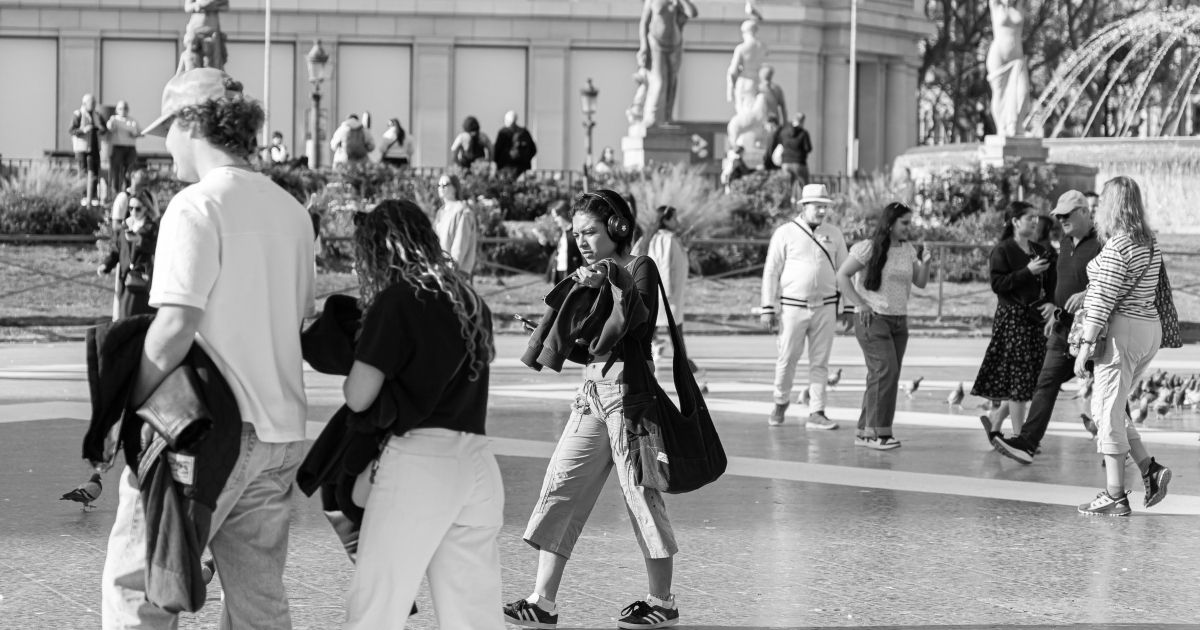
I am aware that Americans passing through the square are surprised to see so much nudity: as they do not live in a Mediterranean way, they have not inherited this hygienic Greco-Roman custom and therefore keep nudes always inside museums. But even so, it must be said that between November and December 1928, various religious and parent associations launched a moralizing campaign against the excess of nudes in the ensemble, which fortunately did not prosper. Various artistic associations, including a group of Catholic ladies, considered "ridiculous to consider nudity in art as an obscene work" and therefore the figures remained (despite the withdrawal of La deessa by Clarà for a few months). The case of La deessa is somewhat understandable: she is no more naked than the others but, being so extremely sensual, she comes to seem so.
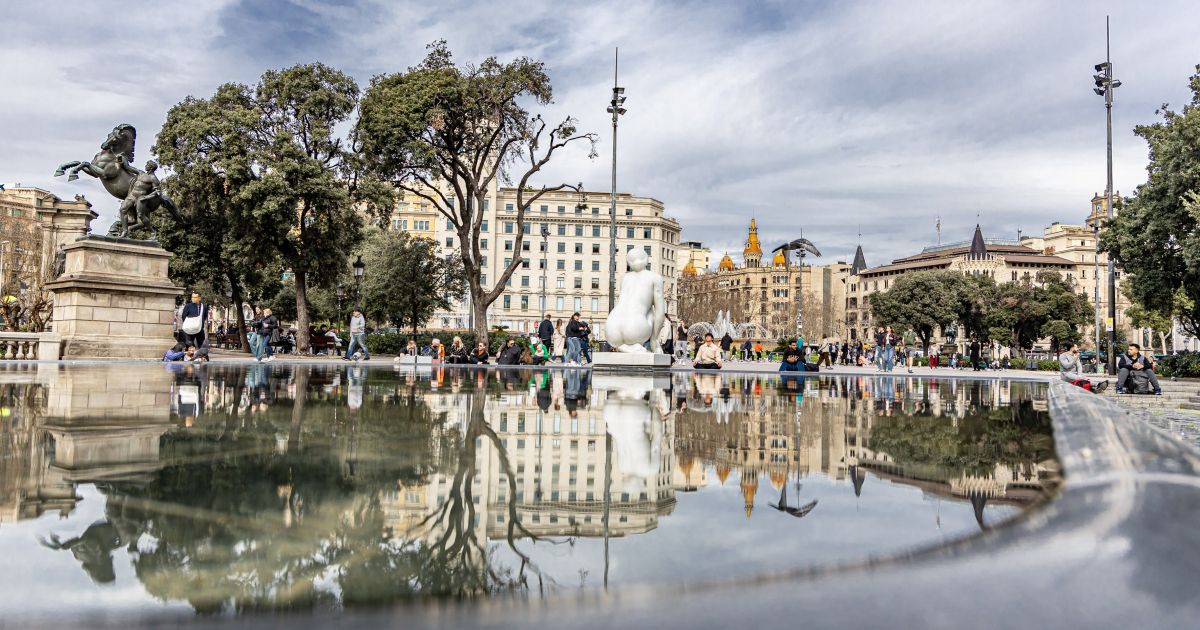
Therefore, if we stroll unhurriedly, as would be appropriate for a main square, we will discover a very rich catalog. Women personifying rivers, lands, and virtues; masculine figures symbolizing strength, work, or youth; compositions that seem to have emerged from a contemporary mythology manual. Finally, there is the monument to Francesc Macià, inaugurated in 1991 and the work of Josep Maria Subirachs. At the time, it was difficult for me, due to its deliberate break with the classical aesthetic of the rest of the ensemble (an inverted, austere, and modern staircase, symbolizing a country under construction and a project always unfinished). Finally, however, I have pardoned this work by Subirachs just as I have pardoned the Passion façade: at least, it does not fall into the temptation of abstraction, always dangerous, that surrounded its era.
Statues that no one looks at, but that undoubtedly look at us, or rather I would say they wait. I am confident that someday someone will have the great idea of saving the square from its dependence on road traffic (as well as from the insulting aesthetic preponderance—to put it one way—of El Corte Inglés) and return our main square to us. It is viable, we deserve it, and we owe it to the city. To the nexus between the medieval city and the industrial city. To the heart that any visitor, no matter where they come from, or any aunt who is a fan of Catalan soap operas, still wonders where it is.
Add The New Barcelona Post as your preferred Google source for free
Stay informed with the latest news.