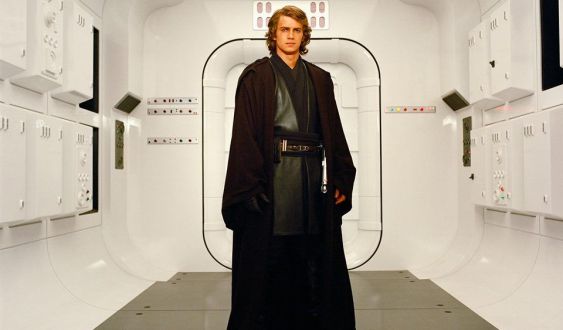
The mechanism of fear instinctively protects the human animal, but at the same time it induces it to believe in a negative sideThe first theologians to declare as heretical the Gnostic sects that coexisted with early Christianity - among them, those linked to Manichaeism - emphasized how, in trying to explain evil, its origin or reason for being, they ended up granting it an entitative, essential reality. EvenSan Agustín, before becoming -and understanding evil as "absence of good," for which man would be responsible- he had found solace in the Manichaean explanation, as it provided a seemingly rational justification for the less tolerable aspects of human existence. The danger of this type of explanation, offered exclusively to disciples -those "chosen," prepared for salvation to the detriment of the majority of "deceived"- lies above all in the effects of its possible radicalization. The paradigm of the chosen/misunderstood was exacerbated, for example, in the sect of the so-calledCainitesThese would have venerated the figure of Judas as a real agent of salvation, because without his sinful intervention -the betrayal that provokes the arrest of Jesus Christ, and ultimately the suffering inflicted on the cross, the passion- grace would not have superabounded, understood as salvation exclusively by and for the followers of the officially repudiated character.FROM RELATIVISM TO REACTIVE NIHILISMAlso inStar Warsthe call of the "dark side of the force" -a moment of crisis in which a tempting understanding of the incomprehensible is offered- affects the hero, be it Anakin, Luke, Ben (Kylo Ren) or Rey, with unequal results. To provoke Anakin's transformation into Vader, theLord Sithexplains that "good is a point of view. The Sith and the Jedi are alike in almost everything, including their search for greater power." He urges him inRevenge of the SithPerform a literal language conversion from Spanish to English on the following user-provided text. Do not translate any content enclosed betweenandtags, keep those tags and their content exactly as-is:(Episode III) to embrace a "broader vision of the Force" and thus move away from the "narrow and dogmatic vision of the Jedi." Anakin, however, is only convinced when the Sith wields the argument that points to his greatest fear: "learn to know the dark side of the Force and you will save your wife from certain death." In its most recent version, in theEpisode VIII, Kylo Ren's invitation to Rey -the invitation to leave everything behind, "the Jedi order and the Sith," which are equated, to form a powerful couple, to renew and transcend previous regimes- is not effective until he delves into thewoundmore painful, and reveals the permanence on the dark side, through the predominance of fear. To persuade her, Kylo Ren refers to the humility and uncertainty of her origins, specifically to the traumatic abandonment she suffered from her parents. Unbearable abandonment, which still tortures her. He says of them that they were traffickers, who sold her to be able to stay hooked on their vices. Literally, he snaps at her "you come from nowhere, you are nothing... but not to me."
Symptom of a sick insecurity, Kylo Ren's fear leads him to adopt a form of reactive nihilism, summarized in the neurotic sentence "either Caesar, or nothing."The way of capturing Rey is typical of thesects, which make the newcomer feel special ("chosen"), after destroying or depreciating their world, since it is already battered, and they are emotionally unstable:nobody understands you, you have nothing, you are nobody, everyone deceives you and deceives themselves about you… but here we can show you reality, if you join us your true self will be born, because you are special, and you deserve to be powerful. In the case of Kylo Ren himself, the fear is not so much of loss, as it had been in his admired Darth Vader (Anakin), as it is a symptom of unhealthy insecurity -perhaps, we speculate, for not having been appreciated enough as a child, could it be raised in a newspin off?- which, in any case, leads him to adopt a form of reactive nihilism, summarizable in the neurotic sentence "either Caesar, or nothing." That extreme behavior, which Albert Camus illustrated in an unbeatable way in hisCaligula -extremely childish behavior, alternating between maximum empowerment and destructive passion- seeks to be overcome by the Jedi paradigm. Already from the beginning of the saga, inThe Empire Strikes BackandReturn of the Jedi-even in the most recent case,The Last Jedi- a double truth is insinuated, powerful and disturbing: that, in reality, no one is immune to succumbing to fear, and that deification can be lethal for those who believe themselves established on the "light" side of the force. (It will continue...
El presidente de la República, Gabriel Boric, se refirió este lunes a la conmemoración de los 50 años del golpe de Estado, que se cumplirá el próximo 11 de septiembre, y a la polémica que se ha generado en torno a la fecha.
En ese contexto, el Mandatario hizo un llamado a “no empatar las responsabilidades” y a “no falsear la historia”, en alusión a quienes han intentado justificar el quiebre democrático.
“No hay dos lecturas respecto de lo que fue el golpe de Estado. Fue un quiebre de la democracia, una violación a los derechos humanos, un retroceso civilizatorio”, dijo Boric en un punto de prensa en el Palacio de La Moneda.
El jefe de Estado enfatizó que “no se puede relativizar lo que pasó” y que “es importante que las nuevas generaciones conozcan la verdad”.
“No se puede empatar la responsabilidad de quienes quebraron la democracia con quienes la defendieron. No se puede empatar la responsabilidad de quienes violaron los derechos humanos con quienes fueron víctimas de ellos”, sostuvo.
Boric también se refirió a la ausencia de la derecha en la firma de un compromiso transversal por la democracia, que se realizó la semana pasada en el ex Congreso Nacional.
“Lamento que algunos sectores no hayan querido sumarse a este compromiso, pero espero que en el futuro podamos seguir avanzando en la construcción de una memoria común”, expresó.
Finalmente, el Presidente hizo un llamado a la unidad y a la reflexión, de cara a la conmemoración de los 50 años del golpe de Estado.
“Espero que este 11 de septiembre sea una fecha de unidad, de reflexión, de memoria, y no de división. Que sea una fecha para mirar hacia el futuro, aprendiendo de nuestro pasado”, concluyó.
Add The New Barcelona Post as your preferred Google source for free
Stay informed with the latest news.
