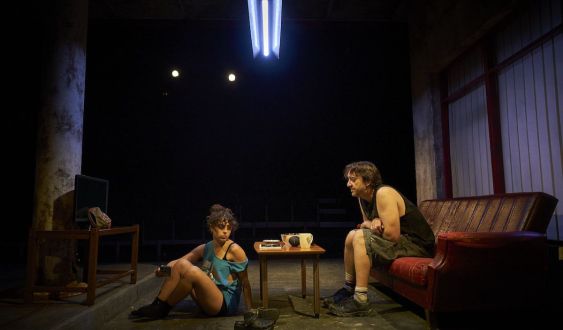
As if by chance, a gem has emerged at La Villarroel (unfortunately it has already finished, we hope this article serves as a sincere tribute), under the endorsement of this year's Grec and also Focus, with a display of emotional capacity that does not stop for a second. The text is coherent, adjusted to our times and, at the same time, unites the boomer imaginary with that of Generation Alpha, maintaining eternal problems: specifically the lower classes, frustrated dreams, machismo, escapism through drugs and the price of maintaining dignity. A price that is sometimes paid and sometimes not, but whatever you do, when dignity is at stake, the wound is more than guaranteed.
Sergi Pompermayer builds an ambitious story, full of lost dreams but also possibilities of redemption. The dramatic fire grows little by little, playing with language, with misunderstandings, the soft and at the same time forceful appearances of the characters (fabulous and endearing protagonist, Pere, embodied by a Joan Carreras who literally transforms on stage), the conflicts (we had a dream, look what it has become), the soundtrack (the hard rock of the old-timers versus the hip-hop or trap of today's rebels), the dialogues (not a comma too many or too few, except perhaps a dubious final speech) and the constant references to details: beer, t-shirts, indecent proposals, the tone between friends, the breaking of friendships, a father's protection of his daughter at any cost...
Pere is loved. Joan Carreras, I mean. Pere. Weak, strong, formidable, lamentable, old-fashioned and worn out, soft drunk, potential abuser, deeply insecure. You would hug him, you would go for a drink with him, you would trust him 100% in terms of nobility and 0% in terms of capabilities. But Joan Josep (the donkey in every house) is also remarkable, interpreted so impeccably by Guillem Balart that he would only need to be able to free himself from the protagonist's shadow: bitten chain, restless legs, rhetorical resource of naive repetition (also a merit of the text, I suppose), vulnerability at first sight, "don't treat me like a dog, don't treat me like a dog." A love.
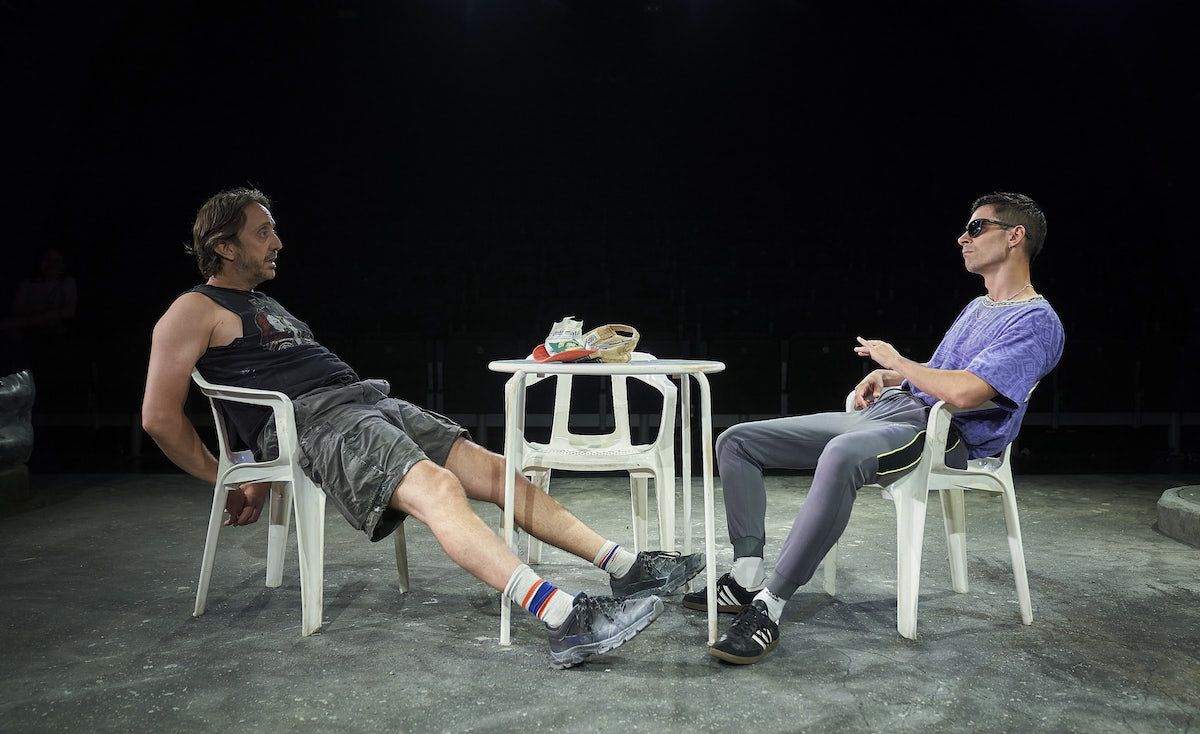
You would also hug the family, when one hugs. The chronicler admits a tear at that moment, when nothing works, when we are on the verge of ruin, when learned values clash with cruel and ruthless reality. Pere wanted to be a rock star (and Joan Carreras seems to know how to play the drums well), and the old dream of doing Route 66 until reaching the Grand Canyon ends in a will for his family —mother and daughter— to fulfill the wish. Immeasurable Ángela (Mireia Aixalà), with an interpretive subtlety full of resources and intuitions, and endearing Ruby (the daughter, Maria Morera). Without forgetting at any moment the road prostitute with whom the play begins (and ends), as a repository of miseries and ephemeral dreams: the obstinate Tatiana (Mar Pawlowsky) and the grumpy and beer-slinging bartender (another splendid Eduard Buch).
Pere Arquillué's direction promised, but Pere always delivers on his promises. A story of humanity that is, also, a lesson in theater: we come here to shake you, not to tell you a story. To make you human, not to give a humanities class. A very high-level proposal, close and at the same time sophisticated, much more ambitious than pretentious and as beautiful as an unexpected kiss. Or, rather, undeserved. I would say we don't deserve you.
Add The New Barcelona Post as your preferred Google source for free
Stay informed with the latest news.
