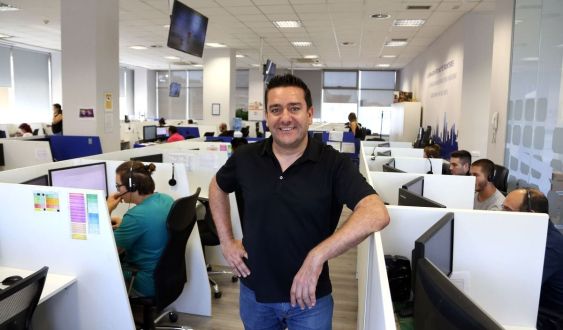
The technology support services company Sosmatic was a key pillar for many individuals and companies during the pandemic stage with its help to solve the computer problems they encountered with the sudden and forced implementation of teleworking. The Catalan company was, therefore, an essential provider that highlighted a range of services it has been providing throughout Spain for more than 20 years.
The result has been an exponential growth of the group in the last two years, going from 130 to 470 people ---50 of whom work from the corporate headquarters at 22@--- and with a significant 36% increase in turnover, which will reach 15 million euros this 2022, according to forecasts.
Sosmatic's job is none other than to be 24 hours a day, 365 days a year, attending to and resolving the doubts and problems that users have when using their electronic devices (computers, mobile phones, tablets, smart televisions, video game consoles...). In person or remotely, through the phone, social networks or by remote control, a computer technician deciphers and solves a user's possible lack of technological training. A range of functions that they had to expand during the pandemic so that companies, employees and professionals could adapt devices and technological tools to be able to work from home.
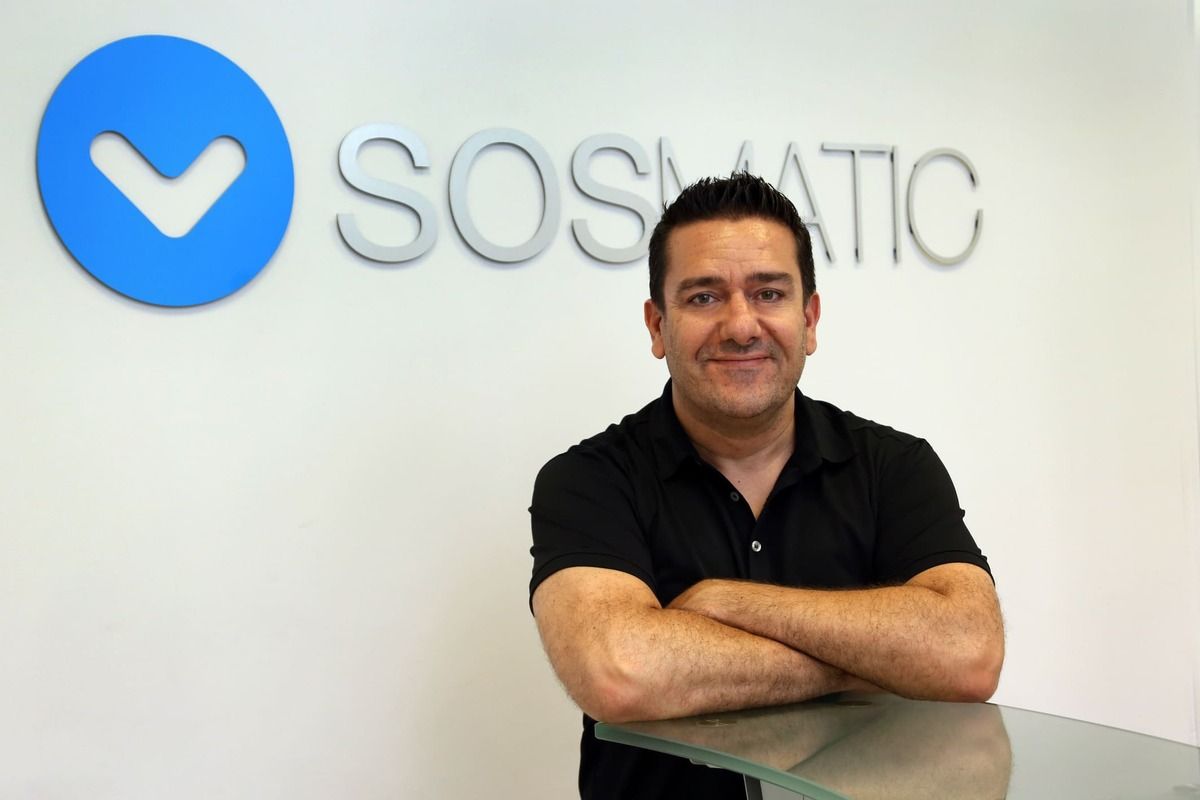
The idea of "selling computer help" and creating this "permanent assistant" came to David Casas in the late 90s when he was responsible for technical support at Intercom, an Internet provider, and realized that many users asked for help in aspects that had nothing to do with infrastructure, but with the use of technology. "I was inspired by the service model provided by the RACC in the field of automotive and, with this approach, two partners and 300,000 pesetas (1,800 euros) that each of us contributed, we created Sosmatic," says the founder and director and sole shareholder of the firm.
Now, 24 years later, Sosmatic reaches thousands of homes and businesses in Spain, Colombia, Peru, and Mexico, either directly to SMEs and business conglomerates or as a service provider for individuals through insurance companies or service providers, such as RACC itself ---which was one of the first clients to boost the company--- and, subsequently, the Open University of Catalonia (UOC), Parlem, and Tech Barcelona, among others.
Casas' business strategy has been based on three pillars: business volume, agility and flexibility, and human talent, along with a policy of self-financing and reinvestment of profits. "My vocation as a sole shareholder is not to make money, but to grow Sosmatic with clients who ask us for recurrence and daily service, not one-off projects," explains Casas. He also specifies that he does not have "a marked roadmap for international expansion", because growth comes from "the clients we have in Spain who ask for our services for their subsidiaries or delegations".
Covid accelerated the company's organic growth and tripled its workforceThus, in recent years, Sosmatic has established itself in Colombia ---the most consolidated foreign market, with a team of 45 people---, Peru, and Mexico, and is finalizing his arrival in Miami by the end of 2022 or early 2023"Whenever we establish ourselves in a new market, we do so hand-in-hand with a local partner, usually with a 50% company, and the United States will be no exception: we are closing an agreement witha Catalan businessman based in Miami who will lead a team of about three or, at most, five people.
Wherever it goes, Sosmatic has four lines of business: individuals, SMEs, distribution chains ---food, fashion, and hospitality--- and large corporate enterprises. This allows for standard services for all segments, but also innovation in more focused digital assistance and training actions.
Cybersecurity and collaborative tools
Among these innovations is the program they have designed from the home technology assistance division specifically aimed at the elderly. "They are a vulnerable group to the challenges of technological changes and are presumed to have skills they don't always possess, and which they need to resolve many of their daily tasks, such as requesting an appointment to go to the doctor, obtaining a legal document, managing their bank accounts, buying a ticket to go to the theater or cinema... a multitude of aspects," Casas points out.
Regarding demand, David Casas clarifies that cybersecurity is one of the aspects causing the most headaches for SMEs, "because large companies have been investing in this area for some time." That is why Sosmatic is developing a program of specific services, "especially preventive ones," to act in this field. However, he adds, "teleworking has encouraged the use of collaborative tools because users need to share information that must be uploaded to the cloud, and that must be done with guarantees of accessibility and security."
Add The New Barcelona Post as your preferred Google source for free
Stay informed with the latest news.
