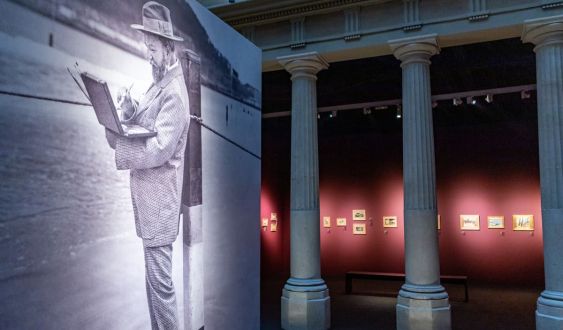
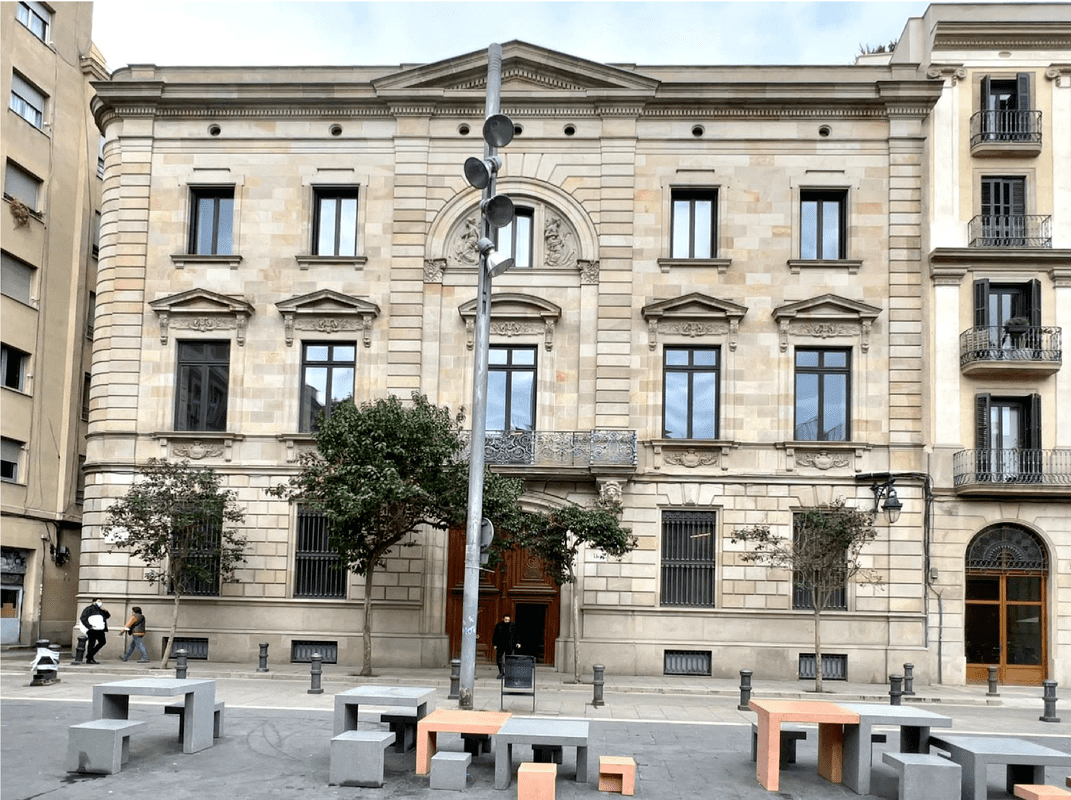
The two most impressive things about the visit are, on the one hand, the spectacular building of the Palau Martorell (which takes its name from the architect, Gaudí's mentor, and which was the headquarters of the old Societat del Crèdit Mercantil at the beginning of the 20th century); and, on the other, the immense (almost endless) quantity of Sorolla paintings that fill up to two of the Palau's floors, albeit consisting of tiny pictorial compositions.
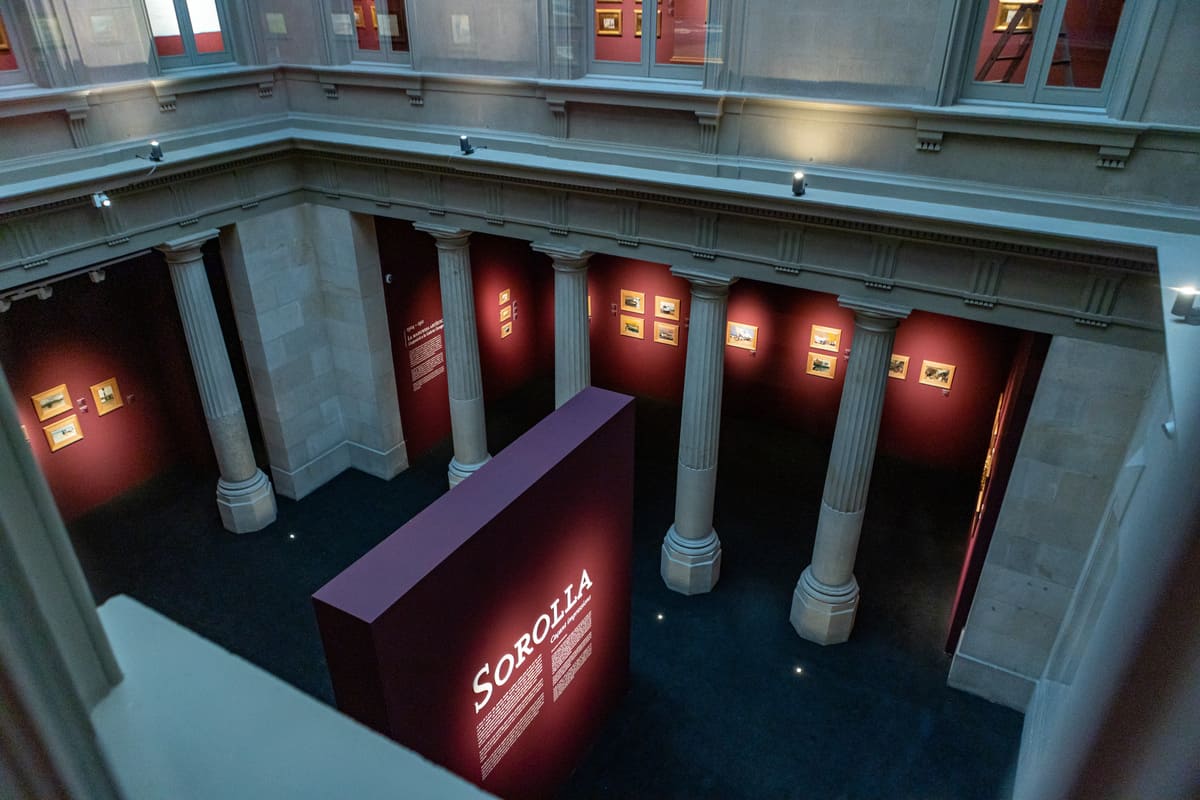
The installation is attractive, with a cozy maroon, somewhere between bourgeois and noble, well-lit, and the exhibition discourse has a chronological coherence that reviews the painter's years of consolidation. Sorolla is well-known enough to be an infallible bet for the inauguration of a new space, which I believe is news above all because it is the first private museum initiative, after the Hermitage fiasco, that manages to offer non-contemporary art content (but of international level) in Barcelona. That is to say, now we have Moco for the "mainstream hipsters" and the Palau Martorell for classics and other experiments, but both with an interesting private initiative profile and with the challenge of showing us that this type of project is viable in Barcelona. Bets are open.
The Palau, I tell you, would look like the headquarters of a bank, but also of a lodge (in fact, there is a mysterious logo that is repeated in some stained-glass windows). Leaving aside the fate of the initiative of the Real Círculo Artístico, a project partner in collaboration with the Madrid-based company Arthemisia Evolucionarte, the truth is that having opened this palace to the public instead of letting it die, allows us to start contemplating the initiative with good eyes. What I was saying: two floors dedicated to Sorolla, to his formative years and his artistic consolidation, but through a large number of small oil works (which he called "spots," "sketches," or "color notes") provided by the Sorolla Museum that outline, make brief brushstrokes, mark with a thick stroke, the unmistakable style of the Valencian author.
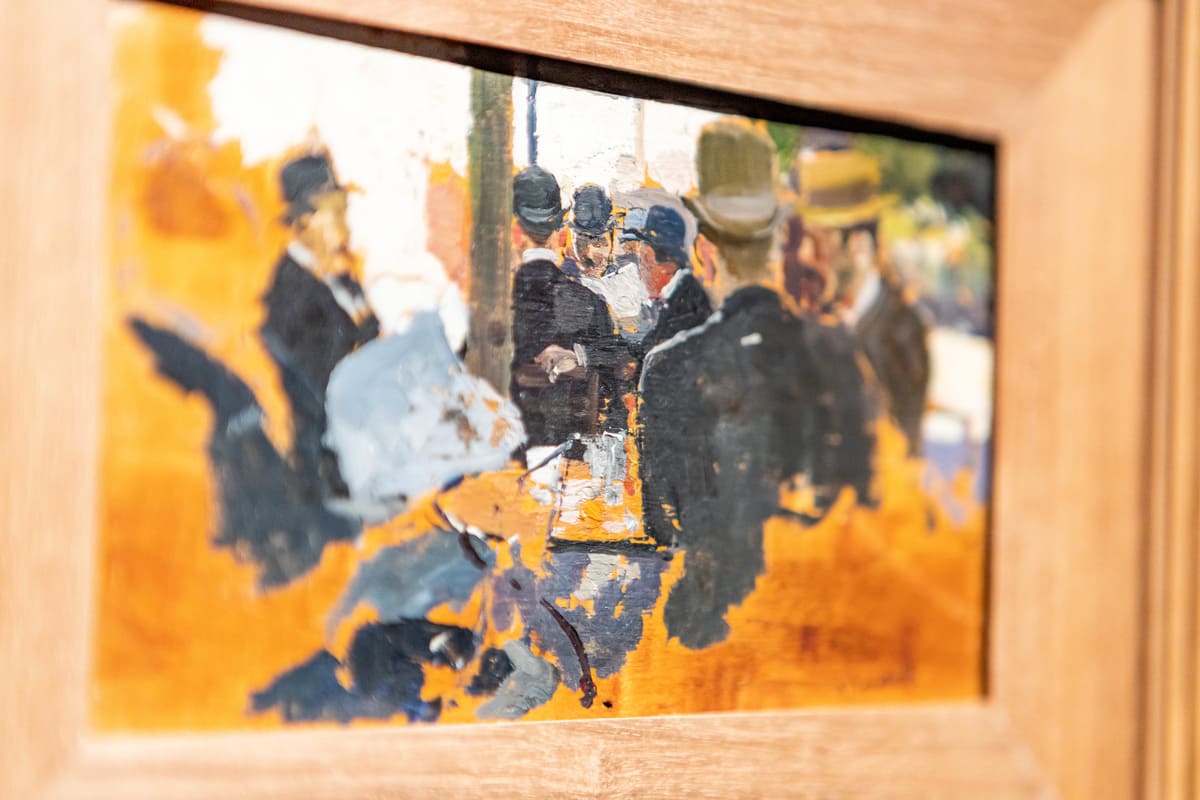
Through this growth of what should be sketches into true works worthy of being framed, we will contemplate (divided into three stages: formation and consolidation, artistic maturity, and plenitude) the painter's impressions of the boulevards of Paris, the streets of Florence, the gondolas of Venice, snow-capped mountains reminiscent of Casas' sheets, almond trees of Assisi, Valencian wash houses and farmhouses, sea notes, seas, the sea of Valencia, the sea of Xàbia, ports and boats, María and Elena on the beach, Clotilde on the beach, children on the beach (with those typical reflections of sunlight sliding on shoulders and bottoms), much San Sebastián, the San Sebastián casino, San Sebastián beach, a bit of Asturias, Biarritz, Zarauz… Notes of an atmosphere and an era where elegance was as much in the air as in the stroke, in the poses, in the gaze at life (his own and that of those around him). Bourgeois, I suppose, I'm not entirely clear. What I am clear about is that it exudes freedom and class everywhere.
On the lower floor, a large exhibition on Playmobil Clicks will soon open. Palau Martorell warns: eclecticism, openness to all audiences, and a desire to sell tickets. It will even be possible to rent the large upper hall for events and parties, with views of the Basílica de la Mercè, and the corresponding souvenir shop has also been set up. We will find fault with this, because that's how we are, but for now we have to we didn't need a Russian franchise to liven up the city's exhibition scene. Yes, it has been necessary, it cannot be denied, to associate with a company from Madrid. Sometimes, whether the invention works or not and whether one likes it more or less, one has to get infected by people who dare. Especially if its content is not minor, as in this case. A good premiere. We will be attentive.
Add The New Barcelona Post as your preferred Google source for free
Stay informed with the latest news.
