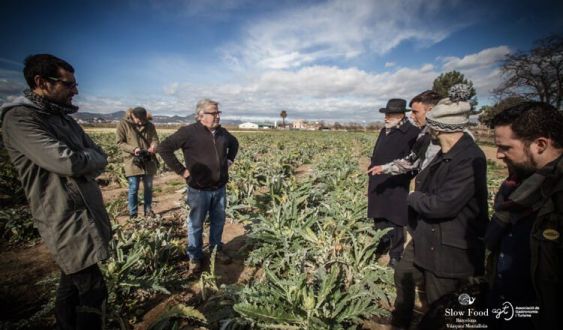
In Barcelona, the Slow Food Barcelona Vázquez Montalbán association (www.slowfoodbcn.cat) has existed since 2005, with Daniele Rossi as president for the past five years. During these years, it has worked with great intensity to get its message to as many people as possible. "The concept of quality is fundamental; if something is good, we will buy it again, but if it is not, we will no longer buy it or enjoy it, which is what it's all about and what we want to promote: enjoying what we eat.
Sustainability refers to ecology; food should not contain contaminants, it should be as natural as possible, but it should also contaminate as little as possible. The fewer kilometers of transport we need to consume a food, the less we will contaminate. And this point leads us directly to proximity. In our environment, we have top-quality products and producers waiting for us to create a social fabric impossible to establish in large supermarkets. Justice refers to all those producers who have to earn a decent living to encourage new generations to follow the same path; their task is paramount."
These concepts are the fuel of the Slow Food Barcelona Vázquez Montalbán convivium, which gains momentum especially thanks to the consolidation of the Mercado de la Tierra (Earth Market), which opens every Saturday from 10:00 to 16:00 in the gardens of les Tres Xemeneies in Poble-sec.
The market started in a monthly format. "It was ten years of knocking on doors, and the answer was always negative; street vending is prohibited in Barcelona, even periodically. It seemed like we wanted to know what. Even Carlo Petrini came to say that in Barcelona it was easier to sell drugs than apples, always with the bluntness that characterizes him. But it is true that for a few years we had this feeling. We just wanted a direct market with the producer, nothing more, but it was forbidden."
Now, this market has become the spearhead of the Barcelona movement. It is there that all its activities are concentrated; things are constantly happening at the market, and this is the will of the organizers. "The two months of urban calçotades have been a resounding success. We really rocked it, you know. The organic calçots, the organic romesco, and the bread from the organic bakery of Santa Madrona have been very popular."
The variety of people who come to the market is another value highlighted by Daniele Rossi. «We have visitors of all kinds: those who come for vermouth, those who come to listen to music, families who take their children to the play area, to workshops, etc. This variety suits us well, because we know that afterwards there are always those hundred people who, even if it rains, Saturday after Saturday come to the market because they know they will find that quality product at a fair price». It is precisely the price that sometimes those people who are perhaps more skeptical of this type of movement cling to. «It will be expensive if there are four intermediaries between the producer and the seller, but if you have direct contact with the producer, sometimes it is cheaper than a conventional product».
The market is yielding very positive results and institutions, now, are getting involved. In fact, the Barcelona city council has asked the heads of Slow Food Barcelona Vázquez Montalbán about the possibility of opening a second Earth Market in another location. «The next step to continue with the dissemination of slow food will be a guide to Barcelona and its surroundings, in print and mobile application format, which will include all those bars, restaurants, shops, school canteens, etc. that have called themselves km 0 (local), but expanding the concept. This terminology has gone too far, there are km 0 banks and cars… We believe it can be confusing. Until now they were km 0 slow food, but with the appearance of the guide they will only be slow food».
A km 0 restaurant had to have as basic requirements six km 0 dishes and 80% of the wines on the menu had to be Catalan. «Now we are looking for an extra plus; places with tradition, linked to the territory. We are looking for typical but not fake places. That bar that has had the same tapas or dishes since it opened. Those usual bravas, a little more awareness of craftsmanship, which exists and which perhaps even shopkeepers and restaurateurs do not know are slow food, but they are. If we broaden the base of our message, it will reach more people and that is, in the end, what we are looking for. The idea is to make an inclusive and not exclusive gastronomic guide».
In this guide, about 140 or 160 slow food establishments will appear; they are still preparing it. Their intention is to present it in November at the Parc Agrari del Prat de Llobregat, in the La Ricarda space, with the presence of Carlo Petrini. "We will also take the opportunity to award thirty or 35 snails (the snail is the symbol of the slow food movement) to those establishments that are more slow food, those that have a broader consciousness. We believe this can encourage the rest to make a little more effort for the future."
The Slow Food Barcelona Vázquez Montalbán association does not stop and already has new objectives in mind. "After the market and the guide, an interesting objective would be to start pushing for local and organic products not to be labeled, and for those that are not organic and not local to be labeled. But what is not negotiable is to give up continuing to incite people through consciousness."
MANUEL VÁZQUEZ MONTALBÁN AND SLOW FOOD
Manuel Vázquez Montalbán was associated with the movement slow foodin Tuscany, one of the most powerful areas of the movement in Italy. He was one of the first Catalans to be part of it. In fact, he wrote about gastronomy, about Catalan dishes and their wonders. He was a confessed lover of good food and knowing how to enjoy it. "When he spoke of the gustatory properties of bread with tomato, perhaps he wasn't so interested in the origin of that tomato, but he was a bon vivant of gastronomy. He even personally met Carlo Petrini», Daniele Rossi, co-founder of the Slow Food Barcelona Vázquez Montalbán association, explains to us, who, along with Chiara Bombardi, the other alma mater of the Barcelona working group, thought that the writer's name could fit.«We asked the family for permission and that's it, all that was left was to start spreading the message».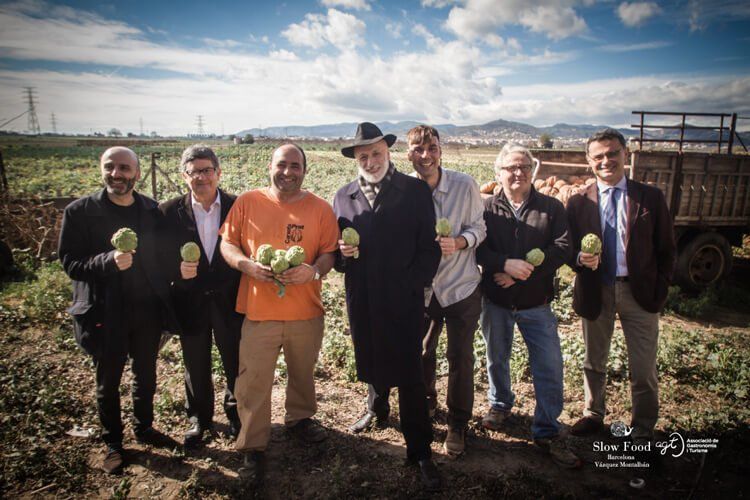
Add The New Barcelona Post as your preferred Google source for free
Stay informed with the latest news.